



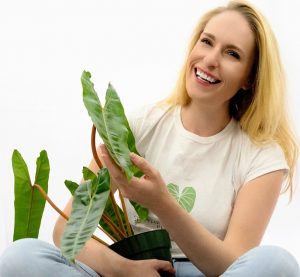
Today we’d like to introduce you to Alayna Younger.
Hi Alayna, we’d love for you to start by introducing yourself.
Like many Coloradans, the COVID-19 pandemic upended my life in many unpredictable ways. However, in the face of losing loved ones, being isolated from friends and family, I was able to grow my longtime plant collecting hobby into a small business and ultimately find my place in a thriving Denver houseplant community.
I work in Public Health as a Communicable Disease Epidemiologist. It’s a career that I absolutely love and would not give up for anything—but I’d be lying if I said it’s easy work. When the COVID-19 pandemic hit the US, the intensity of my work grew exponentially. Being a front-line worker on the pandemic response was one of the most challenging and difficult periods of my life. It also exacerbated the ‘normal challenges‘ of pandemic life: feeling isolated, helpless, lonely, among others—and led me to feel that I desperately needed positive interactions with people in my community, and in a manner completely unrelated to the novel coronavirus.
My desire to connect with others under Colorado’s Stay at Home and Safer at Home orders was truly the inadvertent start to my present business. Prior to the pandemic, my hobby interest in growing and caring for houseplants included propagation—the practice of growing entirely new plants from a piece of an existing plant (often referred to as a ‘mother plant’). What I love about propagation is that you can take a piece of a stem—sometimes only a half inch long, with no leaves, no roots…only a small ‘bump’ called a node— and with time, patience, and care, you can eventually grow it into a healthy and growing mature plant. Through propagation, I grew a sizeable collection of Aroids (Araceae) — a family of tropical plants admired for their often large or unique foliage (better-known Aroids include fan favorite species like Monstera, Philodendron, Alocasia, Syngonium (i.e., ‘Swiss cheese plant’, ‘Arrowhead plant’)). I continued to propagate more and more until I honestly had more plants than I could keep up care for!
I started using social media and neighborhood apps to organize virtual plant sales where I sold my home-grown plants through no-contact porch pick-ups in the Colorado Springs area. I was blown away by the positive feedback I received through these sales, and I quickly realized that this was a relatively easy way to improve the availability of highly desired houseplants that, at the time, were not commonly available in garden centers, nurseries, or even specialized houseplant shops. The Philodendron ‘Pink Princess’ (‘PPP’) was a plant that rose to social media infamy during the pandemic, with its bubblegum pink variegated leaves, everybody wanted one but few had them. Single leaf cuttings were easily selling for at least $100, and a large plant with lots of pink could set you back close to $500 or more. While I personally didn’t feel the same hype around this plant, I had one or two that I chopped into lots of tiny stem pieces and over the course of a few months, grew into beautifully variegated 4” plants which sold the instant I listed them online. The PPP was truly the first ‘rare plant’ that I grew and sold, and it boosted my confidence in my ability to continue propagating highly-desirable plants with solid success rates.
When I relocated to Denver in 2021, my massive plant collection obviously came with me! In April of 2022, I launched Spathe and Spadix Plant Co. using the same model I had created in the Springs: chop, prop, and sell direct to the customer. Today, I grow at least 200-300 individual plants at any given time, and I take pride in the diversity of the species I grow and sell. I connect my plants with my growing customer base in a few ways: I offer local door-to-door plant delivery which is a great way to bring home your new plant without the stress and potential for damage that comes with shipping. I also partner with local businesses to host ‘pop up events’ where my customers can shop my plants in person and allows me to connect and build new relationships within the local plant community.
Would you say it’s been a smooth road, and if not what are some of the biggest challenges you’ve faced along the way?
One of the statements I hear all the time from new or casual plant collectors is ‘I bought a new plant but then I killed it when I brought it home’. But the reality is, we are taking a plant that is native to tropical environments—plants that thrive in warm and humid climates — and expose them to dry, indoor conditions that are a far cry from the plant’s origins. Don’t get me wrong, plants are incredibly resilient. They want to survive. They will find ways to survive. And incredibly, many tropical plants can thrive in residential settings, but it’s not easy and it takes a lot of time and care to keep some of the more ‘finicky’ aroids, like Anthurium and Alocasia species happy and healthy.
This speaks to the greatest challenge for Spathe and Spadix Plant Co.: acquiring healthy mother plants from tropical countries that I can grow and propagate in Colorado. I specialize in growing species of Aroids that are not commonly found outside of plant collector’s circles: these plants tend to be unique in one way or another and therefore, more difficult to come by. For example, they may have unique patterns or colors on the leaves, called ‘variegation’. Others are ‘cultivars’, produced when a grower has collected pollen from one species, used it to pollinate flowers from another species, ultimately yielding seeds for a brand new hybrid plant, often with unique characteristics from each parent. Anthurium hybrids can be incredible: with large, sometimes leathery or suede leaves that can emerge with striking contrasting veins and bold colors. The more striking and unique the look of the plant, the more in demand they tend to be.
It can be challenging for me to source mother plants from their native lands. First and foremost, I must vet the grower to assess how they acquired the plant. Unfortunately, given the retail value of these plants, the practice of ‘plant poaching’ is a real and concerning issue when purchasing tropical plants from overseas. (Plant poaching is the illegal practice of taking wild plants, often from protected lands, and selling them on the retail market). Once I have identified a grower with ethical and sustainable practices, there’s still no guarantee what conditions the plants will arrive in. And even with the correct import permits, entire shipments can still get confiscated and destroyed if they don’t meet import standards and regulations. Fortunately, over the years I’ve developed successful working relationships with a small number of trusted growers in Central and South America and Southeast Asia. Today, I follow a successful protocol I’ve developed for ‘acclimating’ my mother plants from their overseas travels; this process reduces the length of time spent on nursing the plant back to health. (Upon arrival, many plants will lose leaves, are at risk of developing root rot, go into shock or flat out die). This allows me to start propagating from the mother plant in as little as eight weeks after arrival, and then those propagations may be ready to sell as established plants anywhere from two to six months out from there. (Depending on my process: stem cuttings with leaves will propagate much faster than a stem cutting with only a node).
Given the length of time it takes me to acquire and rehabilitate a mother plant, propagate it, then grow the propagations into established and growing plants, I must make strategic decisions about the species of mother plants I acquire. For example, I no longer prioritize growing the PPP referenced earlier because the community supply has now caught up with demand, and the return I’d get on the propagations would be minimal relative to the time and effort it took for me to produce them. Instead, I’ve got to do a good amount of research and invest in plants that I think may still be in demand up to a year down the road. But selfishly, this can also be a lot of fun for me! Aroids are a really diverse family of plants, and since I am constantly acquiring new mother plants to propagate from, I get to grow lots of different plants from all over the world! I’m constantly learning from them, and in return, they make me a smarter grower and a more patient person overall!
Thanks – so what else should our readers know about Spathe and Spadix Plant Co.?
Spathe and Spadix Plant Co. is a local purveyor of home-grown, rare and unique tropical houseplants. As the founder and owner, I leverage my passion for Aroids (a family of tropical plants known for their often large and impressive foliage) toward growing healthy and thriving plants that are often only found within private collector’s circles. What sets Spathe and Spadix apart from other local plant businesses is that I actually grow the vast majority of the plants I sell myself. In fact, I often grow them from incredibly small chunks of rootless, leafless stems and provide each individual plant with months of individualized care until they reach maturity. The plants I sell represent multiple generations of growth originating from my private collection, which includes uncommon and rare species native to the Central and South Americas and Southeast Asia.
Not only does this allow me to provide a diverse range of unique plants not frequently found in garden centers or plant shops, but by functioning as my plant shops sole grower, I have complete control over the growing process from start to finish. I take great pride in the health of my plants, and my customers know that their Spathe and Spadix plant is prepared to grow and thrive for years to come.
Can you tell us more about what you were like growing up?
Growing up, I always had an inquisitive mind. Not only was I fascinated with understanding how things worked, but I liked to experiment and observe how human interactions could influence the natural world around us. Looking back, it was entirely predictable that I’d end up with both a career and a business rooted in science!
My mother was a plant collector, so I developed an appreciation for plant care and growth growing up in her modest but thriving urban jungle. Fast forward to adulthood, and I began adding more and more plants to my home myself. For me, plant collecting has always gone deeper than amassing unique and interesting plants: you can literally watch with your own eyes how your plant responds to your care. Recently provided your vining Philodendron with a vertical post to climb? You’ll soon start to see it produce larger leaves with the added support. Took a stem cutting and plopped it in a jar of water? You get to observe the daily progress as it grows its first roots and eventually pushes out the start of a new leaf from the tiniest of nodes!
For me, plant collecting is about nurturing, learning, and reconnecting with the natural world. Especially for those of us who otherwise dwell in urban settings, may not have children or pets— caring for plants provides us an opportunity to care for something other than ourselves, and it’s a heck of a confidence boost to have beautiful new growth to show off as a result!
Pricing:
- Budget friendly offerings for under $50
- Majority of collector plants sell for $79-199
- Limited offering of ultra-rare plants starting at $199
- Free local delivery
- Free same day delivery
Contact Info:
- Website: www.spatheandspadix.com
- Instagram: spatheandspadixco


Popular
-

The Trailblazers: Rewriting the Narrative
-

Celebrating the Spotlight: Kaytee Shashore Turns Milestones Into Momentum
-

Humanity in the Machine: Alexander Raye Pimentel’s Cyborg Recall Questions the Cost of a Data‑Driven World
-

Raemi Anderson on Courage, Caution, and Answering the Call of the Landscape
-

Hidden Gems: Local Businesses & Creatives You Should Know


