


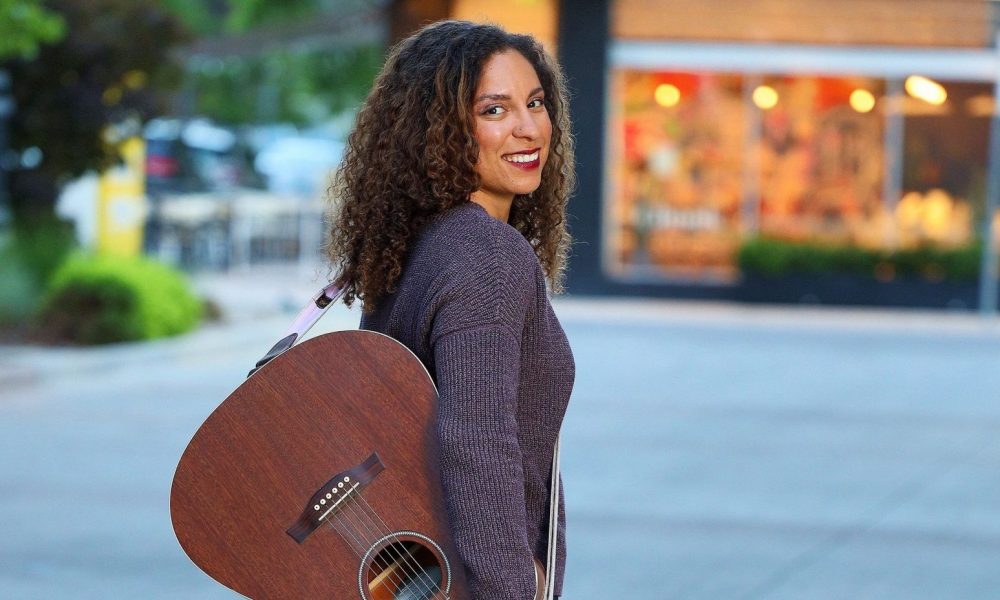
Today we’d like to introduce you to Marlys Woods.
Hi Marlys, thanks for sharing your story with us. To start, maybe you can tell our readers some of your backstory.
I grew up in a home that was bi-racial and bi-religious. And while diversity from a racial and ethnic perspective was never an issue in my home, different religious beliefs were the cause of my parent’s divorce. As they both attempted multiple times to find a partner who would be a more ideal match, I observed something that would become a belief for me as I grew up: when people disagree, someone leaves.
This led to a behavioral pattern of molding myself into what I thought people wanted me to be. Nice, smart, high-achieving, agreeable. The world knew me only as a happy girl, adaptable to everyone and everything. But in reality, I was living as a chameleon, constantly adapting who I was to what would be accepted. I hid my opinions and my emotions, afraid of expressing anything that might lead to abandonment. My one solace – the thing that allowed me to express my true feelings – was music.
Songs allowed me to put words to the emotions I felt! There was one problem, though – I didn’t realize at the time that how I was using music was harming me, not helping. I would listen to a song over and over again, embodying those lyrics as if they were my own. I became stuck in the emotions within them.
Because of this connection to music, I thought that I wanted to be a professional singer. I went to college for music but I found in-congruence there as well – it seemed the only songs I wanted to give attention to were those that expressed how I felt.
I began to realize that my passion was actually expressing through music, not necessarily performing or even the music itself. When I was introduced to music therapy, I knew I had found my calling. I fell in love with the ability to use music as a tool for healing. Unlike most music therapists, I got to experience working in an addiction setting during my internship. And though I hadn’t experienced addiction to a physical substance or behavior in the same way, I could certainly relate to not knowing how to communicate my feelings and wanting desperately not to feel.
Both my parents were in sales – they either owned their own business or worked for a company where you basically ran your own business, so it felt natural for me to start my own as well, and I liked the lifestyle that accompanied that. I loved the idea of creating my own schedule. I also knew with my personality that I could not do a desk job! I needed constant change to keep me motivated. I needed what my business coach calls flexible structure.
As I grew in my field and saw the lack of music therapists working in mental health, my heart for focusing on this work grew even more. So many of us have such a strong connection to music which ties to our emotions, and many of us actually use music in a way that will keep us stuck. To me, it is essential to show people who are struggling with mental health how to use music to connect to themselves faster and to heal faster as a result.
I’m sure you wouldn’t say it’s been obstacle free, but so far would you say the journey have been a fairly smooth road?
Wouldn’t that be nice! 🙂 In my experience, running your own business is more like being on a roller coaster – there are always ups and downs, and there’s always a sense of adventure! I am constantly learning, and just as I’ve developed a skill, it seems I discover another tool that could help my business grow.
I started my career planning to just be a music therapist, practicing on my own. However, as I developed my skill set and became highly effective working in mental health, I decided to expand my company, which meant I had to learn several new skills, including: how to hire, how to conduct interviews to determine who is truly qualified, and how to advocate for fair pricing that reflects the value of our services. Then I realized that the field of music therapy is significantly lacking in music therapists qualified to work in my subset of mental health. So, I created a program to train more therapists!
As my company grew, I also transitioned into different roles, moving from therapist to CEO, and now I’m learning how to hire admin staff and continue our company growth while testing marketing methods for an ever-changing online world. I am constantly having to step into areas of business that I know little to nothing about and learn very quickly. This process is certainly challenging at times but also thrilling – it’s exactly what I want to be doing!
We’ve been impressed with Get In Tune Music Therapy, but for folks who might not be as familiar, what can you share with them about what you do and what sets you apart from others?
I am the founder and CEO of Get In Tune Music Therapy. We focus solely on mental health recovery, including addiction, eating disorders, anxiety, and depression. These areas are not commonly addressed by music therapy, and yet music can be one of the most powerful tools for helping clients struggling with mental health to open up and express their emotions and put words to how they are feeling!
Working in mental health is very different from working in other populations for which music therapists are typically trained. And because of this, I felt called to create training and supervision for those who have a desire to work in this challenging yet highly rewarding area. This is something we offer, in addition to placing music therapists in treatment centers, providing individual and group music therapy sessions, and online self-study programs that focus on mental health.
I am most proud of the lessons I’ve learned throughout my career, which are the same ones I teach my clients! The ability to identify, express, and communicate your emotions, struggles and needs can bring your dreams to life. If I can identify what I am going through, find the words or a creative way to express it, and then communicate it to the right person, I can find a solution to my problem as long as I implement the right skills. It is as simple as that. And I am simultaneously fulfilling a dream I have had since I was 15 – building and running a business that allows me to travel the world for a year!
What quality or characteristic do you feel is most important to your success?
Connection is one of my best qualities. My ability to connect to clients, create connections for music therapists and mental health staff through my training and group supervision and my ability to connect with site staff to help support them in achieving their goals with their clients is integral to my success. I also think resilience and perseverance are important – no matter what challenges we face, I believe we can get up, dust ourselves off, and keep going.
Contact Info:
- Website: getintunemusictherapy.com
- Instagram: https://www.instagram.com/getintunemusictherapy
- Facebook: https://www.facebook.com/GetInTuneMusicTherapy


Image Credits
SC Photography