
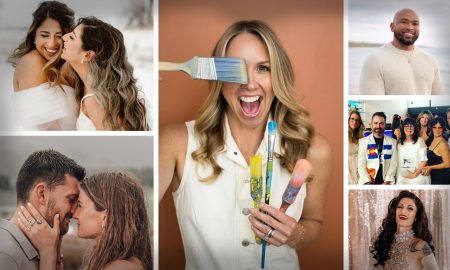


Today we’d like to introduce you to Ryan Dailey.
Hi Ryan, it’s an honor to have you on the platform. Thanks for taking the time to share your story with us – to start maybe you can share some of your backstory with our readers.
I love a good story and I love to tell stories. I’m the type of person who has a hard time with the “long story short” version (if you know, you know), so I hope I can adequately and briefly tell mine. I would say it all started when I was in grade school. I didn’t like going because it wasn’t easy for me. I had teachers that would make me stand up and use me as an example of how not to behave. It was hard for me to initiate tasks, complete assignments that were timed, and even attend to what was important.
It felt like my brain was on overdrive, taking everything in, all at once. I learned that this can be beautiful and messy at the same time. Kids like me would be punished for this in school by mistakenly labeling it as being “noncompliant” or a “behavioral problem.” It shaped my identity to be “not as smart,” “not a good test taker,” etc. This is the overarching reason I decided to get into a field that helped people like me. I am a neurodiversity-affirming speech and language pathologist (SLP). Fast forward to today, I know about neurodiversity. Neurodiversity is a term that means that brain differences are naturally occurring variations in humans.
This perspective sees brain differences, rather than brain deficits. With this perspective, we can see that these differences don’t need to be “fixed” or “cured,” but rather celebrated. All brains are beautifully unique and each person deserves the same right to learn in a way that is meaningful to them. My goal in telling my story and working as an SLP is to help spread neurodiversity acceptance and make communication more accessible.
Would you say it’s been a smooth road, and if not, what are some of the biggest challenges you’ve faced along the way?
People are doing the best they can with what they know. However, when you know better, you do better. This has been the theme of the challenges I’ve faced as an SLP. Early in my career, I was taught things that didn’t feel right at the time, specifically about autism, but I was new to my career and trying to learn from those more experienced than me.
Admittedly, I was scared of failing when I was given an Autistic person on my caseload. Naturally, I immersed myself in autism research which focused on understanding autistic characteristics to help with early identification. I was part of a fantastic interdisciplinary team full of speech and language pathologists, psychologists, neurologists, and social workers that followed babies with an autistic sibling from 9 months old to 3 years old tracking their communication development. It’s interesting to have both research and clinical perspectives.
I learned so much from being involved in research, but I felt I needed more understanding of how this can translate to real life. This is when I dove into the neurodiversity movement and language development research to understand Autistic brains and how their language development differs from neurotypical brains. Analytic language development and gestalt language development are two ways to process and develop language.
Many people think of analytic language development as the “standard” method of developing language, using words first as the building blocks to produce sentences. Children who use Gestalt language development process language in whole chunks instead of processing single words at first.
Both analytic language development and gestalt language development are normal and natural. Autistic individuals are often gestalt language processors. A gestalt is delayed echolalia which is sometimes labeled as a “script” but typically has a communicative purpose. The truth is, that echolalia is a beautiful part of language development! Change is hard, so trying to spread this new understanding to other professionals has been a unique challenge- one that I am up for!
Appreciate you sharing that. What should we know about Dailey Speech and Language Services, LLC?
I am a pediatric, neurodiversity-affirming speech and language pathologist (SLP).
After graduating with my Master’s degree in Communication Disorders in 2011, I spent 6 years working at Children’s Healthcare of Atlanta in inpatient and outpatient rehabilitation with children exhibiting a variety of disorders. I was also involved in autism research administering early communication assessments within longitudinal research protocols designed to investigate early emergence of autism and diagnostic stability.
After time spent in the medical setting, I made the move to Colorado in 2017. I have worked in multiple settings, including hospitals, schools, and home settings. I now own a speech therapy private practice with the clinical freedom to create individualized plans for both my clients and their families that support the child’s strengths, unique abilities, and authenticity.
I have performed diagnosis and treatment of disorders related to apraxia, communication disorders, phonological processing disorders, and fluency disorders in infants, preschool, and school-aged children. For the past 10 years, I have focused my clinical skills on working with Autistic individuals. My therapeutic approach is rooted in play and authentic connection.
What matters most to you? Why?
I believe that all brains are magic, that every child is capable of meaningful connections with the world around them, and that disability rights are human rights.
What matters to me is kindness and connection. I hope that my story impacts a kid like me, that kid with a beautifully, unique brain. I hope they believe that they are not only incredibly smart but that they matter to this world.
Contact Info:
- Website: daileyspeechandlanguage.com




Image Credits
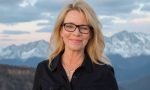
Studio 310 (Featured Photo)
Popular
-

The Trailblazers: Rewriting the Narrative
-

Celebrating the Spotlight: Kaytee Shashore Turns Milestones Into Momentum
-
Humanity in the Machine: Alexander Raye Pimentel’s Cyborg Recall Questions the Cost of a Data‑Driven World
-
Raemi Anderson on Courage, Caution, and Answering the Call of the Landscape
-

Hidden Gems: Local Businesses & Creatives You Should Know


