



 Today we’d like to introduce you to Katya Schloesser.
Hi Katya, thanks for sharing your story with us. To start, maybe you can tell our readers some of your backstory.
I am a science educator and self-identify as a boundary spanner. I’m trained in environmental science, and received my master’s in Geography, studying alpine hydrology (specifically sources of nitrogen in alpine watersheds using isotopes), at CU Boulder. Getting my master’s at CU introduced me to the world of academia and higher ed, but I always knew I wanted to work in K-12 education.
Upon graduating, I accepted two part-time positions at CU, one running an education program, Learn More About Climate at the CU Boulder Office for Outreach and Engagement, and one running the education program on a National Science Foundation grant, AirWaterGas, about the science of hydraulic fracturing.
Through this work, my main objective was to translate current research being done at CU into meaningful K-12 curricula and resources for the general public. I worked with rural teachers across the state, who were teaching in areas experiencing a boom in oil and gas development. Through this, I gained a deep appreciation for the vibrant and close-knit communities of rural Colorado.
My partner and I decided to move to Gunnison, Colorado in 2017, for quality of life, access to recreation, and to live in a small town. I left my positions at CU Boulder and attended Western Colorado University to receive my licensure to teach secondary science. I spent a year and a half teaching 8th-grade Earth Science at Gunnison Middle School. When my time was up, a position wasn’t open in the school district, and I was looking for work.
I got in touch with an old colleague at CU Boulder, and applied for a position with the Cooperative Institute for Research in Environmental Science (CIRES) Education & Outreach group(now the Center for Education, Engagement and Evaluation), once again working in the interface between academia and K-12 education. I began working on a program, the Hazard Education, Awareness, and Resilience Task Force (HEART Force), which I now run.
The program focuses on building community resilience in rural Colorado communities, by supporting middle and high school science classrooms through place-based curricula that introduce students to these hazards, the science behind the causes and impacts, and the impact of climate change on these hazards, and engage students with scenario-based role-play games, where students are challenged to respond to a hazard as it occurs in their community.
Finally, students have the option to complete an action project to make their own community more resilient to hazards. As a Colorado native, I love getting to engage with communities across the state, including ones in rural areas where there is one science teacher who teaches all grades! We also work with Front Range communities – most notably, with teachers who were directly affected by the Marshall Fire.
The CU Boulder Office for Outreach and Engagement partnered with the CU Research and Innovation Office to fund projects that directly served communities impacted by the fire. We had an amazing core group of four educators that we worked with to incorporate trauma-informed practices into the HEART Force curriculum, and supported bringing the curriculum to their classes to empower students after experiencing such a tragic event.
Would you say it’s been a smooth road, and if not what are some of the biggest challenges you’ve faced along the way?
As I said earlier, as a boundary spanner, between academia, K-12, and the public, and now between urban and rural communities, I have to speak a lot of different languages. Living in a rural community, I absolutely love the close-knit nature of a small town, and always seeing a friendly face whether I’m at the grocery store or at the library with my kids, but it also means that there are fewer opportunities professionally.
I appreciate that I get to work for a prominent institution with leading experts in the field, and then share that knowledge and expertise with rural, resource-limited communities around the state. When I lived in Boulder and traveled to rural areas, I often was met with suspicion or distrust, but now that I live “outside the bubble”, I can relate to rural teachers and community members across the state, and have a lot more street cred knowing the challenges and rewards of rural life.
Thanks for sharing that. So, maybe next you can tell us a bit more about your work?
I specialize in a relatively new field of education, resilience education. As we all experience the impacts of climate change and see the devastating effects of climate-fueled hazards on the news (ie. the Lahaina Wildfires, the Marshall Fire, etc.), we need to plan for more of these events and figure out how we create resilient communities and systems to protect everyone and help everyone recover.
I am most proud of my ability to facilitate community-engaged learning and opportunities for students to participate in real-world problem-solving. In my role, I serve to build foundations of support for teachers, by writing quality curricula, delivering professional development to support teachers, and connecting teachers to local emergency managers, planners, and community resilience practitioners.
I succeed if I build a platform that showcases students’ creativity, power, and problem-solving abilities, and students feel empowered to make real change. When community leaders see that young people can contribute to community well-being and resilience, the whole community benefits!
How do you define success?
That’s a tough one! Personally, if I can be impeccable with my word and satisfy my biggest critic (me), I am successful!
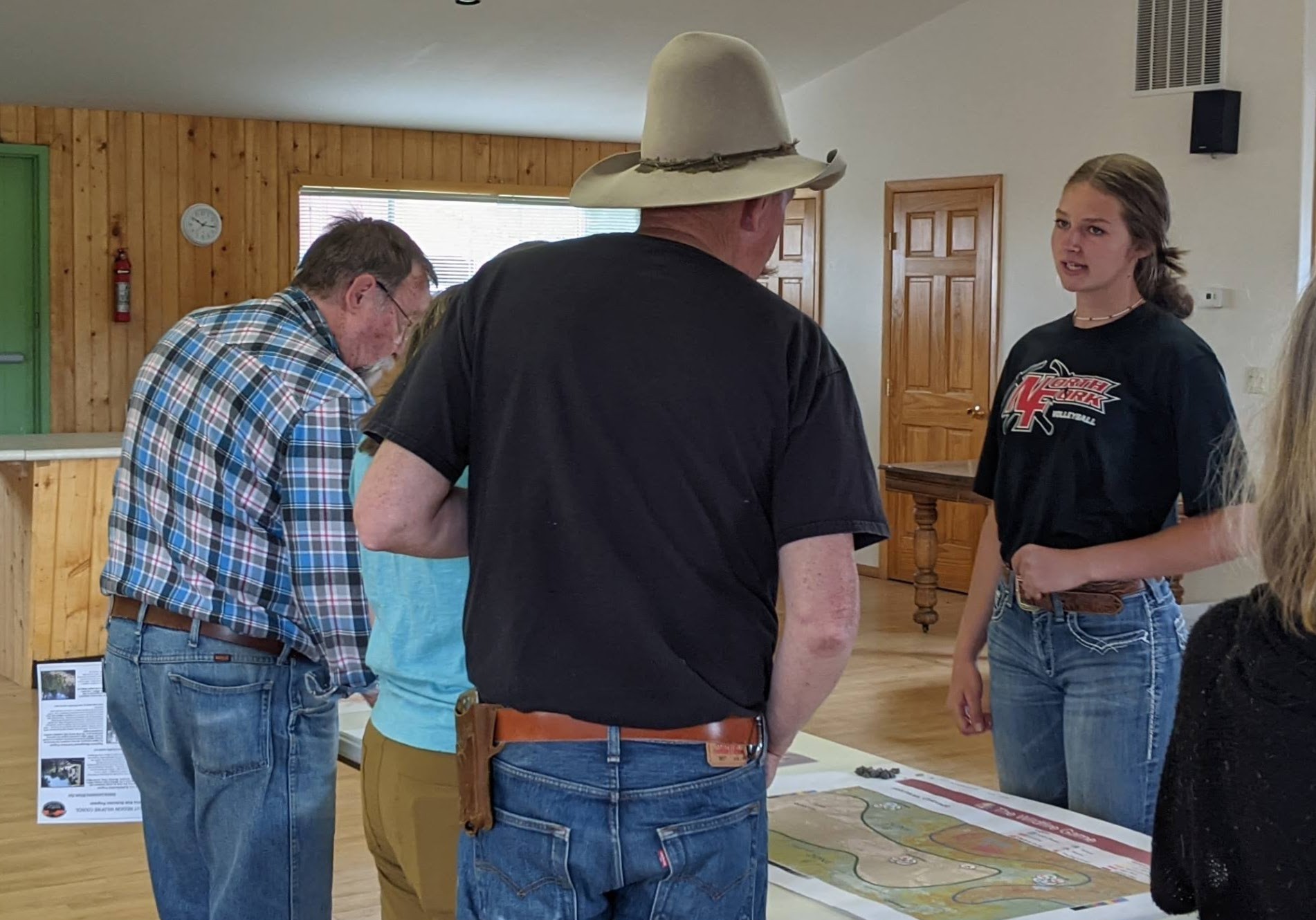
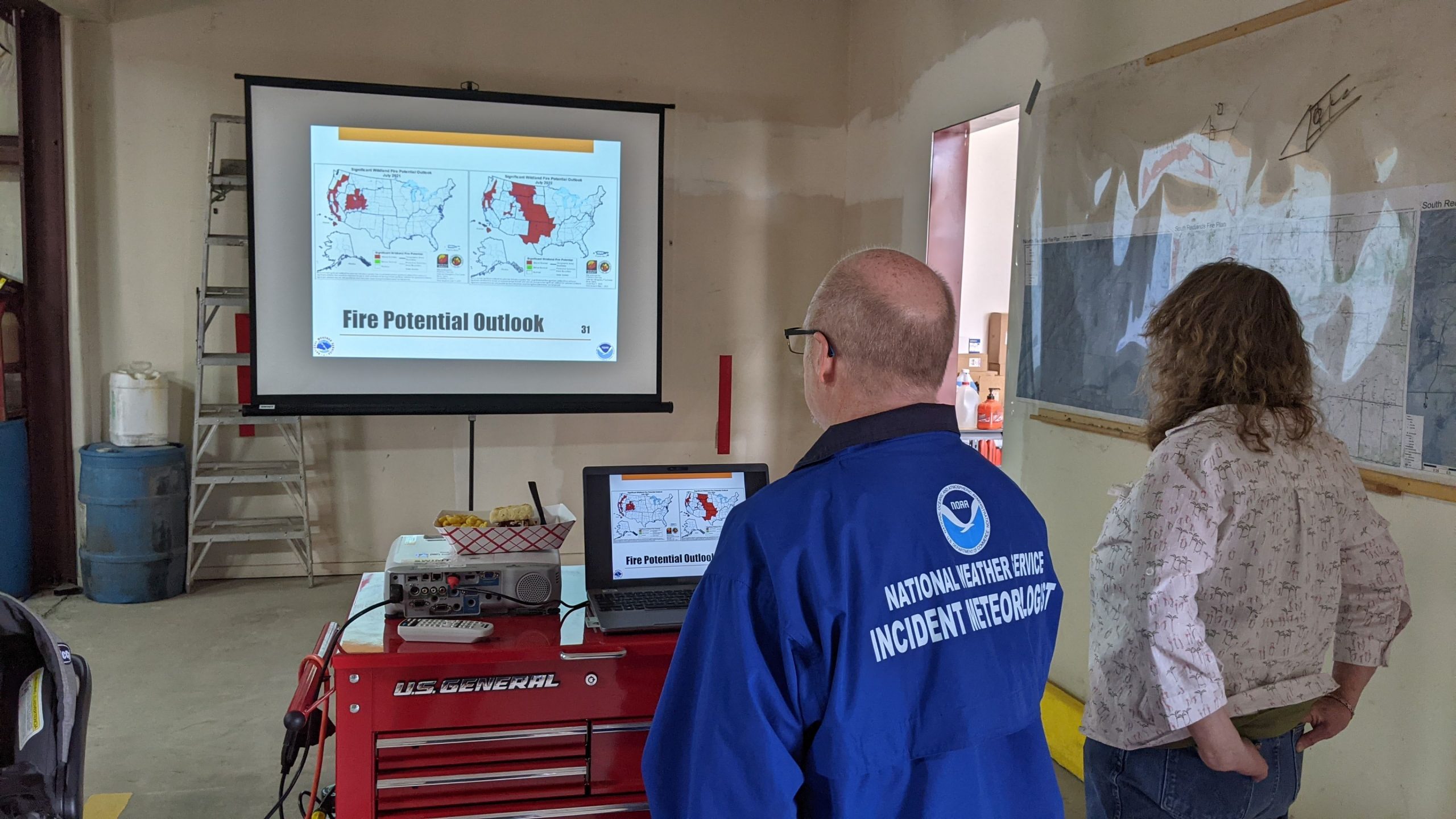
After working so hard during the pandemic to support teachers in a virtual learning environment, and building bridges between classrooms and community leaders, attending Community Resilience Expos have been some of my most affirming moments. Students and teachers in Hotchkiss, Gunnison, and Primero have put together Community Resilience Expos that showcase students’ ideas on how to make their communities more resilient and educate the community on resources they can access to prepare for future wildfires and droughts. These events are the culmination of months of hard work, and seeing a confident ninth grader explain their thoughts on defensible space or water conservation to a county commissioner fills my heart with pride. To me success is the hope and confidence that we are empowering our future leaders to adapt to and thrive in a changing climate.
Contact Info:
- Website: https://cires.colorado.edu/outreach/projects/HEARTForce
- Instagram: https://www.instagram.com/cires.ceee/
- Facebook: https://www.facebook.com/CIRESCEEE
- Twitter: https://twitter.com/CiresCEEE
- Youtube: https://www.youtube.com/user/ciresvideos


Popular
-

The Trailblazers: Rewriting the Narrative
-

Celebrating the Spotlight: Kaytee Shashore Turns Milestones Into Momentum
-
Humanity in the Machine: Alexander Raye Pimentel’s Cyborg Recall Questions the Cost of a Data‑Driven World
-
Raemi Anderson on Courage, Caution, and Answering the Call of the Landscape
-

Hidden Gems: Local Businesses & Creatives You Should Know


