



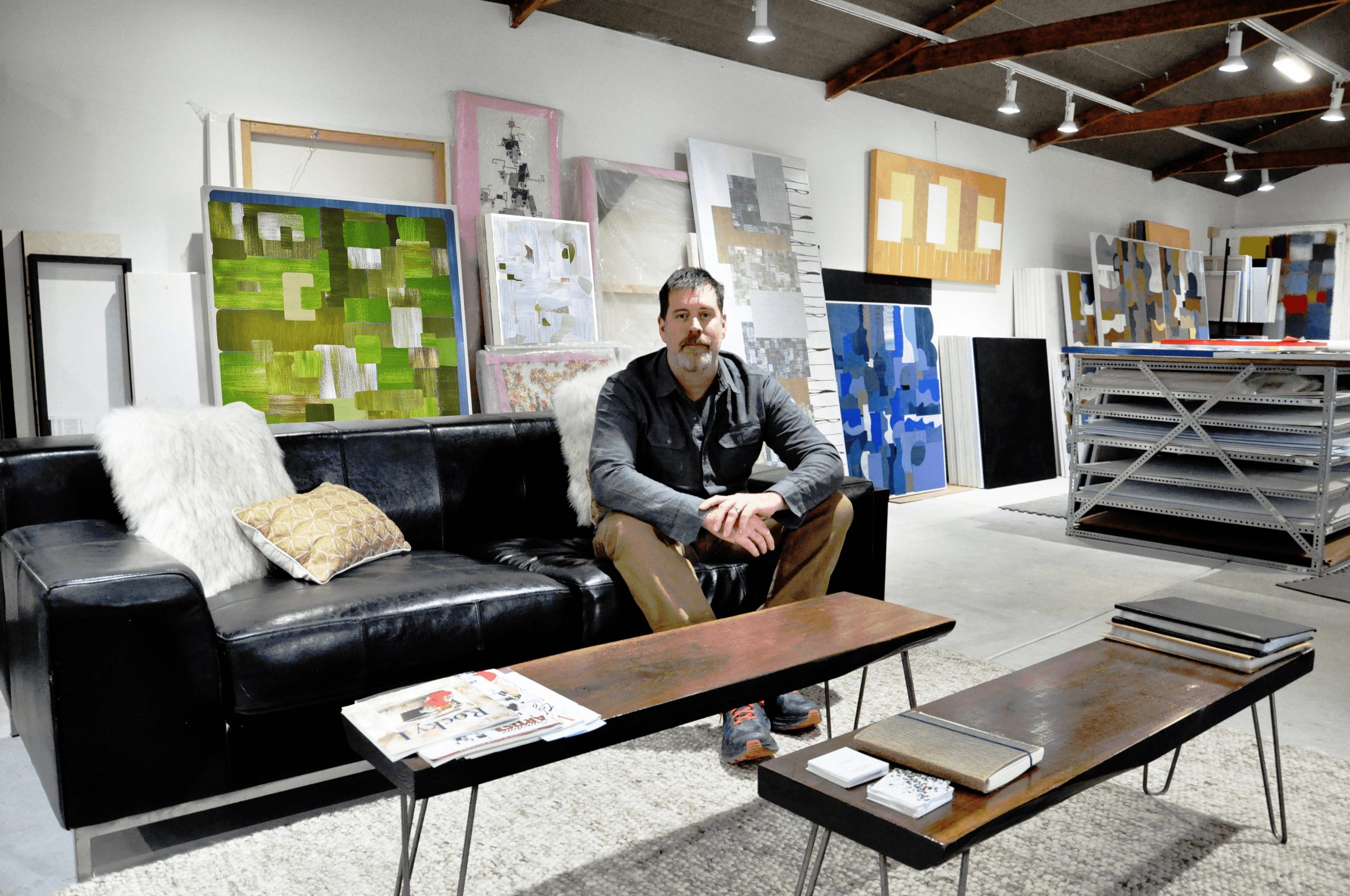
Today, we’d like to introduce you to Chris Wheeler.
Hi Chris, thanks for sharing your story with us. To start, maybe you can tell our readers some of your backstory.
I grew up in Philadelphia and stayed in the northeast until I graduated from St. Joseph’s University. Shortly after, I began to travel to Europe for months at a time. I spent most of my days in art museums and galleries, storing ideas and absorbing creativity. At the age of 26, I moved to Seattle, where I began painting and sculpting in a small studio.
I spent three years in the Northwest working various jobs and searching for my art form. When I moved to Asia, I found an art form that appealed to my creative side. I moved to Tainan City, Taiwan, where I lived for five years. While in Taiwan, I studied art, specifically Chinese landscape painting, and calligraphy, but more importantly, I learned how to mount works on paper for scrolls and shoji screens.
With this skill, I was able to stretch and manipulate paper in ways very few people can. Almost instantly, I began creating my own art using these techniques. I found my art form, and the discoveries I made in Tainan during those years made my future work possible.
I returned to Seattle in 2005 and immediately opened Nha Vuu Studio and Design with my wife. The studio restores works of art on paper for galleries, Asian antique dealers, and collectors from all over the country. I was one of the few people in the US able to do this kind of work.
During this time, I repaired and rebuilt dozens of shoji screens, some 200-300 years old. During this period, I began producing and selling Shoji screens of my own.
I’m sure it wasn’t obstacle-free, but would you say the journey has been fairly smooth so far?
My journey has been interesting, to say the least. I began this journey as a full-time artist just as the recession was hitting in 2008, and shortly afterward, my daughter was born. I knew that being an artist was going to be difficult, however the lessons that I have learned along the way were surprising.
I not only learned about time management, accounting, taxes, and general daily business practices but also the concept of working. Working until you complete a project and working under pressure and stress. I found that what would set me apart from other aspiring artists was my discipline, mental strength, and will to get up at 5:30 every morning, including weekends, and create in the studio. To work through ideas from beginning to end was the best way to progress in a series. Creating a large inventory of work was also a lesson not readily taught in art schools.
Getting my art career off the ground took a lot of time and mental strength, leaving me with little time for friendships and leisure activities. It has only been recently that I have reached a place in my career where I can take a little time to do other things. I’ve learned that one of the challenges as an artist is viewing one’s career as a marathon, not a sprint.
Milestones happen in a career once the person is ready for it to happen.
I appreciate you sharing that. What else should we know about what you do?
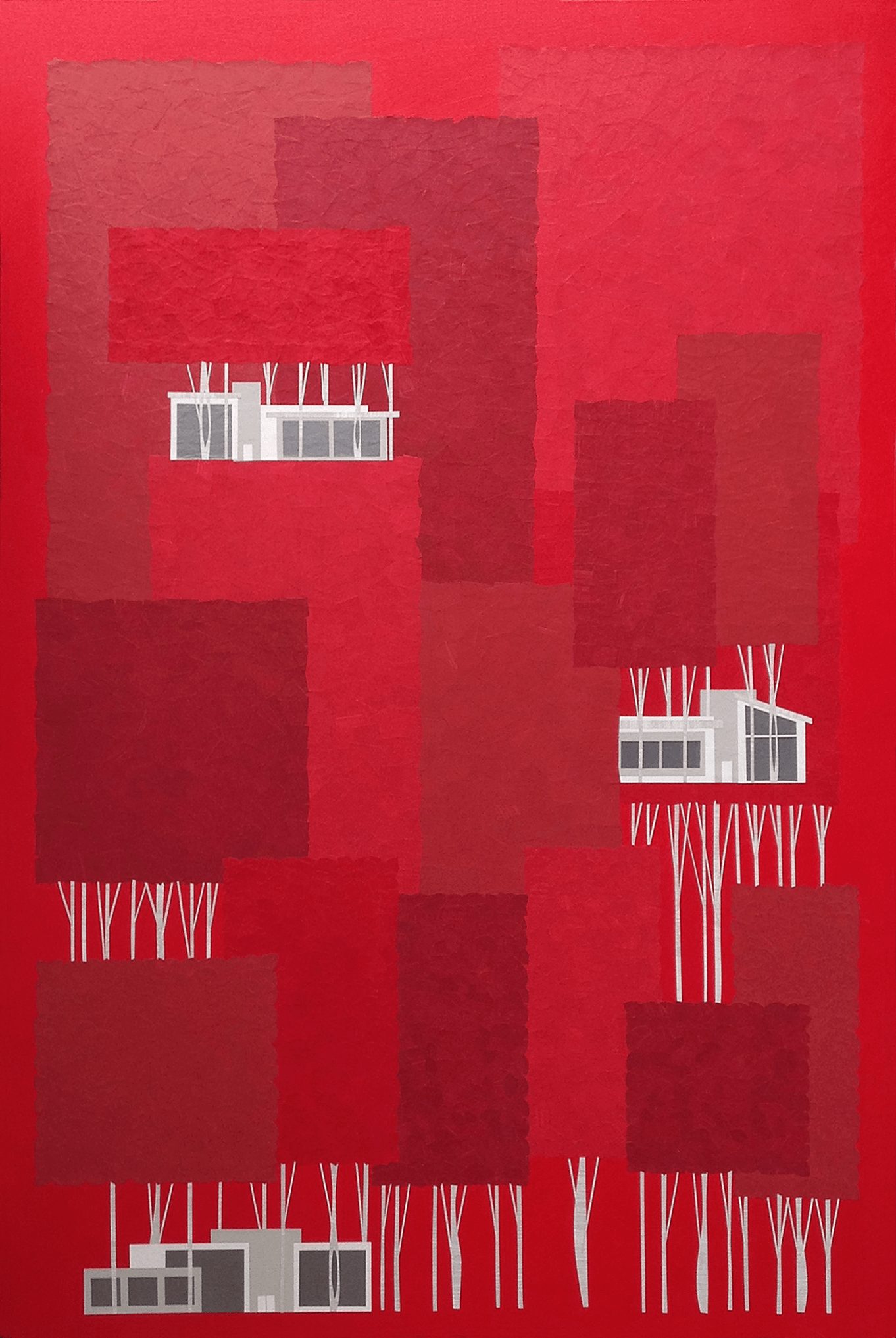
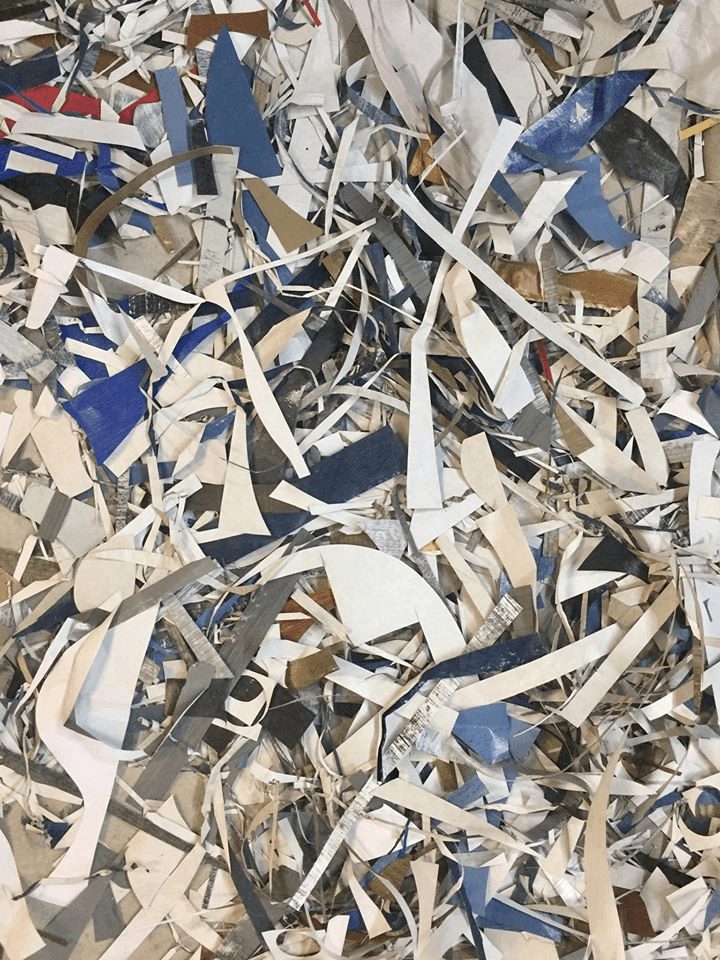
My studio name is Pergamena Fine Art, and pergamene means paper in Latin. I love working with paper and find its ability to stretch and manipulate it in many ways fascinating. When you pair different mediums with different papers, the texture, bleed, and look are infinite.
Paper is often overlooked as the preferred substrate in art. I started stretching my wife’s ink paintings and restoring antique shoji screens and scrolls, however realized that paper was the perfect medium for me. The edges of my collage are sharp and precise.
Since the glue I use is strained, the finish is clean and refined, which is not typical of other collage work.
What were you like growing up?
I grew up in a working-class neighborhood with a mailman as one neighbor and a nurse as the other. My father worked as a businessman in aviation, and my mother was a secretary. There were no artists or creatives in my family, so I was encouraged to take the practical route. I always knew that there was something missing; however, I didn’t know what it was or have the tools or environment to figure it out.
This led to teenage angst and many wasted years. In college, I had the opportunity to go to St. Joseph’s University in Philadelphia and took advantage of the free admission on Sundays at the Philadelphia Museum. That was when my mind was opened to the world of free thinking and the visual arts.
Pricing:
- My prints range from $65-$350
- My originals range from $750-$7200
Contact Info:
- Website: https://pergamenafineart.com/
- Instagram: https://www.instagram.com/chriswheeler99/
- Facebook: https://www.facebook.com/p/Pergamena-Fine-Art-Artists-Nha-Vuu-Chris-Wheeler-100061689105793/



Popular
-

The Trailblazers: Rewriting the Narrative
-

Celebrating the Spotlight: Kaytee Shashore Turns Milestones Into Momentum
-

Humanity in the Machine: Alexander Raye Pimentel’s Cyborg Recall Questions the Cost of a Data‑Driven World
-

Raemi Anderson on Courage, Caution, and Answering the Call of the Landscape
-

Hidden Gems: Local Businesses & Creatives You Should Know


