



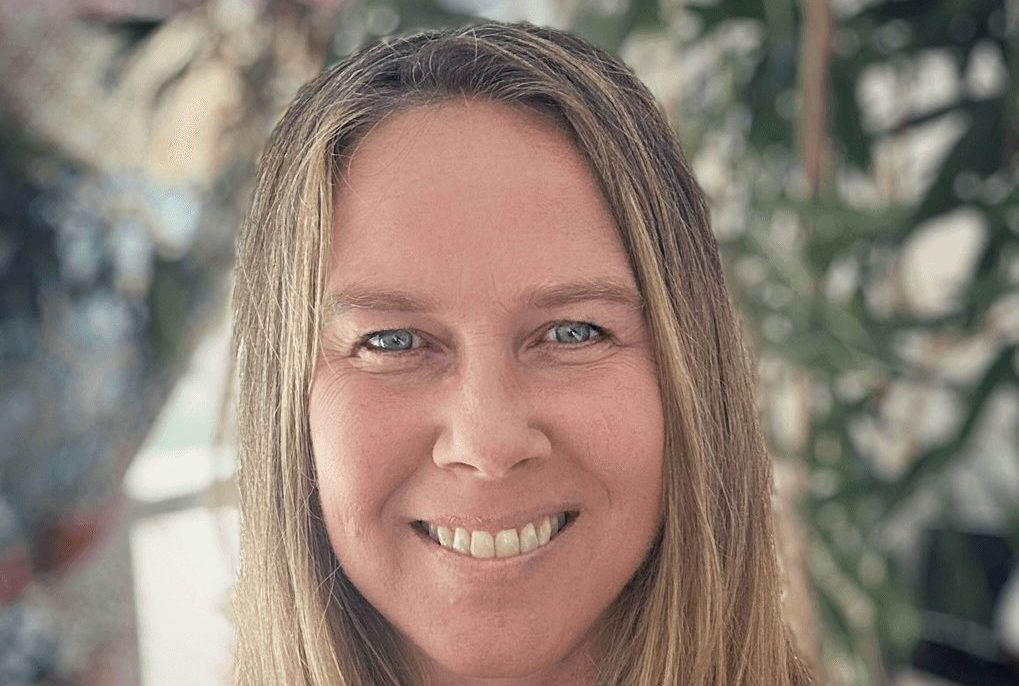
Today we’d like to introduce you to Rai Farrelly
Hi Rai, thanks for joining us today. We’d love for you to start by introducing yourself.
I love sharing my story because it always reminds me how many paths we can choose in life and how fortunate we are when those paths not only intersect, but align. From a very young age, I loved learning and telling stories. My love for both led me on an educational path toward my current career as a teacher educator. I prepare teachers of English as an additional language who want to work with learners of all ages in the U.S. and abroad. Along the way, during my doctoral studies, I had the rich experience of teaching newcomers from Burundi in an adult education program in Utah. Prior to that opportunity, I had primarily taught academic English in a university setting. Suddenly, I found myself teaching this amazing group of women who, due to war in their country, had experienced interruptions to their formal schooling and thus had no chance to develop print literacy in any language. I found myself stumped about how to prepare them to read and write in a language they didn’t yet speak. I had a lot of learning and unlearning to do in order to best support them.
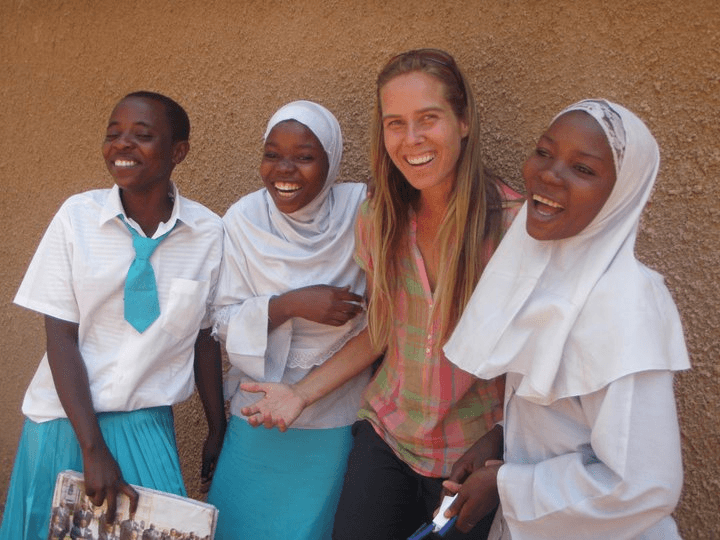
These women had all lived in a refugee camp in Tanzania for over two decades prior to being resettled in the U.S. Serendipitously, at that same time a young man from Tanzania had befriended my close friends in Salt Lake City and shared with them that he was launching a nonprofit in Kigoma, Tanzania – not far from the camp in Kasulu where these women had lived. After a few conversations with him, I found myself booking a trip to Kigoma to volunteer with his nonprofit, with the aim of learning about this region and visiting the refugee camp. It was a remarkable trip during which I not only visited the camp, but met some of my students’ relatives. I was able to bring photos and letters from them directly.
During my seven weeks in Kigoma, I began learning the culture and the language – Swahili. I also learned about the problematic nature of the educational system in Tanzania, particularly its impact on those living in remote regions of the country. At the same time, I developed some deep and beautiful relationships with individuals in the village where I was living. One of the most important relationships was with a young man named Lucas Lameck, who was designated as my cultural guide, travel companion, and interpreter. To make a very long story short, I returned a year later in 2009 to visit Lucas and several young people I had started to support with fees for secondary school. On that trip, Lucas and I visited the leader of a neighboring village who we met the year prior. I discovered that the founder of the nonprofit I volunteered for had not followed up on a commitment to build two additional classrooms for their primary school, as he had promised the year before. I offered to raise money and see if I could help. This wise leader kindly rejected my offer, saying that the Jane Goodall Institute Italia was going to complete that work, however, they’d like me to build a secondary school in their village. For whatever reason, I didn’t balk at the idea. Lucas and I conferred for a day and suddenly, we had come up with a name for a new nonprofit and a plan for constructing a 16-room secondary school. The village government donated a generous plot of land in the village and I returned home to raise money. Our nonprofit, Project Wezesha was born and a few years later, we were celebrating the opening of Amahoro Secondary School.
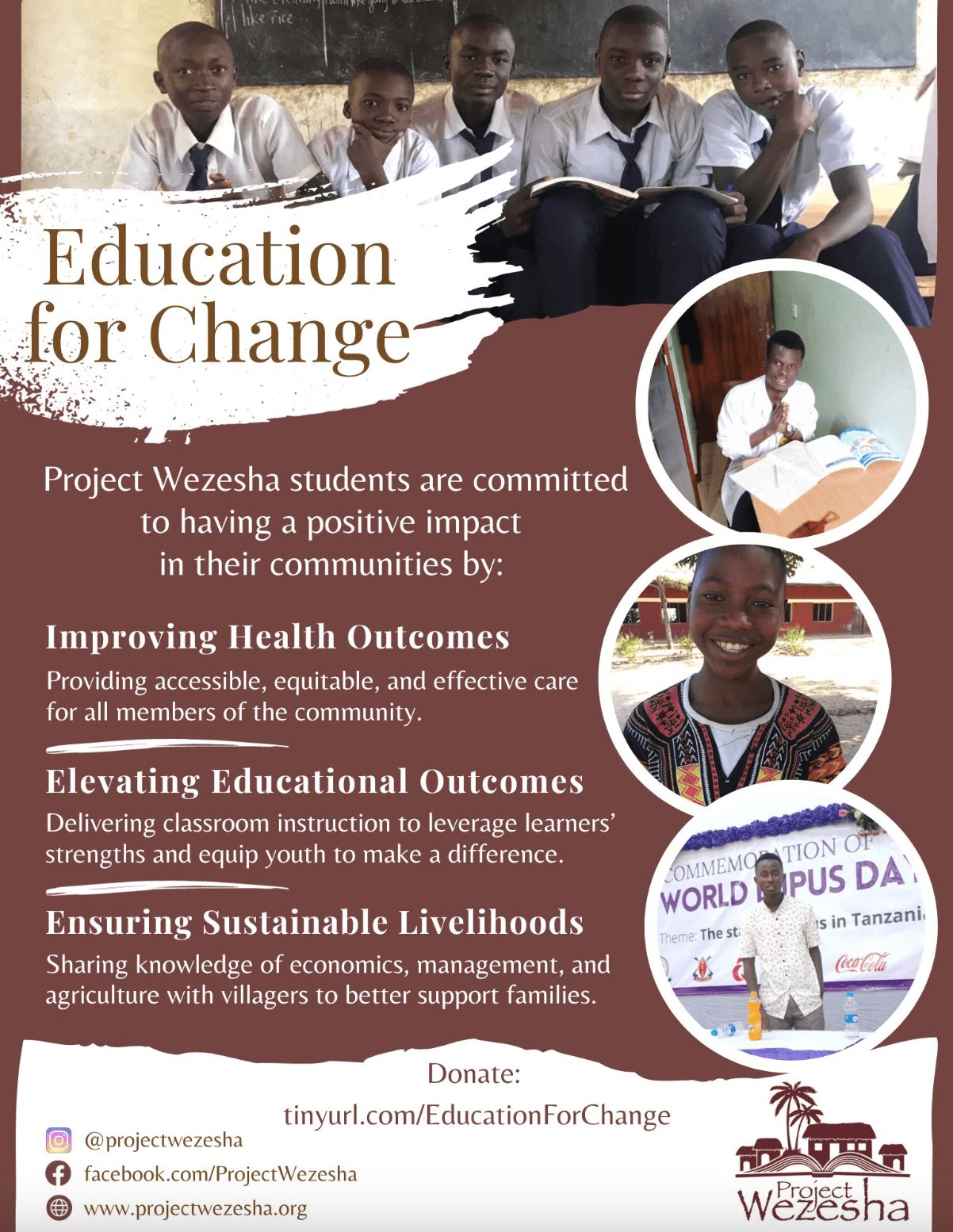
During the time between 2009 and now, Project Wezesha has supported numerous students through scholarships to attend secondary school, high school, vocational training, diploma programs, and university. Our graduates include teachers, nurses, doctors, pharmacists, entrepreneurs, electricians, mechanics, and more! To sustain Amahoro Secondary School, we have contributed desks, chairs, latrines, water tanks, STEM labs, solar panels, printers, and laptops. These enhancements have resulted in this village school ranking in the top 5 of all secondary schools in the entire region year after year! We also implemented academic study camps twice a year to bolster student learning and address gaps we identified that seemed to be impeding learners’ success on national exams. That’s how we ended up with so many university-bound students.
Alright, so let’s dig a little deeper into the story – has it been an easy path overall and if not, what were the challenges you’ve had to overcome?
It has not been a smooth road by any means, and yet – when I think of all we’ve accomplished based on a blue sky idea, I suppose we’ve experienced more flow overall than not. Some of the early challenges were related to my own learning and again, unlearning. I was (and still am) an eager and ambitious American from the U.S. who had certain notions about how (quickly) things could be done. I had to learn how to navigate systems in Tanzania and reset my expectations about the implementation of plans. I look back now and smile at that naïve bright-eyed version of myself because she got stuff done, but she got frustrated more than a few times. Over the years, I leaned heavily on my partner Lucas. He guided me in learning to let go when the men in the village wouldn’t show up as promised to help with certain aspects of the school build. He advised me when I couldn’t grasp the resistance of parents to educating their daughters. He taught me how to sit and listen for long periods of time to stories that could have been told in ten minutes. Fifteen years later, I walk slower, I listen more deeply, and I celebrate every small accomplishment on the paths to our various end goals.
Fundraising and nonprofit. management have also been challenging over the years. When we co-founded Project Wezesha, I was living in Salt Lake City, Utah. I was completing my PhD in linguistics and Project Wezesha was a passion project. In Salt Lake, I had a huge community of support and it seemed “easy” to rally individuals around our cause. However, since 2013, I lived in Armenia for two years and Vermont for four. I moved to Colorado to teach at the University of Colorado Boulder in 2019. For better or worse, fundraising often depends on your immediate community of support – friends, family, and those connected to your inner circle. Now that I am far from my inner circle, it has become difficult to do things like gather items for a silent auction, find someone to donate a space for a fundraiser, tap into a circle of musicians who would like to donate time and talent, and simply ask for money. In the current moment, there are so many issues on the minds of folks in the U.S. including racial injustice, climate change, immigration, the economy, and various global conflicts. Previously, my storytelling compelled the people that knew me well to invest in Project Wezesha, but now it’s hard to tell stories that resonate deeply enough to generate support for young people so far away – in a land largely unfamiliar to the individuals I reach through social media.
I wouldn’t change a thing, though. One of the young men we support, Hamisi, is in year three of a surgical program. When he sends me photos of himself in scrubs from the operating room where he just learned how to reset and repair a broken bone, I can only smile and know it is all worth it! As cliché as it is to say, the ripple effect of the small drop in the bucket that we’re adding is real. There’s a lovely Quechuan tale about a hummingbird doing her best to put out a forest fire one drop at a time. When the other animals tell her she’s too small to make a difference, she replies “I’m doing the best I can.” I channel the hummingbird often!
Alright, so let’s switch gears a bit and talk business. What should we know about your work?
To complete the circle of this story, my experiences in Tanzania back in 2008 shaped my future as a professional in linguistics and language education. My work with that original group of women from Burundi launched me onto a path of developing expertise in teaching adult emergent readers with refugee backgrounds. This required learning more about early literacy instruction, but with the added care and awareness needed to teach adult learners. A small international community was growing in this field, contributing research to inform assessment, materials design, and classroom instruction that would meet the needs of this population while honoring their lived experiences and life goals. I became involved with a young association – Literacy Education and Second Language Learning for Adults (LESLLA, www.leslla.org) – and committed myself as a scholar dedicated to supporting teachers in the adventure of learning how to best support these adult learners. I have published and presented extensively in an effort to have a positive impact on the experiences of learners and their teachers. Over the years, my life has been enriched by the opportunity to teach English to adults from Somalia, Burundi, Rwanda, Sudan, the Democratic Republic of the Congo, Afghanistan, Pakistan, Burma, Mexico, El Salvador, and other countries affected by internal conflict and war. Thanks to social media, I am still in touch with many of my students, including one of the first Burundian women I taught in Utah, whose brother I visited in the camp in 2008!
Locally, I’m a professor in the Department of Linguistics at the University of Colorado Boulder. I’m also the director of the TESOL (Teaching English to Speakers of Other Languages) program where I prepare teachers who plan to work with refugee and immigrant background learners in Colorado schools and community-based programs, or who plan to travel and teach English abroad. Through the teaching practicum I supervise at CU Boulder, my students work with young learners at University Hill Elementary, a Spanish-English dual immersion school. They also work with adult employees at CU who come from a range of countries with interrupted schooling experiences. We also engage virtually with multilingual English learners around the world – most recently in Peru, Indonesia and Russia. I was recently awarded a position as an English Language Specialist with the U.S. State Department to collaborate with teachers in Ukraine through December 2024. I’m planning to build a virtual exchange between my CU undergraduates and the learners of the Ukrainian teachers. On a statewide level, I am working with the Colorado Department of Education to develop online courses for instructors completing a certificate required by of adult educators. These teachers work in the various amazing adult education programs offered across our state, offering classes to develop English language, literacy, academic, and workplace skills.
I think educators often underestimate their impact. I know I do. But every once in a while, a former student contacts me from the path they’re on to extend their gratitude for what they learned with me. They reflect on a teaching moment we shared or a reading from my class or an experience during their practicum, noting how it’s shaped the way they connect with learners in and out of class, as well as how they show up as professionals in the field. That feedback keeps me grounded and helps me recognize that what I do matters.
One thing that sets me apart from others is that I’ve always been a blue skies thinker and I don’t sit well with “not possible”. I know what’s possible because I said “yes” to the request of a leader in a remote village in Tanzania, and the next thing you know – a school, a scholarship program, and a career were born. I operate this way in most areas of my life and as a result, I tend to get things done – even in the face of resistance and barriers. I hope to inspire others to harness their inner hummingbird and keep doing the best they can in the pursuit of making the world a little better.
In terms of your work and the industry, what are some of the changes you are expecting to see over the next five to ten years?
When thinking of the work of our Tanzania-based nonprofit, Project Wezesha, I’m hopeful that we can continue to support the students in our scholarship program and make our contribution to the advancement of science, medicine, technology, and education in the Kigoma region. I know we’ll have to make some key shifts in terms of how we increase and sustain funding for our work, and that will require me to cultivate new relationships in Colorado and explore grant opportunities that target the specific work we do. We’ll have to be nimble and responsive to trends related to international nonprofit management and what works in this precarious world, but we’re up for it!
In terms of my work as a teacher educator, I’m grappling with an important trend in the field of teaching English as an additional language – namely, that of incorporating a greater ethic of care in our work. English, as a lingua franca, is a language of access, mobility, education, and power. However, it is also a colonial language that is responsible for the displacement of many heritage and Indigenous languages. I have increasingly been focusing on integrating anti-racist, culturally sustaining, and trauma informed pedagogies into my teacher education courses. I am striving to raise teachers’ awareness about our responsibility to maintain and cultivate home language use in classrooms, communities, and homes. I am working with the ideas of thought leaders whose scholarly work on raciolinguistics, translanguaging, and other key areas has paved the way for us to do better as we honor the various ways of knowing and rich linguistic repertoires of multilingual learners.
This summer, I’ll be co-leading a Global Seminar to Teotitlán del Valle (Oaxaca), Mexico with my colleague Professor Ambrocio Gutierrez Lorenzo through CU’s Education Abroad program. This seminar will integrate his expertise as a linguist specializing in the revitalization of endangered languages and my expertise as a language teacher educator and materials designer. As a Zapotec speaker, Prof. Gutierrez will be guiding us as we learn about the status of Zapotec in the region. Our students will work closely with members of the Zapotec speech community in Teotitlán to identify the needs and goals of the community related to language use and documentation. Then we’ll collaboratively create a resource hub of materials that can be accessed by the community for use in teaching and learning Zapotec, particularly with young learners who are only learning Spanish. There is no way to offset the impact of Spanish and English on Indigenous languages, but again – like the hummingbird – we’re making our small contribution and hoping that with that little drop, we’ll see a big ripple effect.
Contact Info:
- Website: https://www.colorado.edu/linguistics/rai-farrelly
- Instagram: https://www.instagram.com/projectwezesha/
- Facebook: https://www.facebook.com/ProjectWezesha



Popular
-

The Trailblazers: Rewriting the Narrative
-

Celebrating the Spotlight: Kaytee Shashore Turns Milestones Into Momentum
-
Humanity in the Machine: Alexander Raye Pimentel’s Cyborg Recall Questions the Cost of a Data‑Driven World
-
Raemi Anderson on Courage, Caution, and Answering the Call of the Landscape
-

Hidden Gems: Local Businesses & Creatives You Should Know


