




Today we’d like to introduce you to Tony Domenick
Hi Tony, so excited to have you with us today. What can you tell us about your story?
Getting started in music goes all the way back to being a little kid and listening to my mom & dad play trumpet & saxophone duets together. I started playing saxophone as a 5th grader and just loved the feeling of blowing into the horn and creating music with other kids. I got hooked on music young and never wanted to stop—from sax to trombone to piano to singing, i loved it all.
Went to college to study classical singing, played in lots of funk-rock bands simultaneously, graduated and started the gig life: singing a choir concert here, teaching a one-on-one music lesson there, playing piano for late-night improv shows all over the place, and working as a church musician.
After getting married, i got anxious about having a more steady paycheck and took a job as a middle school music teacher—i don’t want to call it a ‘mistake,’ because it taught me valuable lessons about myself, but it was a rough gig. I wasn’t ready to manage classrooms full of 40 singing eleven-year-olds. It made me want to quit music forever.
I looked into other career paths that all depressed me, and finally, thanks to the intercession of family and friends, i got back on track and started my own music business—more on purpose than ever before. Tonic Dominant Music balances a large music lesson studio with a recording & mixing studio with all sorts of musical creation projects with different collaborators.
Basically i went back to the gig life, but i work better hours and ask for better pay!
Would you say it’s been a smooth road, and if not what are some of the biggest challenges you’ve faced along the way?
Nope, definitely not smooth, ha! Right out of college, i definitely fell prey to the mentality of “Take every gig, even the ones that pay nothing!” Music, like most artistic businesses, can feel like such a privilege to be able to do. Whether that attitude came from cultural narratives or my own anxiety demons, it led me to accept too little money and spend too much time on lots of projects that i wasn’t even sure i wanted to be a part of.
It took such a long time to develop a reliable system to evaluate gig opportunities—now i compare based on time, money, travel, and most importantly, a deep desire to do that particular work. Gigs involving audio engineering rank especially high for me now, since it’s my newest skill and really excites me.
I also spent a lot of time dreaming about big projects: writing musicals & operas, symphonies, concept albums, but very little time developing the disciplined routine required to actually finish big projects like that. I had to do a lot of personal mental work to convince myself that working on a large artistic vision would be worth it, even if it didn’t make me lots of money.
Honestly, i’m still working on that mindset, orienting my work towards the soothing pleasure & beauty music gives to all who listen, no matter how large or small that group of listeners. “Done” is truly better than “perfect.”
As i got more picky about accepting gigs, it became easier to carve out time to work slowly and steadily on these big projects, and i’m pleased to have recorded & released a Winnie the Pooh audio book in the last year—it required a lot of planning, consistent scheduling, and editing. I’ve also finished musical tracks for children’s choirs, podcasts, other musical collaborators, and my very own improvised “meditation no. 1,” available for your listening pleasure on my website.
Having finished some big projects, i get excited about what i can accomplish next—and that is exactly one of the dangerous struggles, letting my mind reach for too many big ideas at once. Breathing deeply, thinking slowly, and talking over ideas with other folks in my creative life keeps me working steadily & sanely.
Thanks for sharing that. So, maybe next you can tell us a bit more about your work?
I make music. That’s the simplest way to say that i am a singer, piano player, songwriter, teacher & coach, recording & mixing engineer, and music director.
I specialize in teaching people to sing—i’ve taught over 100 folks in person & online one-on-one lessons, some of whom started out thinking they were tone deaf, and every student is able to sing in tune. It really only takes one lesson to prove to folks that they can sing!
I’m known for sprinkling philosophical thinking into the teaching process. There’s a lot of cultural pressure to sing in order to impress someone. Pressure to sound like your favorite recording of your favorite singer, pressure to be like some other voice. But your body, and therefore your voice, are unique! You have to get comfortable with your own individual sound, your own body, your own instrument, in order to sing easily.
Furthermore, singing doesn’t have to be “impressive” to be beautiful & cathartic. You don’t have to sing super high notes or really fast runs to be a “good” singer. Good singing is easy & painless for the singer—that’s how i define it (and yes, you can get brutal metal screams easily & painlessly, too). Singing is a powerful way to calm yourself, to have fun, to feel emotions that can’t be spoken, to bond with other humans by singing together. None of that needs to be “impressive” in order to be powerful and worthy of your time.
What sets me apart? Radical patience, which unlocks infinite possibility for students. Some students say to me, “I don’t want to waste your time,” and i reply, “That’s not possible, i’m focused on helping you sing—it requires time, it’s fun & meditative to listen to the same part of a song over and over.”
This deep well of patience helps me collaborate with other musicians, too. I care about all of the artists involved in a project feeling proud and confident about our work. I recently mixed & mastered a song called “Be Free” by Tori Joy, and it was indeed joyful to send recordings back and forth, get feedback, and really take our time to create a beautiful audio experience for folks to meditate with and listen to.
I’m proud of offering all of my teaching, performing, mixing & mastering services on a sliding scale from $35 – $100 per hour. Sometimes we go lower, sometimes higher, we’ll just talk with each other about what’s possible for our budgets and what we’re comfortable with, which builds a lot of trust between us super quickly. I love the access this provides for many folks who wouldn’t otherwise consider taking music lessons or making a high fidelity audio recording. Again, i’m all about mixing philosophy with making music.
Do you have any advice for those just starting out?
I wish i knew more about accounting when i started out—running a business includes the fun, sexy stuff you share with people as well as the less fun building of spreadsheets and budgets. Even more than that though, i wish i had a philosophical understanding about economics, especially worker cooperatives & socialism, so that i could’ve started advocating for sliding scales and artistic partnerships that share profit equitably right from the beginning.
Here’s my advice for anyone planning to create music for both joy & profit: skip getting any kind of 4 year college degree that costs tens of thousands of dollars every year. I did receive lots of great instruction about singing in my college education, but it was still incomplete—i wasn’t encouraged to experiment with my voice, to dig into other ways of singing like belting, distorted screaming, and beyond. And there was no business training whatsoever, meaning i graduated and suddenly realized i had no plan for how to pay rent & buy food. I scrambled to find teaching work, and hadn’t been trained well as a teacher, either! I was a beautiful singing monkey, just barely able to take care of myself.
If you want to make art freely, you probably need a comfortable support network—you have to have friends and family, or your own savings, or a job that doesn’t drain you too much to keep paying rent while you improve your skills and learn what you want to play & sing that satisfies both your internal creative impulse and nourishes the people who listen.
I had this kind of network forever, but i didn’t ask them for help or allow them to help me until very recently. It’s been a game changer to be able to risk spending time on projects that might not make much money in order to learn new skills (recording audio books falls into this category).
So find teachers you vibe with, learn to manage money, ask for help, and take your time. If what you want to create nourishes you, it will most likely nourish other humans too—make that music come to life.
Pricing:
- Music Lessons—$35 – $100 per hour
- Recording, Mixing, Mastering—sliding scale OR profit sharing
- Audio Book Narration—sliding scale OR profit sharing
- Music Creation (for podcasts, videos, etc.)—$100 – $300 per project
Contact Info:
- Website: https://www.tuneinwithtony.com/
- Instagram: https://www.instagram.com/tonicdominantmusic/
- Youtube: https://www.youtube.com/@tonicdominantmusic
- Other: https://tonicdominantmusic.bandcamp.com/album/meditations
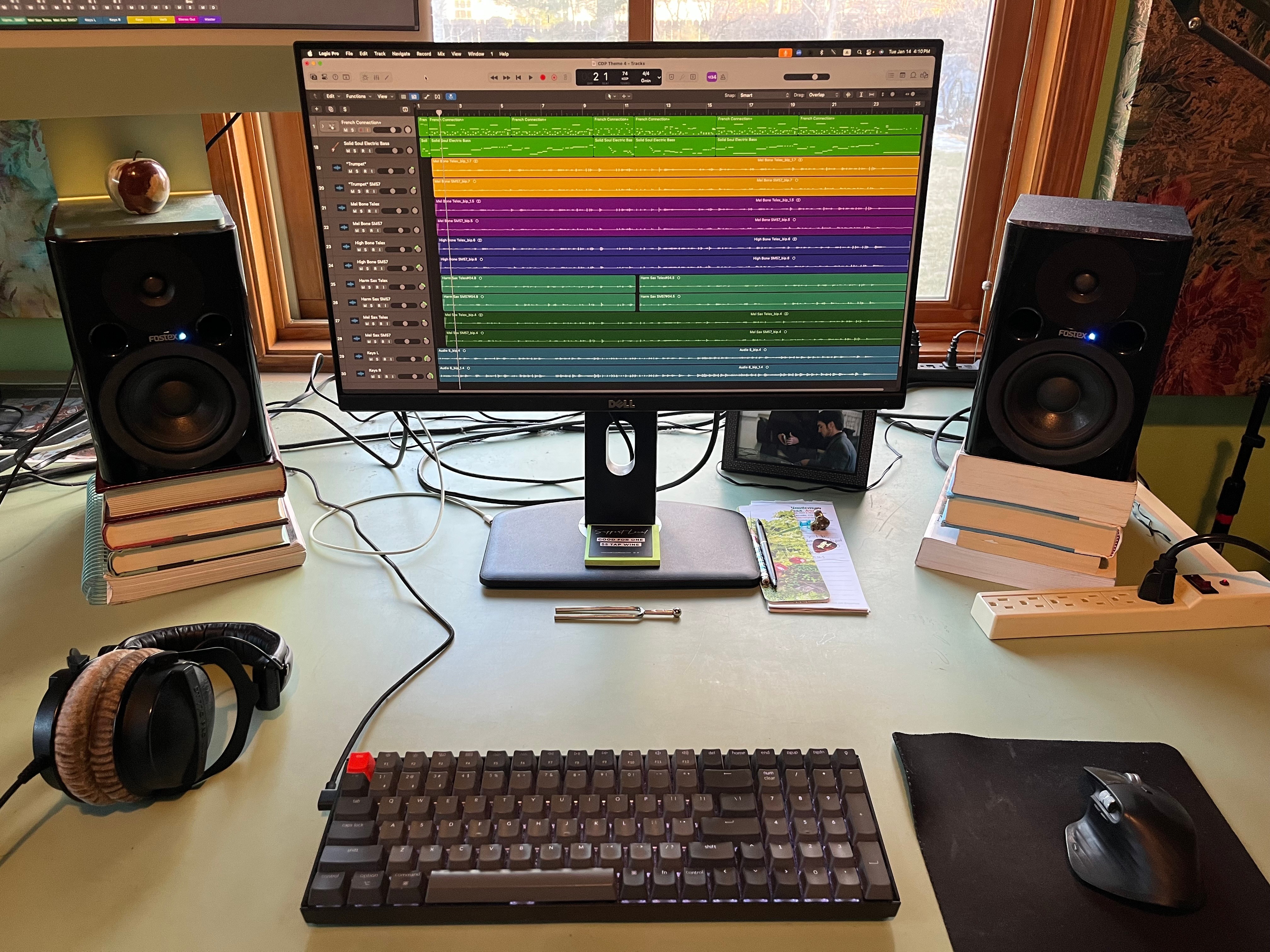
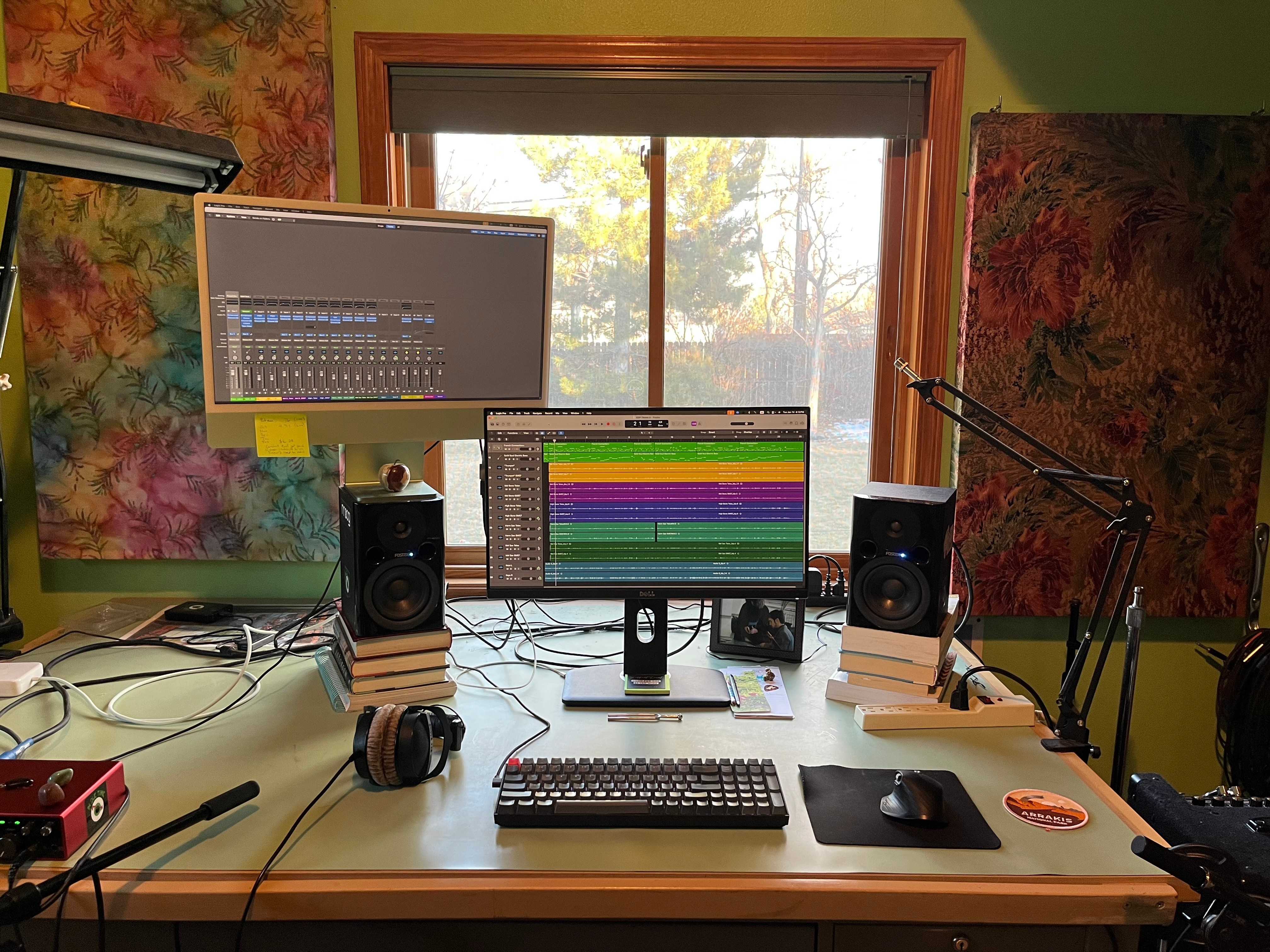


Image Credits
Head shot by Courtney Huffman
Popular
-

The Trailblazers: Rewriting the Narrative
-

Celebrating the Spotlight: Kaytee Shashore Turns Milestones Into Momentum
-

Humanity in the Machine: Alexander Raye Pimentel’s Cyborg Recall Questions the Cost of a Data‑Driven World
-

Raemi Anderson on Courage, Caution, and Answering the Call of the Landscape
-

Hidden Gems: Local Businesses & Creatives You Should Know


