



Today we’d like to introduce you to Meredith Velasquez.
Meredith, we appreciate you taking the time to share your story with us today. Where does your story begin?
The Juvenile Assessment Center (JAC) opened in the year 2000 to work with youth who had come into contact with law enforcement. Until that time, youth were being detained without proper screening and placed in services with no assessment to drive a reason for resources. That is our Law Enforcement Program (LEP) which still operates today and is a much needed asset to the community. Shortly after we opened, we realized there was a need for prevention services. We wanted youth to get access to services and supports prior to being involved in any system (child welfare, juvenile justice) or being arrested by police. So we became a non profit to start a prevention arm at the JAC to what is now known as the Community Assessment Program (CAP).
We provide assessments at no cost to school-aged youth and their caregivers to determine the most appropriate resources, and help connect them to accessible and supportive services in the community. Appointments are scheduled at their convenience with community-based locations in Centennial and Aurora, serving families living in Arapahoe, Douglas, Elbert, and Lincoln Counties. We have a team of 10 licensed clinicians (or seeking licensure) who work at multiple locations in the large area we serve. Our service area includes 2 counties and two judicial districts. We serve 11 school districts and over 17 municipalities. We also have a bilingual family liaison who provides so much more than interpretation for Spanish speaking families, and helps a lot with translation and care coordination.
Assessments are completed by Behavioral Health Clinicians with a holistic focus on all needs including mental health, substance use, education, family dynamics, community connections, etc. Helpful services can include therapy/counseling, mentorship, group support, alternative education opportunities, substance use programming, and so much more. The assessment process itself takes around 2-3 hours ensuring youth and caregivers have the time and space to fully express their concerns.
We work closely with schools, professionals, and other agencies in the community to create a collaborative care model and help navigate all systems. Last year, the JAC as a whole served around 1400 youth, and about 950 of those came through our prevention programming. We measure outcomes, illicit feedback from clients and partners, and track engagement rates through care coordination and follow up. Families and partners value the information we obtain through our assessment, our collaboration efforts to help the family, and feel heard after visiting us. They express feelings of hope and understanding for what is going on in their life and typical engagement rates for supports provided are usually over 80%, meaning they are better off then when they came to us.
I started my career at the JAC working on the LEP while obtaining my Masters Degree in Social Work. Luckily, the prevention arm was growing after I graduated, and I have spent the better part of my career developing the Community Assessment Program, and continuously trying to improve the support and supervision I provide to the clinicians who do the hard work daily, maintain partnerships, and make sure our prevention work stays relevant and accommodates the needs of our ever changing populations, climate, access, and circumstance.
Can you talk to us a bit about the challenges and lessons you’ve learned along the way. Looking back would you say it’s been easy or smooth in retrospect?
We have lived and learned. There have been multiple obstacles when our Director and I set out to develop this program. Because we are a non profit, funding is a struggle to always secure, every grant cycle. We want to maintain programming and grow capacity, when grantors often want to always develop new programming and new ventures. Our partners helped us identify that assessment IS the need, and what we do is extremely valuable, so we go where we are supported for funding.
There have been times when certain positions were funded and placed in school districts, pulling our clinicians and our work in ways that did not stay true to our process and the value we put in assessment. We believe that if clients receive a thorough and appropriate assessment as early as possible, they will not experience the system fatigue that so many other youth or families go through when trying to get help, being sent around for multiple services, duplicating things that don’t address the underlying cause of what is going on. So, there are times our partners (courts, schools, child welfare, etc.) push back on implementing what they think a family needs. Our role remains to stay neutral and work effectively with what the family is able and willing to access.
Our landscape continuously changes with legislation, political climate, funding, ever changing systems, resources, etc. It is a large part of our job to keep up with these things as many agencies provide referrals for youth to things that may not even exist anymore, creating another barrier for the family. In everything, we want to remain neutral in support of what the family needs, considering all the collateral and assessment information to guide us, we don’t want to be guided by a funding stream or stakeholder.
Can you tell our readers more about what you do and what you think sets you apart from others?
Our assessment center is one of the only assessment centers in the state and across the country that operates a nonprofit and has a prevention program. This allows us to access diversified funding. We are also one of few clinical prevention programs that is at no cost to youth and families, the only one in the state of Colorado. Other centers are starting to open up the law enforcement process or work with schools in preventative ways, just not to the level of our program. We pride our work in constantly evaluating our process, the assessment, the values we hold, the questions we ask, where we present our faces in different spaces (volunteering, resource fairs, career fairs, community meetings, problem solving meetings, school meetings, etc.). We individualize the process as much as possible for each family while keeping the integrity of the program and what we do at the heart of everything. We prioritize relationships with partners and the community we serve by meeting with them face to face, in their space, and sharing as much information as possible to help these families.
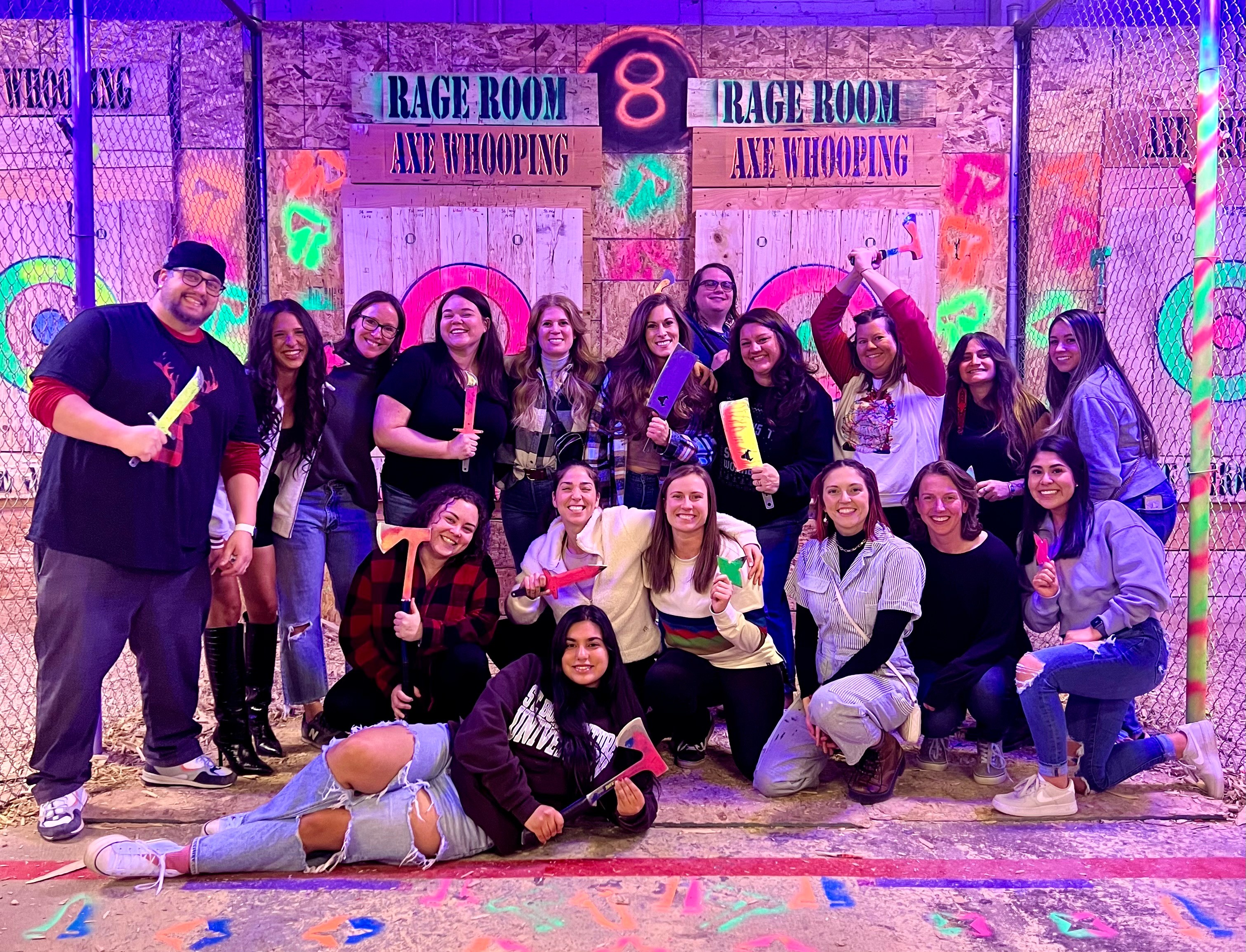
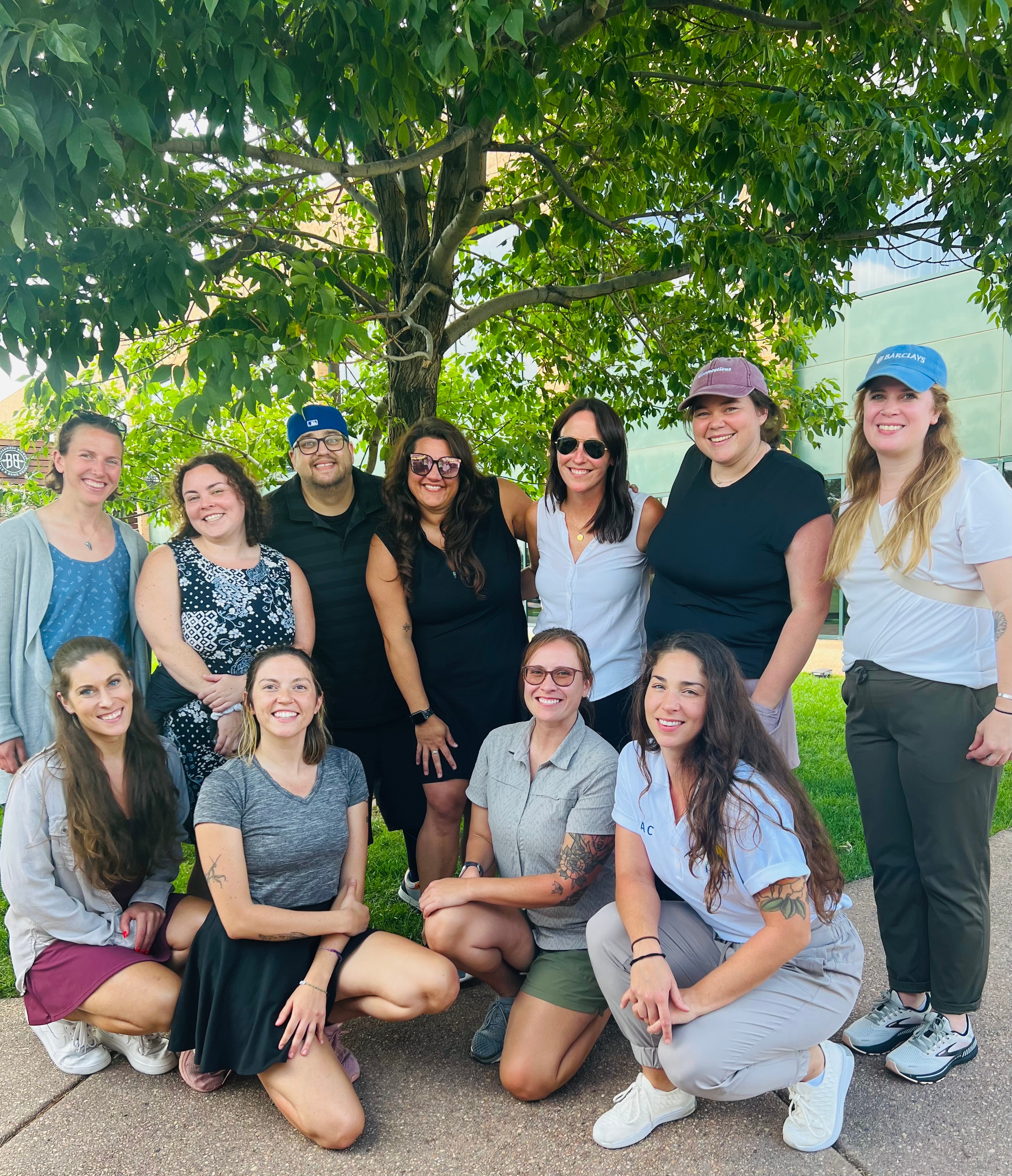
You will not find a more diverse and cohesive team than ours. We find time together in different spaces of our community, reflecting on how our work changes with or because of different things- experiencing art, culture, third spaces, community gatherings- and we value that each member brings a unique perspective to what we do. Our clinicians have the flexibility, encouragement, and freedom to seek out aspects of this field (social work, mental health, non profit, behavioral health, criminal justice) that are intriguing to them. We love learning from one another and with one another. As the Community Assessment Program Director, I am still seeking knowledge from my team, the community, partners, and our Executive Director daily. We discuss and practice self care in all of our work and personal lives, finding things that fill our cup, and not just typical days off and bubble baths, but making sure our agency aligns with your own professional values and what you want in a team.
Are there any books, apps, podcasts or blogs that help you do your best?
Oh so many!
– Research on the HOPE Framework from Tufts University and Positive Childhood Experiences
– Podcasts from CTRJJ – Center for Trauma Recovery and Juvenile Justice
– The National Assessment Center Association (our previous executive director who started a national association based off our model).
– Books: “What My Bones Know” “My Grandmother’s Hands” “Breath” “Real Self Care”
– Office Of Juvenile Justice Delinquency and Preventions (OJJDP) and Community Assessment Centers
– Podcasts from the National Criminal Justice Association
– Books and blogs from The Trauma Stewardship
– Books “Unreasonable Hospitality” and Anthony Bourdain’s “Kitchen Confidential”- I am married to a chef and also worked in restaurants for 12 years. There are so many translatable skills and concepts when working with people.
– I love Brene Brown and Jay Shetti, no matter how much flack they get.
Pricing:
- No Cost
- FREE
Contact Info:
- Website: https://thejac.org/
- Instagram: https://www.instagram.com/juvenileassessmentcenter
- Facebook: https://www.facebook.com/JuvenileAssessmentCenter/
- LinkedIn: https://www.linkedin.com/company/juvenile-assessment-center-centennial-colorado/
- Other: https://1jdj.betterworld.org/
- Other: https://mtyc.co/z4i2ig
- Other: https://sites.google.com/view/cap-community-connector/home?authuser=0





Popular
-

The Trailblazers: Rewriting the Narrative
-

Celebrating the Spotlight: Kaytee Shashore Turns Milestones Into Momentum
-

Humanity in the Machine: Alexander Raye Pimentel’s Cyborg Recall Questions the Cost of a Data‑Driven World
-

Raemi Anderson on Courage, Caution, and Answering the Call of the Landscape
-

Hidden Gems: Local Businesses & Creatives You Should Know


