



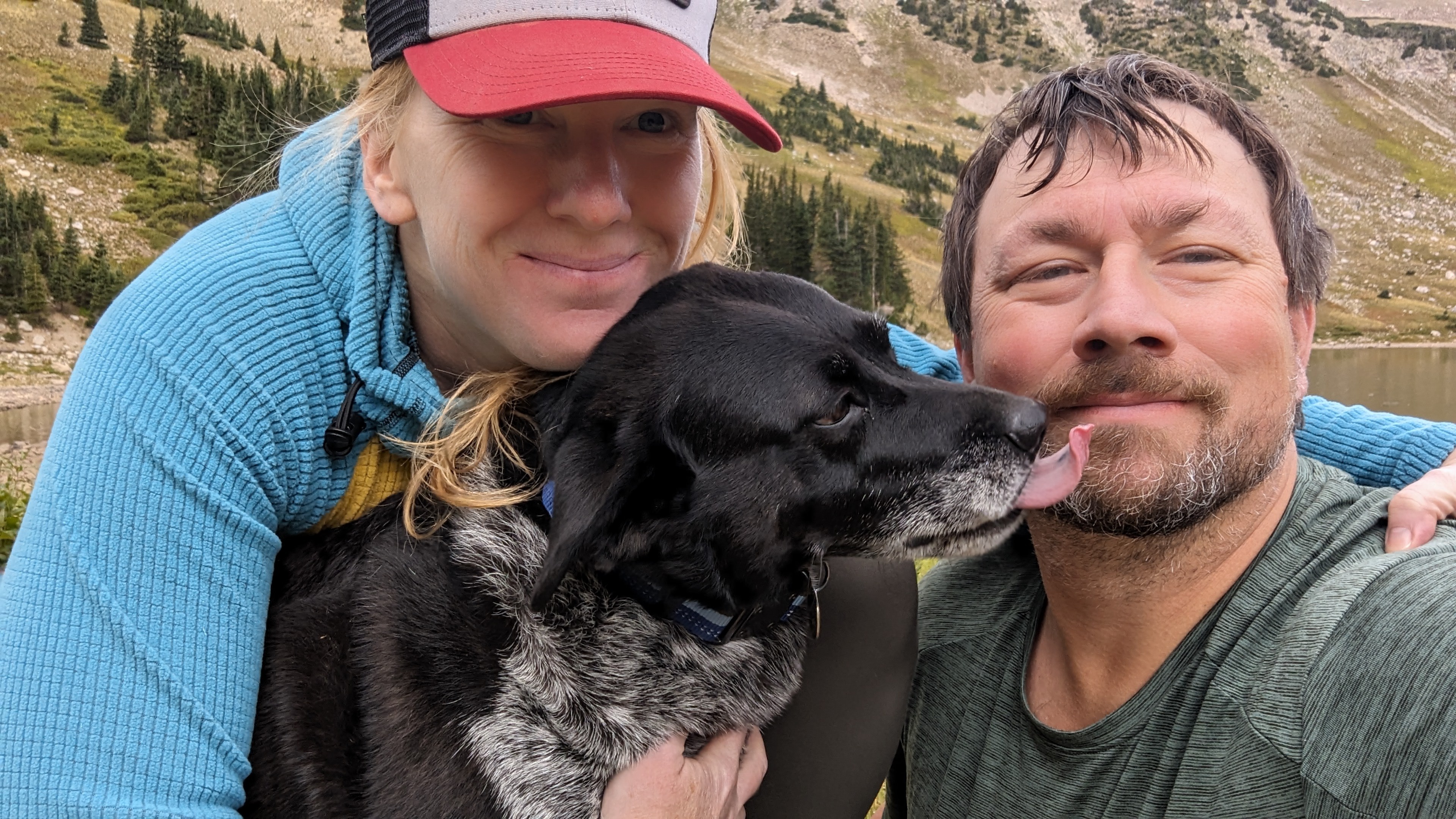
Today we’d like to introduce you to David Dunlap.
Hi David, thanks for sharing your story with us. To start, maybe you can tell our readers some of your backstory.
If you asked my 20-year-old self if he thought he would be a mental health professional at 48 he’d probably wonder what went wrong in life to end up here. But I think it is more of a matter of growing into an unexpected identity that messing anything up. In high school I had thought I was going to get into architecture or at least be a draftsman of some kind. I even had a job working for a steel manufacturing and fabrication company right out of school. However, I quickly found myself fearing the idea that this could be the rest of my life and that I wanted to know more about what was possible before settling into my career. I ended up joining the Marine Corps as a way to get away from everything and explore possibilities and show myself what I was capable of. It was in the Marines that I began my interest in psychology. I found myself intrigued by the psychology of leadership and how teams work together. During my time in service, I found many of the experiences of training to be opportunities for personal development as well and I decided to find a way to provide similar opportunities outside of the military. I learned about the career of Outdoor Educator. When my four years of service ended, I moved to Leadville, Colorado to get my associates degree in outdoor education. I completed my education and began working for Outward Bound, actualizing my dream to give others the opportunity I found during my time in service to use challenges in the wilderness as a way to expand their understanding of themselves. I worked in the summers and completed my bachelor’s degree in psychology in the winters. I thought I was set in my career. However, life has a way of continuing to challenge us, and I found my values and desires in life changing after a few years. I wanted more time to develop my friendships and to create a more stable lifestyle that would support a family. I tried briefly to enter into the administrative side of the work but found it unsatisfying and that I wasn’t particularly motivated for that type of work. After a year or so of soul searching and the serendipitous opportunity to lead a few Outward Bound courses for Veterans, I found myself considering a master’s degree in Clinical Mental Health Counseling. I the pursuit of this career change I also found myself lucky to find Windhorse Community Services in Boulder; a home-based mental health organization that believes in the value of relationship in recovery and from my perspective truly operates from a client centered perspective. It took about 3 years after graduating with my master’s degree that I completed my necessary hours for licensure and since then I have split my work between Windhorse and maintaining my own private practice.
Would you say it’s been a smooth road, and if not what are some of the biggest challenges you’ve faced along the way?
No, the road has not been smooth. Both personally and professionally, I have faced challenges. One of the things that stood in my way and took some time to truly understand was the significance of a head injury that I experienced at the age of 3. I attribute it to the fact that the injury occurred in 1980 when there wasn’t much awareness of the potential developmental impacts of such things, that I never really received any focused support in my recovery. I began to struggle with my academics in third grade and found it difficult to maintain and reasonable GPA throughout my undergraduate schooling. This was confounded by the fact that I was being raised by a single mother who has over the years been diagnosed with Bi-polar disorder and Schizoaffective disorder. We lived in government housing, relying primarily on government assistance to survive. My father’s family had financial resource and my brother and I did benefit some from that and their stability, but the house was a chaotic place. My brain injury continued to affect my sense of self as I attempted to engage in “office” type jobs. I often struggled to maintain the pace and prioritize task completion that would satisfy my supervisors. The financial challenges of putting myself through both undergraduate and graduate studies made life challenging and it was difficult to maintain relationships within the stress of this reality. A large hurdle that I am grateful to have navigated was getting through the 1000 hours of unpaid internship I needed to do to complete my graduate studies. This wasn’t easy in my financial situation and if not for a small inheritance that happened to come at that time, I don’t know how I would have navigated that reality.
Alright, so let’s switch gears a bit and talk business. What should we know about your work?
As a Licensed Professional Counselor I work both as an employee for an organization in Boulder Colorado called Windhorse Community Services (WCS) and in a private practice. At WCS I work with teams of clinicians to support clients in living independently while navigating chronic mental health challenges. As a private practitioner I focus on working with Adults with traumatic brain injuries, particularly in the integration of the experience and developing one’s post injury identity; I also work with Veterans and with men’s issues. I am most proud that I have found myself on the Colorado Advisor Council for brain injuries and am helping to guide the state’s efforts to support survivors of brain injuries and their families. I think what sets me apart from others is the breadth of life experience that I have and how I bring it to bear in my work. I am not afraid of or judge the difficulties that life can present to us. I am highly influenced and pursuing deepening my education with Logotherapy, created by Victor Frankl, and it informs my tendency to help guide people towards understanding their struggles and make meaning from them rather than in looking to help client’s make their feelings and experiences go away.
So maybe we end on discussing what matters most to you and why?
At the risk of sounding self-centered I would have to say that my values are matter most to me. They inform and direct my actions and provide my the foundation and framework to engage with the people and larger communities that I care about as well. It is from the structure they provide that I have found my friends, meaningful work and most importantly my wife. So, on the foundation of my values, what matters most are the people in my life. They give me reason and purpose, a why to my life. But it is not just the people who are and have been in my life, but also those that I have still to meet that matter to me. I’ve never been one for practical success, wealth or acclaim; I like being of service.
Contact Info:
- Website: https://www.davidrdunlapcounseling.com
- Other: https://www.psychologytoday.com/us/therapists/david-richard-dunlap-boulder-co/458749

Popular
-

The Trailblazers: Rewriting the Narrative
-

Celebrating the Spotlight: Kaytee Shashore Turns Milestones Into Momentum
-
Humanity in the Machine: Alexander Raye Pimentel’s Cyborg Recall Questions the Cost of a Data‑Driven World
-

Raemi Anderson on Courage, Caution, and Answering the Call of the Landscape
-

Hidden Gems: Local Businesses & Creatives You Should Know


