


We recently had the chance to connect with Michael Moody and have shared our conversation below.
Michael, it’s always a pleasure to learn from you and your journey. Let’s start with a bit of a warmup: What’s more important to you—intelligence, energy, or integrity?
If you had asked me this twenty years ago, I probably would’ve said intelligence or energy without hesitation. I was obsessed with learning, optimizing, and outworking everyone around me. Now, after thousands of hours with personal training clients, running businesses through recessions and relocations, and redefining myself more than once, my answer is obvious: Integrity comes first—every time. You can be incredibly smart and still use your intelligence to justify bad decisions, manipulate people, or avoid the hard truth about yourself. I’ve seen very bright personal training clients build elaborate stories to explain why they “can’t” change, even when the path is right in front of them. You can have endless energy and still burn yourself—and everyone around you—out. I’ve done that as an owner of a personal training business: stacked my schedule, chased every opportunity, pushed harder and harder…only to realize I was drifting away from the life I actually wanted. I found that intelligence and energy are multipliers, but integrity is the direction. For me, integrity means alignment between what you say you value and what you actually do:
-If I tell a client that boundaries matter, but I don’t protect my own calendar.
-If I claim health is a priority but consistently sacrifice sleep for “one more task.”
-If I stand in front of a couple as a wedding officiant on their wedding day and talk about partnership, but I’m not doing the work in my own relationships.
When integrity is in place, intelligence has a purpose: it helps you see patterns, learn faster, and design efficient and effective systems that support the life you’ve chosen. Energy becomes fuel you can trust because it’s driving something consistent, not just motion for motion’s sake. Without integrity, intelligence, and energy, you move faster in the wrong direction. In my world—whether it’s guiding a personal training client through a major life change, rebuilding my personal training and wedding officiant business models, or writing about awareness, acceptance, and adaptation—integrity is the anchor.
Can you briefly introduce yourself and share what makes you or your brand unique?
When people ask what I do, the simplest answer is that I’m a personal trainer. The more accurate answer is that I help people redefine themselves through their health—physically, mentally, and emotionally.
For more than two decades, I’ve worked one-on-one with personal training clients, logging over twenty thousand sessions. My business isn’t a high-volume gym model. It’s intentionally small and personal. We dig into patterns—how you eat, how you move, how you handle stress, how you talk to yourself when you “fall off.” I love data: lab results, wearables, training logs. But what makes my work different is that we use that data to tell a story. Why do you keep repeating the same cycle? What belief is driving the way you treat your body? Where are you actually heading if nothing changes?
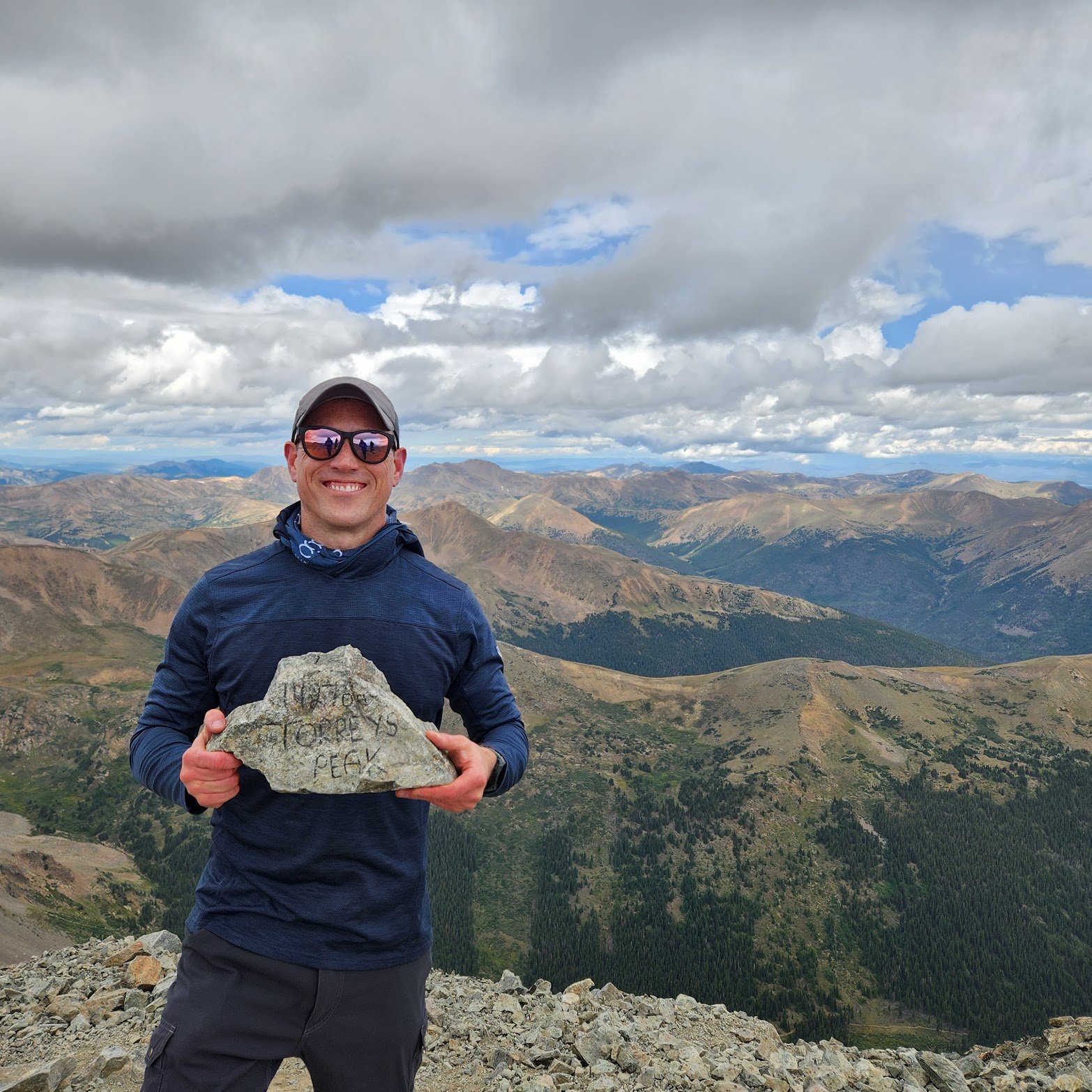
My core framework—awareness, acceptance, and adaptation—sits underneath everything I do. Awareness is seeing your patterns clearly. Acceptance is telling the truth about how those patterns are serving you (or not). Adaptation is about designing changes that are honest and sustainable rather than extreme and short-lived. I’ve applied that loop in my own life: rebuilding my business after burnout, recovering from a serious leg injury, and training my way through 100+ Colorado hikes, including several 14ers and 13ers.
Alongside my personal training business, I’m also a wedding officiant in Colorado. I help couples tell their story on mountaintops and in venues along the Front Range. It might sound unrelated, but it’s the same thread: awareness of who you are, acceptance of where you’ve been, and a conscious choice about who you want to become together. Whether I’m coaching a personal training client through a lifestyle change or guiding a couple through their ceremony, I’m ultimately doing the same work—helping people live in alignment with the life they say they want.
Appreciate your sharing that. Let’s talk about your life, growing up and some of topics and learnings around that. What’s a moment that really shaped how you see the world?
One of the most important moments for me didn’t happen in a gym or on a mountain. It happened while sitting still on a dock in Guatemala. I was at a meditation retreat on Lake Atitlán, in that strange space where you’ve been quiet long enough that your usual distractions fall away but your mind is still loud. I remember sitting there, staring at the water, feeling this uncomfortable mix of restlessness and clarity. There was no laptop, no packed schedule, no back-to-back personal training clients, no “productivity” to hide behind. It was just me… and every story I’d been telling myself about who I was and what my life had to look like. In that stillness, I started to notice all the patterns I had been too “busy” to see: the way I overworked to feel valuable, the way I avoided my own needs while preaching balance, the way I clung to an identity because it felt safer than growth. I realized that a lot of what I called “truth” was really just habit and fear wearing a convincing costume. That moment on the dock is where my core framework—awareness, acceptance, and adaptation—stopped being an abstract idea and became a lived reality. Awareness: seeing those patterns clearly, without sugarcoating. Acceptance: admitting that they were mine, that I had created and maintained them. Adaptation: deciding to change the way I worked, the way I coached, the way I structured my life, instead of waiting for the world to change around me. It’s the lens I use now for everything—whether I’m working with a personal training client who feels stuck, writing about change, or rebuilding parts of my own life. That day by the lake taught me that the world doesn’t really shift until your internal view does. Once you’re willing to sit still, tell the truth, and adapt, almost everything becomes possible.
What’s something you changed your mind about after failing hard?
For a long time, I believed that if something wasn’t working, the answer was always: do more: more hours, more hustle, more offerings, more personal training clients, more everything. Years ago, I scaled my personal training business in Chicago. I added trainers, expanded my hours, packed my schedule, and chased every growth opportunity. From the outside, it looked like success—revenue was up, the calendar was full, and the machine was running. On the inside, it felt like failure. I was exhausted, constantly putting out fires I had unintentionally started. The business was growing, but I wasn’t. The “fail hard” moment wasn’t a single dramatic event. It was sitting in my car between personal training sessions one day, realizing that I had built something I didn’t want to keep living inside of. I had created a version of “success” that left no space for my own health, curiosity, or relationships. That’s a tough thing to admit when you’re the one who designed the whole system. What I changed my mind about was this idea that more is automatically better and that growth should always be the goal. I stopped worshiping busyness and started caring a lot more about alignment and sustainability. I downsized. I returned to a more focused one-on-one model. I rebuilt my schedule around the kind of work that actually energizes me—digging into patterns with a personal training client, hiking, writing, officiating weddings—rather than chasing scale for its own sake. Now, when something isn’t working, my first question isn’t “How can I push harder?” It’s “Does this actually match the life I say I want?” If the answer is no, I’m much quicker to step back, redesign, and adapt instead of doubling down on a broken plan. That “failure” shifted how I see business, success, and even fitness: progress isn’t just about more—it’s about better, truer, and more sustainable. I think you’re probably seeing a theme in my answers today…..
I think our readers would appreciate hearing more about your values and what you think matters in life and career, etc. So our next question is along those lines. Is the public version of you the real you?
From the very beginning, I made myself a promise: whatever role I’m in—personal trainer, business owner, author, wedding officiant, friend—I don’t want to play a character. I want to show up as the same person everywhere. So when you ask if the public version of me is the real me, my answer is yes—by design. Day one of my career, I saw how easy it would be to build a polished persona: the always-on, always-confident personal trainer, the perfect “before and after” story, the business owner who never questions anything. I wanted no part of that (even though I found myself getting pulled into a “personal trainer persona.” If I were going to spend my life helping people redefine themselves, I couldn’t be hiding behind a brand mask (and I tried, it didn’t feel very good). That’s why I talk openly about my own patterns—overworking, recovering from injury, rebuilding my business, navigating relationships, sitting in discomfort at a meditation retreat. In the same way I ask a personal training client to look honestly at their behaviors, I try to do the same with mine in public. I never want the message to be “Look at how I figured it all out.” I want it to be “Here’s what I’m learning in real time, and here’s how awareness, acceptance, and adaptation are shaping my choices.” Does that mean you see every detail of my life? No. I still protect certain parts for the people closest to me. But the values, voice, and intentions don’t change. The way I write, the way I officiate a wedding, the way I coach in a session, the way I talk on a hike—it’s all coming from the same place: a genuine desire to live in alignment and invite other people to do the same. If I ever notice a big gap between who I am privately and who I present publicly, that would be a red flag—something I’d need to sit with and adapt to. My goal is to build a life where I don’t have to switch costumes depending on the room I’m in. So when you meet the “public” version of me, you’re meeting the real me—just the most intentional, thoughtful version I can bring to that moment.
Thank you so much for all of your openness so far. Maybe we can close with a future oriented question. What is the story you hope people tell about you when you’re gone?
I don’t really care if people remember my job titles. I hope the story isn’t “He was a personal trainer,” or “He was a wedding officiant,” or “He wrote a book.” Those are just containers. The story I hope people tell is simpler: “He paid attention. He helped me see myself more clearly. And he lived the way he asked the rest of us to live.” If someone talks about me when I’m gone, I hope they remember that I was genuinely curious about who they were—beneath the roles, beneath the excuses, beneath the noise. That I listened long enough to notice their patterns. That I didn’t just nod along, but gently challenged the stories that were keeping them stuck (even when it was uncomfortable). I’d love it if a former personal training client said, “He helped me change my body, but more importantly, he helped me change the way I talk to myself,” or “He made it impossible for me to keep lying to myself about what I really wanted.” If a couple I married ever looks back, I hope they say, “He took the time to truly understand our story and reflect it to us in a way that made us feel seen.” I also hope the story includes how I lived, not just what I said. That people noticed I was willing to start over—move cities, rebuild a business, recover from injury, climb new mountains, rethink old beliefs—instead of staying in something that didn’t fit anymore. That they saw awareness, acceptance, and adaptation not just as concepts I wrote about, but as the way I actually moved through my own life. And underneath all of that, I hope the story sounds something like this: “He was real. He showed up the same way everywhere. He cared about alignment more than image. He left people, places, and relationships a little better than he found them.” If that’s the story people tell when I’m gone, I’ll have used my time well. Since I plan to live to 100, nobody needs to write anything yet, though…
Contact Info:
- Website: https://www.michaelmoodyfitness.com/
- Instagram: https://www.instagram.com/lohipersonaltrainer
- Linkedin: https://www.linkedin.com/company/michaelmoodyfitness/
- Facebook: https://www.facebook.com/lohipersonaltrainer/
- Yelp: https://www.yelp.com/biz/michael-moody-fitness-denver
- Other: -Directory of Health and Fitness Articles: https://www.michaelmoodyfitness.com/fitness-directory
-Information about the Experience with a Personal Trainer: https://www.michaelmoodyfitness.com/personal-trainer-lohi
-Michael’s Wellness Podcast: https://www.michaelmoodyfitness.com/the-elements-of-being-podcast

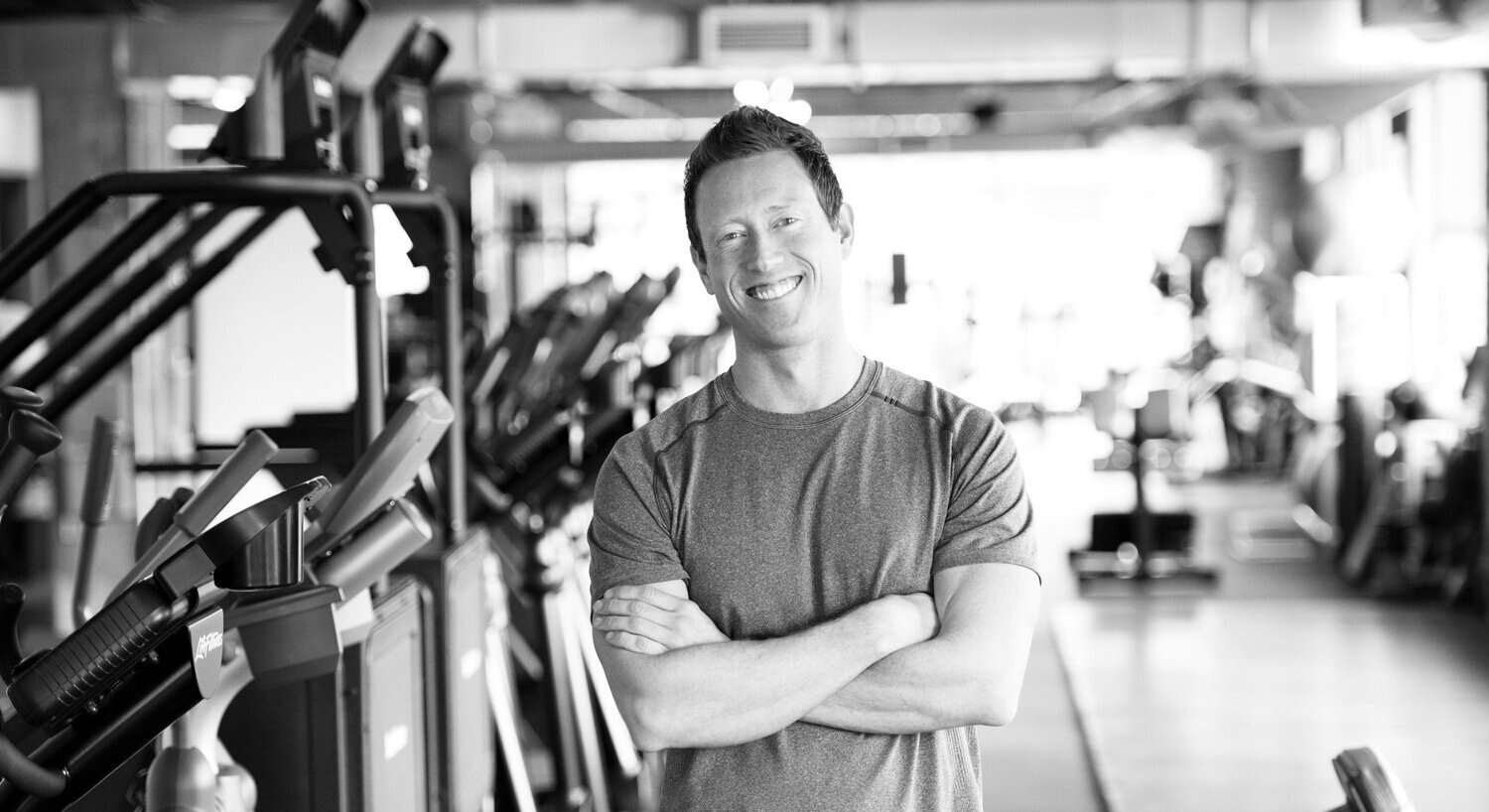
Image Credits
Michael Moody and Ben Elsass