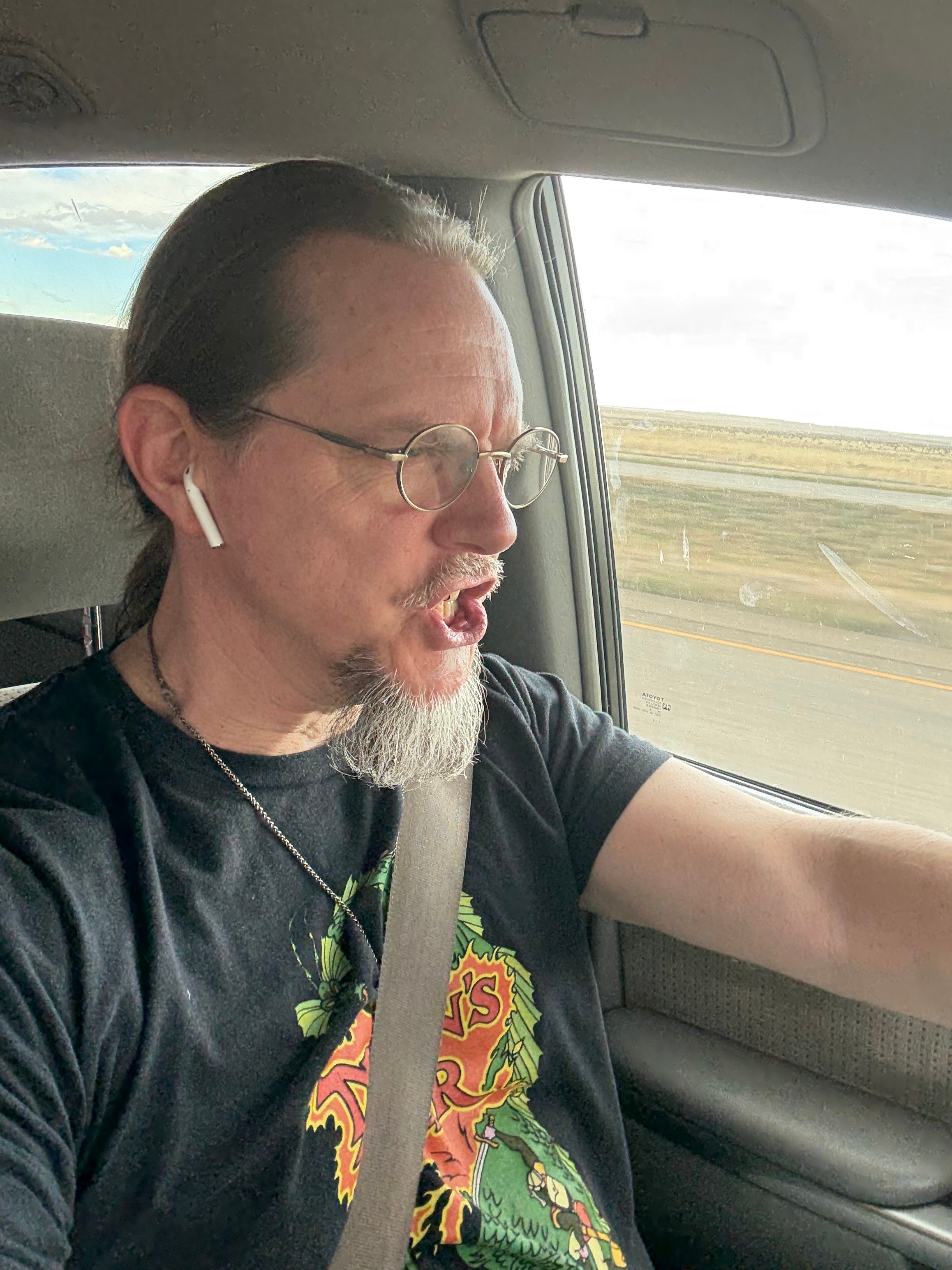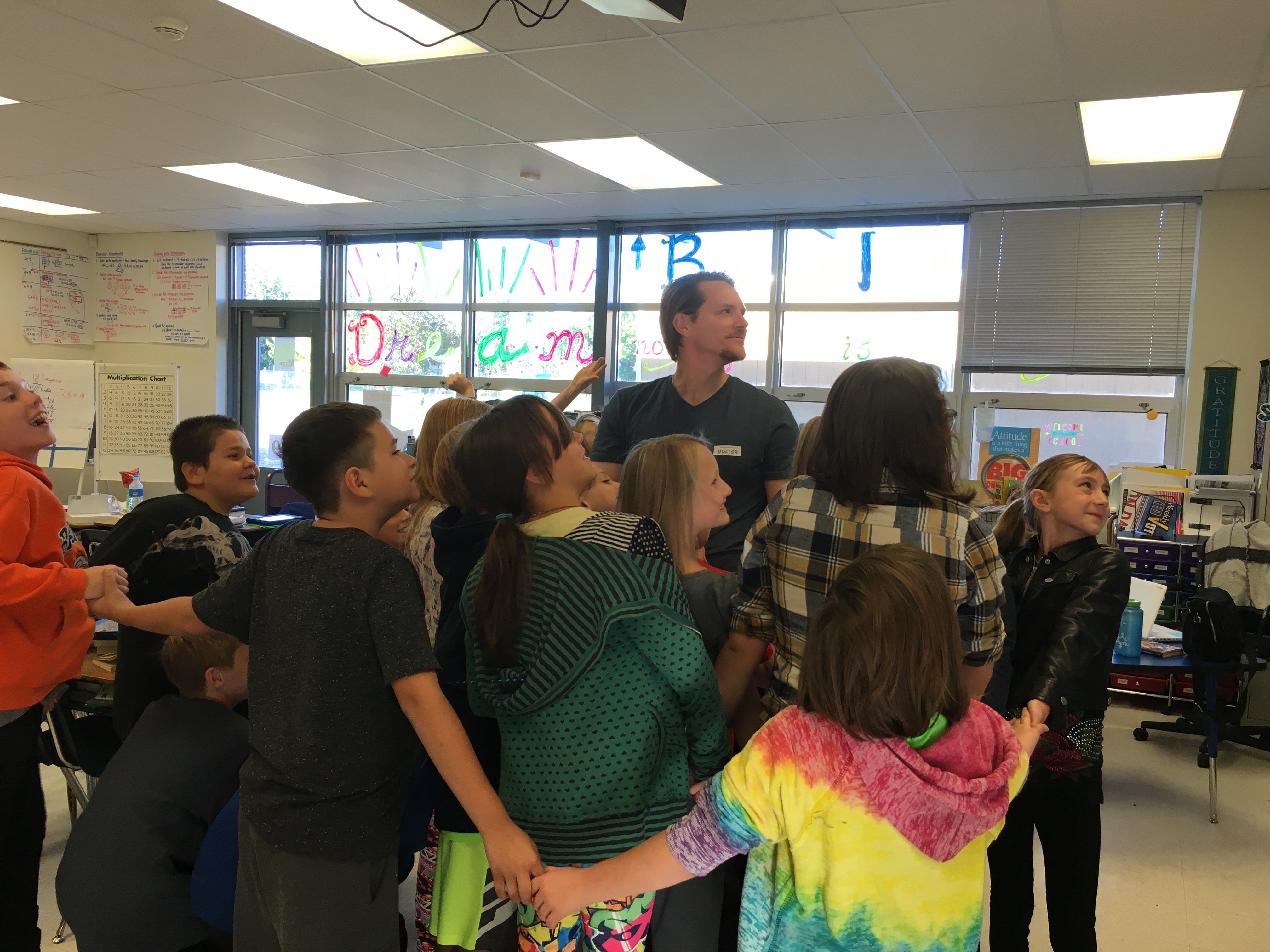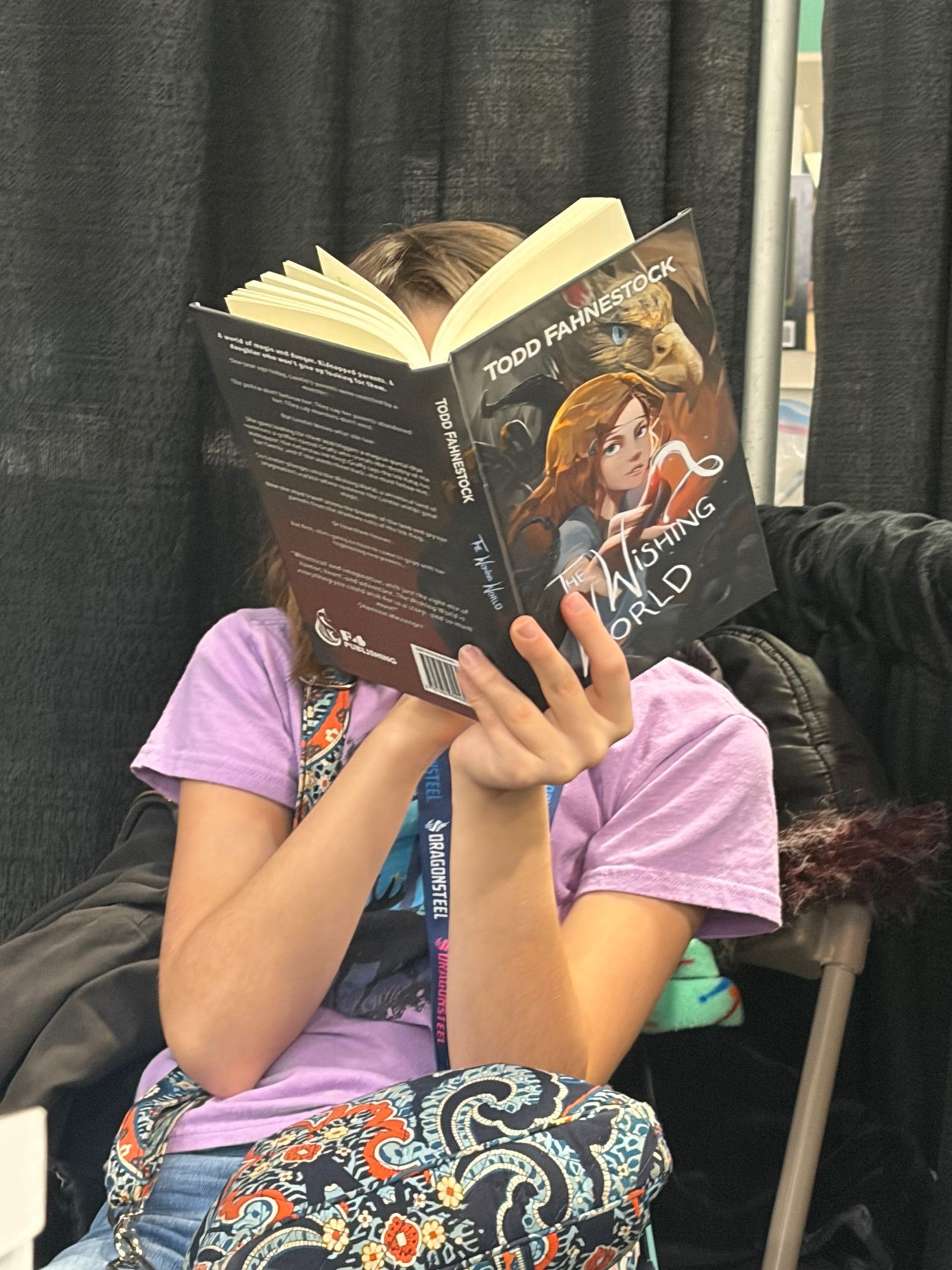


We recently had the chance to connect with Todd Fahnestock and have shared our conversation below.
Hi Todd, thank you for taking the time to reflect back on your journey with us. I think our readers are in for a real treat. There is so much we can all learn from each other and so thank you again for opening up with us. Let’s get into it: What do the first 90 minutes of your day look like?
I wake up between 5:30 and 6:30 a.m.
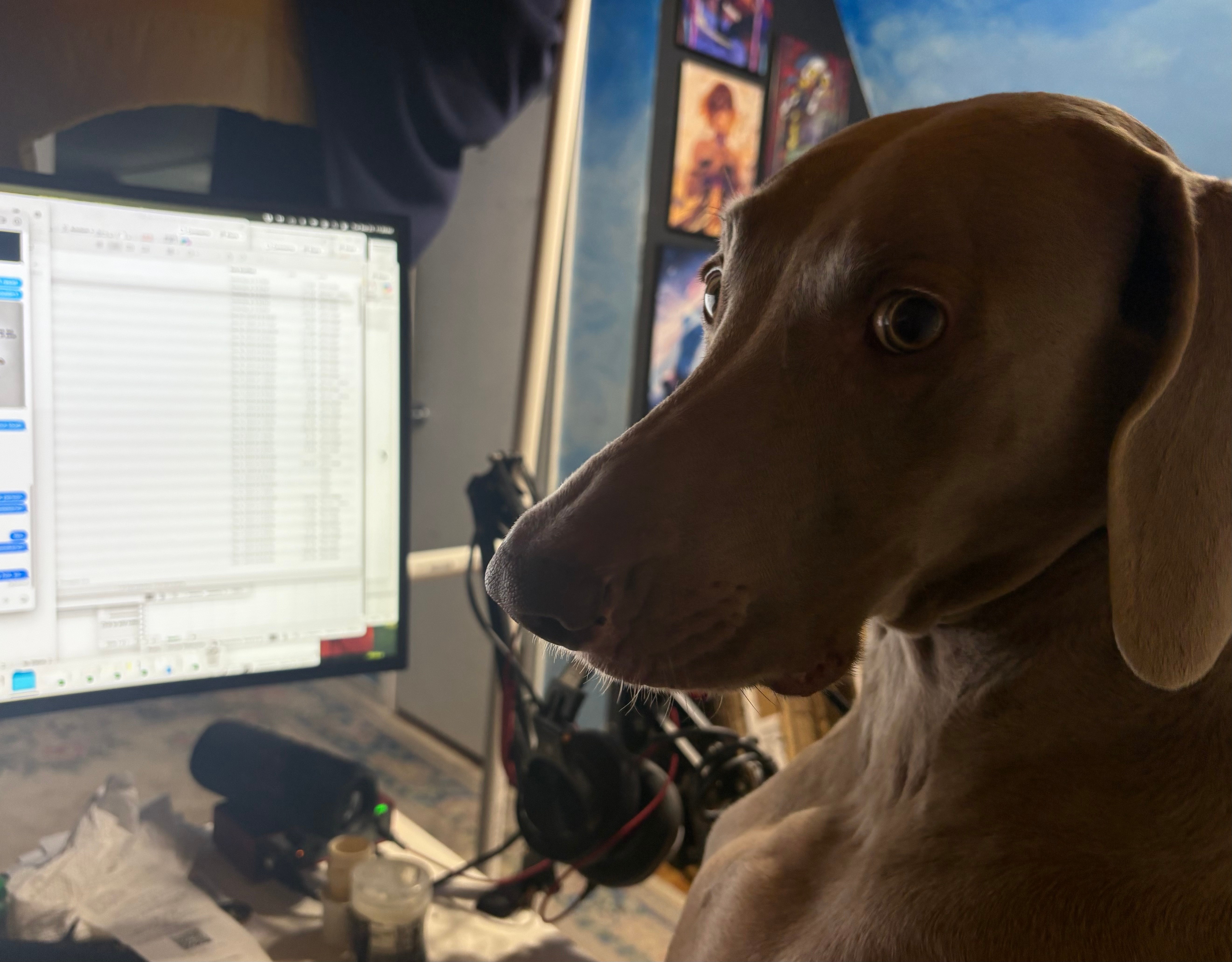
I have an eerie connection with my dog (a 75lb Weimaraner named Galahad). He sleeps downstairs at night, and I sleep upstairs. But within moments of my consciousness rising to the surface, I will hear his paws on the stairs. And, shortly thereafter, I will feel his nose on my hand.
We have a kind of chicken-or-the-egg situation going on with this wake-up process, me and Galahad. I’m not sure if I wake up just before he hits the stairs because he has, over the years, proven that he’ll wake me if I don’t, or if the fact that I wake up naturally within that pre-dawn hour, it has conditioned Galahad to anticipate it and therefore be upstairs and ready when I do.
Either way, I start my day with a dog.
I will mumble a quiet “good morning” to him (because my night-owl wife is still slumbering beside me), swing my feet over the edge of the bed, then whisper “Okay.”
This is the command he’s been waiting for. Galahad leaps onto the bed, spins around once or twice, and thumps down in the warm spot I recently vacated. I head off to the bathroom.
After that, my morning reaches a trident fork of three different possible pathways:
Pathway #1:
I go into my office (which is just off the bedroom), change from night clothes into day clothes, then turn around to find the gray cat (Susuwatari) at my feet. She has purposefully pushed open my office door, positioned herself in my path, and given her quiet but insistent rolling meow. Translation: You must pet me before you go downstairs. Preferably, you must pick me up and rub my belly.
If I’m not in a hurry, I’ll oblige her. Then I go downstairs and do the Morning Routine (said in all caps because this is the one immutable part of my trident of choices, barring a single exception listed in Pathway #3)
The Morning Routine (beginning at 6:30 a,m.) – Like I’m on some kind of game show, I do the following things with balletic precision, where timing and economy of motion get me more points:
1) I hit the button to start the water for coffee.
2) I open the back door and let the dog out to pee.
NOTE: It should be noted that Galahad is always following me. Unless I specifically mention otherwise, envision him always within a foot of me. Part of the ballet is to spin and sidestep around him because he’s always behind me. Susu is also following me, though not like she’s attached by an invisible 1 ft. cord. She’s more strategic and less of a dork. She lurks in doorways because she understands bottlenecks, keeping a cool distance as though she just “happens” to be underfoot whenever I start off in any particular direction.
3) I keep the back door cracked just a little after letting Galahad out and the screen door open because if I don’t open the door immediately when he’s finished doing his business, he’ll dramatically throw himself against it (which makes him about five-feet tall, paws and chest against the glass, head sideways as he peers in with one eye, looking for me).
If, after about five seconds, I don’t let him, he’ll bark, and I want to be considerate of my neighbors.
However, if I leave the back door cracked, he’ll just nose his way inside and head for his food dish. Then all I have to do is close the door before all the heat–or the cat–escapes the house. It’s slightly nerve-wracking, I’ll admit, but less so than a barking dog at 6:30 a.m.
4) I veer from the back door to the bathroom, fill Galahad’s food dish while he’s outside.
5) I return to the electric water pot, which should be steaming by now, and pour hot water into the french press I bought for Lara twenty years ago, which was filled with coffee beans I ground the night before.
NOTE: I do not drink coffee. But I have found that if I make coffee for my not-at-all-a-morning-person wife, she will love me forever and forgive me all manner of character flaws.
6) Galahad noses open the back door as expected and makes a beeline for his food bowl.
7) Susu jumps onto the kitchen counter and, if I don’t fill a sparkling clean water bowl for her right then and there, she’s going to start licking the filtered water spout. I do not like her to do this. So I snatch a tiny bowl from the cupboard, pirouette to the sink, fill it up with filtered water, and set it down for her.
8) With both animals temporarily sated, I put the dishes from the dishwasher away as quietly as I can, as my son (home from college) is sleeping, and his room is just off the kitchen.
10) I fill my ginormous glass beer mug with ice water (This thing is epic; it holds a literal liter of water). This will be my companion all day long, refilled as necessary as I write, eat, or watch movies.
11) I carry the french press, my sloshingly-full water mug, and a giant empty coffee cup upstairs. Galahad races up the stairs alongside me, sprints to his bed, spins around, and lays down, eyes bright and expectant. I taught him this trick years ago to keep him from jumping on me while I juggle two cups in one hand and a french press in the other. He expects a treat. If I do not give him a treat in the next five minutes, he’ll start to make a sound like a tea kettle, which will get louder and louder until I deliver on my promise.
12) I place the coffee mug on Lara’s nightstand, pour the coffee (often with my phone flashlight for illumination in the darkness), and set the french press on the book shelf. Still 90% asleep with her head mashed into a pillow, Lara will mumble: “Iluvyousomuchyersowunnerful.”
13) I go to my office and write… (it is now about 6:50 a.m.)
Pathway #2:
Let’s back up to the trident of choices and go a different pathway. If it’s a walking morning (which I do 3-5 days of the week), things are a little different. I wake, then race to get dressed in my winter-warding-walking clothes, because I have to do the Morning Routine and get out the door before 6:45 a.m. The sun rises at 7:15 a.m., and I want to be well down the trail before it does. I love watching the sunrise from the Platte River Trail. It is a singular joy that fills me with all the right kind of emotions to start the day.
Pathway #3:
I go into my office and write straightaway before executing the Morning Routine.
If I’m forcing myself to write and the creative machine doesn’t take hold, my production time could be as little as five minutes and yield only one sentence (this happens about 5% of the time).
If I’m forcing myself to write and the creative machine sputters to life, one sentence will turn into thirty minutes or an hour and I may produce as many as 2,000 words before I really start my day (this happens about 90% of the time).
If the muse has been whispering sweet inspirational somethings in my ear during the night, when I wake I could get sucked into an epic writing day. If this happens, the rest of my plans go into the trash can, and I could pound out as many as 8,000 words by nightfall (this happens about 5% of the time).
If it’s going to be an epic writing day, Lara senses this (probably because her coffee didn’t arrive). She then picks up the Morning Routine, probably sometime around 8:00 a.m. (I don’t know the exact time because if that’s the kind of morning I’m having, I’m in a completely different reality that doesn’t undertand things like “time.”
So that’s just a quick snapshot of the first ninety minutes of my day…
Can you briefly introduce yourself and share what makes you or your brand unique?
I write edge-of-your-seat epic fantasy novels. That is to say, fantasy novels in the tradition of J. R. R. Tolkien, Terry Brooks, and Brandon Sanderson–grand adventures, magic, swords, dragons–except with my own zip thrown in. My stories have all the deep world-building and complex characters of epic fantasy, but infused with the quick pacing of a thriller.
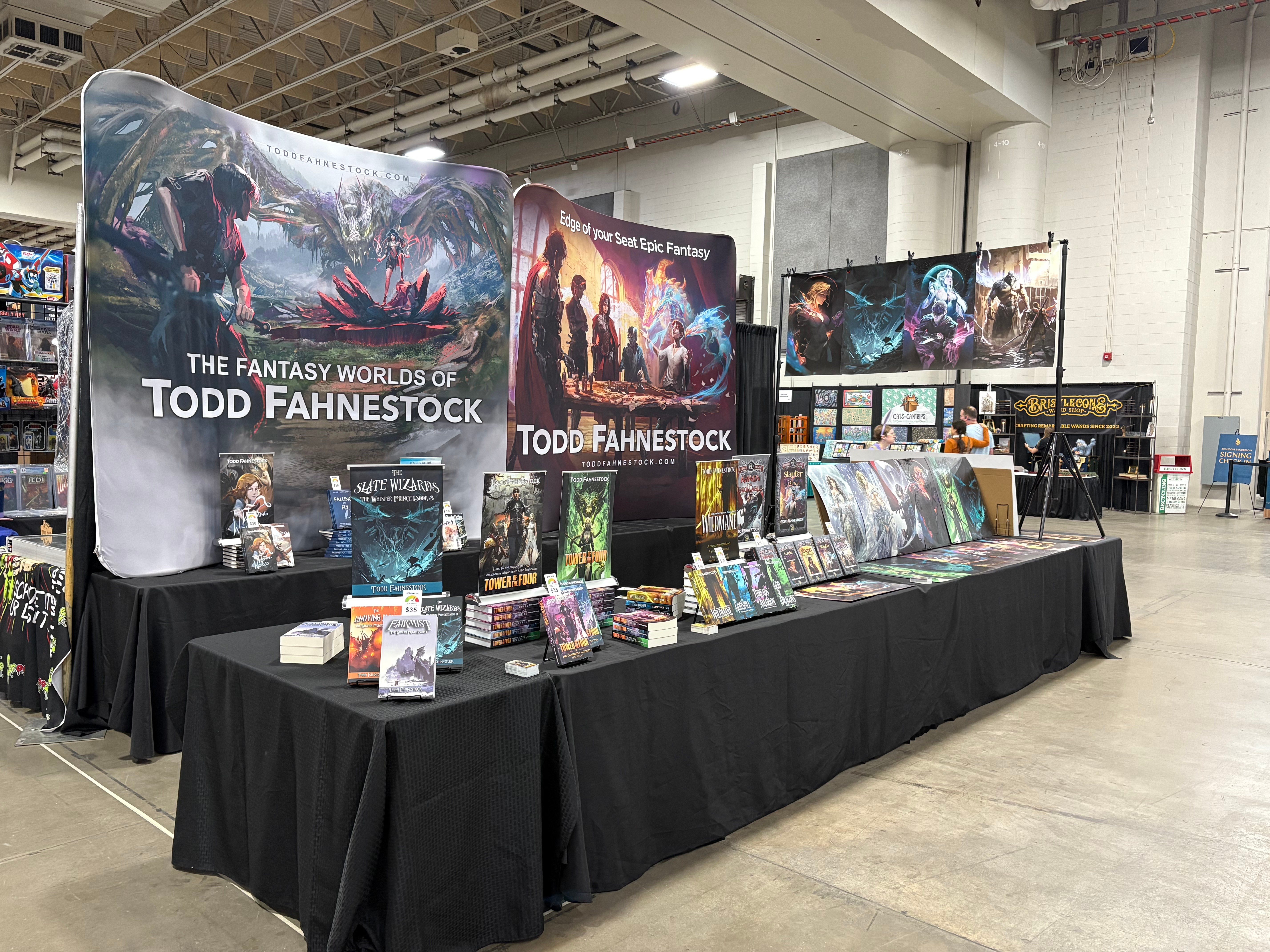
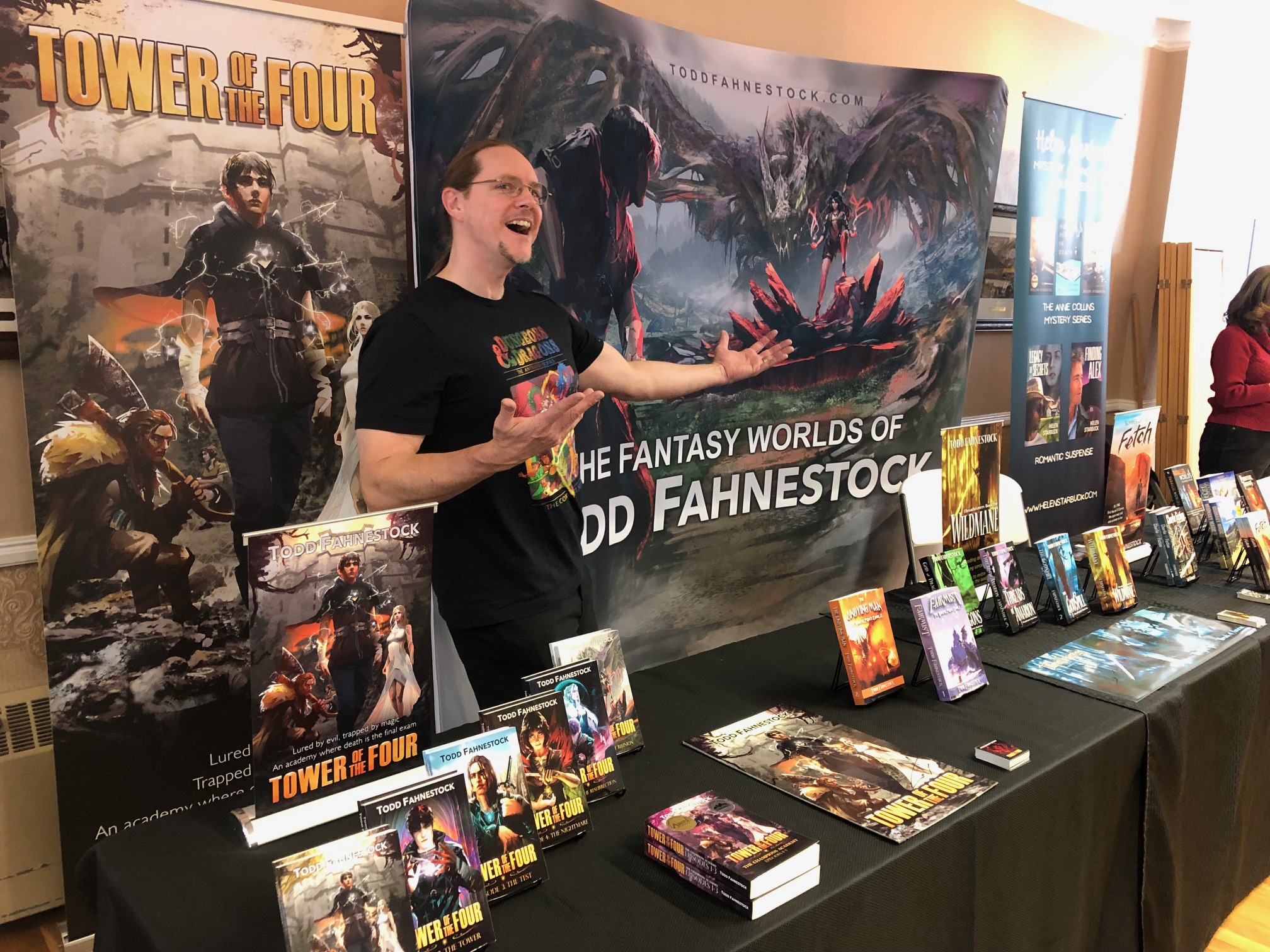
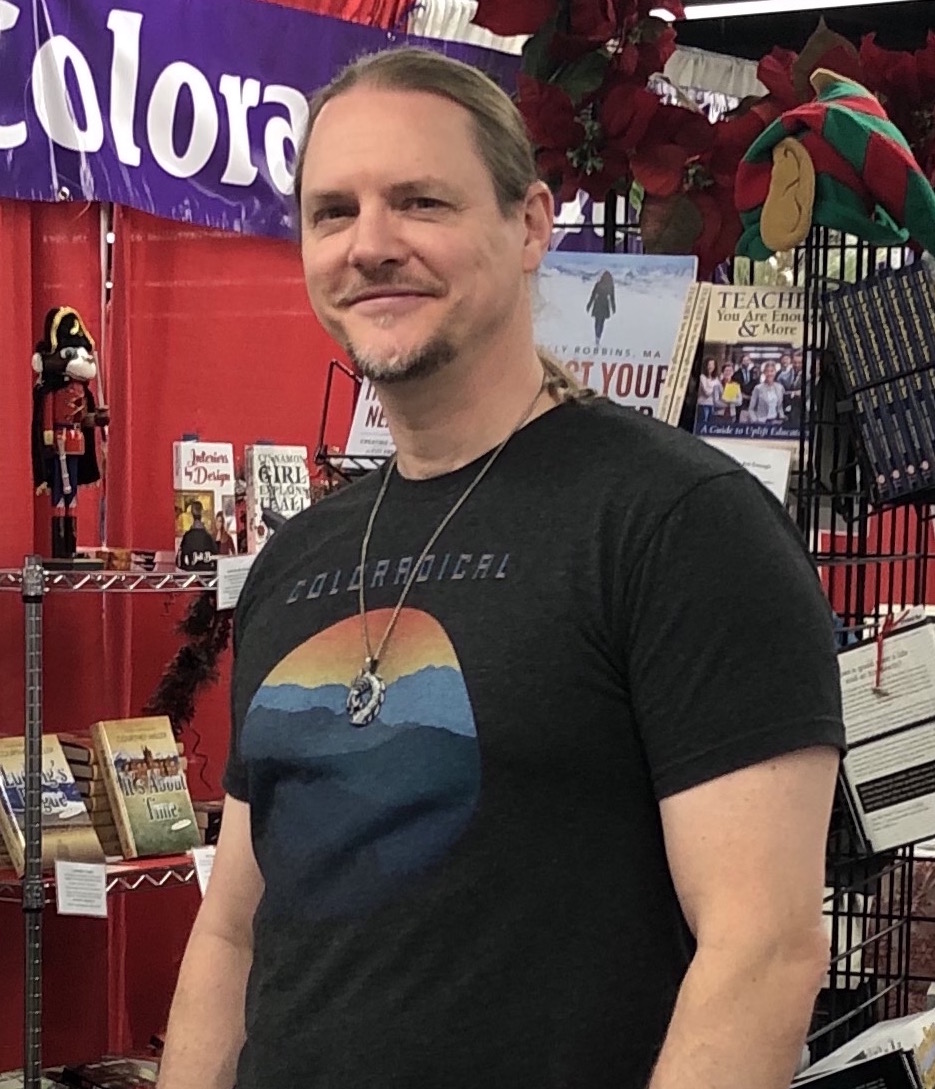
As to the business side of my profession, I manage my own writing career. I write, do the interior design, commission the cover artists, publish my books under my own imprint (F4 Publishing), and then hit the road to market and sell them.
I travel the country, selling books at 15 to 20 events a year (mostly comic conventions like San Diego Comicon, Denver FanExpo, and Brandon Sanderson’s Dragonsteel Nexus), and I attend a couple of writers conferences each year as well.
I also sell books on my website (toddfahnestock.com), on Amazon, and I have them available for distribution to Barnes & Noble as well.
My business has a long way yet to go to fulfill my plans, but it has grown every single year since I started doing this. And in 2025, I came closer than ever to hitting a six-figure year. That is now my goal in 2026.
I have several completed series, but I am most excited about my current project (which is usually the case–whatever I’m working on is the “belle of the ball” in my mind at that moment). The Twelve Kingdoms is an epic, possibly 1-million-word project which will be broken out over 4-6 volumes. I plan to finish the whole story first, then release the volumes back-to-back. I will do a Kickstarter in July where readers can purchase the entire series all at once (as well as some awesome extra bells & whistles).
Here’s a quick view into The Twelve Kingdoms:
At the height of its glory, when magic hums through crystal towers and civilization spans the world, a monstrous leviathan descends upon the world of Alliofor–a greasy cloud with bloody, umbilical-cord tentacles that, if they touch a living creature, turn it into a mindless, shambling piece of meat.
In mere days, the leviathan infects a quarter of the world.
Twenty-four wizards band together to stop it, but they don’t know exactly what they’re facing and don’t have enough time to learn. In short, they are insufficiently prepared to stop the monster before it devours the world.
So they come up with a plan.
They will freeze time. And, just before they cast this unprecedented time spell, they will open a portal and send twelve powerful wizards—as well as thousands of refugees just in case the plan fails—to a pocket dimension.
The time spell will stop the advance of the monster in Alliofor while it runs normally in the pocket dimension. After exactly one year, the portal between worlds will open again, and the monster will resume its relentless advance.
During the year in the pocket dimension, the twelve wizards will craft legendary magical weapons. When the year is up and the portal opens, the weapon wizards will return with the knowledge and power to defeat the monster.
This time, they will be ready. This time, they will have the tools they need. This time, they’ll destroy the monster…
They are wrong.
A single miscalculation shatters the plan. One year in Alliofor is actually a thousand in the pocket dimension.
There is no way home.
Unless the wizards keep the lore of the leviathan and the magical weapons alive for a millennium—unless they prepare new wizards to face the monster when the portal finally opens—the battle is lost. A thousand years after they’re dead, the portal will open, time will resume in Alliofor…
And the monster will consume both worlds.
(So that’s a glimpse of my current project entitled The Twelve Kingdoms. I’m currently releasing chapters as I write them on my Patreon site.)
I’ve spent decades honing my writing skills, but my journey on the marketing/selling side of things is relatively new. And it’s what has allowed me to write full-time. It was a long, unexpected, and risky adventure, but a really exciting one as well.
I started hand-selling my own books because I ran out of money after my first year of writing full-time. When I released what I thought would be my breakout novel and quit my day job in 2016, I had hoped for a big contract from my at-the-time publisher.
I didn’t get it.
By the end of 2017, the money I’d saved up was gone, and we needed $500 a month extra to make our mortgage payment. I either needed to pull a rabbit out of my hat or get another day job.
My “rabbit” ended up being a holiday market event where I sold my books. I went as a member of the Colorado Authors League, got a space at one of their tables, and began my first attempt at hand-selling…
I made $500 that weekend.
That paid November’s mortgage. So I signed up for another holiday event in December in Georgetown. I made another $400 and squeaked through December into 2018.
That was how it started, and year after year, I’ve upped my game, going to larger and larger events, writing more novels, enhancing my point-of-purchase displays, coming up with series deals, and selling posters of the cover art.
Now I’m knocking on the door of that mythical six-figure year, and I’m looking forward to expanding my reach.
Thanks for sharing that. Would love to go back in time and hear about how your past might have impacted who you are today. What’s a moment that really shaped how you see the world?
I remember when I consciously chose to look for magic.
I was fourteen, living in Durango, Colorado, and my parents gathered me and my siblings in the dining room. They were getting a divorce, they said. They handed the news to us like we were adults, like a statement of the facts would make us “understand,” but I don’t remember their reasons. At that age, my rational mind was a fledgling thing with little control over me, whereas my emotions were wild and strong. They galloped like terrified horses, scattering every which way at the news.
My little sister, five years younger than me, just grinned her happy little grin like nothing was wrong. I don’t think she understood what was really happening. My older brother seemed to understand just fine, but he came to a conclusion that confounded me.
“Well, it’s about time,” he said.
That was the opposite of how I felt. I didn’t think it was “about time.” I mean, I’d sat at this table countless times listening to Top 40 radio while doing my homework or playing D&D with my friends. I’d read Edgar Rice Burroughs’s A Princess of Mars and Lloyd Alexander’s The Book of Three in that bay window, which my father had installed himself. I’d been filled with a sense of permanence and contentment here, never once imagining a future that didn’t include me growing up in this house with two parents who loved each other.
“Well, I think it sucks,” I said, and that’s all I said. I got up from the table and ran to my room, imagining the house coming apart around me, all the boards becoming unstuck and floating up into the blue sky until there was just me, running down a hallway with no walls, no ceiling, and nowhere to go.
Two days after my parents dropped the bomb, I stood at the edge of a precipice looking down at the Animas River. I was so scared, and I hated it. I wanted it to stop. I wanted to charge at the fear like it was something tangible, like if I could burst through it, it would go away. I thought about the most frightening thing I could do, something worse than my parents splitting up. I wondered what it would be like to jump.
I wondered what it would be like to die.
I didn’t jump, but I still felt like I was falling. It felt like I’d leaned too far back in a chair, right where I should jerk and catch my balance, except I hadn’t, but I hadn’t hit the floor yet either. That stomach-hollowing, scalp-prickling fear just went on and on.
I stood there at the edge of that cliff, looking across the river, past the beginnings of the little industrial park south of Durango, to the closest foothills and then to the mighty mountains beyond. A whole world. A whole scary world out there, and the reason I felt like I was falling was because I didn’t have a safety net anymore. What my brother was ready for at age sixteen—and what my little sister didn’t realize at age nine—was that our lives were over. That was what our parents had just told us, really. The magic of our family had been fractured, and it was going to simply come apart in pieces.
I wanted to die. I didn’t want to live with this constant fear, didn’t want to go back to school, didn’t want to go home. I had nowhere to turn, and I was crawling out of my skin with a need to know what came next. Except there were no answers. There was only that distant, beautiful horizon, and I just kept staring at it.
I finally decided to go to school, decided I’d take just one step and see what happened. It couldn’t be worse than this feeling, could it? And if that one step worked out, I’d take another. I resigned myself to do…whatever happened next. One little bit at a time.
And if it all became too much, I promised I’d come back to this place. Not to jump, maybe, but to cross that bridge, walk through that industrial park, start up into those foothills and keep walking until something happened, until the Universe showed me that there was a reason for me to be alive. I’d keep walking until I found something magical, or until I died. That would be my jump instead. That would be my way through the fear—a one-finger salute to the Universe. A dare for her to do her worst.
That was the first moment I consciously decided to search for magic. It was wrapped up in so many things—the breaking of my family foundation, my wild imagination, the cold fear of a harsh world closing in on me, and the tingling, twisting changes of puberty—but that was the first moment I decided to shape the future of my own life. Up to that moment, that had been my parents’ job. But obviously they didn’t know what they were doing any better than I did. There was no safety net.
I decided two things then.
First, I was going to challenge the Universe. Maybe I wouldn’t go walking into the mountains today, but I was going to step into this scary world where nothing was certain and dare it to kill me. I was going to take one step. And if I survived, I’d take another. And those single steps would be the only thing that mattered. I wouldn’t look two or ten or twenty steps down the road. Planning for the future was a fiction; my parents had shown me that. I would look only at the one step, and I wasn’t going to care about consequences, which meant I could literally do anything.
So I decided to chase the ridiculous. I would search for the magic that had tantalized me all my life.
That decision is what led to me being an author, to looking for magic in the world, then writing it down on the page.
When you were sad or scared as a child, what helped?
My writing career began with a nightmare I had as a child.
When I was young, just about the time the arguments between my parents were growing more and more heated, I began to have a recurring dream.
I stood on a promontory that stuck out from a sheer mountain like the prow of a ship, except there were no guardrails. I appeared in the dream with my hands out like a tightrope walker, looking over the breathtaking drop, the distant mountains, and a single house on the ground far below, so far below that it could have been a satellite snapshot.
My heart raced, and I fought the vertigo. I didn’t know how I’d come to be on the cliff; all I knew was that I needed to get the hell away from that edge as fast as I could. The ground of the promontory was flat, and there was no wind, but it felt like I was being drawn toward the edge.
I backed away, feeling better with every step. One step… One more… And one more… My racing heart began to calm with each inch I retreated.
I bumped into something.
My gaze had been fixed on the tip of that promontory and the empty expanse of air. I hadn’t been looking where I was going, and when I turned, I came face to face with—
Nothing.
In front of me was the ever-thickening base of the promontory. A short distance away, it connected to the mountain and a friendly looking path continued both ways along the edge. Safety. Security.
But I couldn’t get to it. There was some kind of invisible wall in front of me. I was blocked.
I pushed at it. Nothing. I beat my fists on it. Nothing. I started to move toward the edge, to see if there was a gap—
The invisible wall started moving toward me, pushing me away from the safety of the mountainside, pushing me toward the drop.
“No!” I shouted at the thing and redoubled my efforts, pounding with my fists, but it was as solid as stone. It didn’t shimmy, shudder, or budge in the slightest.
Terror coursed over me like icy water as I flipped around and put my back against it, feet scrabbling on the sandstone as it pushed me inexorably toward the edge.
Fifteen feet… Ten feet… Five feet…
All I could hear was the painful thumping of my heart as I reached the point where I’d appeared at the beginning of the dream. I scrabbled harder, feet sliding, shouting.
Mercilessly, the invisible wall pushed me over the edge.
I fell, screaming and screaming, falling so long that my ragged throat hurt as the ground rushed up at me and—
I awoke, sitting up in bed, breathing hard.
In the following days, though I didn’t tell anyone about my dream, I asked about dreams, about falling dreams in specific. I didn’t ask my parents, but instead my junior high school friends.
I heard lots of stories, but the one that stuck with me was this: if you hit the ground in a falling dream while you’re asleep, you die in real life.
Junior high wisdom.
The dream didn’t come to me every night, and it didn’t come regularly. I would get a few nights’ rest. Sometimes I’d get a few weeks. Never more than a month. And then, at random…
The nightmare would return.
It was always the same.
I appeared on the precipice. I tried to leave. I was blocked by the wall. The wall started moving and pushed me over the edge. I fell and fell and—
I woke up.
The arguments between my parents in real life heightened. I remember my mother losing a lot of money in a business venture. I remember my father yelling at her as she left the house, telling her that if she didn’t get back inside, he’d kick her butt right through her teeth.
At night, the nightmare continued. The same every time. In the dream, my chest hurt at the terror, and I’d wake up with it still hurting.
I told no one.
I had other nightmares. Demons would come for me at night, and I’d run away from them. But those dreams changed every time. The falling nightmare was always the same.
Things progressed with my parents, and they separated. My father moved away to California. We stayed in Colorado. I progressed through junior high and into high school.
During my sophomore year, when we were living in one of the string of shabbier and shabbier apartments my mom could afford, the nightmare changed.
Or rather, it’s more accurate to say: I changed it.
That night, I appeared a couple feet from the tip of the promontory, just as always.
On many other nights, I had tried everything I could to get past the barrier. I’d sprinted toward it to see if I could get past it before it formed. I’d leapt high to see if there was a way I could get over it. I’d tried to sneak around the edge to see if I could circumvent it.
Nothing had worked.
In the wake of my parent’s divorce, though, something had broken inside me. I was still terrified of the wall, still terrified of the fall, but I was also angry now. I hated how my happy little life had been blown apart. I hated how my parents couldn’t keep things together. I hated how, up until this moment, I’d thought they knew everything about everything. I realized now that they didn’t, that they were just as confused and fucked up as everyone else.
Most of all, I hated the futility of this nightmare. No matter what I did, I couldn’t escape it. There was no safety here.
I strode to the wall, put my hands on it, felt the cool, hard nothingness against my cheek. It began its inevitable push that, in about fifteen seconds, was going to dump me over the edge.
I shoved away, spun in mid-step, and sprinted toward the tip of the promontory. I ran as hard as I could, arms pumping at my sides. I couldn’t stop the damned wall from shoving me over the edge, but I could sure as hell deny it the pleasure.
I reached edge and I leapt off.
Air rushed past me. I winged my arms spastically, and I screamed—part terror, part rage. I couldn’t stop from falling… I was going to hit again, just as before.
Then I heard a voice inside me. It wasn’t my voice. Or maybe it was. A voice of some future self, some wiser self. To this day, I don’t know where it came from. It said:
If you can just hold yourself together… If you can just hold yourself together… you can fly.
I didn’t know what that meant, or how I was supposed to use it to fly, but suddenly it felt like my body wanted to come apart in six pieces. My arms and legs wanted to fly away from my torso. My head wanted to fly off my neck. It felt like I was being pulled apart by the force of the very air.
Screaming through my gritted teeth, I held myself together. The air rushed by me. The ground rushed closer.
And I saw something I hadn’t seen before.
A line of tall posts strung power lines one to the next, off into the distance.
The force of my leap had taken me out from the cliff. I was not falling to the base anymore. I realized with the first flash of hope I’d had since this stupid nightmare had started that I might be able to make it to those power lines.
Thinking that seemed to angle me toward them. I hit them, and like some Looney Tunes character, I hit with my feet, the wire bowed nearly to the ground…
And shot me back up into the air.
I screamed again, but this time with exhilaration. I hadn’t hit the ground. I was still falling but… upward.
The arc came to its zenith, inevitably, and I began to fall to the ground again. I felt that sense of being pulled apart.
I held myself together.
And I saw the house, that house I’d seen from so far above, but this time it was at a much more manageable distance. The roof was comparatively huge, and I realized if I could just hit that house, that sloped roof, I might bounce again.
And I did.
My feet hit and I launched. I didn’t have the powerful spring of the wire this time, but my leap flung me a good ten feet into the air. Now I was only twenty-five feet from the ground. All I needed was something cushy, something…
A dilapidated old couch hunched at the side of the house, clearly left out in the weather to be taken to the dump.
I landed on it, sprung five feet into the air and…
I landed on the ground.
At first, I simply couldn’t believe it. What kind of ridiculous string of unlikely events could have landed me on the ground, but…
Here I was. I was standing on solid earth. I had beaten the invisible wall! I’d beaten that stupid cliff and its stupid promontory.
I looked behind me, saw the thing looming, looking down on me impassively. I shouted at it and gave it a one-finger salute.
I danced around in victory, looking at the cliff, at the power lines, at the house, at the couch, and at the distant mountains. I must have danced like that for five minutes.
And then I awoke. Not with my heart hammering, not with my chest hurting. I awoke with a smile.
The next night, the nightmare came again. I did the same thing. I sprinted. I leapt. Powerlines. House. Couch. Ground.
The next night, it came again, as though to check one final time. I sprinted. I leapt. Powerlines. House. Couch. Ground.
That was the last time I ever had the dream. I never saw that cliff again, except in my memories.
The day after, a new dream started. I began in the wide-open field beyond the cliff. I knew that’s where it was, but I never turned around to look at the cliff or the house. The power lines were just behind me, but I was focused on the field and the mountains in the distance. I found that, by exerting my will and angling my hands just-so, I could lift my body up into air. I could fly!
I was free.
The day after that, I began writing my first book, about heroes in a fantasy world, doing the impossible.
To this day, whenever I feel in over my head, whenever it feels like my life is sliding into the toilet, I get that same sensation of my body being pulled apart in those six pieces. I hold them together.
And every time, I’ve come through the hardship.
This was how writing began for me.
I think our readers would appreciate hearing more about your values and what you think matters in life and career, etc. So our next question is along those lines. Whom do you admire for their character, not their power?
My wife.
And for that matter, my daughter and my son, who take after my wife in this regard.
Lara puts the concerns of others over her own personal concerns. It is something I admire greatly, and it’s something that I think–more than all the sensational splashes that we see in the media every day–changes the world for the better. Little kindnesses, little observations that lead to little actions with the people she encounters every day. She wants to do right by people, and she has a generous soul.
She is my role model for decency, and every time I find myself getting self-involved, self-absorbed, or even selfish, I think of her and try to steer my ship back to kinder waters.
Okay, so let’s keep going with one more question that means a lot to us: Could you give everything your best, even if no one ever praised you for it?
I love this question. It makes me nervous because I do love positive feedback about my stories. I’d be lying if I said I didn’t.
However, I also love the idea of people doing their best without recognition. These are the people who create great beauty in the world.
And I actually do believe that great works are more often done–whether by artist, athlete, or business person–when that person finds an inner solitude, a space that not only requires internal strength without external feedback, but demands it.
A great movie came out last year that addresses this very idea. I’m not much of a racecar enthusiast, but the message in F1 (starring Brad Pitt and Javier Bardem) really got me. The movie follows a racecar driver who has multiple chances to bask in praise, accolades, and awards, but he calmly and firmly pushes them aside (he won’t even touch the trophies he wins) to pursue what really matters to him: being the best racecar driver he can be.
He’s reaching for something internal, a feeling he describes as “flying” when he’s at one with the car, the speed, and the track. To him, that feeling is the highest achievement, and the media attention and praise are just “noise.”
I admit that every time he didn’t take the trophy, every time he turned down the lucrative deals, every time he intentionally resisted climbing the racing industry’s ladder of fame and money, I winced, thinking to myself, “What’s he DOING? That’s easy money! Why doesn’t he take it just this once and set himself up for life?”
The answer for him, I think, is that if he takes it once, he’ll take it again, and then he’ll get sucked into a cycle where the fame and accolades are more important than the driving.
The movie made me want to strive for something similar in my own writing. Yes, write the books. Yes, market and sell the books. But never forget that the story is the most important thing. Finding the voices of the characters, finding the tightness to the plot, creating something that is living and breathing for the people who read it…
That’s the highest achievement.
So to answer the question, could I give something my best even if nobody praised me for it?
I don’t know for certain, but I plan to keep trying to find out.
Contact Info:
- Website: https://toddfahnestock.com/
- Instagram: https://www.instagram.com/todd_fahnestock/
- Facebook: https://www.facebook.com/todd.fahnestock
- Youtube: https://www.youtube.com/@toddfahnestock7108?app=desktop
- Other: Patreon – https://www.patreon.com/toddfahnestock
Amazon – https://www.amazon.com/stores/Todd-Fahnestock/author/B004N1MILG