

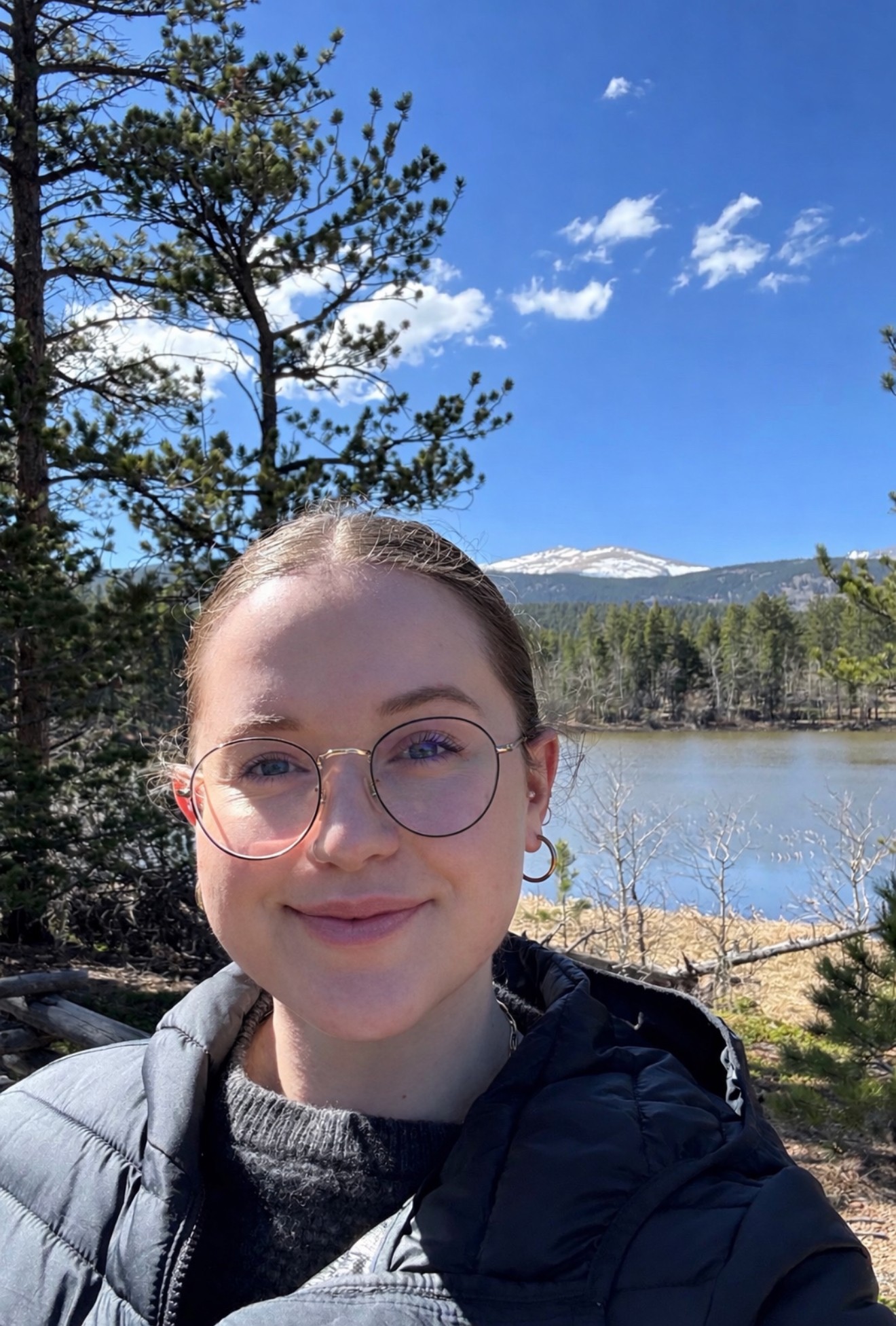
Today we’d like to introduce you to Lauren Sievers.
Hi Lauren, please kick things off for us with an introduction to yourself and your story.
My story with art started long before I had the language to call myself an artist. I grew up constantly making things, but ceramics entered my life in high school and very quickly became the medium I knew I wanted to build my life around.
That eventually led me to earn my BFA in Ceramics and a minor in Nordic Studies from the University of Colorado Boulder. During college, I also studied abroad at Uppsala University in Sweden, an experience that had an enormous influence on the way I think about place, identity, design, and belonging. When VoyageDenver first shared my story, I had recently graduated, had been accepted to my dream graduate program at Konstfack in Stockholm but was unable to attend because of the financial realities of studying abroad, and had unexpectedly found myself beginning a career teaching high school ceramics.
A lot has happened since then.
Teaching became a much larger part of my life than I had originally anticipated. I spent several years teaching ceramics and sculpture and also became involved with community clay spaces, working with students ranging from people touching clay for the first time to artists developing their own practices. Teaching changed the way I understand being an artist. It reminded me that creativity isn’t only about the objects we produce. It can also be about creating spaces where people feel safe enough to experiment, fail, learn, and discover something about themselves.
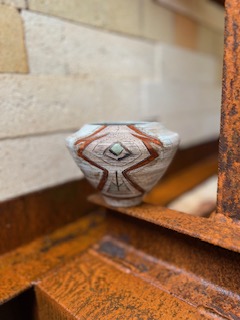
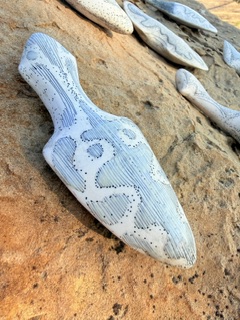
At the same time, my own studio practice continued to evolve. I still work between functional and sculptural ceramics, and many of the visual languages that have followed me for years continue to appear in the work: architecture, arches, geometric pattern, repetition, surface, landscape, and the tension between control and unpredictability. I’m increasingly interested in the ways objects can carry memory and how our relationships with places become embedded in the things we make.
My creative life has also expanded beyond clay. I’ve become increasingly interested in writing, poetry, painting, photography, design, and the ways different mediums can communicate ideas that ceramics sometimes cannot. Rather than feeling like I have to define myself through one material, I’ve started allowing all of those practices to exist alongside one another.
I think the biggest difference between the artist I was when my first VoyageDenver article came out and the artist I am today is that I feel much less pressure to know exactly what the finished version of my life is supposed to look like. My path hasn’t been particularly linear. There have been opportunities I’ve had to let go of, careers I’ve stepped into unexpectedly, and dreams I’ve had to reimagine rather than abandon.
Sweden, ceramics, travel, teaching, and making are all still very much part of the life I’m building. I’m just more interested now in allowing that life to grow organically instead of trying to force it into one specific definition of what being an artist is supposed to mean.
Would you say it’s been a smooth road, and if not what are some of the biggest challenges you’ve faced along the way?
Definitely not, but I think I’ve stopped expecting it to be.
When I was younger, I had a much more linear idea of what an artist’s life was supposed to look like. I thought I would finish my BFA, go to graduate school, establish my studio practice, and continue moving forward from there. My first interview with VoyageDenver actually captured the moment when that idea started to unravel. I had been accepted to my dream graduate program at Konstfack in Stockholm, but ultimately couldn’t attend because of the financial barriers involved. At the time, that felt enormous. I had worked toward something for years, achieved it, and then discovered that achieving it wasn’t enough to make it accessible.
In the years since, I’ve realized that experience wasn’t an exception to the creative life. In many ways, it was an introduction to it.
One of the biggest challenges has been figuring out how to sustain a creative practice while also sustaining a life. Being an artist requires time, space, materials, equipment, and money, and those things aren’t always easy to align. There have been periods when I’ve had incredible access to studios and creative communities, and others when making has had to become smaller or quieter because life required my attention elsewhere. I’ve taught, worked within community art spaces, taken jobs outside of the arts, and continually had to reconsider what it means to call myself an artist when I’m not able to spend every day in a studio.
I’ve also had to become more comfortable with uncertainty. There have been things I was absolutely convinced my life would include by now that haven’t happened yet, and other opportunities I never could have predicted that have completely changed me. That’s been difficult at times, especially when it feels like everyone around you is moving along some invisible timeline you’re supposed to be following.
But I’ve learned that a creative life isn’t something I will eventually arrive at. I’m already living it. Sometimes that looks like making ceramics, sometimes it’s teaching someone else how to work with clay, and sometimes it’s writing, painting, photographing, traveling, or simply collecting ideas until I have the space to make something from them.
I still have many of the same dreams I had when I was younger. I’m just less interested in measuring their success by how quickly I reach them. If anything, the difficult parts have made me more certain about the things I keep returning to. Art, making, teaching, travel, and my connection to Sweden have survived every version of my life so far. I think there’s something worth paying attention to in that.
Thanks for sharing that. So, maybe next you can tell us a bit more about your work?
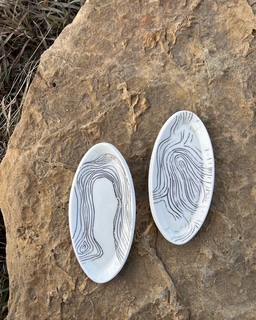
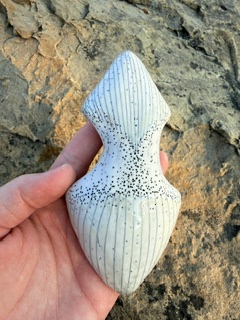
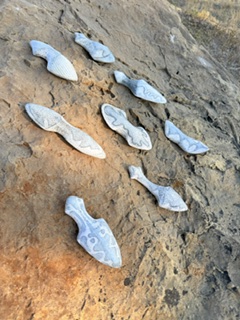
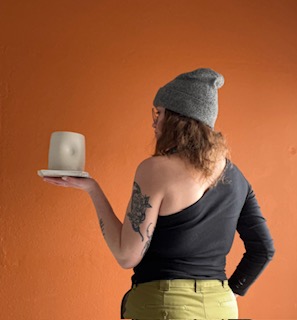
I am an artist, and clay is my primary medium. Ceramics has always been the material I understand most intuitively and the one I return to most often, but over the years my practice has expanded to include painting, textiles, wood, writing, and poetry. Rather than feeling tied to a single medium, I’m interested in allowing the idea itself to determine how it needs to be expressed.
Within ceramics, I create both functional and sculptural work. I’m particularly drawn to architecture, repetition, geometric pattern, and surface. Arches have followed me throughout my practice, originally emerging from the landscapes and architecture of southern Utah where I grew up. Checkered patterns, carved and water-etched surfaces, and the contrast between highly controlled forms and the unpredictability of ceramic materials have also become recognizable elements of my work.
Much of what I make comes back to place and memory. I’m fascinated by the way environments become part of our identities and how ordinary objects can accumulate meaning simply because of where they’ve been, who has touched them, or what we associate with them. I think that’s also why I’m drawn to functional ceramics. A cup or bowl can begin as an object someone chooses because they find it beautiful and, through use, quietly become part of someone’s morning, home, traditions, and memories. I love that transformation.
Teaching is another important part of my work. I’ve taught ceramics and sculpture in both educational and community settings, and some of the moments I’m most proud of haven’t involved my own artwork at all. They’ve been watching someone walk into a studio convinced they aren’t creative and leave having made something they’re genuinely proud of. I take the responsibility of creating that kind of environment seriously.
What I’m most proud of in my own practice is that I’ve continued to let it evolve without losing the core of what has always interested me. The consistency in my work comes less from using one material and more from the questions I keep returning to.
Whether I’m working with clay, paint, textiles, wood, or words, I’m usually circling the same ideas: place, belonging, memory, material, and the ways we construct meaning around the things and environments we love. I think what sets my work apart is the way those different parts of my practice inform one another. They aren’t separate identities or separate versions of me. Together, they make up the language of my work.
What has been the most important lesson you’ve learned along your journey?
One of the most important lessons I’ve learned is how necessary it is to get out of my own way.
That’s something you hear constantly in art school: don’t be your own worst critic, don’t overthink the work before it exists, don’t let fear or perfectionism stop you from making. It sounds simple, but I think it’s one of the hardest things to actually practice.
It’s very easy to become so focused on whether something is good enough, meaningful enough, finished enough, or worth pursuing that you interrupt the creative process before you’ve really given yourself the chance to discover where it could go.
At this point in my life and practice, I feel like I’m rediscovering the importance of curiosity and experimentation. Making something because I want to make it. Following an idea without needing to immediately understand what it will become or how it fits into everything else I’ve done.
I think the lesson for me has been that growth doesn’t always come from pushing harder or becoming more disciplined. Sometimes it comes from loosening your grip a little, trusting your instincts, and giving yourself permission to make without judging every step along the way.
Contact Info:
- Website: https://www.laurensievers.com
- Instagram: laurensievers.studio