

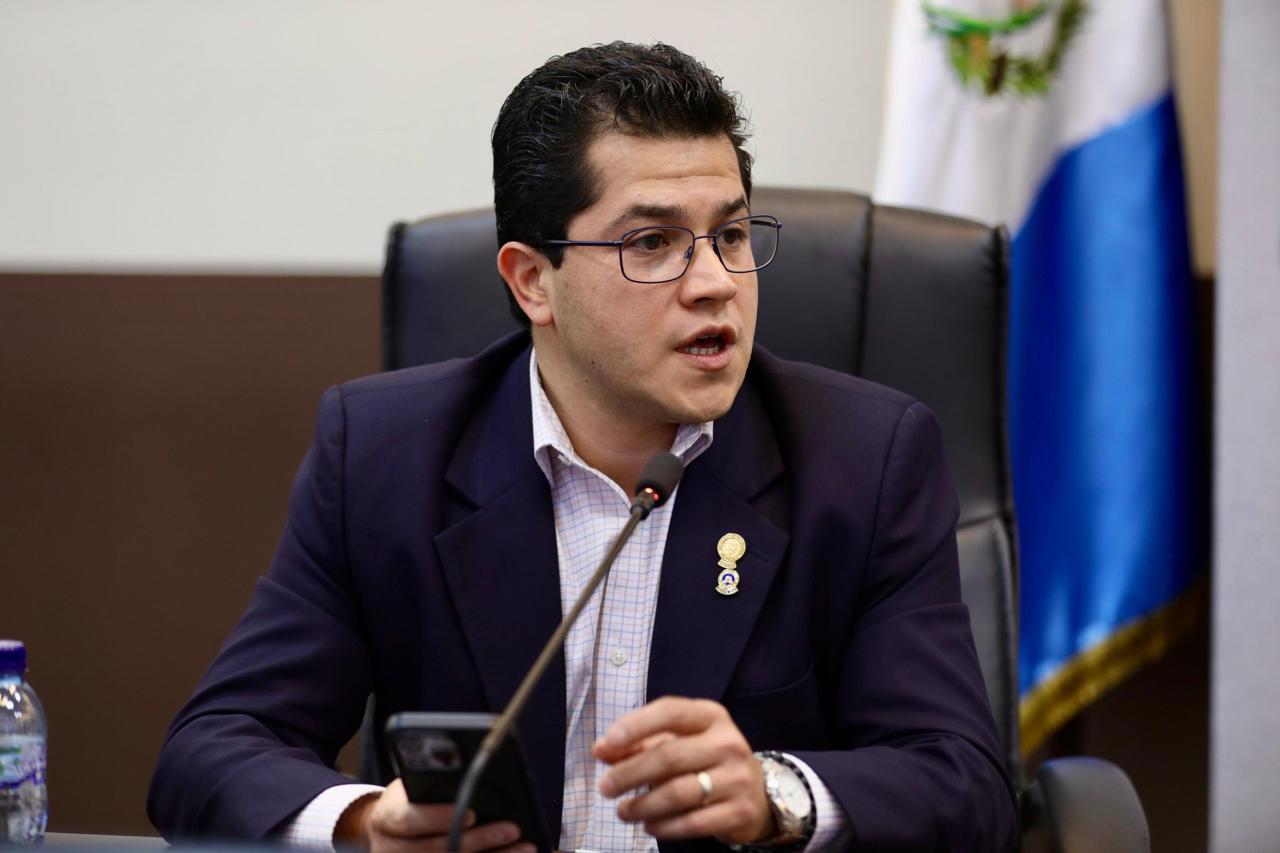
Today we’d like to introduce you to Mario Menendez.
Hi Mario , so excited to have you on the platform. So before we get into questions about your work-life, maybe you can bring our readers up to speed on your story and how you got to where you are today?
Below is the complete English translation of the text you provided, preserving the original structure, tone, and narrative intent.
The Story of Mario Menéndez
My story begins long before my professional life. It begins at home.
I come from a separated family, and I am an only child. From the time I was born, two women played a fundamental role in my upbringing: my mother and my aunt. They were present throughout my childhood, adolescence, and transition into adulthood. They were the ones who educated me, guided me, and, above all, began shaping the values that would later influence many of the decisions I have made throughout my life.
My mother always had a very clear idea of how she wanted to raise me: she wanted me to learn how to stand on my own.
She did not want to raise someone who depended on others. She wanted me to learn how to find solutions, take responsibility, and understand that important things require effort, discipline, and perseverance.
Perhaps because I am an only child, that lesson became even more important.
From a very young age, I repeatedly heard the same lesson expressed in different ways:
You have to learn how to solve problems.
Through tremendous effort and dedication, my mother did everything she could to provide me with the best educational tools available to her, convinced that one day they would be essential for my professional development.
I began my education at a bilingual school, where I was exposed to both English and Spanish from a very early age. I later attended a traditional school with more than one hundred years of history in Guatemala.
However, my education was never limited to regular school hours.
Throughout those years, I took different extracurricular classes and courses. I studied mathematics, strengthened my English skills, and participated, among other activities, in speed-reading courses.
At the time, I probably could not fully understand how important those tools would eventually become. Today, for example, speed reading allows me to analyze large amounts of information, review technical and legislative documents, and process information more efficiently so that I can subsequently develop opinions, conclusions, or proposals.
Over time, I came to understand that many of those educational decisions that seemed small at the time were actually developing abilities that I would continue using decades later.
## University: Learning How to Think
After graduating from school, I enrolled at Universidad Francisco Marroquín, an institution recognized for its emphasis on individual liberty, free-market economics, and classical liberal thought.
I studied International Relations with a specialization in Foreign Trade and International Organizations.
It was a particularly important stage in my education.
The university’s educational methodology, based largely on discussion, questioning, and the Socratic method, strengthened my capacity for critical analysis.
I learned that memorizing information was not enough.
It had to be questioned.
It had to be understood.
It had to be compared and challenged.
And, ultimately, I had to be capable of developing my own position and defending it with sound arguments.
That educational approach had a profound influence on the way I continue to analyze problems and search for solutions today.
It was also during this period that I consolidated my affinity for free-market principles, ideas with which I personally identify and that I have sought to apply both in my professional and entrepreneurial life.
Through considerable effort, I was able to complete my undergraduate degree in approximately four and a half years.
During those years, I also had the opportunity to participate in a model of international organizations in Washington, D.C., together with university classmates. The experience allowed me to move beyond the traditional academic environment and engage in exercises involving negotiation, diplomacy, argumentation, and consensus-building.
It was one of my first opportunities to put into practice many of the concepts I had studied in the classroom.
Spain and a New Perspective on the World
After completing my undergraduate studies, around 2010, I decided to continue my education.
I applied to theMaster’s Degree in Port Management and Intermodal Transportation, which was offered in Valencia, Spain, through Fundación Valenciaport at the Port of Valencia and was academically supported at the time by Universidad Pontificia Comillas in Madrid.
I lived in Spain for approximately two years.
The experience meant much more than earning an academic degree. It allowed me to experience another culture, face a different reality, and learn how to function independently far away from my familiar surroundings.
During this period, I also had the opportunity to become involved in one of the projects related to the automation of the Port of Valencia.
That experience awakened an interest that would repeatedly appear throughout different stages of my career:
**how technology can be used to transform traditional processes, improve efficiency, and make institutions and companies more competitive.**
Without realizing it at the time, that interest in automation and technological transformation would reappear many years later in my professional life.
Returning to Guatemala
When I returned to Guatemala, I did so with an undergraduate degree, a master’s degree, and, perhaps more importantly, a different perspective on the world.
A new stage of my life began.
I worked as Head of Ground Operations at La Aurora International Airport.
It was there that I met someone who would become my first major professional mentor and whose presence would, years later, have a decisive influence on my life.
At that time, however, our conversations were primarily related to operations, management, business, and ways of addressing problems within an organization.
I later had the opportunity to work for one of the most important sugar industry groups in Guatemala.
That experience once again broadened my perspective.
I gained first-hand knowledge of industrial operations and had the opportunity to observe activities related to sugar mills and the industry’s operations in Guatemala, Mexico, Honduras, and Nicaragua.
It was there that I also met the person whom I consider my second mentor.
From him, I learned important lessons about management, commercial strategy, negotiation, and human resource management.
Over time, I have come to understand that technical knowledge is essential, but leading organizations requires something more: understanding people.
A company can have processes, systems, technology, and capital, but behind every operation there are human beings.
Learning how to lead them, listen to them, motivate them, and make difficult decisions was one of the most important lessons of that stage of my life.
People Are Also Part of the Journey
Over the years, I have also learned something that is not necessarily taught at a university.
Life is made up of cycles.
Throughout our journey, some people remain with us for many years, others accompany us only during a particular stage, and some, after a long period of time, unexpectedly reappear in our lives.
There are also people who simply move away.
And that is part of life.
Not everyone who begins a journey with us is meant to walk beside us until the end.
Some people enter our lives to teach us something.
Others help us open a door.
Some accompany us through difficult moments.
Others show us what we need to change.
And there are also those whose absence itself becomes a lesson.
With time, I have learned to understand these encounters and farewells as a natural part of a person’s development.
Because our education and personal growth do not come exclusively from books, universities, or our jobs.
They also come from the people we meet.
From those who encourage us.
From those who challenge us.
From those who teach us.
And, sometimes, even from those who leave.
Every person leaves something behind.
And every stage, whether good or difficult, eventually becomes part of who we are.
## Ports, Technology, and Energy
I subsequently worked for Guatemala’s National Port Commission.
My experience in Valencia had left a strong impression on me, and from that position I sought to promote ideas related to the modernization and automation of Guatemala’s ports.
I also conducted research aimed at improving the energy efficiency of port facilities and explored the possibility of incorporating alternative energy sources into their operations.
Even then, I had a concern that remains present in my work today: Guatemala needs to modernize its infrastructure if it wants to compete internationally.
During the following years, I also worked for multinational companies such as Bayer and for businesses involved in international trade, imports, and exports.
But alongside my professional responsibilities, another ambition had always remained present.
I wanted to build something of my own.
## Trying, Failing, and Starting Again
The upbringing I received from childhood had instilled in me independence and the need to seek solutions on my own.
For that reason, at different points in my life, I attempted to develop my own businesses.
One of my first projects focused on exporting Guatemalan handicrafts.
I later explored opportunities to commercialize and export fruits and vegetables of Guatemalan origin. I also evaluated business opportunities involving products from Mexico.
Some projects progressed further than others.
Others simply did not work.
And just as new opportunities were beginning to develop, the COVID-19 pandemic arrived.
Commercial, logistical, and mobility restrictions completely changed the conditions under which several of those projects had originally been conceived.
It was a difficult period.
But it also taught me an important lesson.
Entrepreneurship means accepting uncertainty.
It means understanding that a good idea does not necessarily become a successful business immediately.
It means making mistakes, losing opportunities, reconsidering strategies, and starting again.
Once again, that lesson from my childhood — learning how to solve problems — took on new meaning.
The Return of a Mentor
Years later, a coincidence occurred that would ultimately change the direction of my professional life.
I reconnected with the first mentor I had met during my years working at the airport.
Many years had passed.
He continued developing his business activities, but around 2021 and 2022 he had also become involved in the creation of a new political party in Guatemala, identified with a right-of-center political orientation.
We began speaking again.
That reunion confirmed something life had already taught me: some people disappear during certain chapters of our lives and return when circumstances, new projects, and greater personal maturity make it possible to build something different together.
I initially became involved by supporting logistics-related matters.
I was subsequently invited to join the National Executive Committee, becoming part of the leadership team responsible for the direction and organization of the political party.
This meant entering an entirely different world.
Until that point, my experience had been primarily related to business, international trade, logistics, operations, infrastructure, and management.
Now, a new stage was beginning: politics.
In 2023, I made one of the most important decisions of that process.
I ran as a candidate for the Congress of the Republic of Guatemala.
I was not elected.
But that election did not represent the end of the road.
On the contrary, it opened a new chapter.
From the Private Sector to Public Service
Today, I continue to be part of the political party and its National Executive Committee.
My former mentor was elected to the Congress of the Republic, and today I once again have the opportunity to work alongside him, although from an entirely different perspective.
I serve as his personal adviser and also participate in different political and legislative advisory processes.
My professional education, business experience, knowledge of operations and logistics, and long-standing interest in technology began to converge.
I have participated in the work of the **Presidential Forum for Digital Transformation**, of the Congress in F the Repúblic, where discussions and proposals are promoted with the objective of reducing Guatemala’s technological divide and preparing the country for the challenges of the digital economy.
At the same time, I collaborate on matters related to the **National Security Affairs Committee of the Congress of the Republic**, particularly in areas involving technology, security, and legislation.
Among the issues I have had the opportunity to study and promote are critical infrastructure protection, data protection, and cybersecurity.
In many ways, the different pieces began to connect.
The experience with automation that I had encountered years earlier at the Port of Valencia.
International trade.
Logistics.
Airport and port operations.
Energy.
Management.
Technology.
International relations.
And ultimately, public policy.
What had once appeared to be isolated professional experiences gradually became part of the same professional journey.
Continuing My Education to Better Understand Politics and Security
My academic education did not end with my master’s degree.
As I became more deeply involved in political, legislative, technological, and national security matters, I realized that I needed to continue preparing myself academically.
I am currently in the dissertation stage of a Doctorate in Political Science and Security.
This academic stage represents, for me, a natural evolution of everything I have experienced throughout my career.
International Relations allowed me to understand relationships among states and organizations.
Foreign trade and logistics taught me how economies move and connect.
Port management and intermodal transportation allowed me to study infrastructure, supply chains, and competitiveness.
My business experience taught me management, negotiation, and human resources.
And politics taught me that many of a country’s greatest transformations require strong institutions, appropriate legislation, and people willing to assume responsibility.
The doctorate therefore represents an opportunity to deepen my understanding of power, the State, security, institutions, and public decision-making.
Because if there is one thing I have learned throughout all these years, it is that we should never stop studying.
Preparation does not end when we receive a degree.
It should accompany us throughout our entire lives.
Family: The True Point of Balance
However, no professional story is complete if it speaks only about work.
The journey has been long.
There have been good moments and difficult ones.
There have been successes, but also projects that did not work.
There have been opportunities and closed doors.
People who arrived.
People who left.
People who returned.
Joy, frustration, certainty, and doubt.
And throughout this journey, I came to understand that family ultimately becomes one of the most important pillars that allows us to remain standing.
In 2021, I met the woman who is now my wife, who is originally from Colombia.
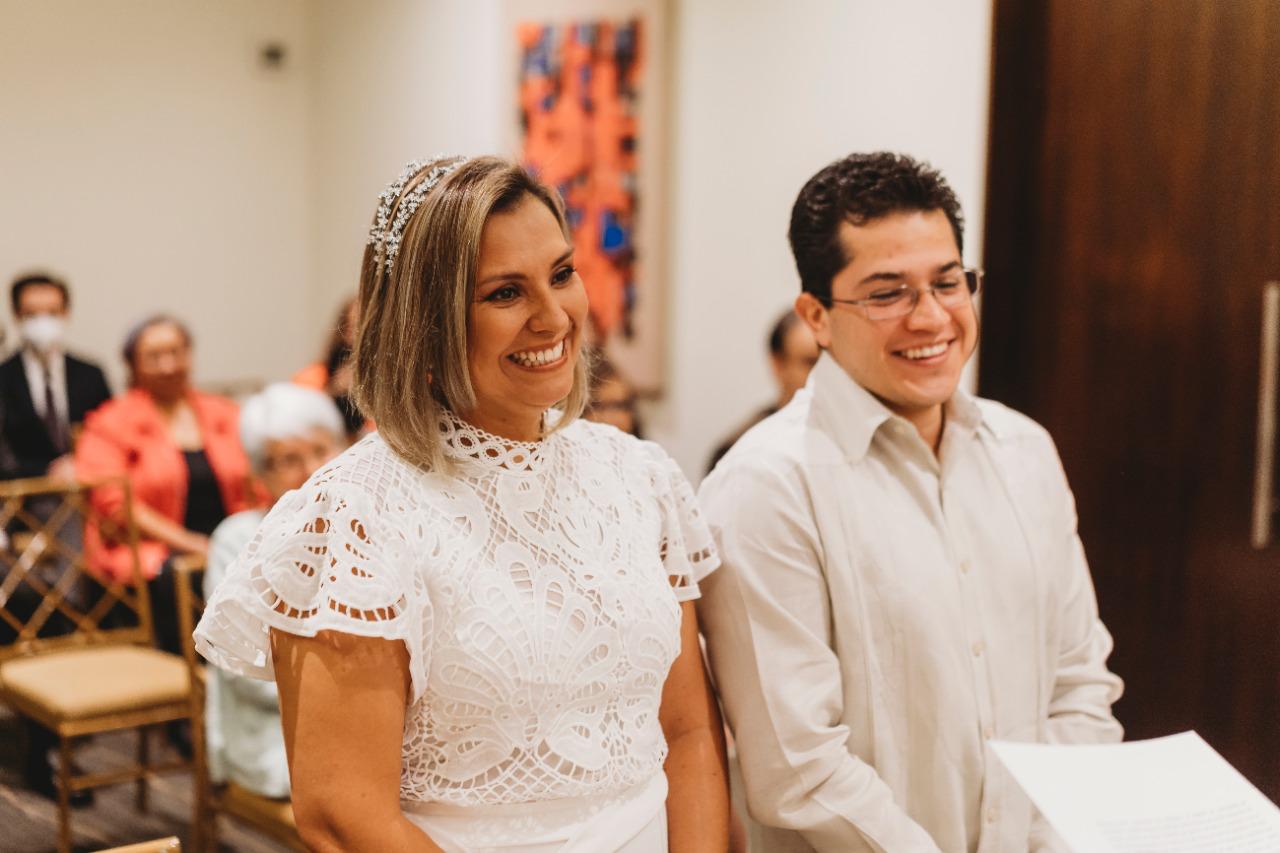
We were married in 2022.
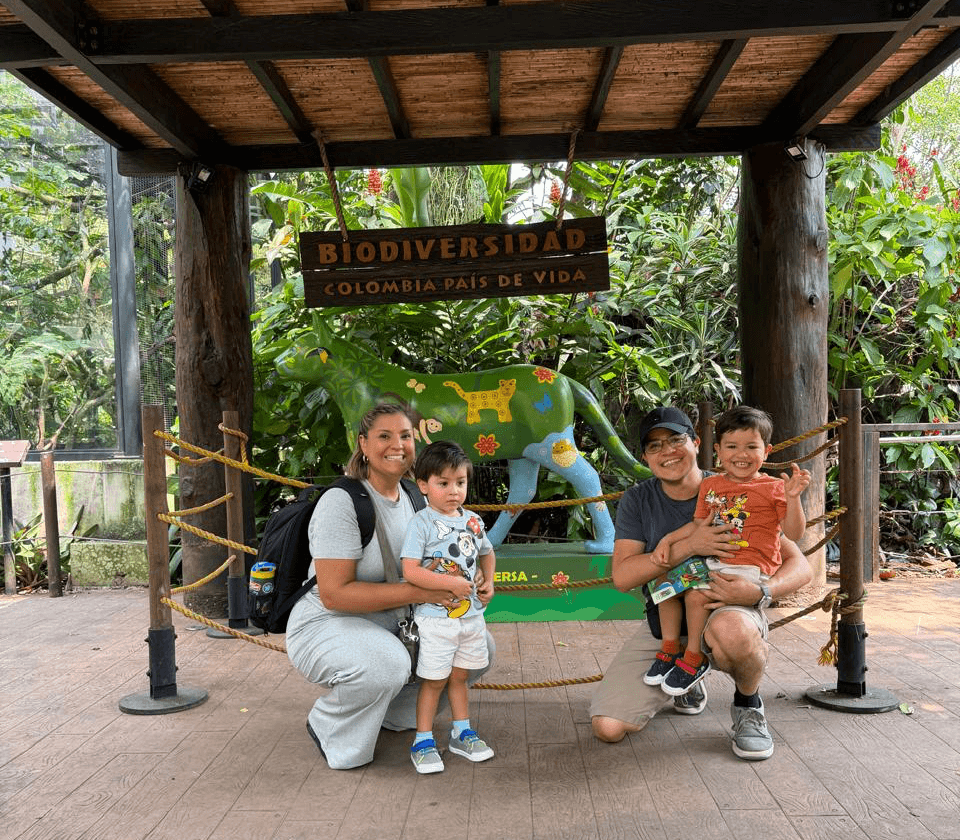
And in 2023, our lives changed completely with the arrival of our twins.
Becoming a husband and later a father transformed many of my priorities and also changed the way I understand the future.
My wife has been a fundamental part of this stage of my life.
She has supported me through difficult moments, encouraged me to return to projects I had previously left behind, and, in particular, motivated me to become actively involved again in spaces and activities that form part of my personal and professional development.
Her support is not limited to my professional work.
She also accompanies me and respects other dimensions of my personal growth, including my participation in Freemasonry, an activity that represents another space for learning, reflection, fraternity, and personal development.
Having someone who understands your projects, supports you when doubts arise, and at the same time encourages you to keep moving forward completely changes the way you face challenges.
Today, my children also represent an additional reason for me to think about the future.
It is no longer only about the country in which I want to live.
It is about the country in which I want them to grow up.
Trying Again
My participation in the 2023 elections was a major learning experience.
Entering politics means putting yourself in the public eye.
It means listening to criticism.
It means persuading others.
It means learning how to communicate.
It also means understanding that profound transformation rarely takes place from a position of comfort.
For that reason, I have made the decision to run again as a candidate for the Congress of the Republic of Guatemala (Partido AZUL).
I do not see this new candidacy simply as a second electoral attempt.
I see it as the continuation of a process.
Today, I approach it with greater political experience, a deeper understanding of Congress, direct experience with legislative processes, and participation in discussions involving national security, digital transformation, critical infrastructure, data protection, and cybersecurity.
I also approach it with a different perspective.
The 2023 experience allowed me to learn from the perspective of a candidate.
The years that followed have allowed me to learn from inside the institution how Congress operates, how legislative initiatives are developed, how agreements are negotiated, and what some of the principal limitations facing the State are.
That is why participating again has a different meaning for me.
It is not simply about holding public office.
It is about attempting to transform the knowledge and experience accumulated throughout all these years into tools for public service.
Continuing to Build
When I look back at my story, I see one constant.
It has never followed a perfectly straight line.
I have worked in the private sector, multinational corporations, international trade, logistics, airports, sugar mills, ports, entrepreneurship, technology, and ultimately politics.
I have lived in another country.
I have tried to build businesses.
Some ideas worked partially.
Others never fully developed.
I have changed jobs.
I have returned to old projects.
I have met people who defined entire stages of my life.
Some remain.
Others continued along their own path.
And some, after years of distance, reappeared.
I have learned that this is also how life works.
People come and go.
Circumstances change.
Projects begin and end.
Priorities evolve.
And we change as well.
All of this forms part of our development.
Because a person is not shaped solely by success.
We are also shaped by our mistakes, our losses, our farewells, our reunions, our failures, our decisions, and the people who left lessons behind along the way.
Today, I continue studying.
I continue working.
I continue learning.
I continue participating in politics.
And I am preparing to once again ask the citizens of Guatemala for their trust as a candidate for the Congress of the Republic.
But there are principles that have remained almost unchanged since my childhood.
Education matters.
Discipline matters.
Family matters.
People matter.
We must constantly prepare ourselves.
We must learn from our mistakes.
We must know when to close chapters.
We must have the ability to begin again.
And when we face problems, before looking for excuses, we must look for solutions.
That is probably one of the greatest legacies my mother and my aunt gave me.
Learning how to solve problems.
Today, my objective is to use everything I have learned throughout this journey — my business, academic, international, technological, political, and human experience — to participate in projects capable of creating real transformation.
I am convinced that Guatemala has enormous opportunities, but it also faces major challenges.
Reducing the digital divide.
Protecting our infrastructure.
Strengthening cybersecurity.
Protecting citizens’ data.
Modernizing our institutions.
Improving our competitiveness.
Strengthening national security.
And preparing the country for an increasingly digital economy and society.
These challenges require more than speeches.
They require knowledge, experience, the ability to engage in dialogue, and the willingness to execute.
My story is still being written.
I do not know exactly what every future chapter will contain.
But I do know the direction in which I want to continue moving.
Everything I have learned, every success, every mistake, every person who arrived or left, every mentor, every job, every opportunity, and every difficulty has been part of my preparation for what comes next.
Because, in the end, life is also about this:
learning, preparing, adapting, knowing who we are, and having the courage to try again.
And, above all, never forgetting the lesson that began at home:
when faced with every challenge, learn how to find a solution.
We all face challenges, but looking back would you describe it as a relatively smooth road?
No, it has definitely not been an easy journey. It has been a path filled with learning, change, achievements, and also difficult moments.
One of the main challenges has been understanding that life does not always move according to our plans. I have developed business projects that did not fully materialize, some because of market conditions and others, as happened during the COVID-19 pandemic, because of circumstances completely beyond my control. I have also had to start over at different stages of my professional life, adapt to new sectors, and continue learning in order to remain prepared.
In politics, I have also faced important challenges. In 2023, I ran as a candidate for the Congress of the Republic of Guatemala and was not elected. However, I chose not to see that experience as a failure, but rather as part of my development. It allowed me to better understand politics, gain a deeper perspective on legislative work, and prepare myself with greater experience to try again.
Another important lesson has been understanding that people are also part of the different cycles of life. Some appear at certain moments, walk with us for a period of time, teach us something, and eventually follow a different path. Others disappear for years and, as happened with one of my mentors, return at a different stage and once again play an important role in our story. I have learned that encounters, farewells, and reunions are also part of our personal development.
In addition, balancing professional, political, academic, and family responsibilities is a constant challenge. I am currently continuing my professional and political work while completing the thesis stage of my Doctorate in Political Science and Security, and at the same time I strive to remain present as a husband and father.
That is why I do not consider my journey to have been easy, but I believe that the difficulties have been precisely what shaped me the most. I have learned to adapt, to accept that not everything turns out as expected, to close chapters, to begin again, and above all, not to give up in the face of obstacles.
In the end, I always return to one of the most important lessons I learned at home as a child: when faced with problems, you have to learn how to find solutions.
Can you tell our readers more about what you do and what you think sets you apart from others?
I currently serve as an advisor in the Congress of the Republic of Guatemala, where I directly support the political and legislative work of a member of Congress. I also serve as an advisor to the political party, the Presidential Forum on Digital Transformation, and the Congressional Committee on National Security Affairs.
My work involves analyzing national challenges, conducting research, developing proposals, providing strategic advice, and contributing to legislative initiatives aimed at modernizing the State, strengthening national security, and preparing Guatemala for emerging technological challenges.
I specialize in the intersection of public policy, national security, digital transformation, cybersecurity, data protection, and critical infrastructure. My academic background in International Relations, Foreign Trade, Port Management, and Intermodal Transportation, together with my doctoral studies in Political Science and Security, enables me to approach these issues from technical, political, strategic, and international perspectives.
Within the Presidential Forum on Digital Transformation, I help promote dialogue and proposals aimed at reducing the digital divide, modernizing public institutions, and creating the conditions necessary for Guatemala to move toward a more digitally driven economy and society.
In the Congressional Committee on National Security Affairs, I participate in the analysis and development of legislation addressing the emerging risks facing the country. Among the accomplishments I value most is having contributed to the drafting and presentation of legislative initiatives concerning critical infrastructure protection and data protection, while continuing to work on their amendments and technical improvement.
I am also particularly proud of having participated in the review process and final presentation of the cybersecurity bill. This proposal represents an important step forward for Guatemala because it seeks to establish a legal framework to prevent and combat cybercrime, protect citizens and institutions, strengthen national and international cooperation, and provide greater security in the digital environment.
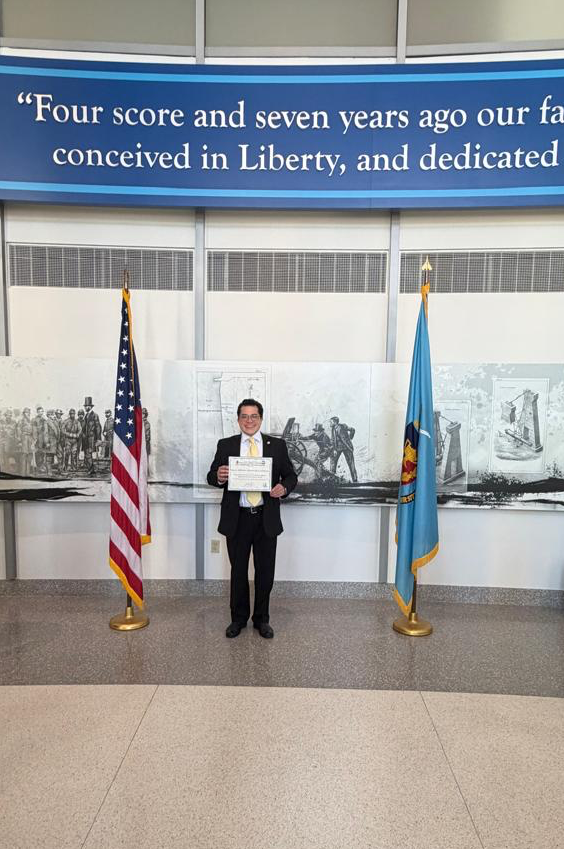
This work has also given me the opportunity to continue strengthening my professional education. In 2026, I was invited by the United States Embassy in Guatemala and the William J. Perry Center for Hemispheric Defense Studies at the U.S. National Defense University to participate in specialized training on cybersecurity and artificial intelligence. This experience broadened my knowledge and allowed me to examine these challenges from a strategic and international perspective.
I believe I am known for my ability to examine complex issues, connect different fields of knowledge, and translate analysis into concrete proposals. My experience in logistics, international trade, operations, infrastructure, technology, and public policy allows me to understand problems from multiple perspectives and develop comprehensive solutions.
What distinguishes me most is precisely this combination of experiences. My background is not limited to politics: I have worked in the private sector, airport and port operations, international trade, multinational companies, and technological modernization projects. Today, I apply all this knowledge to public service and legislative work.
More than holding a position, my purpose is to help Guatemala develop modern institutions, protected infrastructure, up-to-date legislation, and stronger capabilities to address the risks of an increasingly digital society. I am proud to be transforming years of education and professional experience into proposals that can generate meaningful change for the country.
What continues to define me is a lesson I learned at an early age: when facing any challenge, we must prepare ourselves, analyze the situation, and learn how to find solutions.
Can you talk to us about how you think about risk?
I believe risk is an inevitable part of growth. I do not view it as acting impulsively or irresponsibly, but rather as having the courage to move forward in the face of uncertainty—after carefully analyzing the consequences, preparing yourself, and accepting responsibility for the outcome.
Throughout my life, I have made important decisions that involved taking risks. One of the first was leaving Guatemala to pursue a Master’s Degree in Port Management and Intermodal Transportation in Spain. Living far from my family and adapting to an unfamiliar environment was challenging, but it also broadened my worldview and strengthened my independence.
I also took risks by launching business ventures related to international trade and exports. Some progressed, while others did not become fully established, and several were affected by external circumstances such as the COVID-19 pandemic. These experiences taught me that taking risks also means accepting that we will not always achieve the outcome we expect, learning from our mistakes, and developing the ability to start again.
However, one of the most significant risks I have taken was entering politics. I came from the private sector, with experience in logistics, international trade, and operations, so joining a political party and running for Congress in 2023 meant stepping completely outside my comfort zone. Politics requires public exposure, facing criticism, defending one’s convictions, and accepting that—even after making a tremendous effort—the outcome depends on many different factors.
Not being elected was difficult, but I chose to turn that experience into an opportunity to learn. Rather than walking away, I continued working, preparing myself, and gaining an inside understanding of how the Congress of the Republic of Guatemala operates. Today, I participate in political and legislative processes related to digital transformation, critical infrastructure, data protection, cybersecurity, and national security.
Promoting these issues also involves taking risks. Proposing changes in new and complex areas requires questioning existing structures, confronting resistance, and defending decisions whose effects may extend well beyond a single political term. Nevertheless, I believe the risk of failing to act can be even greater, particularly when the country’s security, the protection of its citizens, and Guatemala’s digital future are at stake.
For that same reason, I have decided to run for Congress again. I am doing so with a clear understanding of the uncertainty and difficulties involved in a political campaign, but also with greater experience, preparation, and clarity of purpose. To me, trying again does not mean ignoring the previous result; it means demonstrating that one setback should not define the rest of our journey.
I do not consider myself a risk-taker in the sense of acting without thinking. I consider myself someone who is willing to take calculated risks when there is a purpose that justifies them. Before making a decision, I try to conduct research, analyze different scenarios, listen to various perspectives, and prepare thoroughly. At the same time, I understand that there comes a point when no amount of analysis can eliminate uncertainty entirely, and we must have the courage to make a decision.
My perspective is simple: risk should be approached with preparation, conviction, and responsibility. Sometimes we succeed, and other times we learn—but remaining still out of fear also carries a cost. Many of the experiences that have shaped me the most began precisely with an uncertain decision and the determination to take the next step.
Contact Info: