

Today we’d like to introduce you to Cora Spearman.
Hi Cora, can you start by introducing yourself? We’d love to learn more about how you got to where you are today?
I sometimes joke that my life feels a little like Forrest Gump—I somehow keep finding myself in extraordinary places, meeting extraordinary people and collecting incredible experiences along the way. Life is like a box of macadamia nut chocolates. Or maybe it’s a little like The Wizard of Oz, because I feel as though I’ve spent much of my life following my own yellow brick road.
I was a little girl with a huge imagination who loved sneaking copies of my mother’s Vogue. My father worked in fashion and was a creative, while my mother was very business- and corporate-minded, so I suppose both sides of what I would eventually become were there from the beginning.
My life changed dramatically when, as a child, I was hit by a car, dragged approximately 50 feet and severely burned over 78% of my body, with extensive injuries that required me to spend more than 11 months in the hospital learning to walk again. Because I couldn’t stay in a children’s hospital, I recovered among adults, including several gentlemen who were patients in what would now be understood as an AIDS ward. They became my hānai uncles.
They spoiled me with every toy I saw on Saturday morning cartoons, but more importantly, they gave me extraordinary kindness, companionship and love. Somehow my zest for life encouraged them, and their generosity and kindness encouraged me. I think we helped each other survive.
That experience taught me very young about resilience, identity and what it means to truly see another human being. Appearance matters—we use clothing and personal style to tell the world something about ourselves—but appearance doesn’t define our worth. How we show up in the world matters much more.
Years later, after attending an all-girls high school in Fukuoka, Japan, and Waseda University in Tokyo, Japan, I felt called to Hawaiʻi. I arrived without a job or a grand plan, but serendipitously, one opportunity and relationship led to another. That’s where my yellow-brick-road philosophy comes from: throughout my journey, I’ve been blessed to meet people who gave me knowledge, heart and courage—my own Scarecrows, Tin Men and Lions—and sometimes simply the encouragement to keep walking.
Eventually, that road took an unexpected turn through head, neck and skull-base cancer. I was a newlywed thousands of miles from my Hawaiʻi home, undergoing treatment and multiple reconstructive surgeries at Johns Hopkins in Baltimore. I lost vision in my right eye after my optic nerve was over-radiated during treatment. But I often say, “Though I lost my sight temporarily, I never lost my vision.”
And strangely enough, that hospital room is where Coradorables began.
I didn’t want cancer to be the only thing I thought about. I wanted to focus on something more beautiful and brighter. I wanted to think about creativity, family and the future I still believed I would have. I dreamed about having children someday.
The doctors and nurses who were helping bring me back to life became my first unofficial focus group. I began imagining a Made-in-Hawaiʻi family lifestyle brand built around beautiful, heirloom-quality clothing that could carry culture and story—pieces connected to memories rather than disposable fashion.
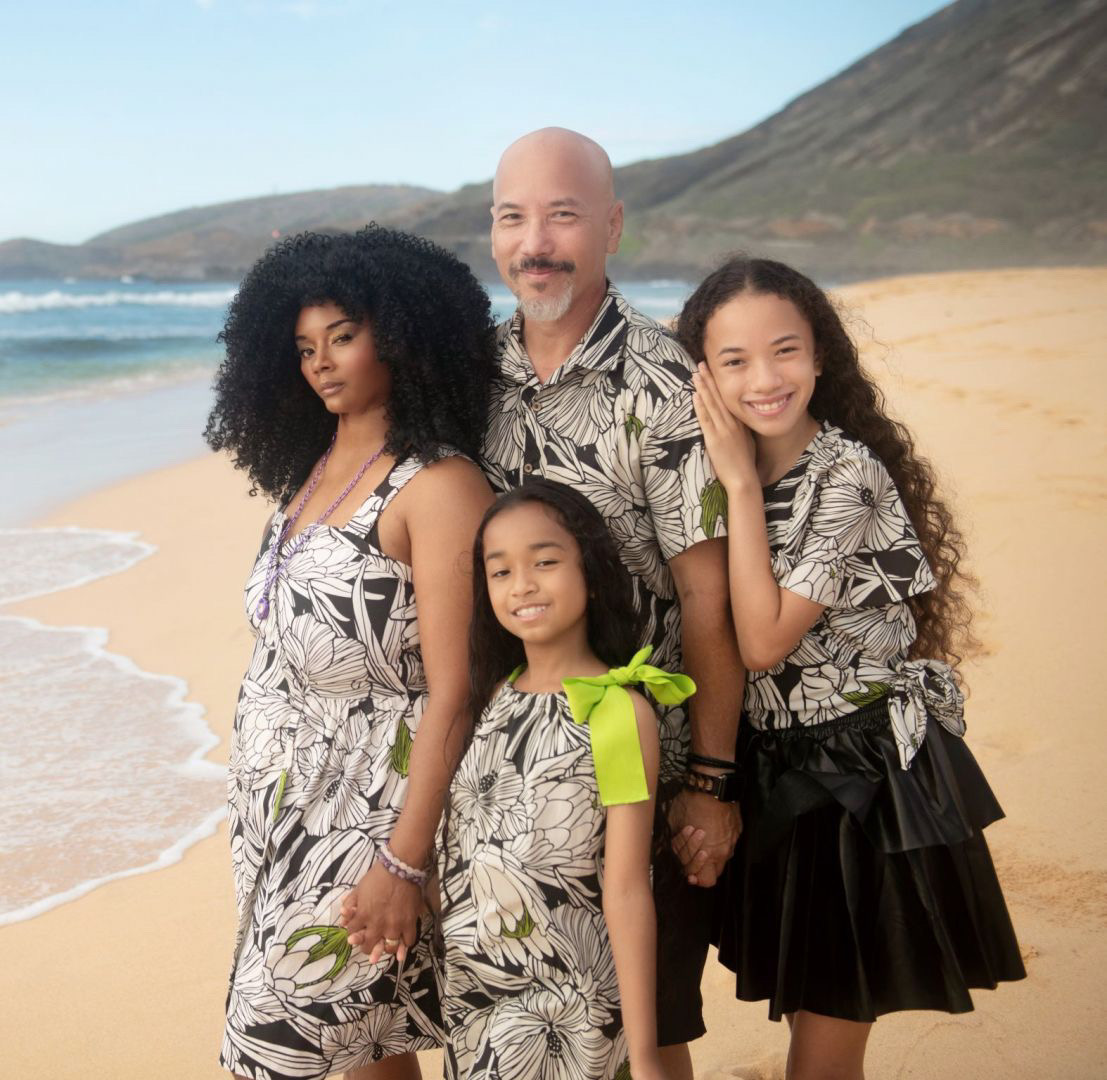
Eventually, my yellow brick road brought me home to Hawaiʻi, back to my soulmate and partner, Chris, and ultimately to motherhood. Our daughters, Izzabelle and Zoe, became both my “how” and my “why,” and Coradorables became something much bigger than the idea I had imagined from a hospital bed.
Today, Coradorables Sustainable Corporation creates clothing manufactured here in Hawaiʻi, with fabric sourced through our Hawaiʻi-based textile partners. We’ve grown from that deeply personal idea into Hawaiʻi’s first Made in Hawaiʻi Certified B Corporation, earning an overall B Impact Score of 107.7, and our work has reached customers through relationships with companies and destinations including Disney, Bloomingdale’s, Four Seasons, Hankyu in Japan and others.
But some of the moments that mean the most to me aren’t the big names.
They’re seeing children who wore Coradorables when they were little grow up and wear our designs to their graduations and even their weddings. They’re seeing a treasured piece passed from one child or generation to another. Those moments tell me that what I imagined all those years ago in that hospital room actually became real.
Coradorables helped me find another part of myself, too. I realized that fashion could carry culture, memory and story while also being a vehicle for doing business differently.
We’re still learning and still building. In Hawaiʻi, we talk about being pono—doing what is right, just and responsible—and that guides how we think about people, community, culture and our environmental impact. I want our growth to mean something beyond simply selling more things.
And in Hawaiʻi, we say imua. It literally means “to push forward,” but it isn’t about pushing forward alone. Imua is used when more than one are gathered with a shared purpose—a group moving forward together, united by common purpose, dignity and perseverance.
That understanding means a great deal to me because none of us gets here alone. My journey has been filled with people who have walked beside me, cared for me, taught me, encouraged me, loved me and sometimes carried me when I needed carrying. From my hānai uncles when I was a little girl, to the doctors and nurses at Johns Hopkins, to my husband and daughters, our community, our partners and all of the people I’ve met along my own yellow brick road—there has always been a we inside my story.
So we continue to push forward together.
I’m still having those Forrest Gump moments where I look around and think, “How in the world did I get here?” I’m still dreaming, creating and advocating for people whose voices aren’t always heard. And I’m still following that yellow brick road, knowing that the journey is bigger than any one person.
Despite everything this road has brought us through, I have a feeling this is still only the beginning.
Imua.
Would you say it’s been a smooth road, and if not what are some of the biggest challenges you’ve faced along the way?
Smooth? Absolutely not. But I’ve learned that sometimes the very things you think are holding you back turn out to be some of your greatest strengths.
As a woman and a person of color, being underestimated has been a recurring part of my journey. But somewhere along the way, I stopped seeing that entirely as a disadvantage. Being underestimated can become a quiet superpower. You don’t always have to announce what you’re capable of—you can simply do the work and allow the results to speak for themselves.
Entrepreneurship while raising a family has certainly been challenging, too, but I couldn’t imagine my entrepreneurial journey without my family. Motherhood didn’t diminish my ambition; it gave my ambition greater purpose. My family is woven into the reason I build, the way I lead and the future I’m trying to create.
Building a company from Hawaiʻi presents another very real set of challenges. Our geographic isolation affects shipping, logistics, manufacturing and the overall cost of doing business. Hawaiʻi also continues to wrestle with the loss of talented young people who leave the islands because the cost of living is so high and opportunities can be limited. That affects our workforce and our ability to retain local talent. Access to capital can be difficult as well, and I’ve often had to look beyond Hawaiʻi to create opportunities while remaining deeply committed to building something rooted here at home.
Another lesson has been learning the difference between being invited into a room and actually being valued once you’re there.
There have been moments when I worked incredibly hard to reach a particular table, only to discover that a prestigious partnership isn’t automatically a pono partnership. A recognizable name doesn’t necessarily mean that the relationship will be equitable, respectful or aligned with your values.
That realization was difficult, because like many entrepreneurs, I once believed getting the “yes” was the victory. Now I understand that sometimes rejection is redirection—and sometimes it’s God’s protection.
Learning to say no has probably been one of my greatest challenges. I’m naturally enthusiastic. I love people, I love possibilities, and I can see potential in almost everything. But I’ve gotten much better at saying no. In fact, at this point I think I can say “no” in multiple languages. No. No thank you. Absolutely not. And occasionally, “Bless your heart.” I’m kidding—mostly.
What I’ve learned is that saying no isn’t necessarily closing a door. Sometimes it’s protecting the space necessary for the right door to open.
The larger challenge has been navigating entrepreneurship, motherhood, marriage and simply becoming more fully myself without allowing disappointment to make me cynical.
I’ve experienced rejection. I’ve been underestimated. I’ve been invited into rooms and undervalued once I arrived. I’ve encountered financial obstacles and geographic ones. But I don’t want those experiences to harden me.
I want them to make me wiser.
What allows me to continue doing that is unwavering faith and extraordinary love—love for my family, love for Hawaiʻi, love for the work, and love for the communities I hope our work serves.
The road hasn’t been smooth. But I don’t think a smooth road was ever the point.
The point is to keep learning how to travel it—with faith, discernment, humor, gratitude and the courage to recognize when it’s time to take a different road.
Thanks – so what else should our readers know about your work and what you’re currently focused on?
Sometimes a print begins right in my backyard—or my front yard.
It might be a plumeria tree, a mango tree or the shape of a monstera leaf that catches my eye. Nature is often where the creative process begins for me. Our designs are inspired by nature, created in relationship with nature, and deeply connected to our sense of place here in Hawaiʻi.
But I don’t think of myself as simply a fashion designer. At my core, I am an artist and a storyteller.
My work is about designing sustainable futures through storytelling. Sometimes those stories have been passed from generation to generation. Sometimes they come through research, conversation and relationships. And sometimes they are simply inspired by the beauty, humor, complexity and multicultural reality of our everyday family life in Hawaiʻi.
Our own family reflects many intersecting histories and cultures. I am African American, Native American and European, and my husband, Chris, is Native Hawaiian, Chinese and Portuguese. Our daughters are growing up at the intersection of all of those histories. That rich multicultural family experience, combined with our relationship to Hawaiʻi and the communities around us, inevitably informs the way I see color, nature, family, identity and story.
I think that’s part of what makes a Coradorables design recognizably ours.
Sustainability is also inseparable from my creative practice. For me, sustainability isn’t simply about materials or checking an environmental box. It’s about asking: Who made this? Where was it made? What story does it tell? Will someone value it enough to care for it? Can it be passed down? And what responsibility do we have to the people and place that made our creativity possible?
Our clothing is manufactured here in Hawaiʻi, and maintaining local production is an intentional part of our work. I want the things we create to have meaning beyond the moment in which they’re purchased.
My creative practice has also grown far beyond apparel. Today my work extends into creative direction, cultural storytelling, education, production, wardrobe and other creative-industry projects. That’s been one of the great surprises of this chapter of my career. The more I create, the more I discover new facets of business—and new facets of myself.
The sky really does feel like the limit.
When I think about what I’m most proud of, though, it isn’t one award, one retailer or one accomplishment. I’m proud that we’ve continued to create something authentically our own while allowing it to evolve. I’m proud that my daughters get to watch their mother build, create, stumble, learn, get back up and keep dreaming. I’m proud that my husband and daughters aren’t standing outside my creative life looking in—they’re part of the inspiration for it.
And I’m profoundly grateful.
After everything I’ve experienced, I don’t take another day on this planet for granted. I think gratitude also creates responsibility. If I’m fortunate enough to still be here—to see beauty, create something from it, tell stories and have people willing to listen—then I have a responsibility to give something back.
To the people. To the community. To Hawaiʻi. And to the planet that inspired the work in the first place.
That’s probably what sets my work apart most: I’m not simply trying to make something beautiful. I’m trying to make something beautiful that means something.
Are there any books, apps, podcasts or blogs that help you do your best?
I’m not really a podcast person—I’m a little old school. Give me a good book!
I’m usually reading more than one at a time, and right now I have about three going. I’m reading André Leon Talley’s The Chiffon Trenches, which I’m really enjoying. I’m also reading We Might Just Make It After All: My Best Friendship with Kate Spade by Elyce Arons. I love books that give you a glimpse behind the curtain of creative lives and the fashion industry.
I’m also a longtime fan of fashion journalist Teri Agins. Her writing about the business of fashion is fascinating because I love understanding not only the creative side of the industry, but the machinery behind it—how fashion, culture, commerce and consumer behavior intersect.
And I have Children of Blood and Bone by Tomi Adeyemi on the way. I’m excited to dive into that world. Whenever I know a book is being adapted for film, I love reading it first and creating the entire world in my own imagination before seeing someone else’s interpretation on screen. Then I get to compare their imagination with mine!
I also grew up loving magazines. There was something wonderful about sitting with a beautiful magazine and physically turning the pages, tearing things out and collecting inspiration.
These days, Pinterest fills some of that space for me. If I’m not a podcast person, I’m definitely a Pinterest person—or maybe a pinhead. 😂 I love a good Pinterest board.
It helps me organize, but more importantly, it helps me visualize. I can collect a color, a texture, a room, a flower, a silhouette, a feeling—things that may seem completely unrelated—and eventually begin seeing the story connecting them.
For a creative, having a place where you can organize your dreams and imagination is incredibly useful.
So give me a stack of books and a Pinterest board, and I’m pretty happy.
Contact Info:
- Website: https://coradorables.com/
- Instagram: https://www.instagram.com/coradorables/
- Facebook: https://www.facebook.com/Coradorables
- LinkedIn: https://www.linkedin.com/in/cora-spearman-2519005
- Twitter: https://twitter.com/Coradorables
- Youtube: https://youtube.com/@coradorablesHI808?si=wWd1siqvV3DJhSZ6
- Other: https://open.spotify.com/user/1swka28ga0246es4z8u8ctu78?si=WmihpEK2RvWBOspBoNYKqw&utm_source=copy-link
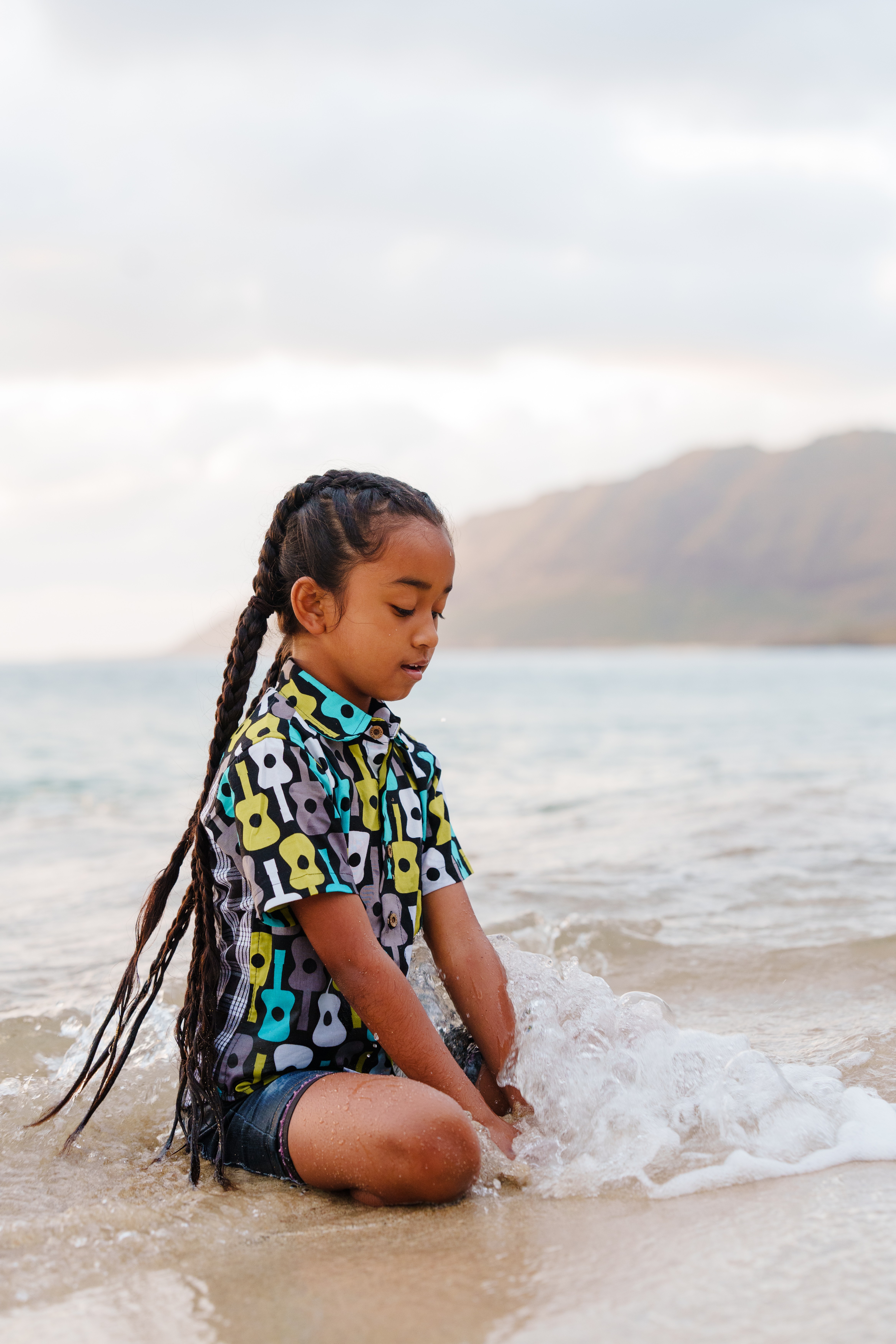
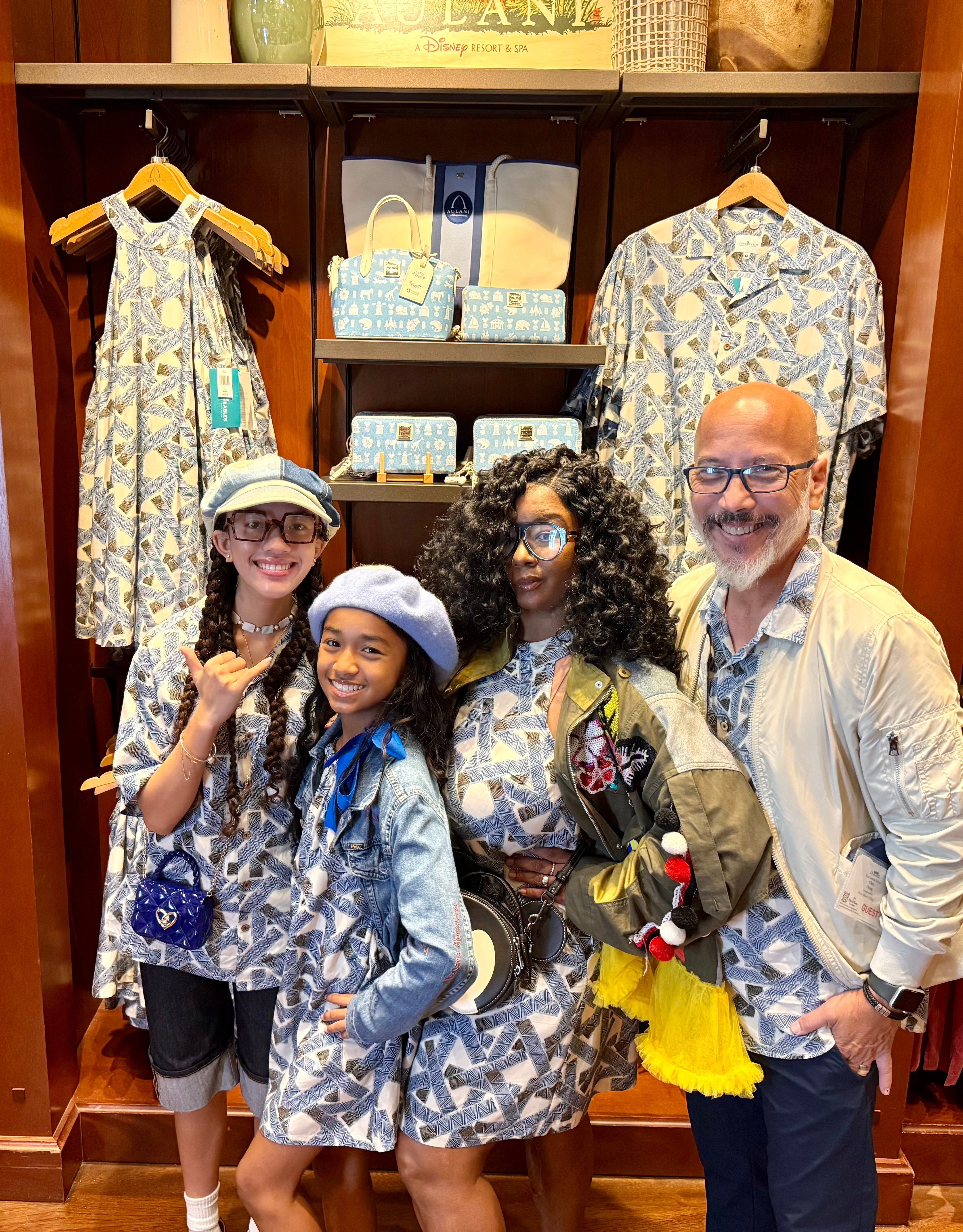


Image Credits
Blake Abes photography