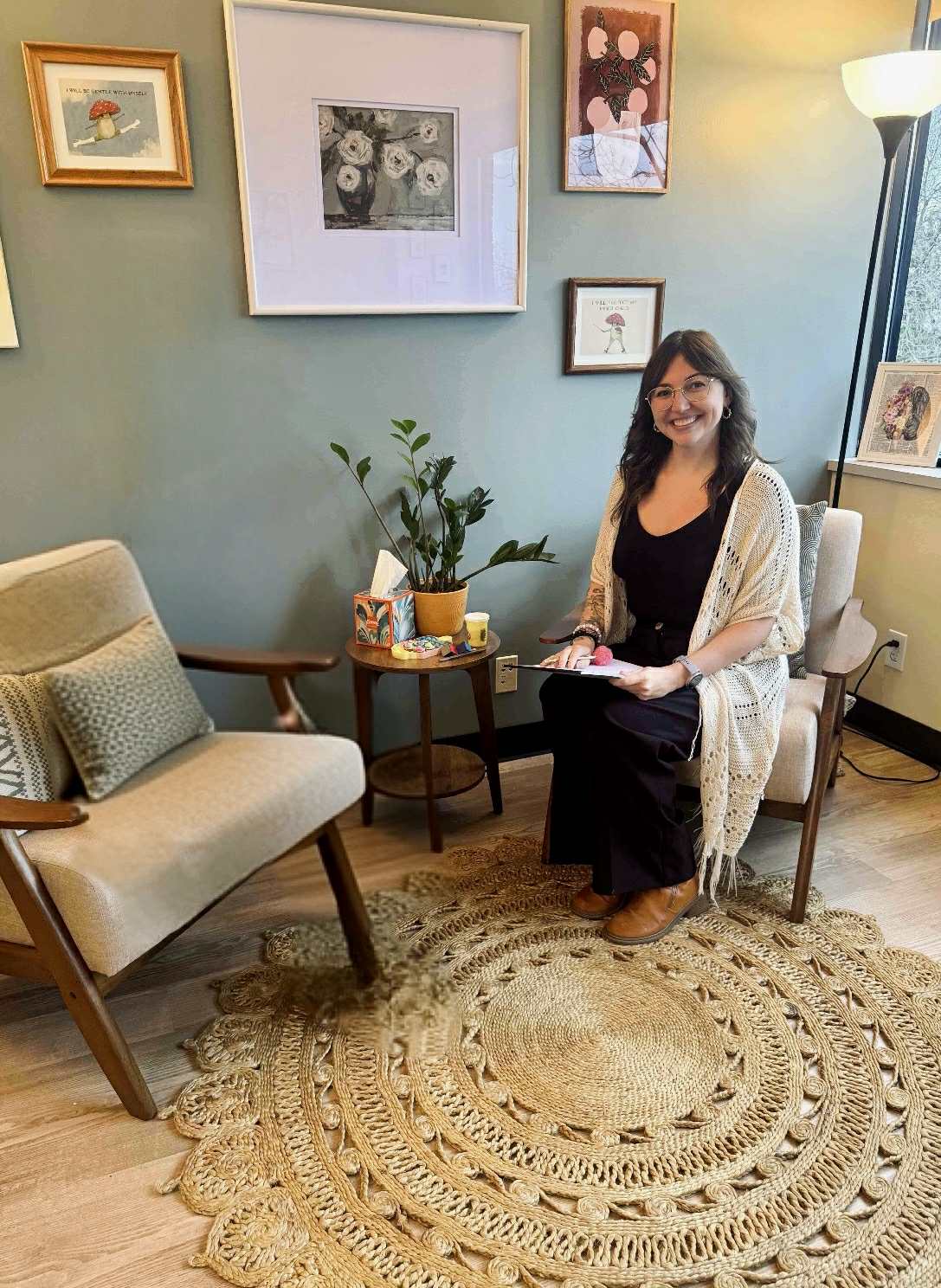


Today we’d like to introduce you to Megan Wendling.
Hi Megan, please kick things off for us with an introduction to yourself and your story.
My interest in understanding human behavior started long before I ever studied psychology. I was a quiet kid who spent a lot of time watching, listening, and taking in the world around me. I felt things deeply and was naturally curious about people, their experiences, and what was happening beneath the surface. In a way, I was always trying to understand people—not necessarily by consciously analyzing them, but by observing, listening, and trying to make sense of everything around me.
I experienced first-hand how deeply difficult experiences can affect individuals and how trauma can be passed down through generations. One experience that profoundly impacted me was watching my sister struggle with an eating disorder that nearly took her life. Seeing someone I love go through something so painful left a lasting impression on me and deepened my desire to understand the connection between our experiences, our mental health, and the ways we learn to navigate the world.
By the time I reached high school and college, that lifelong curiosity had begun to take shape as a formal interest in psychology. In college, I had a mentor who specialized in trauma, and that helped turn my curiosity into a passion. As I began learning more about trauma through my education and my own healing, I found myself drawn to this work in a way that felt incredibly meaningful. I’ve also always been drawn to creative forms of expression, including painting and poetry, as ways of making sense of experiences that can sometimes be difficult to put into words. That has shaped how I view healing—not just as a process of understanding ourselves intellectually, but also as a way of reconnecting with our emotions, creativity, and the parts of ourselves that may be harder to access through words alone.
That passion led me to pursue a Master of Arts in Clinical Psychology with an emphasis in trauma at the University of Colorado Colorado Springs (UCCS). I’m now a Licensed Professional Counselor Candidate (LPCC) in Colorado, and my work focuses on helping people understand themselves with greater compassion, work through the experiences that have shaped them, and recognize that the ways they learned to survive do not have to define their future.
I’m sure it wasn’t obstacle-free, but would you say the journey has been fairly smooth so far?
Definitely not. One of the biggest challenges has been realizing that being a therapist doesn’t mean you’re exempt from the very human work of understanding yourself. Becoming aware of my own patterns, learning where they came from, and recognizing how they show up in my life has been uncomfortable at times. It is one thing to understand a concept intellectually, and another to practice it in your own life.
I’ve also had to learn how to be there for other people without losing sight of my own needs. When you’re naturally empathetic and care deeply about others, it can be easy to focus so much on supporting everyone else that you forget to offer yourself that same care. Learning to set boundaries, advocate for myself, and recognize that my needs matter too has been an ongoing process.
Another challenge has been navigating my own identity, including understanding my later-in-life neurodivergence diagnosis and learning how to work with myself rather than constantly trying to fit into expectations that weren’t designed for me. I’ve had to redefine what success looks like and become more comfortable embracing the parts of myself I once felt I needed to hide or change.
Building a business has brought its own learning curve, too. We’re taught how to become therapists, but we’re not necessarily taught how to navigate the business side of running a practice, communicate our value, or build something from the ground up. I’m trying to approach that process with the same compassion I encourage my clients to practice with themselves.
Through all of this, I’ve learned that growth isn’t linear. The things that challenge us can also help us develop a deeper understanding of ourselves and others – and there is beauty in that. I’m still learning, and I think being willing to acknowledge that is part of what makes me a better therapist.
Great, so let’s talk business. Can you tell our readers more about what you do and what you think sets you apart from others?
My therapy practice, Megan Wendling Psychotherapy LLC, is rooted in the belief that there is nothing inherently wrong with you. So often, the patterns we struggle with today developed for a reason. They may have helped us survive difficult experiences, feel connected to others, or protect ourselves when we didn’t have other options. I want to help people understand those patterns with curiosity rather than shame and discover new ways of relating to themselves and the world.
I offer individual psychotherapy for adults, with a focus on trauma, addiction, anxiety, relationship patterns, and navigating life transitions. I have a Master of Arts in Clinical Psychology with an emphasis in trauma from the University of Colorado Colorado Springs, and I’m a Licensed Professional Counselor Candidate (LPCC) in Colorado. My clinical training includes Eye Movement Desensitization Reprocessing (EMDR) and Cognitive Processing Therapy (CPT), and I also draw from somatic, parts-work, and other evidence-based approaches depending on each person’s needs and goals.
My approach is trauma-informed, collaborative, and grounded in the belief that clients are the experts on their own experiences. I see therapy as both a science and a creative process. People make sense of their experiences in different ways, and sometimes creativity, imagery, metaphor, movement, or simply finding the right words can help us access and express things that are difficult to explain. As someone who personally expresses myself through art and poetry, I appreciate how powerful creative expression can be in helping us explore our inner worlds.
I help people better understand themselves, make sense of their experiences, and develop the tools and confidence to move toward a life that feels more aligned with who they are. I’m also particularly interested in neurodivergence and how we come to understand ourselves. My own experience of learning more about ADHD has reinforced how meaningful it can be to finally have language for things you may have struggled to explain for years.
What I hope sets my approach apart is the emphasis on meeting people where they are and reminding them that they are more capable than they may believe. I don’t believe healing has to look a certain way or happen on anyone else’s timeline. I empower clients to feel that they can show up as their full selves, including the parts they may feel embarrassed about, confused by, or afraid others won’t understand. Sensitivity, for example, is often treated as something people need to toughen up or get over, when in reality, it can help us connect deeply, notice what others miss, and live with empathy and intention.
I currently have openings for individual therapy on Fridays in person in Denver, as well as a limited number of virtual evening appointments during the week. People can learn more about my practice and reach out through my Psychology Today profile: https://www.psychologytoday.com/us/therapists/megan-wendling-denver-co/1793695
What has been the most important lesson you’ve learned along your journey?
The most important lesson I’ve learned is the importance of being authentic, even when it feels uncomfortable or scary, and recognizing that you don’t have to abandon yourself to be loved, accepted, or connected to others.
For a long time, many of us learn to adapt to the people and environments around us. We figure out what makes others comfortable, what earns approval, and what helps us feel safe or connected. Sometimes that means becoming the dependable one, the high achiever, the person who doesn’t ask for too much, or the person who understands everyone else while struggling to make room for their own feelings.
But there comes a point when we have to start asking ourselves: What do I actually need? Who am I when I’m not trying to meet everyone else’s expectations? What would it look like to make choices that feel true to me?
I’ve learned that being sensitive isn’t a weakness, that boundaries don’t make you selfish, and that honoring your needs doesn’t mean you care any less about other people. You can be compassionate and still say no. You can love people and still recognize when a relationship isn’t right for you. You can be a work in progress and still be worthy of good things. This isn’t to say authenticity is easy, but it does mean speaking up for what’s true to you, even if your voice shakes.
I think the right relationships and opportunities become easier to recognize when you’re living in alignment with your values rather than constantly trying to be who you think you should be. You may not be everyone’s cup of tea, and that’s okay. This is one of the most important lessons I’ve learned in life, and in owning a business.
My reminder to myself and my clients is to be kind to ourselves, meet ourselves where we are, and keep showing up as we are. You don’t have to wait until you’re fearless, perfectly “healed,” or completely confident to live a life that feels true to you. Sometimes the most meaningful thing you can do is take the next step, even if your voice shakes.
Pricing:
- $110/hr for individual therapy
Contact Info: