


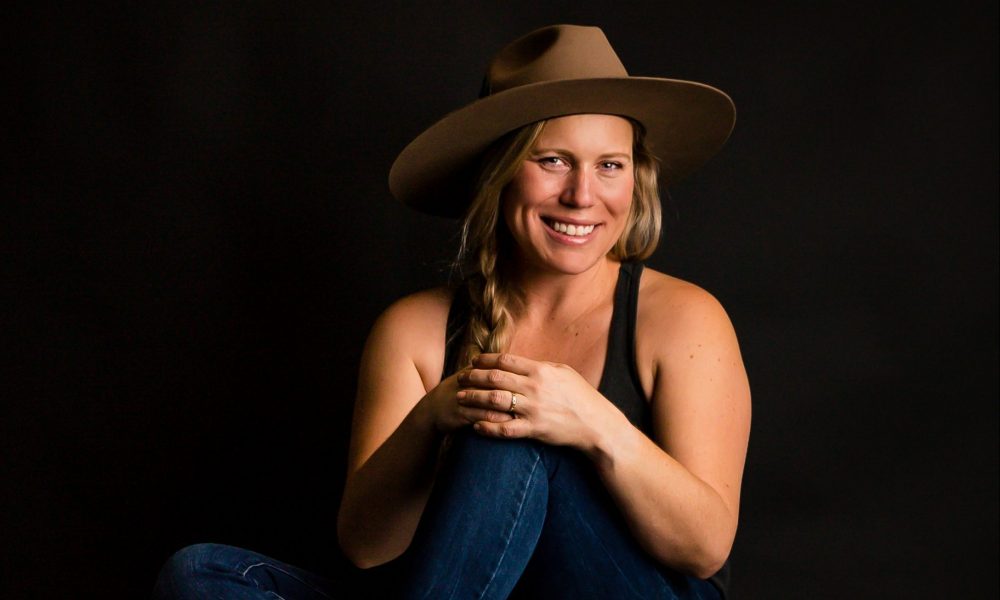
Today we’d like to introduce you to Shelli Quattlebaum.
Hi Shelli, so excited to have you with us today. What can you tell us about your story?
I have always been interested in bees and beekeeping. Being born and raised in Colorado, I am nature lover to my roots.
My parents moved onto 3.5 acres near Firestone, Colorado in 2018.
After a little begging, they agreed to let me have a hive on their land.
I took an introduction to beekeeping class from the Northern Colorado Beekeepers Association in January of 2020. I graduated in February and quickly started gathering all of the equipment I needed to raise honey bees.
Honey bees are definitely an investment, not just in time but money. A small hive called a “package” runs anywhere from $80-$120. A nuclease (5 full frames of nurse bees, baby bees, and 1 Queen) is a mini beehive. Those run from $150- $230 depending on who you buy from.
Almost all bee packages come from contract pollinators for the almond fields in California.
Those bees tend to be sick since they only forage on a mono-crop (Almonds). The crops are also sprayed with pesticides and anti fungal agents,
I would strongly recommend buying your bees from a local beekeeper. You know that those bees are strong and have made it through our Colorado winters.
If you are an adrenalin junkie like me, you can try to catch swarms of bees in the springtime. A swarm is half of a colony that is looking for a new home. Swarms land to rest on almost anything, I am sure you have seen pictures of swarms land on cars or mailboxes.
You can add yourself to the swarm hotline to receive calls when someone spots a swarm. I was lucky enough this year to catch 2 swarms and do 2 hive removals for people I knew. One hive being removed from an old building and one from a large rotting tree in a yard.
At the end of my 2nd year of beekeeping, I sit with 5 hives. I had to combine a few of my smaller rescue hives together to make sure they made it through the winter.
Now I just wait till Spring and cross my fingers that they make it through our crazy winters.
In my personal life, I enjoy running with my chocolate lab Summit, hiking, and camping. I grew up in Berthoud, Colorado, and participated in 4H and dance team in Larimer County. My Jr. and Sr. year I rebuilt V8 engines with my dad and drag raced one of the engines we rebuilt in a chevy truck at high school drags at Bandimere my senior year. My 2 teen daughters keep my husband and I busy nowadays with their 4H projects and hobbies. My youngest daughter does beekeeping as one of her 4H projects and has taken champion the last 2 years in Weld County.
My husband and I celebrated 15 years of marriage in 2021. He is my biggest supporter!
This September we harvested almost 200lbs of honey and set up my first booth at a festival in Firestone. I look forward to creating more products from my bees’ honey, wax, and propolis. I am even getting into bee venom extraction to add that to lip balm products in the future.
We all face challenges, but looking back would you describe it as a relatively smooth road?
I will be 100% honest, I lost my first hive 🙁 I found the hive dead on Thanksgiving of last year.
I cried. I worked so hard to make them a happy home.
But the mites got them.
There are small mites called Varroa destructor that attach themselves to bees. The mites eat the bees’ fat. and can also cause deformed wing disease (DWD).
Think of it like a mosquito to human. Once the mite feasts on the bees’ fat and is done, they hop off that bee and go to the next bee, or they go into a cell in the nursery portion of the hive and wait for another victim. Mites can replicate super quick and cause colony collapse disorder (CCD). The mites outweigh the bees and eventually kill the entire hive.
I had been treating for mites, but it wasn’t enough.
If I am treating for mites, but another beekeeper down the road isn’t, and our bees forage in the same area, my bees will get their mites from them and bring them back to the colony. Then the cycle starts over. There is a 50%+ colony loss per year for every beekeeper. That is a lot of dead bees!
After losing my hive and mopping up my tears, I started to research more natural and effective ways to kill mites and not stress out my hive.
I learned that the all-mighty Hop for beer is also amazing at killing Varroa mites! No, you don’t get the mites drunk off of IPA. Hops contain something called hops beta acid, that is the yellow stuff under the leaves of the hops cone. Now how do you get that into the beehive and have it be effective? You make those dried hops into a resin through a long process using just powdered hops and 190 proof grain alcohol. I applied the resin to strips of cardboard and placed them into one of my colonies for 14 days in late August of this year. I am happy to say as of today the hive is still alive, though we haven’t entered our true winter yet.
So, if you haven’t put two and two together yet, that is why I named this business Hops and Honey, it is a symbiotic relationship.
As you know, we’re big fans of you and your work. For our readers who might not be as familiar what can you tell them about what you do?
I also started testing Reishi mushrooms with my hives. Mycelium extracts of polypore mushrooms (Reishi and Amadou) have been shown to increase immune benefit to bees. Making the hive more hygienic and less attractive to mites. I used Reishi tincture in the bees’ sugar water through September. I was also giving the bees bananas sprinkled with Reishi powder. The potassium in bananas will help the bees flex their wings, and the gases released from ripe bananas will kill pathogenic spores. I am really hoping that by helping the strengthen their immune systems and by giving them more of a diverse diet, they will survive through the winter! I am currently growing Reishi mushroom in hopes to provide my hives with my own home-grown mycelium.
Before we let you go, we’ve got to ask if you have any advice for those who are just starting out?
I get asked often where to start with beekeeping. Get the “Beekeeping for Dummies” book and read! Read as much as you can about apiculture. This is a never-ending learning opportunity! Next sign up for a beginning beekeeping class, most beekeeping clubs offer one at some point in the year.
Then find a mentor to help you along the way. There is a steep learning curve to beekeeping and it is nice to have someone to lean on the first year and even into your second and 3rd.
It is better to try something and fail than to have never tried at all.
Pricing:
- Honey $14-$25
- Honey Milk Bath $20
- Honey Oat Soap $6
Contact Info:
- Email: hopsandhoneycolorado@gmail.com
- Website: www.hopsandhoneycolorado.com
- Instagram: hopsandhoney_colorado
- Facebook: www.facebook.com/hopsandhoneyacoloradoapiaryandgarden
- Other: www.shelliquattlebaumphotography.com


Image Credits:
Shelli Quattlebaum Photography LLC