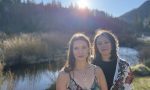


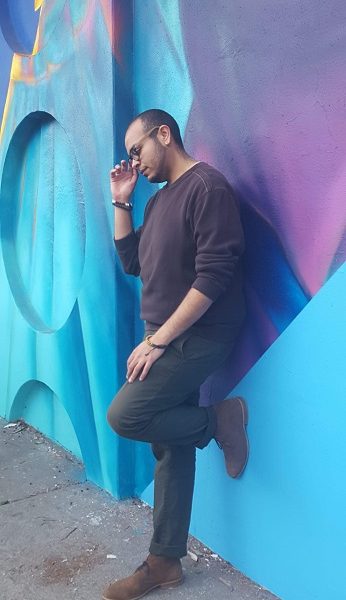
Today we’d like to introduce you to Aerik Francis.
Aerik, we appreciate you taking the time to share your story with us today. Where does your story begin?
I wish I could remember precisely how I came upon poetry. But then again, poetry is everywhere, so it was always only a matter of time. I just remember one day in 4th grade, I decided to enter a writing contest at school with my own book of poems. I remember the poems I wrote were silly, short, and last minute. They used a range of simple poetic forms like acrostics, limericks, and haikus. I still remember the haiku I wrote about Summer: “Summer is the best / So very hot and joyful / I really like it!” I drew a smiling sun with sunglasses underneath the poem. To my surprise, one day the school announced on the intercom that I had won the contest that year with my small collection of poems. After that moment, poetry stayed with me.
I kept a composition notebook of poems in middle school. I didn’t realize until long after the fact that I was depressed already during that time. The poems provided an outlet for all the new feelings I was having. When I reached high school, I transitioned out of that depression (momentarily, anyway) and stopped writing poems, but poetry still followed me anyway. For example, the poem I was made to memorize for a school assignment is still a poem I know by heart to this day– the poem is “Theme for English B” by Langston Hughes.
Similarly in college, I had no intention or desire to follow poetry. I lived in Chicago then and was preoccupied with so much newness in my life. Eventually, I met a group of friends who would take me to the open mic night on campus. It was so wonderful, so magical to see especially that group of poets (Catcher in the Rhyme) share their work. I found myself going weekly, with or without my friends, though I would rarely share my own poems.
It wasn’t until moving to yet another city, Los Angeles, that I found myself looking seriously at the work and craft of poetry. I was miserable in my program of doctoral studies, and for so many reasons. Once more, poems were a salve for me for these moments of dread. A good friend of mine who left the same program collected their poetry, made a book to sell, and were surprisingly successful in transmuting their talent into survival, their survival into talent. They inspired me to look at my own archive, all of the poems I wrote just to survive without thinking of what would happen with them. I looked around and was surprised that I too had enough to bring together into a collection. It was all a powerful shift in my life.
I decided to quit grad school and go back home to Denver to try and make being a poet happen. That was in 2018, so it’s been almost four years now. There have been many setbacks, many rejections, many naive assumptions, and much grief. But I also feel so lucky to be on this path and fulfilled in ways I’ve never previously felt in my life. I have learned so much and wrote so much in these 4 years, but also, I still have so much to learn and so many more goals to accomplish in this field. That’s what keeps me going, ultimately: that I love poetry. It surprises me every single day.
Would you say it’s been a smooth road, and if not, what are some of the biggest challenges you’ve faced along the way?
Certainly no smooth road– sometimes no signs or no pavement at all. Publishing has been a big challenge– being an artist without an academic creative writing background, I’ve had to learn so much about craft on my own. It took many years to figure out what I liked and what I didn’t. It took a lot of trial and error, a lot of rejection, and a lot of persistence. It still does– and I think it always will. I look over to some of the poets I admire, and while many of them have made a living out of this work, they are still doing essentially the same things that I am: they are still writing, they are still reading, they are still teaching, they are still submitting work and inevitably getting rejections, they are going through their own complex lives in their complex networks, they are still looking for ways to be better writers, to be better people. And they are often still struggling in many regards– and who isn’t in this world of struggle we live in? So, thinking about it that way, I feel lucky and honored to have the support of friends and family as I pursue this complicated and often frustrating path. I don’t ever want to glorify the violences that happen in our lives, but in many ways, I believe that struggle is beautiful and necessary, as much as I want to try to make sure that nobody else has to struggle.
Can you tell our readers more about what you do and what you think sets you apart from others?
I am a poet at heart, always, no matter what medium I’m working in. My poetry ranges in all kinds of topics and various levels of seriousness. There are poems that are heavy, emotional, and political. And then there are poems just for play or just to record a moment. There are poems about any and all of my identities. But mostly I tend to write about issues related to the body– the beautiful, the ugly, the everyday. I try my best to speak frankly about politics, frankly about my own body.
To me, craft is about regular engagement and practice with the art. If I’m not writing, then I’m editing or reading or practicing or performing or making art or living– and all of these are very much a part of the writing process. I love the way poetry can be both visual art and spoken performance– and beyond with various intersections of multimedia. That’s the future of poetry and that’s where I want to be– to think about the combination of poetry and contemporary music, to think about the combination of poetry and film, poetry and animation, poetry and experimental art. Right now, that’s what drives me– not only the craft of the poems but stretching those limits and seeing how many different ways a poem can exist in the world.
My debut poetry chapbook BODYELECTRONIC is coming out in April with the publisher Trouble Department. It’s really exciting to be able to share my work in that way and I hope to have more collections for you all to read and own. I also have book and chapbook manuscripts that I hope to share if/when they are picked up by publishers. I am very excited about these projects, but because of how publishing works, it is work that will ultimately be shared years down the road. It keeps me forward-thinking, at least.
I have been working on a poetry EP called S Y Z Y G Y that takes poems created through divination and bibliomancy techniques and gives them space to play with music, film, and performance. I love seeing how these genres mesh with each other and influence questions about structure and form. Best of all, this project will be completely self-produced and self-released. Perhaps that means the reach is more limited, but it also means that the rights are all mine and the total vision is mine as well. I hope to use this project as a jumping pad to return to some of my older beloved poems, to let them exist in other audio and visual spaces.
Can you share something surprising about yourself?
Something surprising is that I did acappella music in college. I did it for all the years I attended college and became the music director for the last two years. It was such a release to sing together with people who became fast friends. And I think it has been super formative to my poetics, even if it isn’t quite obvious how it would be related. Really, poems are often done a cappella, and so it helps a lot that I have a familiarity and comfort with that kind of performance.
Singing is totally about breath, and poetry, too, is about the breath– how much breath to give words, how much breath to take for pause. I also like how a cappella singing in particular is concerned with vowel and consonant sounds. How the breath moves. How the mouth opens. What kind of consonant sounds resemble what kinds of instruments. What consonants match better with which pitches. These are salient concerns with poetry as well, thinking about what words match the music or feeling you are going for. I like that poems can have a particular rhythm and cadence to their reading. As much as I am a poet, my dream is to be a musician and I try my best to operate as my favorite musicians do.
Contact Info:
- Email: [email protected]
- Website: phaentompoet.com
- Instagram: https://www.instagram.com/phaentompoet/
- Twitter: https://twitter.com/phaentompoet
- Youtube: https://www.youtube.com/channel/UCNmb7vtQvtzJ7UEkMdBFWow/featured
- SoundCloud: https://soundcloud.com/phaentompoet


Image Credits:
Bre Blake Photography
Jennifer Joines