


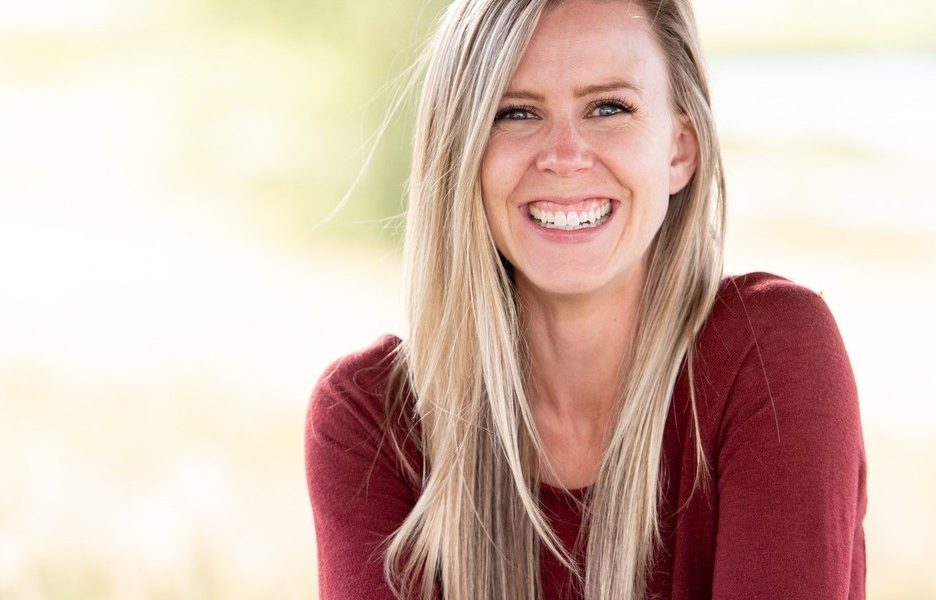
Today we’d like to introduce you to Kyra deGruy Kennedy.
Hi Kyra, please kick things off for us with an introduction to yourself and your story.
Thanks so much for telling my story. I moved to Colorado in 1999 and have been working in the policy and advocacy space for over a decade. As a kid, I was a victim of violent sexual trauma (from a neighbor, not a family member), and in trying to cope with the pain of that, I put myself and was put into a lot of positions that created more trauma, and gave me a real education of how and for whom our systems were built. Throughout my adolescence, I had a million jobs. I cared for people, cleaned houses, served beverages, and worked in stores. But my first job that felt like it was pointing me in the direction of a career was at a primary care clinic as a care manager when I was 20.
At the time, I was studying to go to medical school, as I thought that was the place I could make the largest impact on improving people’s lives. I already had a pretty good understanding of what we now call the social determinants of health, in that people can’t thrive if you aren’t addressing their housing, food access, stable work, mental health, language equity, childcare, and other needs outside of the clinical setting. I knew that we needed to do more than just give people healthcare. But working in this clinic, I saw firsthand, with patients I got to know and love, exactly what happened when we did and didn’t help them address those things. To make a long story short, people thrive when we see them as whole people. Not when we check their blood work and send them on their way. And our healthcare system is not designed or incentivized to pay providers to do whole-person care.
I realized that to be of maximum service to my patients and community, I needed to dig into major system reform. I started working for a federal health policy nonprofit called the Integrative Health Policy Consortium. Our largest project was working on the implementation of the affordable care act in the States, but while I was working there, the Flint, MI water crisis unfolded. We rapidly shifted gears to work on the response to that tragedy, primarily looking for integrative treatments for the almost 30,000 children, mostly Black and Brown children, who’d been exposed to neurotoxins because of financial greed and government mismanagement. It was the most egregious example I’d experienced up to that point of the structural racism that is inherent in our systems.
Fast forward to the end of 2016 and like many of us, the world felt like it had changed overnight. For me. For women. For the folks in my LGBTQ+ community. For my friends of color. For America. When I woke up the morning after the election, I decided to run for office.
And run I did. I took on big challenges for Lakewood City Council in both 2017 & 2019. I loudly spoke up for more affordable housing in years when voters were looking for candidates who would oppose any new development. And although I lost by a heartbreakingly few votes, what I gained from those losses has deeply added to what makes me an effective policy leader in our state.
In the past handful of years, I’ve been privileged to lead organizations fighting to create more equity in our systems. I led the government affairs team at MSU Denver, an open-access Hispanic Serving Institution of higher education. While there I ran the advocacy program, MSU Denver Champions, that helped young adults of color find and use their voice for change. And I worked closely with the legislature to fund First-generation, Pell-eligible, and underrepresented minority students’ scholarships and wrap-around services.
And fFor the past three years, I ran the Colorado chapter of Young Invincibles, where we trained (and paid) over 150 young adults who were furthest from power and privilege on personal and professional development, how to use their voice for change, and taught them how to effectively work on state-level policies. In these years, I’ve had the honor of working on over 50 state policies that have created more equity in our deeply problematic systems. I’ve also had the incredible honor in the past couple of decades of mentoring almost 100 young women trying to find their place in a complicated web of systems.
In 2021, I became a mother. And let me tell you what, things changed in me in ways I struggle to even articulate. Since I moved to Colorado in 1999, the year of Columbine, there have been 380 mass shootings in schools. And every day 120 Americans are killed by guns. Over 530,000 Coloradans and 1 in 10 Colorado children go hungry every day. We have a housing affordability and availability crisis in Colorado, and between 10,000-50,000 people in Colorado are experiencing homelessness or are unhoused. My friends are taking anti-anxiety medications just so they can send their kids to school. Having my daughter, Lennon, turned up the dial on all the things that already made me me; my desire to fight for equity, my ability to see into people’s pain and help them make changes to work through it, my visceral dedication to this work.
So I decided to take the work I’ve been doing for many years to the next level, and am running for the State Legislature. On my birthday this year, I filed paperwork to run for State Representative in House District 30, and I couldn’t be more excited to serve this community that I love and have been working hard to improve for many years.
I have a superpower that drives some people in my life crazy, and that is persistence. I just don’t give up. And I will not give up until we build a Colorado that permanently enshrines, in our Constitution, a woman’s right to an abortion. That protects our children from gun violence. That builds a system of health that enables all of us to thrive and doesn’t put us in debt to get there. That funds a public education system that our children deserve and pays our teachers as the professionals they are. That takes care of our aging family and community members with dignity. That does everything in our power to combat climate change. That dismantles systems of oppression and builds systems with equity in the center.
So in other words, I’m in this work for the long haul.
We all face challenges, but looking back would you describe it as a relatively smooth road?
Compared to a lot of folks struggling to make ends meet right now, I’ve been very lucky. Being a victim of sexual trauma is far too common. In America, about 1 in 4 girls and 1 in 13 boys experience sexual abuse as a child (CDC). The fact that I had a loving family with resources to get me to help is what saved my life, and far too many Coloradans don’t have those privileges. I’ve been really lucky to have incredible mentors and friends who have walked with me in my darkest moments and stuck with me when things felt hopeless.
This lived experience is a huge part of why I’ve worked so hard in the past decade to create more mental health resources for kids and young people, and I’ve been grateful to have partners in the legislature that I’ve been able to fight shoulder to shoulder with to make this a reality. Through my mental health journey, and as a mentor to countless women on their journeys, I’ve learned how important deep self-reflection and self-work are. It’s tough to make a major system-level change when we’re struggling with our internal issues.
I’ve lived a lot of life for a young(ish) person and what has consistently helped me through the toughest challenges is my dedication to self-work and the incredible community I’m privileged to be a part of. When I experienced periods of homelessness as an adolescent, that deep self-work helped me channel my despair into action.
When I was evicted from apartments for being late on rent, or had to choose between eating or having my power on, that deep self-work has helped me think creatively about policies to make life more manageable for people working hard to make ends meet. The list could go on, but I think the point is that the challenges I’ve experienced have given me opportunities to learn about how to make better policies that help people thrive.
Appreciate you sharing that. What else should we know about what you do?
I’m a systems-thinking policy wonk. I’m currently the Director of a health innovation project called the Collaborative Community Response Initiative where we’re bringing together the silos of health (social services, public health, primary care, mental health, and community leadership) at the community level to incentivize collaboration, build a workforce that meets people where they are, and puts the person in the center with the resources they need around them so they can thrive.
We’ve piloted in four communities across Colorado and are building a system of metrics for thriving, a model that is flexible enough to adapt to different communities and populations, an IT system that supports an integrative care management system, and state policies that support a new way to deliver thriving.
I’ve spent many years as a student of leadership, and this project is bringing together my strengths as a leader, convener, and bridge builder between folks who don’t normally spend time working as colleagues. My north star has always been equity and this project is the beginning of an exciting new system that builds power and equity in communities that have been furthest from opportunity.
What sort of changes are you expecting over the next 5-10 years?
As a policy professional working to build equity across our systems, my industry is pretty broad. I’m hopeful we’ll see wide-ranging progress creating more access and affordability for everyday folks to live whatever their version of the Colorado way of life is.
I’ve worked on policies in the past decade that improve our current healthcare system, work to build a new system, create more resources for mental health, create more access to housing and healthy food, address gun violence, tackle climate issues, fund our k-12 public education system, create more opportunities for folks to go to college or find a career pathway, address our school to prison pipeline, protect women and trans folks rights, fight to protect our neighbors who weren’t born in America, protect workers, and help folks get involved in the political process.
I hope that in the next decade what we’ll see within all of our systems is policies that bring us closer to equity. Our country as a whole isn’t necessarily trending in that direction, and so it’s more important than ever that we keep fighting for opportunity and equity in Colorado.
Contact Info:
- Website: https://www.kyraforcolorado.com/
- Instagram: https://www.instagram.com/kyraforcolorado/
- Facebook: https://www.facebook.com/kyraforcolorado
- Linkedin: https://www.linkedin.com/in/kyradegruy/
- Twitter: https://twitter.com/Kyra_deGruy


 Image Credits
Ellen Jaskol and Scott Dressel-Martin