



Today we’d like to introduce you to Major General Gregg F. Martin, PhD, US Army (Retired).
Today we’d like to introduce you to MAJOR GENERAL Gregg F. Martin, PHD, US ARMY (RETIRED).
Hi Gregg, it’s an honor to have you on the platform. Thanks for taking the time to share your story with us – to start, maybe you can share some of your backstory with our readers.
I grew up near Boston, was super successful as a student, athlete and leader, unknowingly always had a hyperthymic personality, lived on the bipolar spectrum and had a bipolar brain. This mostly helped me with extra levels of powerful natural chemicals in my brain, such as dopamine, which boosted my energy, drive, creativity and problem-solving skills. It mostly helped me until it went too high and then it caused my near-destruction.
My bipolar onset was in 2003 during the Iraq War. The pressure, stress and thrill of leading thousands of soldiers in fierce combat triggered my genetic predisposition for bipolar disorder, sending me into a high-performing mania. For the next 11 years my manic highs went higher, and my depressive lows sank lower, even as my bipolar disorder went unknown, unrecognized and undiagnosed, and I was promoted from colonel to 1-star, then 2-star general, and commanded increasingly complex, larger, and prestigious organizations.
In 2014 my brain roared off into full-blown mania, which propelled me into a state of madness. Serving as president of National Defense University, my behavior became out-of-control and over-the-top, which led to my removal from command in July 2014, forced retirement and then hospitalization. After multiple misdiagnoses, I was diagnosed with late onset bipolar disorder, type 1, with psychosis, in November 2014.
My severe mental illness went from bad to worse as I retired from the Army in May 2015 and lived through bipolar hell for two years – crippling, hopeless depression along with terrifying psychosis. The turning point was when the VA (Veterans Administration) hospitalized me and prescribed lithium, which stabilized my brain chemistry and put me on the path of recovery. That was in August 2016.
My journey of recovery has been challenging, and i wrote my book, “BIPOLAR GENERAL: My Forever War with Mental Illness”, to share my life story, my Army service, my battles with mental illness, and my road to a thriving recovery. My goal is to share my experiences, lessons learned and inspiration, in order to help stop the stigma, promote recovery and save lives.
Can you talk to us about the challenges and lessons you’ve learned along the way? Looking back, would you say it’s been easy or smooth in retrospect?
There are many great achievements and successes along with challenges and struggles: graduating from West Point and Army Ranger School; athletic achievements such as running 7 marathons in less than 3 hours each (including a 2:36); earning a PhD and two masters degrees from MIT when I was only sent to get a single masters degree; successfully commanding 10,000 soldiers in fierce combat in Iraq; and achieving the rank of 2-star general, are all key achievements. There are many more.
I had no idea that I was afflicted with a serious mental illness until my mania went too high, and then brought me crashing down. Living with bipolar disorder mostly helped me, until it went too high, and then it didn’t. This terribly destructive brain disease could have destroyed all I value – marriage, family, career, finances, and led to addictions, homelessness, incarceration and early death, by violence, physical ailment, or suicide. My family and I are most fortunate to have gotten the correct diagnosis, and then medical care that launched me on my life-long journey of recovery.
My wife and I raised three boys and were always having to adapt to new jobs, people and locations, which is the norm for Army life. I struggled with episodes of mania and euphoria, psychosis, anger, depression, and a never-ending spiritual search. Life was not easy, and two of our high-performing sons came down with bipolar disorder before me – we had no idea that i would be next, as my Army performance and career were flourishing.
Can you tell our readers more about what you do and what you think sets you apart from others?
I was an officer and leader in the US Army for thirty-six years. After successfully leading thousands of troops in combat, i was promoted to general officer and mostly charged with implementing high-level institutional change for large, complex educational centers and training institutions.
I was always very enthusiastic and passionate about my work and MY mission of serving in the US Army. My extroverted personality, intense energy and drive, creativity, and problem-solving skills, thrived on the complex problems and demanding pressures of the job.
Following my separation from the Army and getting on the road to bipolar recovery, I have carved out a new mission and purpose for my life, which is “sharing my bipolar story to help stop the stigma, promote recovery and save lives.” I achieve my mission by writing, speaking and conferring on my bipolar life and journey. My goal is to share my experience, knowledge and hope, and in so doing, inspire others.
So maybe we end by discussing what matters most to you and why.
Marriage and family is number one. A close second is my bipolar mission, which serves others, and is a cause greater than myself.
Pricing:
- $27.00
Contact Info:
- Website: www.generalgreggmartin.com
- Linkedin: https://www.linkedin.com/in/gregg-f-martin-222735aa/
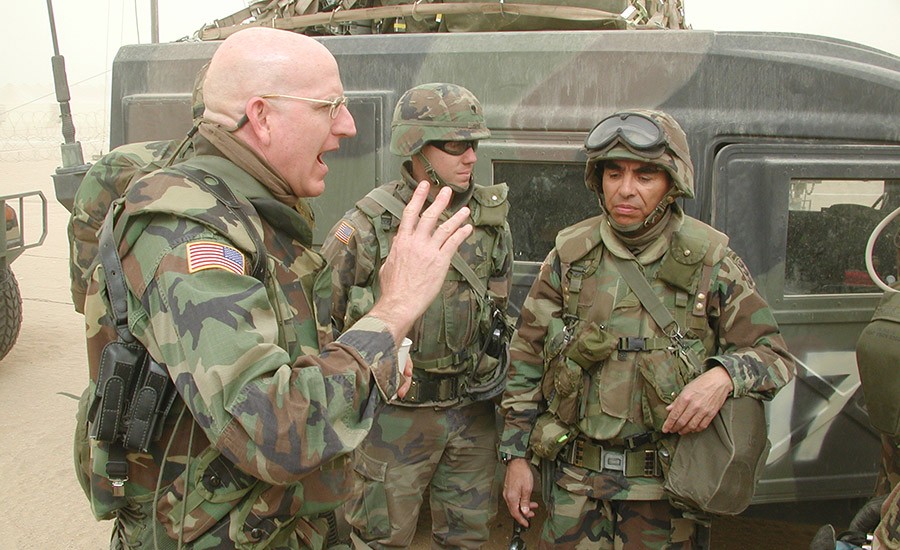
Image Credits
Tom Sawyer (2003)
Popular
-

The Trailblazers: Rewriting the Narrative
-

Hidden Gems: Local Businesses & Creatives You Should Know
-

Denver’s Most Inspiring Stories
-

Designing Bold, Lived-In Spaces: How April Stites Is Blending Artistry and Function in Modern Home Design
-

Shaping Strength and Stillness: Carlos Flores on Craft, Culture, and a Life Worth the Effort


