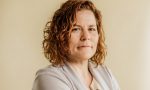


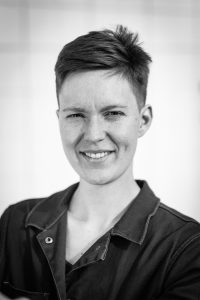
 Today we’d like to introduce you to Teague McDaniel.
Today we are interviewing artist and curator, Teague McDaniel (they/them). McDaniel is the founder of CII, a practicing artist, and professor at a local university in Denver, Colorado. Today they will share their insights on what makes them successful in their business, personal life, and what challenges they have overcome. Hi Teague, it’s an honor to have you on the platform. Thanks for taking the time to share your story with us – to start maybe you can share some of your backstory with our readers.
Thank you so much for having me. Yes, absolutely. I will start by listing some intersectional aspects of my identity to provide a bit of an illustration of who I am today. I am a white, transgender, autistic and ADHD single parent who is chronically ill, and multiply disabled. I practice relationship anarchy, Buddhism, and somatic compassion for our planet and the life on it. I work as a professor of studio art teaching 18 different mediums, as a curator at CII, and am a practicing artist. In addition to professional work, I maintain an active mutual aid and volunteer schedule where I sit on boards, support racial and environmental justice, and organize in my children’s schools by doing things like starting a DEIA committee and encouraging parents to sign letters of support to the district to prioritize equity work in schools.
I was born in the early 90’s in the Denver Metro Area and was raised here as well. I was an only child to separated parents who are interested in health, spirituality, and movement (my mom is a pilates teacher and dancer). I attended an alternative public school from preschool through high school graduation. After high school, I moved to Portland, Oregon to attend the Pacific Northwest College of Art, later moving to Atlanta, Georgia, then back here to Colorado.
I started my first business at age 12 sewing dog bandanas and dog beds and making organic dog treats. I distributed these handmade goods at local pet stores, doggy daycares, etc. Through this, I raised enough money to take a school trip to France, buy a digital camera, and more sewing supplies. Since then, I have continued my work as an entrepreneur with my most recent project being a company that I founded five years ago called CII, which stands for Creative Integration Initiative.
Would you say it’s been a smooth road, and if not, what are some of the biggest challenges you’ve faced along the way?
It has not been a smooth road. This is a hard question to unpack because I have experienced and healed from extensive trauma in many areas from interpersonal violence to sexual violence to medical trauma. Additionally, my trans identity has also been a source of discrimination and I have experienced difficulties through other areas of my experience like navigating a labor market as a disabled, autistic, single parent that is not setup to provide support or accommodations for me as a whole person.
These challenges add to my unique experience and bandwidth for compassionate response. For example, CII focuses our client work on partnerships with organizations who have missions we believe in and who have a specific problem they are looking to solve. For example, I recently provided support to a pediatric dentist office to utilize arts integration into their space in a way that made dentist visits more accessible to autistic children. If I myself did not have the lived experience of autism and traumatic dental experiences that were not built to or informed on how to create a trauma informed dental space, I would not have been able to support this client with the same immersive and comprehensive arts integrated solution.
Also, if the labor market was well suited to fit my needs I wouldn’t have committed so intensely to the success of my own business. CII only exists in the capacity it does right now because I don’t feel that my needs will be well accommodated within most traditional work environments nor is there compassionate transparency when entering into most jobs–especially in a field as competitive as art.
As you know, we’re big fans of you and your work. For our readers who might not be as familiar, what can you tell them about what you do?Absolutely, thank you. Let’s dig into my curatorial work at CII and artistic practice a little more. I will start with CII. At CII, we ground our work in our mission and vision, which are:
MISSION: To be a beacon for creative vitality through education, coaching, and curation of the visual arts.
VISION: A sustainable arts ecosystem with equitable access in a world of widespread creativity.
Creative Integration Initiative or CII for short (found at ciiart.org online) is a creative firm with three branches of practice. Those branches are: curation, education, and partnerships where we integrate the arts into everyday aspects of society to solve a problem. The curation branch includes turnkey services from project scope development, to art selection, through installation and can be selected as a whole package or purchased in parts e.g. installation only. In our educational work, we provide individual and organizational consultation in areas as diverse as strategic planning and wraparound support for traveling exhibitions. In the educational aspect we also offer pop-up educational opportunities and monthly workshops for artists.
Last but not least, I will explain our core project type. We do the most of this and it is typically the most project aligned. We offer arts societal integration. Kind of a chunky set of words, but hear me out. Artists are often asked to produce goods that are then displayed separately from life in places like museums and galleries. That doesn’t make sense for our society because–artists are our biggest source of creative thinkers and creativity is the most highly sought after skill in our labor market. So, why does it make sense to divide off artists and creatives from the general market and create separate markets for them only. Can you imagine what it would be like if artists were on staff as creative support in every company, school, municipality, and community in our country? What if they were asked to sit in on meetings to provide creative support or brought in to solve problems when problems were not able to be solved through traditional methods like support from HR or a marketing department. Enter CII.
Since artists aren’t on staff in our society in this capacity CII can work as a bridge by coming into a company and solving a single problem without the additional commitment of a new employee. A project also indicates a beginning, middle, and end, which means that I have the privilege of pulling in exactly who is right for the job each time and that the creative energy gains momentum without the duration to potentially stagnate.
I understand this description is a bit utopian and abstract so I will wrap up with an example before moving on. During the pandemic in 2020, libraries closed. When libraries closed they also stopped offering story time. This went on long enough for a microgeneration (including my youngest child) to miss out on story time and the routine of picking out library books. I met with the director of libraries in Boulder, Colorado who told me this was having an impact on the utilization of the library. Boulder Library staff wanted to see similar levels of library use post-pandemic as pre-pandemic with the specific goal of making sure that children who missed out on story time had opportunities to feel a greater sense of belonging in libraries.
Boulder Public Libraries ended up hiring CII and we involved children, teens, and parents by inviting children to design their own storybook characters. These illustrations were then juried by a group of teens who were taught how to jury artwork and the selected children’s artwork was edited minimally by graphic designers and produced as vinyl wall graphics. These graphics were then placed throughout the libraries as a scavenger hunt where children could go and find artwork that they and their peers had made on the walls of the library.
We just turned five years old and have utilized a slow growth model to engage in community-responsive initiatives and maintain organizational integrity. In that time we have worked with so many amazing clients. A few other recent projects include partnering with WOW! Children’s Museum to produce programming for Family Pride Night, Girls Inc. to add trans-artist-designed inclusive gender signage to their restrooms, and YouthSeen to promote their services and summer camp while also offering artful make your own pronoun pin stations at local pride fairs.
We are gearing up for some exciting programming in 2024, including a partnership with a global health expert, RJ Quirk, to produce arts-based community programming and an exhibition. You can expect to see us at many counties Pride this year too in engagements as simple as a booth with an art activity on up-to-float-sized interventions.
Shifting focus a bit here, I also wanted to tell you about my art practice. I regularly exhibit my artwork and aim to be in 4-6 shows, residencies, or other guest artist opportunities a year. In the past year, my artwork has focused on my recent top surgery, medical transition, and anti-trans legislation. I address these subjects through augmented reality activated paintings, found object assemblage using medical supplies from my top surgery, and performance art. Most of my recent artwork includes at least the following two supplies: testosterone gel (a type that I am allergic to) and rainbow sprinkles. Now, I am diving into queer abstraction with some more traditional art supplies. I am excited to see where this phase of my practice takes me.
What is an augmented reality activated painting?
At a high level, here is a technical description. We will get to the description of what it is like to experience this type of art next. An augmented reality (AR) prompted painting is any painting that is used as an image token in AR coding. The person coding the AR will upload an image of the painting and code it to respond by prompting something digitally when a camera on our device senses the painting. The result is that when you go onto a specific website or app that has been coded to add AR your phone will bring up a digital component of the artwork when it senses the painting.
Imagine; you go into a gallery, you notice a QR code and it prompts you to open an app or website that someone has coded to respond to the artwork in the gallery. Then, you walk around the gallery while hovering your device over an artwork. When you hold your phone in front of each artwork you realize it has a digital surprise. This digital surprise can be an animation, a 3D object, a 2D image or a GIF. In my case, if you hold your phone up to my paintings it will prompt a 3D sculpted figure sculpture that you can rotate, rescale, and that casts a shadow.
Is there a quality that you most attribute to your success?
The quality that I would attribute most to my external and career success is one that I am familiar with through my studies of Buddhism. It is the concept of right livelihood. To me, that means identifying and aligning my actions with my values to engage harmoniously with myself and others while reducing the potential that I will harm others. The core components of my right livelihood are mindfulness, creativity, and equity. Within that, I make a goal to specifically prioritize raising my children and the health of people and the planet/ecosystems that we inhabit. Here is how I would break down living by right livelihood.
I believe that humans are innately creative beings. I center all of my work, even equity work, on creativity. Creative output can be an indication of individual and communal or systemic wellness, equity, and inclusivity, and creative solutions will be the most resilient way forward through global challenges.
To be engaged in the right livelihood for myself I need to be compassionate with myself when I am too tired, too busy, or too limited to make system-wide differences. As an individual, I can endeavor to raise compassionate and creative children while living by example. If I start by listening and feeling deeply then I can tune back into my values. In my life, this takes the shape of frequent seated meditation, often in a community of Zen Buddhists, or yoga Nidra body scans. This stillness is where I create capacity. This additional capacity allows me to mindfully live by my values within and outside of work, allows me to be present for my children, and helps my overall sense of internal peace, which allows me to access more happiness. If I create capacity through stillness, I act mindfully as I move through my day and I am less likely to be reactionary or create additional harm.
With this stillness, I also build the capacity in myself to look deeply into the painful histories of subjects like white supremacy. I seek to understand the experiences and systemic oppression of black, indigenous, people of the global majority, LGBTQ2IA+, disabled, and neurodiverse people. This helps me speak up for and align myself with equity work in all of these subjects in my professional and personal life. I work to understand the similarities in the struggles of different marginalized groups and how ultimately supporting each other’s wellness and the wellness of our planet is liberation for all of us.
While I begin with the individual scale on my values; part of my success in this system of right livelihood is to acknowledge that I live within systems of oppression in institutions, places of worship, governments, organizations, and businesses. These places are the major sources of trauma and planetary degradation and imbalance. Imagine if we could all aim, when we have the ability, agency, and capacity, to hold the systems and organizations that we navigate accountable for right action and right livelihood as well as ourselves. If these systems changed, we would have a much easier time becoming well and creating equity.
Within the skill of right livelihood I am able to engage deeply and passionately with CII and my creative work because I am clear on my values and priorities. It guides me to seek and select work that contributes to the wellness of people and ecosystems around me while allowing me to avoid projects that are not a good fit. I am also able to strike an appropriate work life balance where I prioritize quality time with my children in my value of raising whole and happy humans. This practice can be utilized by anyone. Starter questions to ask yourself may include “what does living within my values and practicing right livelihood look, feel, sound, taste, and smell like to me” and “how can I respond in this situation in order to live my values without creating additional harm”.
It has been such a pleasure to interview with you. Thank you for your time in this process. If any of the readers would like to engage in a studio visit to learn more about my artwork or would like to talk about how CII can help you find your next creative solution, I would encourage you to reach out. I work both in and outside of Colorado and am specifically interested in deepening my work in Los Angeles and New York City with some exciting announcements coming soon with regards to coastal projects. Stay in touch with us on Instagram to catch the big reveal.
You can find their work at:
- CII’s Website: ciiart.org
- Portfolio Website: teaguemcdaniel.cargo.site
- Instagram: @ciicreative and @teaguemcdaniel
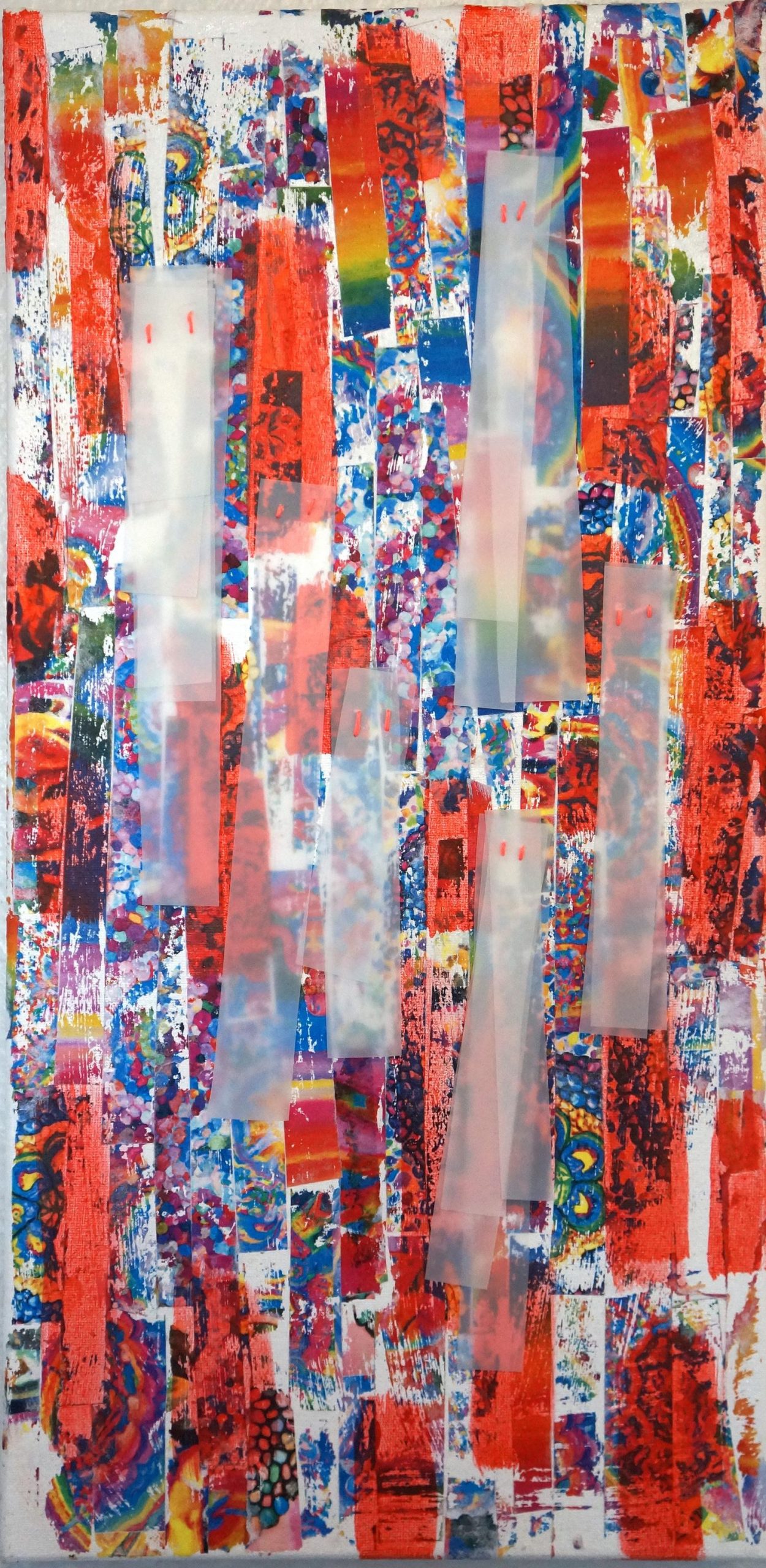
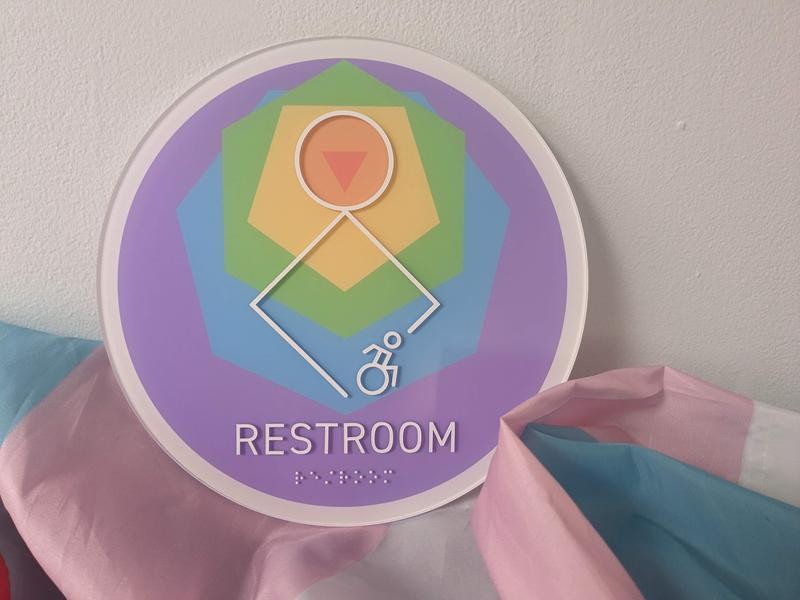
 Image Credits
Star McQueen, Corianne, and Kristopher Wright