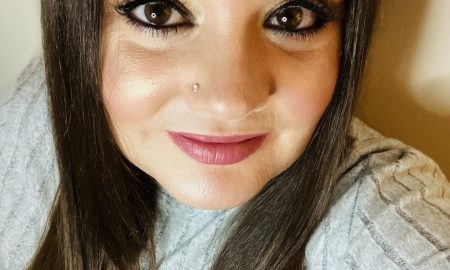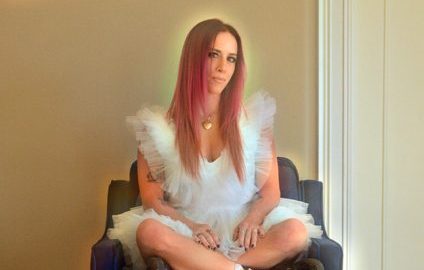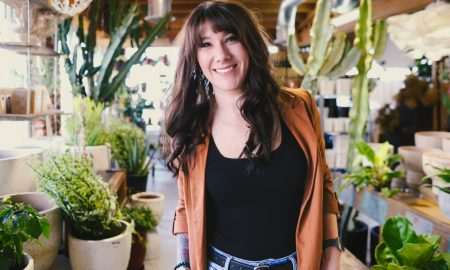


Today we’d like to introduce you to Sophie Danielson.
Sophie, please share your story with us. How did you get to where you are today?
It all started back in 2014 shortly after graduating high school in Colorado Springs. The traditional college experience didn’t appeal to me, nor did the cost. I wanted to do something different, something unconventional. With no clear direction, I deferred all of my college acceptances and continued to chop bread at a local fondue restaurant in Manitou Springs.
Then, the opportunity arose to move to Asia, a place I only knew about from my obsession with Disney’s Mulan. Within a week, I was on a flight to Thailand and never looked back.
I was hired by the Foundation for Education and Development (FED), a Burmese-led grassroots NGO based in southern Thailand that works with Burmese migrants. I ran the English program for a school of 300 Burmese migrant students. I settled myself into the Burmese migrant community — bucket showers, fish paste, beauty pageants, and all.
As the token white girl, I quickly became a local — and eventually, global Burmese celebrity. My friend uploaded a video of me singing a Burmese cover song. A white girl singing in Burmese? Naturally, it went viral on social media. One or two million hits later, I was invited to perform at the US Embassy in Myanmar. Since then, I’ve released several more Burmese music videos — and most recently, a Bengali music video.
During my time in southern Thailand, I found a small shelter near my house with around 45 Rohingya women and children. I passed the shelter every day on my way to work and was curious to learn about these people. Who are they? Where did they come from? I approached the shelter and quickly became friends with a 12-year-old Rohingya boy who spoke enough English to explain their situation.
They came by boat from Rakhine State, Myanmar. The boat was supposed to take them to Malaysia, where they all had family members waiting for them. Instead, the boat stopped on a small island between Thailand and Myanmar, where they were forced to stay for three days with no food or water. The Thai navy eventually found them, sent the men to a detention center in northern Thailand, and brought the women and children to the shelter near my house.
That’s where Books Unbound was born. They asked me to teach them, but I struggled with finding learning materials that were relatable to them. The learning materials I had were too Westernized — there was not a single relatable picture for them. That’s when I received the help of my artist friends, who developed Rohingya-specific illustrations. We started to develop culturally sensitive illustrations to provide informal learning for my new Rohingya friends. We used these illustrations as a way to break the barriers, build relationships, and teach them. The more time we spent with them, the more they opened up to us.
Finally, my time in Thailand hit an expiration date and I was ready to head back to the States to go to college. I thought I’d never see my Rohingya friends again. I reluctantly went back to the States, knowing that a college degree would help me to come back and maybe help these people in a greater way in the future. One year later, I received a phone call from one of the Rohingya kids I knew at the shelter. She was resettled in America with her younger siblings and mother! I found out more of them were resettled in the States, so I knew exactly what I had to do: I chose to do online college and I started my own piano teaching business that allowed flexibility for me to travel. I mapped out where the Rohingya friends were resettled throughout the States and started reuniting with them, one at a time. I traveled all across the States to find them and documented the reunions through my blog called Rohingya Reunions. Eventually, they told me of their family members who escaped the genocide from Myanmar to Bangladesh.
I went to Bangladesh to find their families in a refugee camp of over 1 million people. I’ve successfully found over 11 families and over 65 individuals (not including their children). Every time I meet a family member, I pull out a family tree that I’ve been drawing to map out where each scattered family is located. Some families have family members scattered across 6+ countries!
As I was reuniting with them in Bangladesh, I was also piloting some Rohingya illustrations with the children to see how I could start a project. Books Unbound started to form yet again.
I gave myself six months in the States. During this time, I crowdsourced artists, raised funds for a pilot project, and built the Rohingya Picture Dictionary. We received help from over 35 volunteer artists from 16 countries. All of this was done through social media and public speaking events.
As of April 2019, Books Unbound officially launched its pilot project, the Rohingya Picture Dictionary, in Kutupalong, Bangladesh. We’ve distributed over 220 picture dictionaries, reaching over 660 students per day. I’m grateful every day for the opportunity to work with such incredible Rohingya friends in the camps who are able to bring Books Unbound to life.
Has it been a smooth road?
Haha! I decided to launch a pilot project in Bangladesh with the poorest (and most persecuted) people in the world, so my chances of having a smooth road are quite slim. Books Unbound has pushed me way out of my comfort zone, especially as a 23-year-old female in a male-dominant culture. I’ve ventured to unknown places on my own, forcing myself to trust my gut and the relationships I’ve built with strangers on the other side of the world.
I’ve chosen the unconventional path. I opted out of traditional college, I had to start my own business to support myself, I’ve hopped on 100+ airplanes to destinations alone and have successfully managed to be the only white girl in the room.
Some of the challenges? Cultural sensitivity with the Rohingya people. Safety in Bangladesh. Trusting my gut and not knowing what tomorrow holds. People taking advantage of me. Taking it one day at a time. The unpredictability of working in Bangladesh always keeps me on my toes.
So, as you know, we’re impressed with Books Unbound – tell our readers more, for example, what you’re most proud of and what sets you apart from others.
Books Unbound delivers targeted informal learning for marginalized communities. A picture-based curriculum reaches both literate and illiterate individuals, allowing a more inclusive learning environment. The illustrations are designed specifically for the ethnic group, making it culturally sensitive.
Our first project is dedicated to the Rohingya people of Rakhine State, Myanmar. We have spent the past five years researching and tracing Rohingya family trees across the States and Asia to understand their culture and history. We crowdsourced artists to develop a Rohingya-specific picture dictionary.
Before Books Unbound, there were few books available for these Rohingya kids. The teachers had little guidance or structure for their lesson plans. From April to June 2019, we have been piloting the Rohingya picture dictionary in Kutupalong, Bangladesh. We’ve distributed the books in Temporary Learning Centers (TLCs) and with various Rohingya families throughout the camps.
The book is used as a tool for three purposes:
1) Vocabulary Development: Learning English in camps with relevant vocabulary and illustrations.
2) Problem Solving: Identifying common problems in the camps through relevant illustrations. Using critical thinking skills to find solutions.
3) The platform for Storytelling: To serve as inspiration for individuals to create their own art and storytelling to aid in the trauma healing process.
Books Unbound was originally created to honor the families who changed my life at that small shelter in southern Thailand. Since then, it has expanded to reach individuals in the world’s largest refugee camp. I am honored to receive such incredible support from friends, families, and NGOs who recognize Books Unbound as a necessary tool for these refugees who have lost everything.
Plans for the future: We hope to design more Picture Dictionaries specific to other ethnic minorities who are in need of learning resources. Our approach is scalable to other ethnic groups, making it possible to expand however we want.
We also have plans to digitize the Picture Dictionary to increase access through a digital learning platform. Having Books Unbound as an app would change everything — increasing access to informal learning for all.
Let’s touch on your thoughts about our city – what do you like the most and the least?
I like the inclusiveness of the city. Every time I come back to the Springs after being overseas, I am warmly welcomed by family and friends alike. The people are so incredibly friendly and open to hearing of my crazy stories in Asia.
I don’t like how spread out our city is. It’s difficult coming from overseas where there is public transportation to a place in Colorado where it is nearly impossible to live without a car. This makes several barriers for newcomers.
Pricing:
- Our Rohingya Picture Dictionary costs $10.
- All donations go towards picture dictionary distributions in Bangladesh.
- It costs just $400 (one-time payment) to supply an entire classroom with our Picture Dictionary in Bangladesh.
Contact Info:
- Address: 7620 Lonergan Court, Colorado Springs, CO 80919
- Website: http://books-unbound.org/
- Phone: +17193397318
- Email: sophie@books-unbound.org
- Instagram: https://www.instagram.com/books__unbound/?hl=en , https://www.instagram.com/totessophs/?hl=en
- Facebook: https://www.facebook.com/sophie.danielson , https://www.facebook.com/booksunbound/
- Other: https://www.youtube.com/watch?v=2OgxKjXNx-o , https://www.youtube.com/watch?v=yi91dVd0OO8&t=76s


Image Credit:
Hailey Sadler, Nihab Rahman
Getting in touch: VoyageDenver is built on recommendations from the community; it’s how we uncover hidden gems, so if you know someone who deserves recognition please let us know here.
Popular
-

The Trailblazers: Rewriting the Narrative
-

Celebrating the Spotlight: Kaytee Shashore Turns Milestones Into Momentum
-

Humanity in the Machine: Alexander Raye Pimentel’s Cyborg Recall Questions the Cost of a Data‑Driven World
-

Raemi Anderson on Courage, Caution, and Answering the Call of the Landscape
-

Hidden Gems: Local Businesses & Creatives You Should Know