

Today we’d like to introduce you to Heather Bean.
Heather, please share your story with us. How did you get to where you are today?
I was fortunate enough to be raised by a mother that taught me to appreciate fermentation and make wine at a very young age. When I graduated from public high school at age 14, I took that love of fermentation with me and went to university for mechanical and chemical engineering, and also learned to brew beer. I might have ended up in the beverage world sooner, but I was offered a great big-corporate job right out of grad school, so I took it and ended up spending the first decade and a half of my career working in consumer electronics instead.
While my job started as a fun, challenging mechanical/electrical/firmware engineering work, the outsourcing boom of the ’00s hit and then it degenerated into attempting to manage people in India and China in the middle of the night. Funding was constantly being cut, the quality was going down, and it just wasn’t what I signed up for anymore. I often joke that corporate engineering drove me to drink, so, being a good engineer, I decided to build a distillery to support my new habit.
I learned an immense amount and had a great time for much of my corporate career, but when I started building the distillery it just felt like the right time to get on the more entrepreneurial path that had always interested me. That was 10 years ago and I haven’t looked back.
Overall, has it been relatively smooth? If not, what were some of the struggles along the way?
The transition from corporate engineer to entrepreneur was a terrifying and wild ride. As much as I’m a bit of an adrenaline junkie, I was used to a stable, well-paying job and the massive support network associated with a huge company. Since I went to work right out of grad school, a lot of my identity was wrapped up in the corporate culture, too. Starting my own company in a completely different field that I knew nothing about took a lot of staring into the abyss and trying not to panic constantly. It took years before I could just proudly say “I’m a distiller” and own the hell out of it without feeling slightly like a fraud.
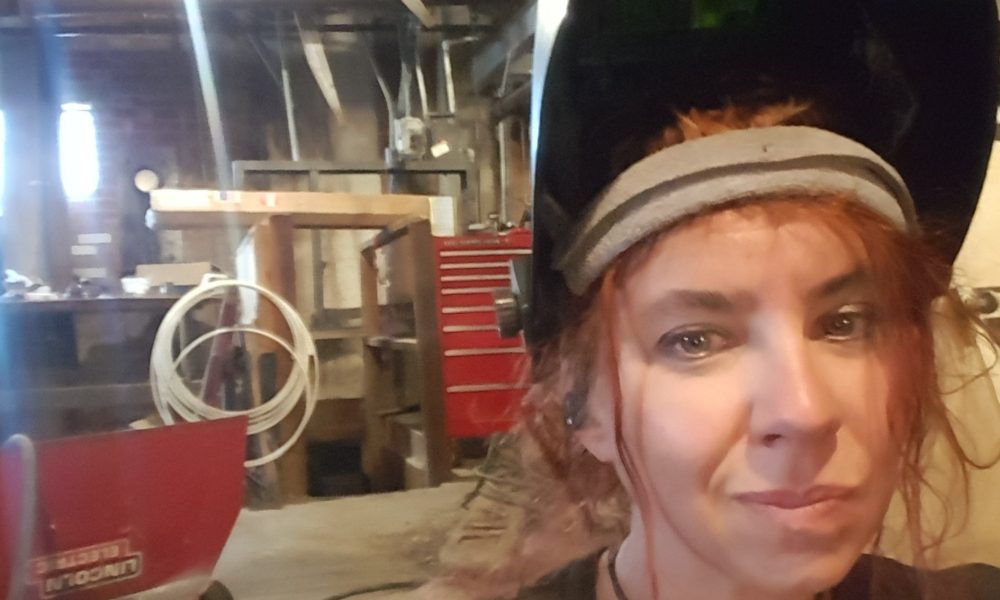
I designed and built our production line, which was definitely a terrifying task at the time. To some extent, I had no idea if the equipment that I was putting together would work. I’d never done steam system design or steamfitting before, I’d never built large stills, I fundamentally had no clue about a lot of things. Luckily it seems that I’m almost as good as I am cocky because it all works great…now. I won’t lie and say that there wasn’t a lot of debugging and improvement in the beginning, though. In fact, it’s only been in the last couple of years that I’d say we have this incarnation of the production line running about as well as it possibly can. There really was A LOT to learn and tweak. It certainly would have been faster to just buy a nice German still for $50k, but this was a far more educational experience.
Most recently, we decided to completely reboot the company a couple of years ago and we’re still on that crazy ride. We learned a whole lot in our first seven years of business and also realized that if we were going to be serious about staying in the business, there were some big changes to make. We rebranded all of our products and our company’s image, started working on out-of-state distribution and purchased our own building, which happens to be a 115-year-old grain elevator. The building needs a lot of work and has been a constant project for over a year now. I joke that I can work any 18 hours a day I like these days, and it’s funny because it’s true.
We’d love to hear more about your business.
I really like that we’re a true local grain-to-glass distillery, which is comparatively rare in this business. We buy all of our grain locally and make all of our spirits from scratch, from our own recipes. The vast majority of craft distillers purchase alcohol from outside sources, but we’ve never done that. When you drink our products, it’s really something that you can’t get anywhere else.
I’m also proud of the way that we’ve been able to work environmentally friendly practices into our business, like composting, recycling, and working with local farmers to use our spent grain. I’m also pleased that our new building is going to let us do even more, like process heat recovery which will reduce our energy bills and carbon footprint.
Another thing people often find interesting is that the vast majority of my staff have often been female. That’s comparatively rare in this extremely male-dominated industry, and I’ve been fortunate enough to work with some very talented and hard-working women over the years.
Any shoutouts? Who else deserves credit in this story – who has played a meaningful role?
Jeff Copeland is my partner who’s been all-in on this project since the beginning. He maintains a “real job” in atmospheric science so that we have some financial stability as we grow and develop, but he also lends a hand on evenings and weekends as much as possible and mixes a mean cocktail.
I also have an amazing and encouraging tribe of friends without whom none of this would be possible. They’re always there to push me to be better, give advice, and lend a hand (or a shoulder to cry on). Sometimes I have no idea how I can possibly get some scary/big project done, and then wonderful people come out of seemingly nowhere and make fantastic things happen. I don’t know what I’ve done to deserve all of the support I get, but I’m infinitely grateful for it constantly.
I can’t possibly name all of the amazing people that have helped me in large, small, and sometimes-unintentional ways, but a few special mentions are deserved: Tom Burkleaux for unwittingly inspiring me to become a distiller and for then becoming my mentor. The late Eric Babbitt for being a constantly supportive cheerleader through all the twists and turns of my life. Derek Boulton, Mark Anderson, and Rick Pitner for their often-tireless construction help, engineering assistance, encouragement, and dirty jokes. And finally, Sarah Swingle, Carla VanBemmel, Bill Tucker, and Helly Kippenhan for being my critically important emotional support team (and it does take a team).
Pricing:
- We make whiskey, gin, rum, vodka, and other specialty spirits that are distributed in CO, CA, WY, MO, and IL. Retail prices typically vary between $24-$45
Contact Info:
- Address: 700 6th Street
Greeley, CO 80631 - Website: https://www.syntaxspirits.com
- Phone: 9703525466
- Email: info@syntaxspirits.com
- Instagram: https://www.instagram.com/syntaxspirits/
- Facebook: https://www.facebook.com/syntaxspirits
- Twitter: https://twitter.com/syntaxspirits
- Yelp: https://www.yelp.com/biz/syntax-spirits-greeley-3


Image Credit:
Josh Polson, Megan Verlee, Susan Brown
Suggest a story: VoyageDenver is built on recommendations from the community; it’s how we uncover hidden gems, so if you or someone you know deserves recognition please let us know here.
Popular
-

The Trailblazers: Rewriting the Narrative
-

Celebrating the Spotlight: Kaytee Shashore Turns Milestones Into Momentum
-

Humanity in the Machine: Alexander Raye Pimentel’s Cyborg Recall Questions the Cost of a Data‑Driven World
-

Raemi Anderson on Courage, Caution, and Answering the Call of the Landscape
-

Hidden Gems: Local Businesses & Creatives You Should Know