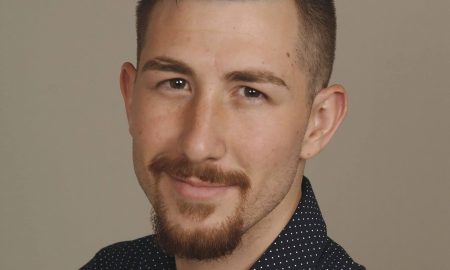


Today we’d like to introduce you to Billy Wynne.
Billy, can you briefly walk us through your story – how you started and how you got to where you are today.
I started my career with Operation Smile, an international charity that provides reconstructive surgery to children in developing countries. In addition to being an inspiring service opportunity, it was an in-depth orientation to health care services. I was able to support doctors, nurses, and other clinicians in their roles on these medical missions, which they frequently characterized as the type of work that was the reason they chose health care as a career.
After law school, I had the opportunity to work for a law firm that specialized in public policy. This was shortly after the Medicare prescription drug bill passed in 2003, so that branch of the firm had a particular need. I was able to work for mentors there that taught me the 101 (and the 202 and the 303…) of federal health policy.
After a few years with the firm, a very Washington-esque combination of timing, relationships, and true blue luck combined to present me with a chance to work as a health policy counsel for the Senate Finance Committee. The Finance Committee has jurisdiction over most federal health care spending, as well as tax policy, so it was an optimal office to serve given my career path. There was simply no better way for me to strengthen my expertise, learn how the sausage is truly made, and meet leaders from all corners of the health care market. Before the age of 30, I was crafting federal law governing large swaths of the sector and negotiating compromises between both parties and chambers of the Congress. It was a fascinating and deeply rewarding experience that I credit with dramatically accelerating my career.
Two weeks before I joined the Finance Committee, my daughter Eleanor was born and my wife and I began planning where we wanted to live longer-term. She was living in Denver when we met prior to graduate school and we quickly agreed that was where we wanted to land as soon as we could.
That’s why, at the end of 2008, I left the Committee to go into private policy consulting and advocacy practice. I joined a boutique firm that focused on health care and began to build a book of clients and professional brand. We moved to Denver in the summer of 2009 and, at first, I traveled back to Washington frequently, often three times a month for three to four days at a time. It wasn’t easy but I reasoned it was a fair compromise for getting to live in Colorado. Over the years, the pace of my travel to Washington gradually eased.
After spending five years at another government relations firm based in Washington, my growing team and client portfolio departed to found the Wynne Health Group. I had long hoped to establish my own firm but was hesitant to lose the DC foothold that another firm could provide. After almost ten years of practice, however, I had the confidence to jump ship and quickly began to build out a Washington footprint of my own. We now have six employees in our DC office and they are able to manage the lion’s share of in-person responsibilities there, affording me more time to manage the broader company needs.
Another important part of the establishing the Wynne Health Group was to be able to evolve our mission and focus to align more with the public interest. We declared ourselves a social enterprise and have, among other changes, contributed five percent of profits every year to charities that serve people in need.
Over the past few years, I began taking a great personal interest in the debate regarding Medicare for All and public option programs. I was curious regarding what these ideas could offer to the underlying goal of expanding access to quality, affordable health care. I wrote several articles for the health policy publication, Health Affairs, exploring the topic in detail. Then, last spring, Washington state and Colorado enacted public option legislation. That, coupled with the fact these issues were taking center stage in the Democratic primary, suggested to me that we are the forefront of a new national trend. If these states can be successful, then I believe several others will adopt public option programs as well.
One thing that has become clear from their implementation of these programs so far is that the states are not going to take the financial risk or bear the administrative burden of operating these plans themselves. On the other hand, most traditional insurers are at best reticent and at worst hostile opposed to public option initiatives.
That leaves an urgent need, for a new type of insurance organization that is eager to partner with states to operate mission-driven, public-interested health plans to serve as public options. By building products from the ground up that meet state and public expectations for transparency, consumer-centeredness, quality, and low cost, I believe such a company would best positioned to serve as the new public option alternative in states implementing these programs. That is what Direct Health a public benefit corporation I established last summer, aspires to be.
Overall, has it been relatively smooth? If not, what were some of the struggles along the way?
Direct Health is a start-up and we have had many ups and downs in our short life. We have made a number of pitches to potential investors for the substantial capital we need to stand-up a health plan in Colorado. At the moment, we are seeking to complete a Series A round to build out our brand, conduct additional modeling of how we would structure our products and position them in the market, establish our core leadership team and key vendor partners, etc. We have seen considerable interest in our business case and I’m optimistic we will acquire that funding soon, but it takes a healthy dose of fortitude and persistence to continue to identify and pursue new funding opportunities.
We have also invested considerable time in pursuing partnerships with existing insurance companies with the goal of teaming with them to craft this new type of public option product. What we have found, so far, is that there are considerable caution and even resistance at these organizations in light of the potential for public option programs to disrupt the existing market.
Direct Health – what should we know? What do you guys do best? What sets you apart from the competition?
Direct Health exists to deliver high-quality, stable public option health plans. So farBecause, states pursuing these initiatives do not intend to carry the financial risk and administrative burden of these programs themselves, it is our goal to be a trustworthy partner to execute those functions on states’ behalf.
We elected the PBC status because we wanted to ensure that our mission will be prioritized to the same degree as investor return. That, accompanied by embedding transparency, public interest, quality, and cost-control in our DNA, distinguishes us from existing insurance companies, including many non-profit ones. Ultimately, we strive to combine the public interested nature of a government plan with the entrepreneurial spirit of a private one to fill the need for a next-generation insurance company.
What is “success” or “successful” for you?
We define success as everyone in the U.S. has access to quality, affordable health care. That’s our ultimate goal, whether we are the insurer delivering that coverage or not. A nearer term objective is to assist Colorado in implementing a successful public option program. If the state can’t achieve that, then broader aspirations so many of us hold for health reform will suffer a serious setback.
Contact Info:
- Website: directhealthpbc.com
- Phone: 202-309-0796
- Email: billy@directhealthpbc.com
- Twitter: @billywynne77


Suggest a story: VoyageDenver is built on recommendations from the community; it’s how we uncover hidden gems, so if you or someone you know deserves recognition please let us know here.
Popular
-

The Trailblazers: Rewriting the Narrative
-

Celebrating the Spotlight: Kaytee Shashore Turns Milestones Into Momentum
-

Humanity in the Machine: Alexander Raye Pimentel’s Cyborg Recall Questions the Cost of a Data‑Driven World
-

Raemi Anderson on Courage, Caution, and Answering the Call of the Landscape
-

Hidden Gems: Local Businesses & Creatives You Should Know