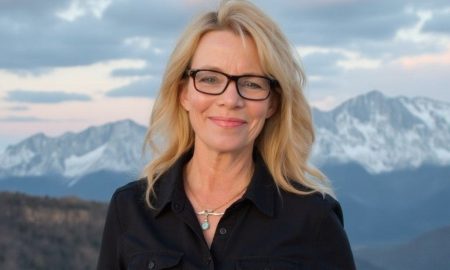


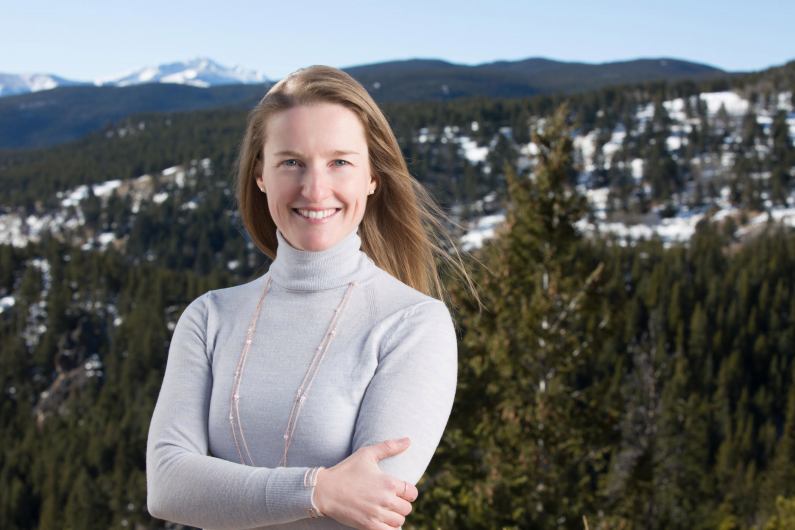
Today we’d like to introduce you to Trish Zornio.
So, before we jump into specific questions, why don’t you give us some details about you and your story.
I am a 34-year-old scientist and educator running for the U.S. Senate in Colorado 2020. At a time when science and technology impact every area of our lives, we have zero scientists on the United States Senate science committee, as well as no scientists on the White House staff. We have fallen drastically behind other nations and seen the denigration of facts and reason under President Trump. It’s time we elect a scientist! But it’s so much more than just the science. Science is merely the tool and process to achieve an equal and just 21st Century society. Whether it is protecting our planet, achieving healthcare for all Americans, or providing quality education, we must utilize an evidence-driven process to drive solutions. Plus, we’ve NEVER elected a woman to the U.S. Senate from Colorado in over 140 years of statehood! I’d be humbled to shatter this glass ceiling!
I wasn’t always a scientist. I grew up in a small, rural mountain town in Northern New Hampshire, where my father built us a house off a dirt road. We were not a wealthy family, and my father lost his job in middle-high school to the green economy. We definitely struggled and I started work as soon as I could, first with babysitting and later working at local restaurants and tourist resorts in housekeeping. With help from my teachers and community I was able to go on to college. As a first-generation American on my father’s side, I was the first to achieve an advanced degree and my grandparents were incredibly proud of what was possible for their family in America. To this day, I’m grateful for their sacrifices in making my life possible.
After over a decade studying science and conducting research, one of the projects I worked on took me often to Washington D.C. My father had held local office for 18 years, and I’d held several elected positions throughout schooling/grad school (including President of the Graduate Student Association), and had worked on campaigns and policy research and development behind the scenes, so being in Washington felt invigorating for me. I began attending the Senate science committee meetings and that’s when I realized there were no scientists on the highest level federal science committee! I felt compelled to make change.
I started by working at the state level, helping to develop better bridges between the STEM (science, technology, engineering, mathematics) communities and local/state representatives, and ultimately decided I would work toward running for office myself. My first step was starting in 2016 to take many candidate trainings for women (we’ve still never had a woman elected to the U.S. Senate from Colorado) and then I proceeded to a 64-county statewide exploratory tour. It was a LOT of work, but with help from hundreds of volunteers we completed it and found the support we needed to begin a full campaign. That was in 2017-2018, and then in January 2019 I officially announced my candidacy for the United States Senate! It was incredibly exciting, and we’ve been talking with voters statewide ever since!
Great, so let’s dig a little deeper into the story – has it been an easy path overall and if not, what were the challenges you’ve had to overcome?
The political scene can be rough, especially federal politics, but I knew what I was in for. The hardest part has been running as a younger woman — particularly one who is 5’1″ tall (maybe an extra inch or two with heels!), ~103lbs, and I’m told I look quite young for my 34 years. Combined with a societal bias toward women, it’s produced many awkward or downright wrong situations, including being fondled, degraded verbally, and openly ogled. It’s almost universal to be underestimated, and it’s why I spend so much time focusing on building up the next generation of young women.
My biggest advice for other women is to support each other. Work to build each other up, particularly the next generation. One of my idols, Supreme Court Justice Ruth Bader Ginsburg, is known for building and fighting to make the path easier for the next generation. That’s something I strive to do as well. If I encounter a challenge I want to do everything possible to make it easier for the next generation of women. Building the bench, so to speak, is a huge part of my campaign and I volunteer my time often to speak at events for young women, particularly those interested in science and politics. And, on the campaign trail, the best moments are when young girls come up to me and say they want to be just like me! It’s the most humbling thing, and I try to do everything possible not to let them down and build their paths.
We’d love to hear more about your work and what you are currently focused on. What else should we know?
Scientifically speaking, I currently teach behavioral neuroscience and research methodology at the University of Colorado Denver and hold a dual graduate degree in clinical neuropsychology and neuropsychopharmacology. My research has typically focused in neuroscience topics, usually as applied medically. The work I do is typically referred to as translational research, and it’s the juxtaposition between clinical and laboratory sciences. That means I get to do both! I typically work with patients at a hospital or clinic, and we then work with the laboratories to either identify a disease, improve a treatment, or understand the molecular basis. It’s like solving really complicated puzzles that actually impact people in real life. Some of my favorite moments are in pediatric neurology (where I typically focus) and helping families and the kids overcome incredibly difficult medical conditions.
Politically speaking, I’m running for a federal statewide office and I’m the only scientist! With zero scientists on the science committee, and no women EVER elected to the Senate from Colorado, this has become my passion for change! I’m most proud of how we are especially working to bring together the scientific community — especially women in science — into the policy-making process. Our voices haven’t been heard and we’re setting out to change this!
Do you think there are structural or other barriers impeding the emergence of more female leaders?
The systemic nature of gender bias makes it such that there isn’t just one barrier to female leadership, but many that are deeply embedded. Societal education on gender bias and learning how to recognize it is a good first step, and then we need to work to systematically dismantle the systems that keep gender bias in place. There are so many, but a few examples include family leave policies, improved sexual assault reporting, pay equality (with a subsequent focus on the intersectionality of race and gender discrepancies), and even biases in fields such as medicine where women do not have access to the same level of care as men.
Contact Info:
- Website: zornio2020.com
- Email: info@zornio2020.com
- Instagram: @trish_zornio
- Facebook: @trish_zornio
- Twitter: @trish_zornio


 Image Credit:
Main photo by Lacey McGinty, other photos courtesy of the Zornio for Senate campaign
Suggest a story: VoyageDenver is built on recommendations from the community; it’s how we uncover hidden gems, so if you or someone you know deserves recognition please let us know here.
Popular
-

The Trailblazers: Rewriting the Narrative
-

Celebrating the Spotlight: Kaytee Shashore Turns Milestones Into Momentum
-

Humanity in the Machine: Alexander Raye Pimentel’s Cyborg Recall Questions the Cost of a Data‑Driven World
-

Raemi Anderson on Courage, Caution, and Answering the Call of the Landscape
-

Hidden Gems: Local Businesses & Creatives You Should Know