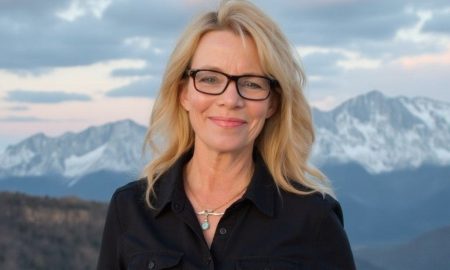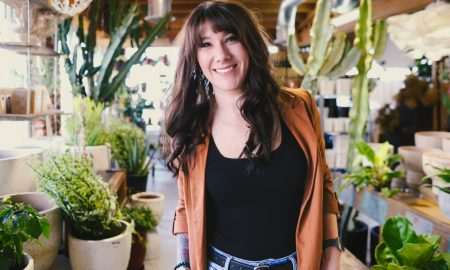


Today we’d like to introduce you to Laura McKinley.
Hi Laura, so excited to have you with us today. What can you tell us about your story?
Growing up in Boulder, I always felt a pull toward the medical field. My mother was a public health nurse, and we talked a lot at home about how early intervention with one single person can directly benefit an entire community for decades. You could say public health was my first taste of preventative medicine. I eventually left Colorado to attend UC Berkeley, where I began to explore my interest in mental health academically, earning degrees in Psychology and English.
At 23, I found myself working in an underground cubicle at the library with searing shoulder pain and a numb hand. I was diagnosed with a repetitive strain injury and sent to physical therapy. I made progress, but my pain persisted; that is until someone suggested I try acupuncture. With regular treatment, acupuncture completely relieved me of my arm pain. At the same time, I found myself feeling lighter, calmer, and freer in all aspects of my life. I understood acupuncture as a medicine premised on the mind-body connection and began to wonder, what was I trying to reach for? What was my arm pain holding me from? I decided to move across the country to attend school for nurse-midwifery. By this point, I was arm-pain free and my acupuncturist had prescribed an herbal formula that had diminished my lifelong seasonal allergy symptoms by over 90%. I was using acupuncture primarily to manage anxiety about my future plans. One afternoon, resting with needles in, a lightbulb went off and I knew: my anxiety about the movie was, like all emotions, a message from my body. I was not meant for nurse-midwifery. I was called to Asian medicine.
Four months later, I began grad school at Acupuncture & Integrative Medicine College of Berkeley. There, I found a form of medicine that aligned with my inner knowing. Acupuncture and herbal medicine excel at the prevention of disease. Rather than approach each symptom as a singular issue to be addressed alone, Asian medicine seeks out the root cause, aiming to both calm current conditions and prevent their recurrence. Acupuncture and herbal medicine are based in a belief that the body, mind, and spirit are forever intertwined. Western biomedicine asks us to distill ourselves, to separate our minds from our physical form. Asian medicine insists that we are one, that our feelings affect our bodies and our bodies affect our feelings. I earned my Master of Science in Oriental Medicine and moved back to Colorado to start my practice in Denver. I spent my first year home acclimating to the Colorado acupuncture scene and researching local practices before opening the doors to Laura McKinley Acupuncture in 2015. I’m proud to say that my bustling clinic celebrated its fifth year in business last fall!
Alright, so let’s dig a little deeper into the story – has it been an easy path overall and if not, what were the challenges you’ve had to overcome?
Opening a business with minimal business training was not a smooth road. When I first moved back to Denver, I had no idea what to expect and the very littlest of formal business education. Acupuncture and herbal medicine are very popular in the Bay Area. Acupuncture actually became legal in the United States because of a practitioner in Northern California in the 1970s. As a result, there is a baseline cultural awareness in The Bay about acupuncture. Colorado is an acupuncture hot spot, but there are still plenty of folks here who don’t know that Asian medicine is millennia old and can be used to treat any condition — that it is an entire system of medicine. I am so grateful I had planned to spend a year working in community acupuncture clinics, a great low-cost option for those comfortable with a group setting. This enabled me to learn more about the Denver acupuncture culture, and specifically, the Denver acupuncture patient at the time.
I also spent this year preparing to open my business by trying to discover what I didn’t know. I started building connections with other local acupuncturists and learning about the successes and challenges they were facing. I began amassing a team who knew about the things I don’t know about and am not particularly driven to learn about. For example, I hired an accountant, not just to do my taxes but to teach me the basics of successful daily bookkeeping. I knew I didn’t want to be on the phone with insurance companies, but I also wanted to make acupuncture as accessible as possible, and accepting health insurance is a huge step in that direction. So, I hired a billing team to handle the data entry and got credentialed with insurance companies that offer a fair rate to Licensed Acupuncturists. This has continued to be my style as my business has grown: do what I do best, regularly zoom out to try to pay attention to what I am not doing best, and hire other people to help as needed.
Great, so let’s talk business. Can you tell our readers more about what you do and what you think sets you apart from others?
Laura McKinley Acupuncture is woman-owned acupuncture and herbal medicine clinic located in the heart of Denver. We offer acupuncture, dry needling (a style of acupuncture), herbal medicine, and lifestyle and nutritional counseling, along with bodywork, including cupping and gua sha (a technique used to release pain and detox the body). We accept insurance for those with acupuncture coverage. Laura McKinley Acupuncture wholeheartedly asserts that Black Lives Matter and is an LGBTQ+ friendly space. I specialize in the treatment of psychoemotional health and women’s health. That said, I am trained and experienced in treating a wide variety of conditions, ranging from musculoskeletal pain to gastrointestinal concerns to autoimmune disorders and more. I am a Licensed Acupuncturist in both Colorado and California and am nationally certified as a Diplomate of Oriental Medicine, which indicates that my training includes acupuncture, herbal medicine, and western biomedicine.
As with most professions, there are many different styles of acupuncture. I practice a blend of Five Element and Traditional Chinese Medicine styles, with palpation skills developed in Japanese Meridian Therapy. I draw on these different styles as appropriate to best meet the individual needs of my clients. One of the unique features of my practice is my pulse diagnosis style. My clients love chatting about their pulses. This is a honed skill I have cultivated that offers me particular information regarding how the American lifestyle influences my clients’ physical and emotional health. I spent two years studying Shen-Hammer pulse diagnosis under the tutelage of Lonny Jarrett, a master diagnostician and practitioner. This style of pulse diagnosis focuses on the integration of the mind, body, and spirit and is widely recognized as the most comprehensive form of pulse diagnosis practiced in the United States today. As a practitioner, I champion my role as a facilitator, holding that disharmony in the body is best realigned from within. I support my patients to rediscover their own innate healing abilities by guiding them gently towards their health goals. Laura McKinley Acupuncture is committed to providing a safe and comfortable environment for each of our patients.
What sort of changes are you expecting over the next 5-10 years?
One of my personal hopes for the next 5-10 years is that our profession works to eradicate the outdated, racist language used in our professional designations, like my degree title and national certification. This is a cause already championed by many in our profession and changes are being made on smaller scales, like the renaming of state organizations. I look forward to bigger changes coming. Diction aside, the Asian medical field in the United States is in a really exciting phase of growth right now. Things have already changed so much in the years since I entered the field. More and more insurance companies are including acupuncture coverage in their plans, and hospitals are hiring Licensed Acupuncturists on their staffs. Medical Doctors are starting to become more aware of how acupuncture can benefit their patients. It is so exciting when I have a client who was referred by their MD.
I expect the next 5-10 years will include even more expansion and integration into the American health care system. My hope is that this will make acupuncture more accessible to more people. Of course, this growth will have its challenges, especially since the healthcare system as an institution does not understand how acupuncture works. For example, in 2020, Medicare-approved acupuncture for the treatment of low back pain but only covers it under the supervision of a physician. Since most Licensed Acupuncturists do not work under Medical Doctors, this means that those of us best trained to perform our medicine are not able to treat Medicare clients who are excited about acupuncture for low back pain. While this is discouraging, I can also see this as a moment of hope: the fact that Medicare even recognizes the efficacy of acupuncture is a huge step towards where our industry is headed.
Pricing:
- Initial Acupuncture Session, 90 minutes, self-pay: $115
- Follow-Up Acupuncture Session, 60 minutes, self-pay: $88
- Cupping Only, 30 minutes, self-pay: $38
Contact Info:
- Email: Laura@LauraMcKinleyAcupuncture.com
- Website: www.LauraMcKinleyAcupuncture.com
- Facebook: www.facebook.com/LauraMcKinleyAcupuncture


Popular
-

The Trailblazers: Rewriting the Narrative
-

Celebrating the Spotlight: Kaytee Shashore Turns Milestones Into Momentum
-
Humanity in the Machine: Alexander Raye Pimentel’s Cyborg Recall Questions the Cost of a Data‑Driven World
-

Raemi Anderson on Courage, Caution, and Answering the Call of the Landscape
-

Hidden Gems: Local Businesses & Creatives You Should Know