

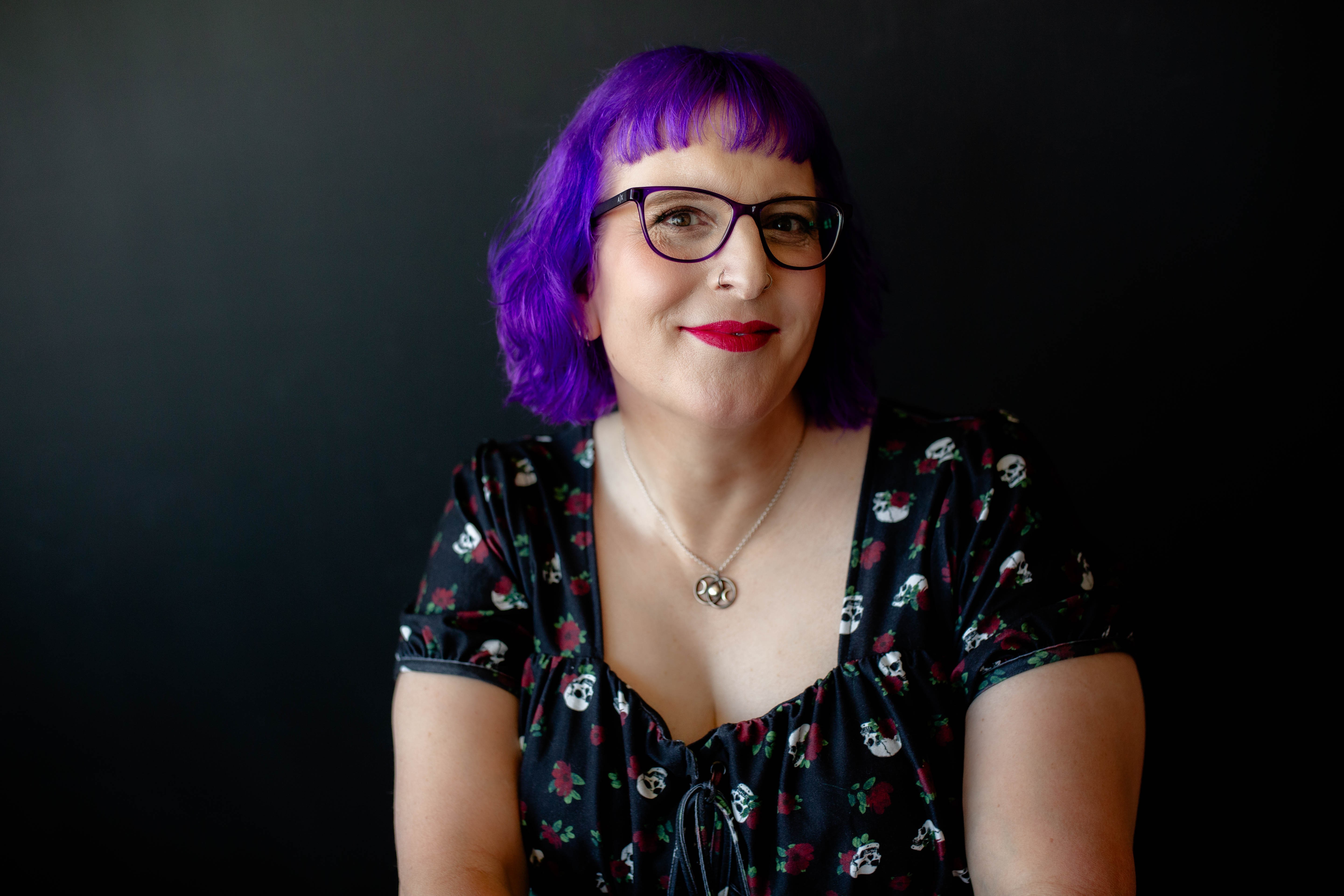
Amethysta Herrick Ph.D. shared their story and experiences with us recently and you can find our conversation below.
Amethysta, so good to connect and we’re excited to share your story and insights with our audience. There’s a ton to learn from your story, but let’s start with a warm up before we get into the heart of the interview. What are you being called to do now, that you may have been afraid of before?
Throughout my career – from technology to academia to the content I create today – I dismissed the idea that community could grow around ideas I promote. I’m uncomfortable being a symbol of anything, including my own work.
In October 2025, however, I realized community grew around me whether I wanted it to or not. Every person is a symbol of their actions, whether they choose to define what they stand for or accept society’s defaults. As a result, I started thinking more seriously about building a space for those who appreciate my work to gather.
Since I was already working on a content strategy to hone what I create for those who need it most, I used that same effort to define a vision and the audience I hope to reach. For years, I’ve been frightened to create a Discord community server, but in December 2025, I launched my community and have already been enriched by the interactions I see among members.
Can you briefly introduce yourself and share what makes you or your brand unique?
I am Dr. Amethysta Herrick, a scientist and content creator whose work focuses on investigating human identity and gender using the scientific method. Politicians and religious leaders today attempt to place humans into boxes based purely on physical characteristics, but evidence shows the human experience is so much richer.
I founded my company, The Purplepaw Clan, to explore the human experience and promote individual expression. Most work on identity centers on either the physical or the psychological and social: the argument of Nature vs. Nurture. But simply by observing humans, we see the question is not either / or – it is both / and.
All of us are born with knowledge of who we are, but we must express who we are within a social environment. As a result, identity spans the physical, cognitive, behavioral, and social, which is why none of us is like any other.
This diversity in the human experience makes each of us beautiful and special. My life’s work is to demonstrate this to society and improve how each of us views and respects each other.
Thanks for sharing that. Would love to go back in time and hear about how your past might have impacted who you are today. What did you believe about yourself as a child that you no longer believe?
I grew up with three sisters and simply assumed I was the same as they were. My parents and the social environment around me, however, treated me differently. It took years to understand the way I was treated originates in social norms I could not fulfill. By my early 20s, I realized I am a transgender woman.
As a child, I believed I was wrong for being who I am. I believed I needed to be “fixed” in some way I could not define. That led me to study genetics as an undergraduate, focus on experimental and system design as a graduate student, and nurture a lifelong fascination with philosophy and psychology. All I knew was that I could neither accept what my social environment wanted me to be, nor could I embrace who I truly am without backlash.
Finally – at age 52 – the pressure was so immense, I could either transition gender or die. The choice truly was that stark. When I began transition, I still believed I needed to be fixed, but I hoped expressing who I am would salve the pain of knowing I was broken.
In the three years between beginning transition and now, I discovered the fallacy I believed as a child is that social norms are immutable laws. They are not. Social norms are fluid, and they change as society grows and evolves.
When I rejected the social norms that equated the sex assigned to me at birth and my personal expression, I learned none of us needs to be “fixed.” There is never anything “broken.” Each of us expresses who we are and contributes to the greater human experience. Some may choose to disagree with how we contribute, but as long as our experience does not negate another person’s experience, all experiences are simply human.
When did you stop hiding your pain and start using it as power?
I hid being pansexual and transgender most of my life. With the exception of a few years in graduate school, I focused on the American Dream: the desire to acquire more and more stuff, to buy a bigger house, to earn a higher salary, to attain a more impressive job title.
But inside, the American Dream was tearing me up. I made plenty of money in my career in science and technology, but at the cost of my mental health. Denying who you know yourself to be is excruciating.
When I finally transitioned gender in 2022, I had to embrace all aspects of who I am. I had to allow what I tried to hide to flow outward. I had to express who I truly knew I was. What I discovered is that expressing who I truly am is liberating. Far from feeling like a failure for no longer earning the high salary, I felt like a success for showing the world who Amethysta Herrick has been all along.
I won’t deny there are politicians, religious figures, and those who follow them who claim to hate me. They claim I’m the reason the world is as bad as it is today. They want to use me as a scapegoat for the failures of a patriarchal society that was never sustainable.
But that’s where my power lies. I demonstrate the American Dream was always a nightmare. I demonstrate being Assigned Male at Birth is not the highest achievement a human can accomplish. I demonstrate that living life true to yourself, not acquiring material objects, is the path to happiness. And by demonstrating all of the above, people fear the lesson I teach.
As a content creator, I channel their fear into my work. I talk about genetics, feminism, philosophy, hypnosis. I show that identity is a complex of physical, cognitive, behavioral, and social. And my life is so much better than it was pre-transition!
Alright, so if you are open to it, let’s explore some philosophical questions that touch on your values and worldview. What do you believe is true but cannot prove?
My theory of identity begins with the axiom that each of us is born with a set of knowledge about ourselves. We don’t know why we know what we know about ourselves, but we do know that we know it. I call this set of knowledge our Origin of Identity. The Origin acts as the base-level knowledge from which the rest of our human experience grows.
Many theories exist for how we acquire at least some of this knowledge, such as genetics, epigenetics, social conditioning, or karma. In my theory of identity, it doesn’t matter where the Origin comes from. What matters is that we have knowledge about ourselves nobody else can gainsay.
I can’t prove where the Origin of Identity comes from, nor can I prove how extensive that set of knowledge is at birth. What I can do is demonstrate the Origin of Identity. My favorite way to demonstrate the Origin of Identity is simply to ask: what is your favorite vegetable?
You certainly have an answer to this question (and maybe it’s that you hate all vegetables), but you can’t explain why you know the answer. For instance, my favorite vegetable is broccoli. If you asked why I like broccoli, I could talk about the smell, the color, the texture, the delicious flavor both steamed or raw. I could go on and on about the characteristics of broccoli, but at some point, I have to answer “Because.” Why does broccoli taste good? Because. Why is broccoli’s texture appealing? Because.
The knowledge we hold in our Origin of Identity is who we are at birth, and every experience in our life is colored by it. Because of our Origin, identity must be multifaceted, and it must be personal. Nobody else can tell us who we are, and nobody else can tell us what we like and dislike is wrong.
Thank you so much for all of your openness so far. Maybe we can close with a future oriented question. Have you ever gotten what you wanted, and found it did not satisfy you?
To return to the American Dream, I was taught if I worked hard, I would be rewarded. I was taught material gain would make me happy. I believed it, even though thousands of songs and poems claim money does not buy happiness.
The insidious aspect of the American Dream, however, is that if we don’t experience happiness through material gain, we’re told it’s because we haven’t worked hard enough, made enough money, risen high enough in social status. To be blunt, that statement is false. No salary can buy self-respect. No house can prevent you from lying awake at night wondering why you continue to exist. No social status can give you a purpose.
The American Dream is a lie. I made it into the 1%. I bought whatever my whims fancied. But I was miserable. I was a bitter, crabby, old man hoping to die as soon as possible.
By embracing who I am and transitioning gender, I renounced the ability to advance in technology the way a White, ostensibly cisgender and heterosexual man would advance. Today, I cannot buy everything my whims fancy. I am no longer in the 1%.
But I am happy.
I am a vibrant, vital, purple-haired woman just beginning to enjoy her life. I have a purpose to fulfill. I know why I exist, and I know I want to exist. For the first time in my life, I have self-respect and self-love. For the first time in my life, I feel truly human. And that alone is worth all the money ever printed.
Contact Info:
- Website: https://purplepawclan.com
- Linkedin: https://www.linkedin.com/in/amethystaherrick/
- Youtube: https://www.youtube.com/@amethystaherrick
- Other: Bluesky: https://bsky.app/profile/amethysta.io
TikTok: https://www.tiktok.com/@amethystaherrick
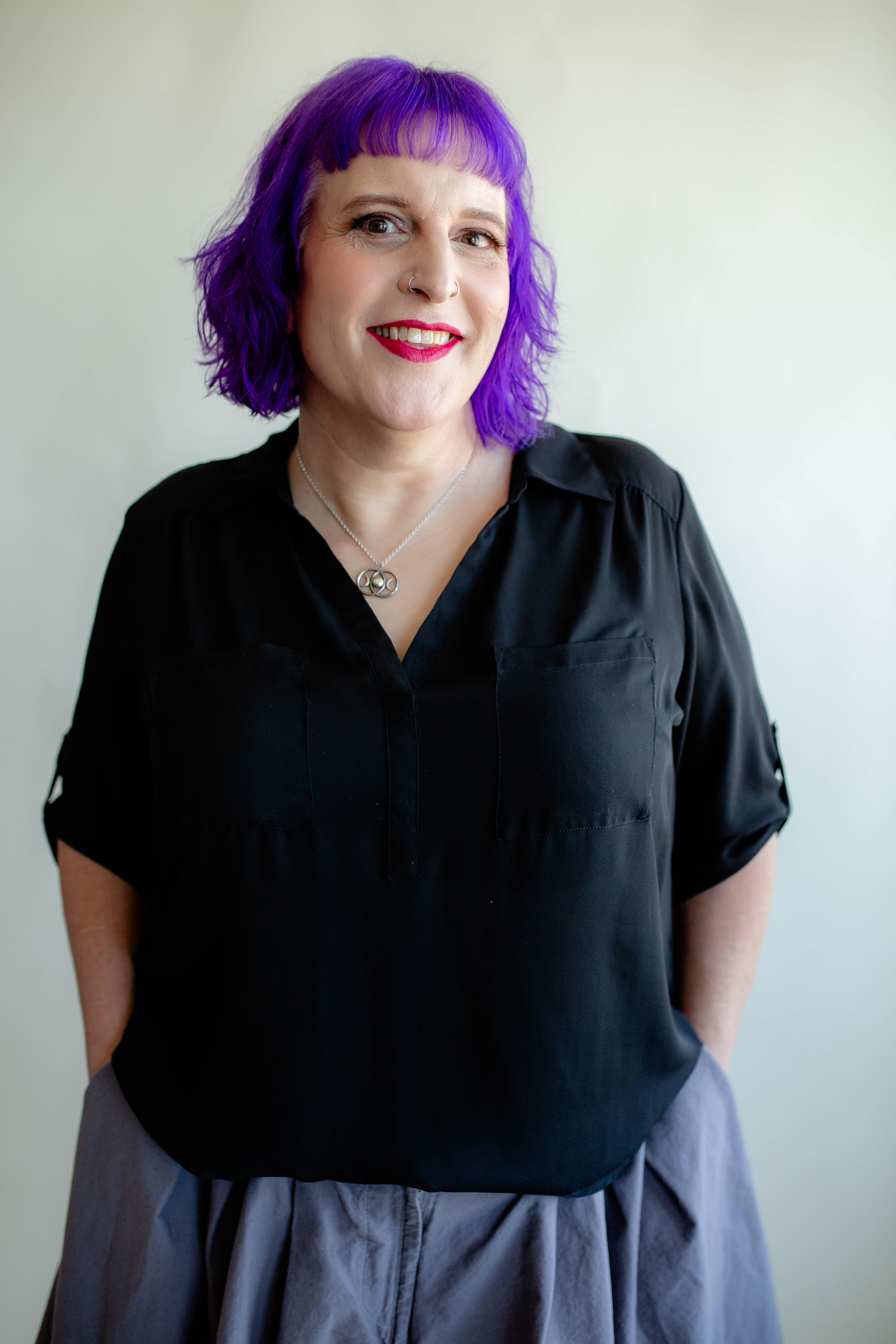
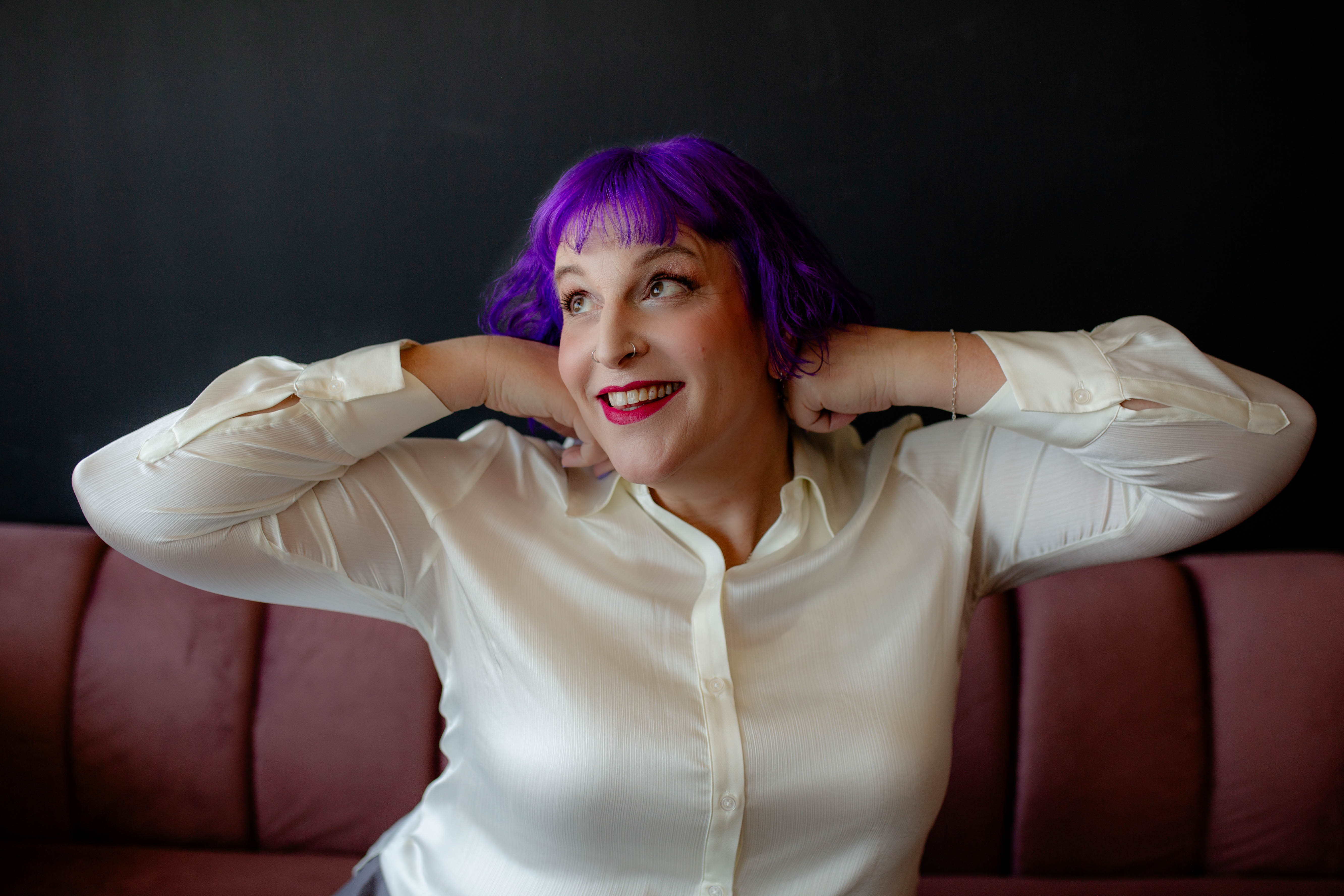
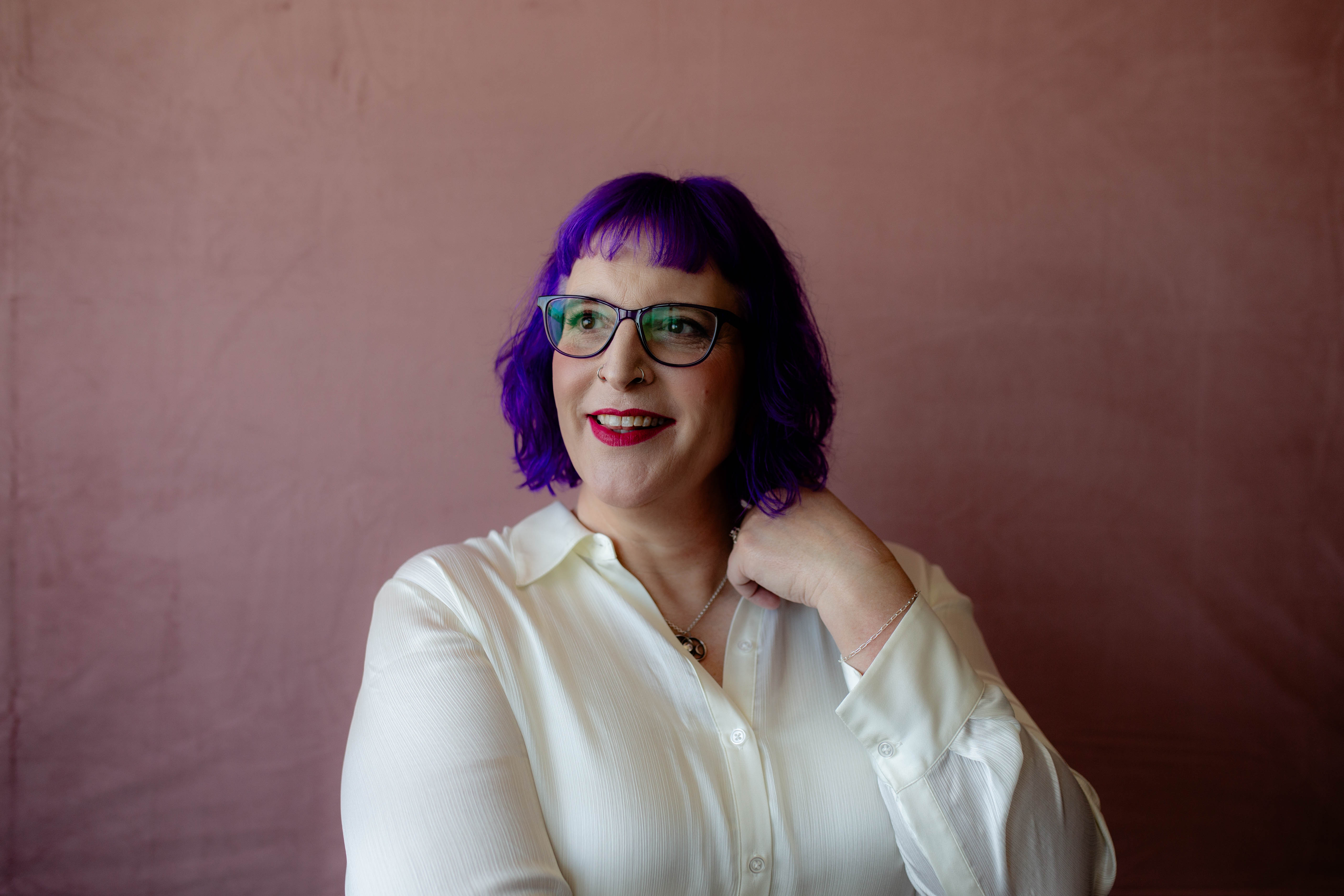
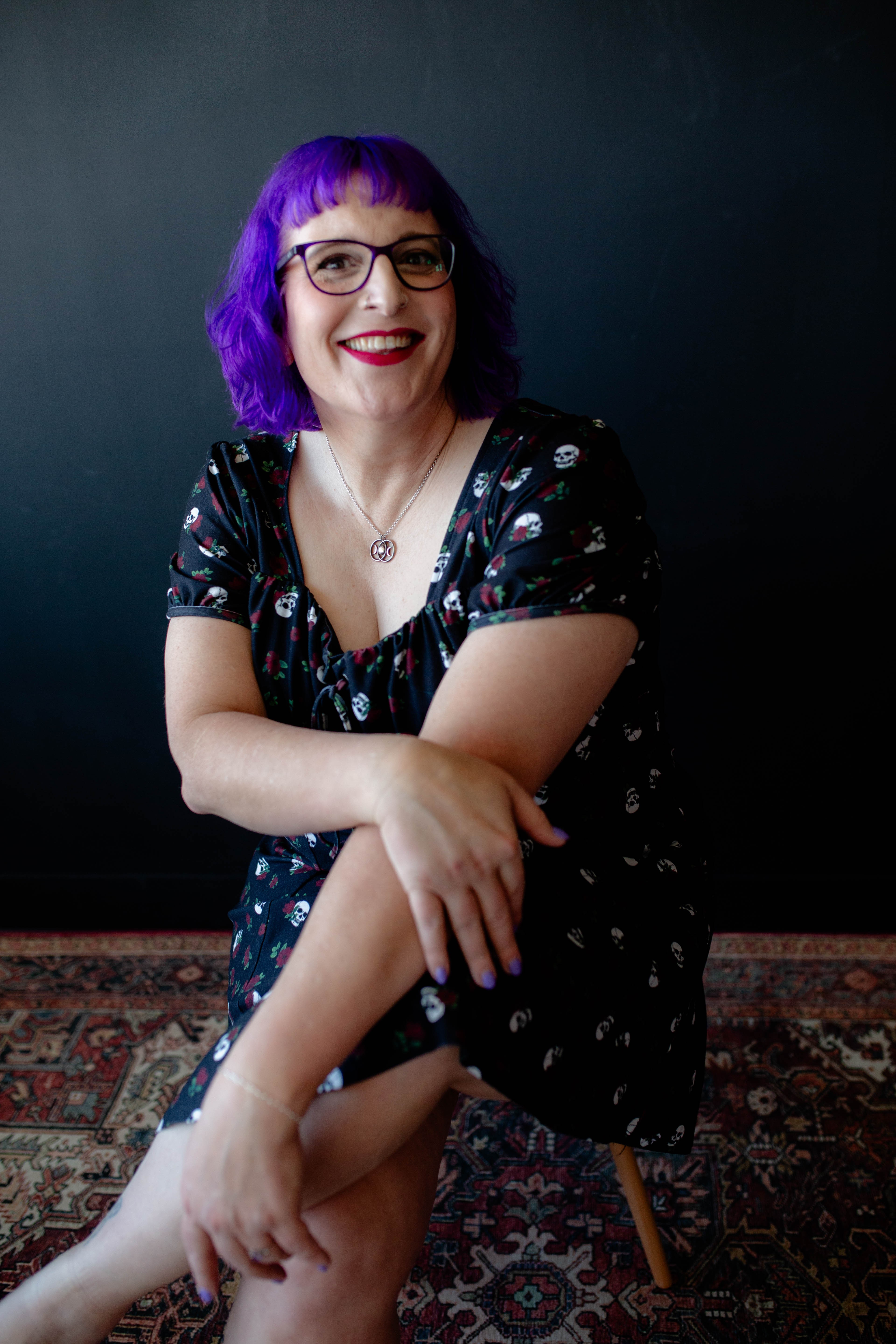


Image Credits
All photos by Lisa Gullo of Dark Moon Studios, Fort Collins, CO
Dark Moon’s Website: https://www.darkmoonco.com/
All logos by Shannon Gross at 10toLaunch, Englewood, CO
10toLaunch’s Website: https://10tolaunch.com/