

We’re looking forward to introducing you to Danilo Habusmel. Check out our conversation below.
Hi Danilo, thank you so much for joining us today. We’re thrilled to learn more about your journey, values and what you are currently working on. Let’s start with an ice breaker: Have you stood up for someone when it cost you something?
Absolutely. Early in my career, I worked at a bank where I was expected to push financial products on people who clearly didn’t need them. Many of them were immigrants, elderly, or simply trusting. I refused to do it. I protected the clients instead of the quotas — and it cost me my job.
At the time, I was 20 years old, supporting my family, and losing that paycheck hurt. But that moment shaped my entire philosophy: I’d rather take a hit than compromise someone else’s dignity. Standing up for people who don’t even realize they’re being taken advantage of became a core part of who I am.
Looking back, it wasn’t just about saying “no.” It was about choosing the kind of man I wanted to become — someone who builds, protects, and repairs, even when it’s inconvenient.
Can you briefly introduce yourself and share what makes you or your brand unique?
My name is Danilo Habusmel, and I build ecosystems more than companies. I work at the intersection of culture, innovation, and human experience — designing modular retail concepts, wellness activations, and cross‑border business models that connect the U.S. with Latin America in a meaningful way.
What makes my work unique is that it didn’t start with a “business idea.” It started with a personal story — one shaped by migration, rebuilding, and the need to create spaces where people feel seen, respected, and empowered. Every project I lead today is an extension of that purpose.
I’m currently developing MOD●, a modular concept space that blends technology, wellness, and editorial storytelling into a new kind of retail experience. I’m also building Elevana, a corporate travel and hospitality brand rooted in emotional intelligence, and Austral Property Exchange, a cross‑border advisory firm focused on ethical investment and bicultural stewardship.
Across all these ventures, my role is the same: I design platforms that help people and businesses connect, grow, and belong. I’m not interested in trends — I’m interested in building systems that last, that elevate communities, and that open doors between markets that rarely speak to each other.
Thanks for sharing that. Would love to go back in time and hear about how your past might have impacted who you are today. What’s a moment that really shaped how you see the world?
One of the moments that shaped me the most happened when I was very young: my father left when I was two. At that age you don’t understand the details, but you feel the absence. You grow up learning to read the world without a guide, without a safety net, and that forces you to develop a different kind of awareness — emotional, social, and spiritual.
That early rupture taught me two things that still define how I operate today. First, that you can survive almost anything if you stay connected to purpose and community. And second, that leadership isn’t about authority; it’s about presence. It’s about showing up, consistently, even when life is messy or uncertain.
That experience shaped the way I build companies, raise my children, and move through the world. I don’t take connection for granted. I don’t take trust lightly. And I don’t wait for someone else to set the path. I learned early that sometimes you have to become the person you needed — and that mindset has guided every chapter of my life.
When did you stop hiding your pain and start using it as power?
I stopped hiding my pain the moment I realized it wasn’t a weakness — it was information. For years, I carried my story quietly, thinking that surviving was something you did in silence. But at some point, I understood that the same experiences I tried to bury were actually the foundation of my strength, my empathy, and my ability to build bridges between people and cultures.
The turning point came when I started writing my book. Putting my story on paper forced me to confront the parts of my life I had avoided — not to relive them, but to understand them. And in that process, the pain stopped being a shadow and became a tool. It gave me clarity, purpose, and a sense of responsibility to help others who are trying to repair their own narratives.
Using my pain as power didn’t happen overnight. It happened the moment I decided to stop running from my past and start shaping it into something that could serve others. That shift changed everything — the way I lead, the way I parent, the way I build companies, and the way I show up in the world.
So a lot of these questions go deep, but if you are open to it, we’ve got a few more questions that we’d love to get your take on. What’s a belief or project you’re committed to, no matter how long it takes?
I’m committed to a lifelong project: building systems that strengthen connection, dignity, and continuity across generations. It’s not a company or a single initiative — it’s a philosophy that guides everything I create, from modular retail ecosystems to cross‑border business models and community‑driven platforms.
This belief also shapes the book I’m writing. It’s a long process, but I’m not in a hurry. The book is part memoir, part framework — an attempt to translate years of personal reconstruction, cultural navigation, and entrepreneurial experimentation into something that can help others find clarity and direction. It’s my way of documenting the lessons that shaped me, so they can serve someone else long after I’m gone.
Whether it takes five years or twenty, I’m committed to this idea: building things that last, that repair, that elevate people, and that create bridges where none existed before. That’s the work I’ll keep doing for as long as I’m here.
Okay, so let’s keep going with one more question that means a lot to us: What is the story you hope people tell about you when you’re gone?
I hope people say that I was someone who created clarity where there was confusion, dignity where there was noise, and opportunity where others saw limits. Someone who didn’t just build businesses, but built bridges — between cultures, generations, and people who needed a way forward.
I want to be remembered as a man who showed up. Who protected others when it wasn’t convenient. Who used his experiences — the good and the painful — to elevate those around him. Someone who didn’t chase status, but impact. Someone who left systems, ideas, and spaces that helped others stand taller.
Contact Info:
- Website: https://www.amileup.com
- Linkedin: https://www.linkedin.com/in/danilo-habusmel/

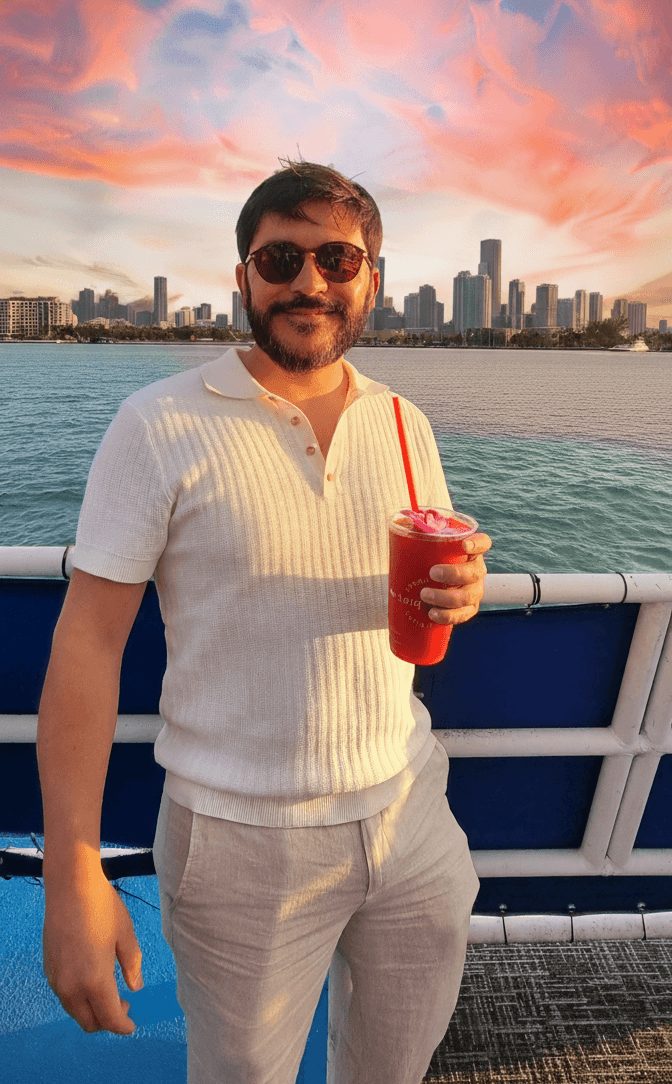
Image Credits
Danilo Habusmel