


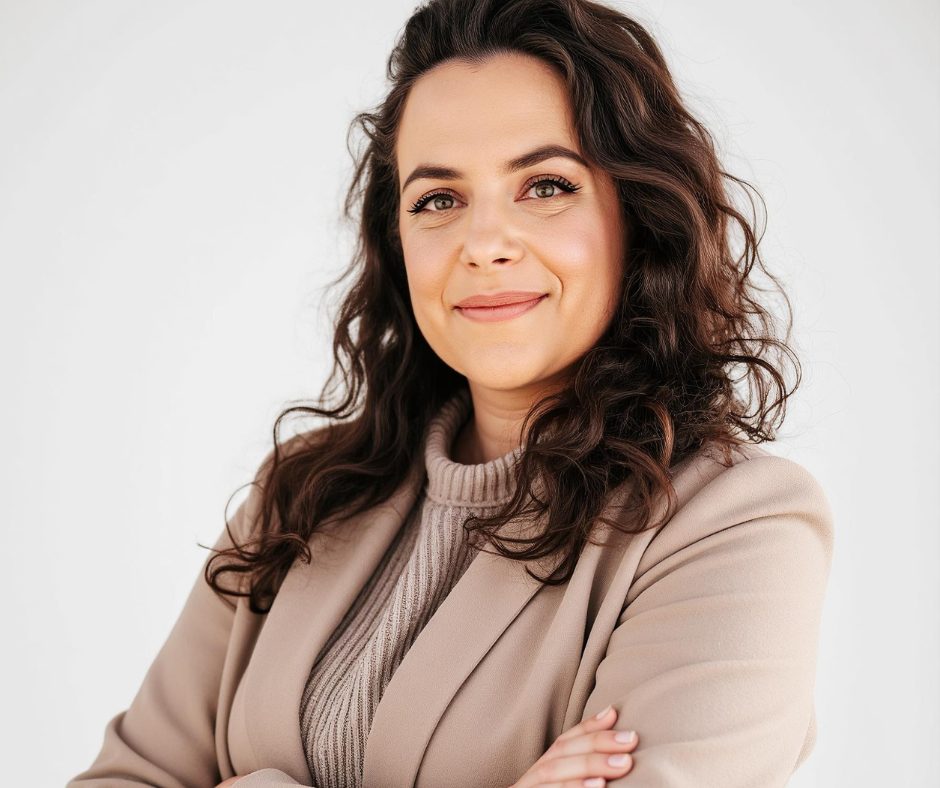
We’re looking forward to introducing you to Inbar Madar. Check out our conversation below.
Hi Inbar, thank you so much for joining us today. We’re thrilled to learn more about your journey, values and what you are currently working on. Let’s start with an ice breaker: What are you most proud of building — that nobody sees?
Honestly? My crisis management skills. You’d think I’d say something more glamorous, but it’s really my ability to stay calm when five clients call me at once because something broke, someone quit, or a number doesn’t make sense. It’s not dramatic, but it’s the difference between being a nice-to-have advisor and being the person clients never want to let go of. No one sees it, but it’s definitely my superpower.
Can you briefly introduce yourself and share what makes you or your brand unique?
I’m Inbar, founder of Flip Fractional, a strategy firm that acts as the executive power team behind high-growth brands. We plug into companies that are scaling fast and help them build the infrastructure, systems, and financial clarity they need to actually keep up with their own growth.
What makes us different is that we’re not just consultants handing out advice – we’re operators. We sit inside the business, fix what’s not working, and create the roadmap that turns scaling roadblocks into consistent profit. My background’s in brand leadership and finance, so I’ve lived both sides – the creative vision and the data that keeps it alive.
Right now, we’re working on expanding Flip’s internal ecosystem. Creating new data tools, dashboards, and frameworks that give leaders real visibility into how their businesses perform day to day. The goal is to make strategy more tangible and less theoretical. We’re turning what usually feels complex and intimidating into something simple, actionable, and (dare I say) actually fun to run.
Appreciate your sharing that. Let’s talk about your life, growing up and some of topics and learnings around that. What did you believe about yourself as a child that you no longer believe?
When I was a kid, I was painfully shy. The kind of kid who’d rehearse what to say, then decide to just smile instead. I used to think confidence was for the loud ones, the people who walked into a room and instantly owned it. I was definitely not that kid.
Somewhere between moving countries, getting through way too many awkward introductions, and realizing no one actually has it all together, I stopped waiting to feel confident and just started showing up anyway. Turns out, that’s what confidence really is – doing it before you feel ready and surviving the cringe.
What’s something you changed your mind about after failing hard?
That failure means you did something wrong. For a long time, I treated failure like a verdict instead of feedback. Like it meant I wasn’t cut out for whatever I was doing. Eventually, after enough times face-planting on ideas that should have worked, I started seeing failure as data. Painful, humbling data, but still data.
Now when something doesn’t work, I don’t spiral, I diagnose. What broke? What did I miss? What needs to change next time? It’s not fun, but that’s where the real growth happens. And that’s exactly why I still call it failure, because failing isn’t the problem. Avoiding it is.
I think our readers would appreciate hearing more about your values and what you think matters in life and career, etc. So our next question is along those lines. What are the biggest lies your industry tells itself?
That growth fixes everything. It’s like thinking a bigger closet will fix your laundry problem – it won’t.
Most businesses don’t need more, they need better.
More revenue doesn’t fix bad margins. More clients don’t fix broken systems. Growth just makes the cracks louder.
Everyone loves to talk about scaling, but scaling what? If your foundation’s messy, all you’re doing is multiplying inefficiency.
The hard truth is that growth hides problems until it can’t, and by the time it shows, it’s ten times more expensive to fix. So before you chase “more,” make sure what you already have actually works. That’s where the real money is.
Okay, so let’s keep going with one more question that means a lot to us: What do you understand deeply that most people don’t?
That calm beats control.
Most people think leadership is about steering harder when things get messy, but real leadership is knowing when not to grab the wheel. The more you try to control every detail, the less space you leave for people to step up. When you stay calm, you stop being the bottleneck, and that’s when everything starts running better. Control feels powerful, but calm is what actually builds trust.
Contact Info:
- Website: https://flipfractional.com
- Instagram: https://www.instagram.com/flipfractional/
- Linkedin: https://www.linkedin.com/in/inbar-madar/