
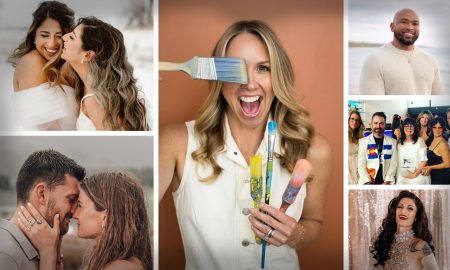


Today we’d like to introduce you to Binisha Shrestha.
Hi Binisha, we’d love for you to start by introducing yourself.
I was born and raised in Nepal. I have lived in Denver for more than 10 years now. Because my sister was living in Denver, I joined her in order to have a better quality of life and education than back home. I came here with my husband and son who was still a toddler as an immigrant.
Decades ago, as a new immigrant to America, I struggled deeply with cultural and language barriers, finding a job, a lack of information on community resources, and, as a profoundly deaf person, even not knowing where to ask for help. I thought, ‘If I’m educated and facing these challenges, how many others might be struggling even more without similar resources?’ This realization led me, along with a few community members, to start a community project – the Colorado Nepalese Community – at a grassroots level. we are a nonprofit formed with a group of community leaders dedicated to improving the quality of life of residents in Denver (Nepalese Community) and the surrounding neighborhoods by promoting equitable access to education (art and culture), health, and economic opportunities. We provide intergenerational opportunities to experience Asian Nepali heritage and traditions through cultural events, educational programs and community initiatives. We are still a grassroots volunteer group , each of us associated in our own respective fields but have common interests in straightening our cultural roots, uniting our people to be aware of the community we live in and represent and be a voice for Nepalese Community, especially those from immigrant, refugee, and under-served communities.
Alright, so let’s dig a little deeper into the story – has it been an easy path overall and if not, what were the challenges you’ve had to overcome?
Navigating life as a deaf immigrant can present unique challenges and barriers, making the journey far from smooth.
Inspite of being qualified, finding and retaining jobs was more difficult due to communication barriers, lack of access to training and resources, and potential discrimination from employers. I always hard time asking for accommodations, people not being aware on our issues, concerns, our culture. On top of that, adapting to a new culture and societal norms was challenging for people like us. Deep down, I was always looking for the sense of belonging. For deaf immigrants, the intersection of cultural differences with communication barriers can add another layer of complexity.
Yet, throughout my journey, I have had a constant feeling of something missing from my life and I realized I was struggling with the idea of belonging and fitting in. As I started researching these concepts, I saw a pattern in my struggles and those of others with similar trajectories — it came down to being part of a community while being an immigrant.
People consider immigration as a transaction; you get the visa and start living in a new place. It’s even considered as a metric for happiness. “You’ve got your visa; you must be happy!” Well, sure I am. I’m glad I get to live in and explore a new continent, and work for an amazing organization that values my efforts and skills and tries its best to align that work with my goals and expectations. But happiness is not just measured by success and promotion at work, or by how many people know and acknowledge your contributions. Those factors help make Google, Amazon, Facebook a great place to work, for sure, but they’re not everything. Happiness is a combination of satisfaction, joy, and belonging in both work and personal life. And since we spend a minimum of eight hours at work (maybe even more without realizing it, since we’re working at home/living at work these days), work life contributes highly to our happiness index. While we are all being invited to more DEI (Diversity Equity Inclusion) events, and everyone’s making an effort to learn how to improve company cultures, I believe we’re all missing out on the basic and inherent need to be able to find the kind of common ground that enables us to start connecting with each other.
Thanks – so what else should our readers know about your work and what you’re currently focused on?
As an art and culture promoter, I specialize in creating platforms and opportunities that celebrate artistic expression and cultural heritage. My work revolves around curating events, exhibitions, and initiatives that bring artists, creatives, and communities together—whether through public art programs, festivals, artist residencies, or cross-cultural collaborations.
I’m known for my ability to bridge the gap between emerging talent and wider audiences, often championing underrepresented voices and grassroots movements. My projects are fueled by a deep respect for tradition and an eye for innovation. I believe that culture thrives when stories are shared authentically and creatively.
One of the things I’m most proud of are Mosaic of Cultures : Nepali Community Exhibit, Heritage. in Motion series, numerous festivals, musicals, storytelling sessions we’ve organized and also founding a cultural nonprofit, organizing an international exchange. It wasn’t just about the final outcome—it was about the connections made, the dialogues sparked, and the sense of belonging it fostered.
What sets me apart is my holistic approach: I don’t just promote events; I nurture ecosystems. I invest in relationships, context, and long-term impact. I bring together artists, institutions, sponsors, and communities in ways that feel meaningful and sustainable. For me, it’s about creating cultural moments that resonate—deeply, and lastingly.
We love surprises, fun facts and unexpected stories. Is there something you can share that might surprise us?
Something surprising that many people who know my work as an art and culture advocate might not realize is that being deaf, a mother of two, my journey into this field didn’t come from a conventional path—but from a deep, lifelong fascination with museums, art, sense of belonging and the quiet power they hold to speak across boundaries, cultures, and even sound.
Growing up Buddhist in Nepal, I was surrounded by symbolism, storytelling, and spiritual art that always made me feel connected—even when I couldn’t hear the world around me in the same way as others art became my language. It’s how I process the world, how I communicate, and how I advocate for others who may feel unseen or unheard.
Being both a mom and an immigrant has taught me resilience, patience, and the value of cultural preservation. These experiences have shaped not only what I do, but how I do it—with empathy, intention, and a deep commitment to inclusion.
So while people may know me for my public work promoting art and culture, what truly fuels that work is something more personal: the belief that every story matters, and that art can be a bridge between people, identities, and possibilities.
Contact Info:
- Instagram: @bineedarl
- Facebook: https://www.facebook.com/binisha.shrestha.9/
- LinkedIn: https://www.linkedin.com/in/binisha-shrestha-6932a435/
- Youtube: https://www.youtube.com/@binishaw


Image Credits
All the images are my own.
Popular
-

The Trailblazers: Rewriting the Narrative
-
Celebrating the Spotlight: Kaytee Shashore Turns Milestones Into Momentum
-
Humanity in the Machine: Alexander Raye Pimentel’s Cyborg Recall Questions the Cost of a Data‑Driven World
-
Raemi Anderson on Courage, Caution, and Answering the Call of the Landscape
-

Hidden Gems: Local Businesses & Creatives You Should Know


