
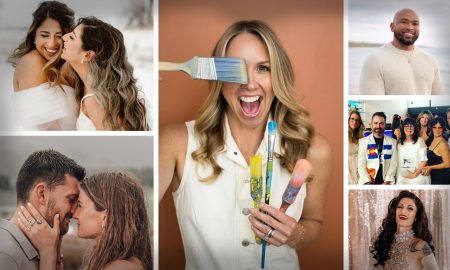


Today we’d like to introduce you to Charity Ellison.
Alright, thank you for sharing your story and insight with our readers. To kick things off, can you tell us a bit about how you got started?
I always knew I wanted to “be an artist”; most of my childhood memories are of exploring art, usually drawing or painting, sometimes clay. I was deeply fascinated with architecture and the figure, and I’d usually be illustrating grandiose houses with elaborately designed doors or figures in extravagant gowns. And everything, I mean everything, was an outlet for creativity.
I softly asked my parents for all the fun building toys available to kids, and then promptly used them to make sculptural art pieces. Sometimes they were houses, but more often than not they were carefully constructed to be specific shapes or patterns. I didn’t like coloring books, either. I tried to explain that I had no problems coloring within the lines, I just didn’t like my creative expression being restrained by someone else’s designs.
One of my favorite coloring pieces was this illustration of a ballerina. She had the usual ballet tutu, with a very minimally patterned bodice and the implication of tights. Her hair was in a tight bun, and she was drawn realistically. It wasn’t a cartoon or caricature, and I was over the moon. I convinced my parents to make me about a hundred copies of this illustration and spent countless hours filling in the bodice with patterns, the tutu skirt, the tights… sometimes I gave her wings, and changed her hairstyle.
Then I got to color in all my designs, and that’s when it became magical. Everything could be just how I wanted it, and I gave attention to every detail of her makeup, outfit, and jewelry. Sometimes I’d get out the metallic roller pens, and painstakingly draw small dangling beads on the skirt, or put them in her hair. She was a queen, a goddess.
Art was the one constant throughout my life, and I developed an incredibly intimate relationship with it. I had dreams and hopes of illustrating majestic characters for some of the most popular video and card games, and I wanted nothing more than to labor over a painting, giving it the same attention and love that I had given the ballerina so many years ago.
So after a rough time with high school and my family, I expressed my desire to go to an art school. Unfortunately, I didn’t know the right word for my interests and ended up pursuing Game Art and Design at the wrong college. It wasn’t until almost 6 years after I said “I want to go to art school” that I wound up at Rocky Mountain College of Art + Design. Everything about that school was magical to me, and I made it my job to be there every day working and studying.
I did almost everything right; I selected the courses most appropriate to character design and illustration, adjusted my schedule to ensure I had the best professors, and dedicated my free time to studying and practicing. I successfully equipped myself with the technical skills to pursue any creative endeavor that I could fathom, but I neglected networking with my peers and the faculty, and even more, I neglected to check in with myself about my aspirations and goals.
About one or two semesters before graduation, COVID happened and the school transitioned to remote. My goal of adorning one of the galleries with larger-than-life illustrations of magnificent deities for the Graduation Show vanished overnight, and I found myself in a Character Design class that I, truthfully, hated. I ran into something in my brain and discovered that I couldn’t do that type of work. I was physically incapable of conceiving out characters, drawing the same thing over and over, developing their backstories, and answering the question “why?”
I passed the class, barely, and walked away with a loss of self and direction. I no longer wanted to exist in a commercial art world where I would produce visually pleasing illustrations that lack the emotive soul I craved to give my paintings. Fussing over line art and sketches for days would often kill the inspiration that started the project, and it seemed like the objective of producing a dynamic illustration full of gestures was completely unattainable.
I needed to freely paint from reference or live models and converse with the image about what we wanted it to be. What shapes did the lines, emotions, and movements want to make? What was I feeling and how could I capture that essence in a painting of a human body? What abstract idea did I want to imbue into their attire or adornments? I had to design the character of the painting, as I was painting it. This was the only way my brain would connect with the subject matter, and the only way I could capture the authenticity of emotion.
And so I graduated. There was no ceremony, no graduation show at the galleries with friends and family, no silly mortar hat and photos with my peers. I worked at a place in Denver for a while, designing mantelpieces and shelves to be cast in Limestone. Sometimes I’d assist in mockups for crown molding and various architectural finished. I even got to do an elaborate bas relief in plaster, for an overmantel (the space above the mantelpiece of a fireplace).
That job went away, and I tried to build up a presence on socials for my art, and recapture that hope of being an illustrator. My husband got me into miniature painting, and we tried to make a reality of painting commissions for a living. I couldn’t do it. I couldn’t produce art like that, at that volume. It felt too soulless, too mechanical. The intimate relationship I made with art came up over and over again, and it wouldn’t let me use it like that.
Art was there for me when I was alone and hurt. Art was there for me when no one else was, and when all had gone dark in my little world. Art allowed me to say the things I didn’t know how to use words for and express the feelings I couldn’t bear alone. And she wouldn’t let herself be commercialized. I had to do art for myself. And I had to find a different means to financially support myself, and keep art as the sacred activity it had always been.
Would you say it’s been a smooth road, and if not what are some of the biggest challenges you’ve faced along the way?
It has been a very turbulent road! I struggled with trying to create in a commercialized, production-based way. Starting at the wrong college was a learning experience, and I gained a lot, but I think it brought with it a false sense of assurance about what I wanted to do. There’s no question that I’m an artist and I want to do (or make) art. The only answer I’ve ever been able to come up with for “What do you want to do when you grow up?” is “Paint pretty things”.
Overcoming the realization that painting pretty things is too personal to do professionally was incredibly challenging. I felt like I was disappointing myself, my family, and my partner. Everyone who believed in me. I thought they wouldn’t understand this reasoning. I think it probably confused them for a while, too. “You’re so good at art, why don’t you try to get an art job?”, was a question that stung too much. I felt like I failed myself; the present me today and the little girl drawing over an illustration of a ballerina.
Walking away from years of hopes and aspirations, coupled with years of schooling and effort was incredibly hard. That’s not to say that I gave up on art, but that I chose not to pursue grinding out illustrations to fill a portfolio, for only a chance at something the younger me thought she wanted. Ultimately, I think my relationship with art (and myself!) is even better now that I have accepted these things, and accepted myself. I can create freely, without restraint, with no expectation or deadline, and put as much passion and love into it as I desire.
I also have the freedom to participate in the miniature commissions with my husband as I see fit. If a project or a client comes along that I’m particularly interested in or excited about, then I give it my all and produce the most amazing work of art. If I’m not interested, I don’t participate. It’s liberating.
As you know, we’re big fans of you and your work. For our readers who might not be as familiar what can you tell them about what you do?
Professionally, I am both an artist and a real estate agent. I got my license after much deliberation about how I would go about supporting my life, and it’s the best choice I’ve ever made. I have the freedom in my professional artistic life to choose the projects I want to work on, without worrying about paying the bills or buying cat food.
This has allowed me to excel at the projects I take on and deliver high-quality products to my client base. It also has the added benefit of making my services much more exclusive. I’ve started specializing in painting larger miniature figures, around 4-10 inches tall (or larger, I suppose). It started as a tertiary art interest with my husband; they are interested in miniature painting for tabletop games, and I had to share in this new medium for painting pretty things.
I focus almost exclusively on models that are considered “centerpieces”. They are large, highly detailed, and beautiful, and would likely demand a place on a mantel or other similar display shelf. I have also begun to specialize in painting small busts of figures, around 4-6 inches high. These remarkably detailed sculptures allow the extensive representation of light and color.
In these circles, I’m mostly set apart for the high quality of painting, attention to detail, and of course, the small quantities I will deal in. Each piece I take on, I approach with specific theming and mood. Depending on the client, I will either match their existing color scheme or develop a new one for the specific model. This can then be carried over to other models or subjects, or just exist as a standalone. I take great care to develop realistic lighting and shading for every model.
This means that I am meticulously planning and executing bounce and reflective light, recess (or occlusion) shadows, and adjusting every color to adequately represent the warmth of the light and coolness of shadows. Nothing is left untouched, and every detail is addressed. A second part of what sets me apart professionally is my adaptation of fine art theory and technique to small-scale miniature painting.
I utilize mostly oil paints in my work, which allows me to carefully adjust details and capture the nuance that colors and objects would have in the real world. Blending colors on the model’s surface enables me to continually develop color relationships between various objects, as they would reflect their light color onto each other. As a fun treat, it also lets me fix any mistakes I might make, as nothing is dry instantly.
My clients know that if I accept their project, or offer my services, their models will be in the best hands and receive my full, undivided attention. I work closely with clients so I can understand their hopes, wishes, and vision for the project, while carefully providing feedback and suggestions so we can achieve their goals. I take a personal, caring approach that allows me to understand the mood they want to achieve, the story they want to tell, or even something as subtle as deciphering which colors bring them happiness.
My services include high-quality, professional “product photographs” of the models/projects. Attached to my studio is a small photography setup, where I document the projects. This ultimately provides three things: A final pass of quality control, (because I notice details and imperfections when I review photos), content for my portfolio, and images for the client to share or have.
On my other professional side of real estate, I approach clients in the same way. It’s my objective to understand what they want, what they’d like to achieve, and what brings them joy and inspiration in their life. How can the space they are looking to purchase, help fulfill their personal and professional endeavors? What gets them out of bed in the morning, and how can I make sure that element of their life is adequately represented and addressed in their home?
Finally, I am always working on personal projects for myself. Balancing these with my two “jobs” and life is sometimes tricky, but it’s a form of self-love and care. I allow myself to pursue only things that have inspired me, whether that’s music, color, a tool itself, or a model’s pose. I take great care to make sure the root of my inspiration is preserved, through gesture and brush stroke, and to never over-work a part of the piece.
Is there any advice you’d like to share with our readers who might just be starting?
Do what makes you happy, and what brings you peace and fulfillment! Sometimes that might differ from the job you have to work to pay your bills, sometimes it might not. But always be careful of how utilizing your passions to sustain your livelihood might damage your relationship with them.
Doing the thing we love the most for work sounds amazing, and sometimes it is, but I believe it can have a great risk associated with it. Sometimes we might not want to do whatever task it is, despite loving it, but work makes it so we have to. It takes away the joy and passion of the task and turns it into something utilitarian.
Finally, it’s okay to say no to projects, people, and ideas… it’s okay to say no to yourself, too. Even if you don’t do art professionally, that doesn’t make you any less of an artist. I would argue it makes you an even greater artist; you’ve established a boundary and a preference for how your creativity is used, and have chosen to honor that.
Oh! And set goals. I had dreams and hopes, but I never set goals. I didn’t understand how important a tangible goal was to success. It seems obvious, but when we’re chasing the passion of creativity, it’s easy to get caught up in the thrill and lose sight of the steps needed to get where we want to go.
If you have a dream of doing art for a specific person, company, or purpose, make sure the art you create is relevant to it and that you genuinely enjoy the process. Otherwise, you might find yourself creating things you enjoy for enjoyment, forgo the required process, and then discover that the process is undesirable. Always communicate with yourself about what you want.
Pricing:
- Small bust: $150-200
- Large bust: $200-300+ (dependent on size and details)
- Small character: $150
- Large character 5″ or taller: $250+
- Canvas or traditional fine art painting: negotiable
Contact Info:
- Website: https://charityellison.com/
- Instagram: https://www.instagram.com/cherrytea.art/
- Facebook: https://www.facebook.com/charityrellison
- Linkedin: https://www.linkedin.com/in/charityellison/
- Other: https://linktr.ee/charityellison


Popular
-

The Trailblazers: Rewriting the Narrative
-

Celebrating the Spotlight: Kaytee Shashore Turns Milestones Into Momentum
-

Humanity in the Machine: Alexander Raye Pimentel’s Cyborg Recall Questions the Cost of a Data‑Driven World
-

Raemi Anderson on Courage, Caution, and Answering the Call of the Landscape
-

Hidden Gems: Local Businesses & Creatives You Should Know


