
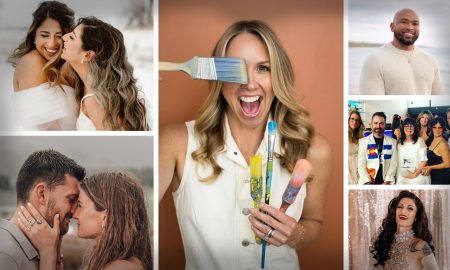


Today we’d like to introduce you to Hannah Tran.
Hi Hannah, so excited to have you with us today. What can you tell us about your story?
I’m a queer, Vietnamese-American documentary filmmaker from Denver, Colorado, and proud founder of Lionheart Narratives LLC. I started my career as a broadcast reporter in TV news, then transitioned to the Colorado Springs Gazette as the Director of Video. After my partner was accepted to Colorado State University’s prestigious Doctor of Veterinary Medicine program, I started a new chapter in higher education as a Senior Social and Digital Media Specialist at CSU Marcomm. I’m still in this role as a videographer and digital media strategist at CSU while directing a documentary film for my LLC.
My documentary film, “There’s a Lane for Us Here,” honors the legacy, collective memory, and families behind Denver’s Little Saigon. The project draws deeply from my family’s experience as Vietnam War refugees and my desire to celebrate our stories beyond the lens of war. These stories dig deep into the power of nostalgia, while excavating the profound historical and cultural contributions of our community throughout the decades.
Whether I’m filming for CSU or freelancing through Lionheart Narratives, I’m especially drawn to stories of reclamation, celebration, and resistance, where people find realignment to stories that reflect their most honest selves and lived experiences.
Would you say it’s been a smooth road, and if not what are some of the biggest challenges you’ve faced along the way?
As a queer, Vietnamese-American filmmaker raised by refugee parents, I’ve often navigated feelings of displacement and fragmented identity. This holds true in both my personal and professional life. I’ve long lived between worlds, never feeling fully seen, whether in queer circles, cultural spaces, or the world I was raised in. This awkward space was always difficult. Over time, I’ve seen this limbo as a bridge: a space of transformation and storytelling. These challenges inform why I’m drawn to stories of diaspora, displacement, and reclamation, as these stories search for belonging and healing.
As you know, we’re big fans of you and your work. For our readers who might not be as familiar what can you tell them about what you do?
Throughout my years as a visual storyteller with a foundation in visual journalism and current roles in higher education and documentary filmmaking, I’ve told countless stories from a variety of topics and communities. However, most recently, I’ve felt a pull to specialize in storytelling that centers cultural preservation, identity, and the lived experiences of displaced, diasporic, or BIPOC communities. I’m especially drawn to those whose stories have historically been told by those outside of their own community. I hope to further amplify my own communities and support creatives leading their own projects to reclaim stories about their histories and identities.
My current documentary, There’s a Lane for Us Here, is certainly a center-point in projects I’m most proud of. While Little Saigons exist across the U.S., few films have centered them, despite their deep cultural and historical impact.
I try to set my work apart through my emphasis on the process. I think deeply about my positionality, and I collaborate closely with community members to ensure stories are told with honesty, dignity, and depth.
Any advice for finding a mentor or networking in general?
My advice is to find mentors who share parts of your identity that are important to you. This can include your cultural background, gender, or lived experience. Each career or industry poses unique challenges for different kinds of people, so it’s vital to find guidance from people who really get it. That shared understanding can make all the difference in how supported and seen you feel. I’ve found the most meaningful connections through BIPOC filmmaking groups, women-led spaces, and queer creative networks. When those values align, mentorship feels less transactional and more meaningful. This is what energizes me and keeps me sustained.
Contact Info:
- Website: https://www.lionheartnarratives.com/
- Instagram: https://www.instagram.com/lionheartnarratives?igsh=MW9jeG5ramU3N3dlZw%3D%3D&utm_source=qr
- LinkedIn: https://www.linkedin.com/in/lionheartnarratives?utm_source=share&utm_campaign=share_via&utm_content=profile&utm_medium=ios_app
- Youtube: https://youtube.com/@hannahtrance?si=WtiBBC19snnY1FT-
- Other: https://vimeo.com/lionheartnarratives


Image Credits
Professional photos of noodles and food spread and portrait of me holding a camera with the blue curtains are by Dougal Brownlie
“There’s a Lane For Us Here” poster: My Linh Mac Doan
Other BTS photos are from family/friends, no need to credit.
Popular
-

The Trailblazers: Rewriting the Narrative
-

Celebrating the Spotlight: Kaytee Shashore Turns Milestones Into Momentum
-
Humanity in the Machine: Alexander Raye Pimentel’s Cyborg Recall Questions the Cost of a Data‑Driven World
-

Raemi Anderson on Courage, Caution, and Answering the Call of the Landscape
-

Hidden Gems: Local Businesses & Creatives You Should Know


