


Today we’d like to introduce you to Lars Mattingly.
Hi Lars, thanks for joining us today. We’d love for you to start by introducing yourself.
My story begins with the natural world. My parents took me on lots of hikes, canoe trips, and fishing trips as a kid. We stopped and admired the mushrooms, trees, and birds. I searched for geodes on the shore of the streams while my dad fished, the silence broken by my discoveries. This exploration gave me a deep appreciation for the world around me, which translated into a desire to create art.
One of the earliest pieces of art I created was a watercolor painting of a giraffe inspired by a trip to the zoo. From then on I was drawing still lifes in my kitchen, making jewelry, painting self-portraits, and spending all of my money on art supplies. When I applied to college, however, I wanted to study anthropology and Spanish. I loved art but never thought I could make a career out of it. I ended up going to Sewanee: The University of the South, where I did not get the art scholarship I applied for and nearly gave up on art altogether.
That was until I took Introduction to Photography with Pradip Malde. This class slowly overtook all of my free time; I would spend countless hours in the darkroom watching my images magically appear in the developer. I had found my medium. I knew this because I was okay with, and even welcomed, failure- be it getting the exposure wrong, messing up the chemicals, troubleshooting a 4×5 camera, or missing the focus entirely. Everything excited me. I felt like I had finally found a language to express my need to slow down and preserve this fleeting life.
Over the next four years, I deepened my artistic practice. Alongside Pradip’s mentorship, I learned how to make platinum-palladium prints. This is still a crucial part of my artmaking process. I ended up making over 100 prints to arrive at 20 final prints for my undergraduate thesis show, Blue Hour. This work is still special to me, for it marks the culmination of an intense phase of life- one marked by emotional turmoil, self-discovery, and full immersion in my creative process.
Fast forward two years and I have just moved to Golden, Colorado after finishing my MFA in Photography + Film at Virginia Commonwealth University. I will be teaching workshops at Colorado Photographic Arts Center starting in the spring, and meanwhile I am continuing to photograph.
I’m sure it wasn’t obstacle-free, but would you say the journey has been fairly smooth so far?
It has not always been a smooth road. I have struggled with my mental health for as long as I can remember, especially in college. However, my friends and family have always been supportive and help pull me out of spells of depression and anxiety. Photography itself also constantly presents new challenges. I remember trying to develop sheet film for the first time and it turning out clear and purple!
One of the hardest things I think I have ever done was spend so many hours in the darkroom alone making prints for my undergrad thesis show. It required me to sit with myself-both literally and metaphorically-as I looked at deeply emotional images for hours at a time.
Going right into grad school was also a challenge, especially because after graduating I was truly lost. I entered the workforce unprepared for the “real world” and without knowing how to develop my artistic practice outside of an academic institution. I had to learn how to be a person again, and budget time and money for art when I once took it for granted.
Thanks for sharing that. So, maybe next you can tell us a bit more about your work?
I am a photographer specializing in making platinum-palladium prints, or an alternative photographic printmaking process that is nuanced and archival. I generally make photographs with a variety of image-capture methods, but nothing makes sense to me until I see them all printed and sequenced in monochrome.
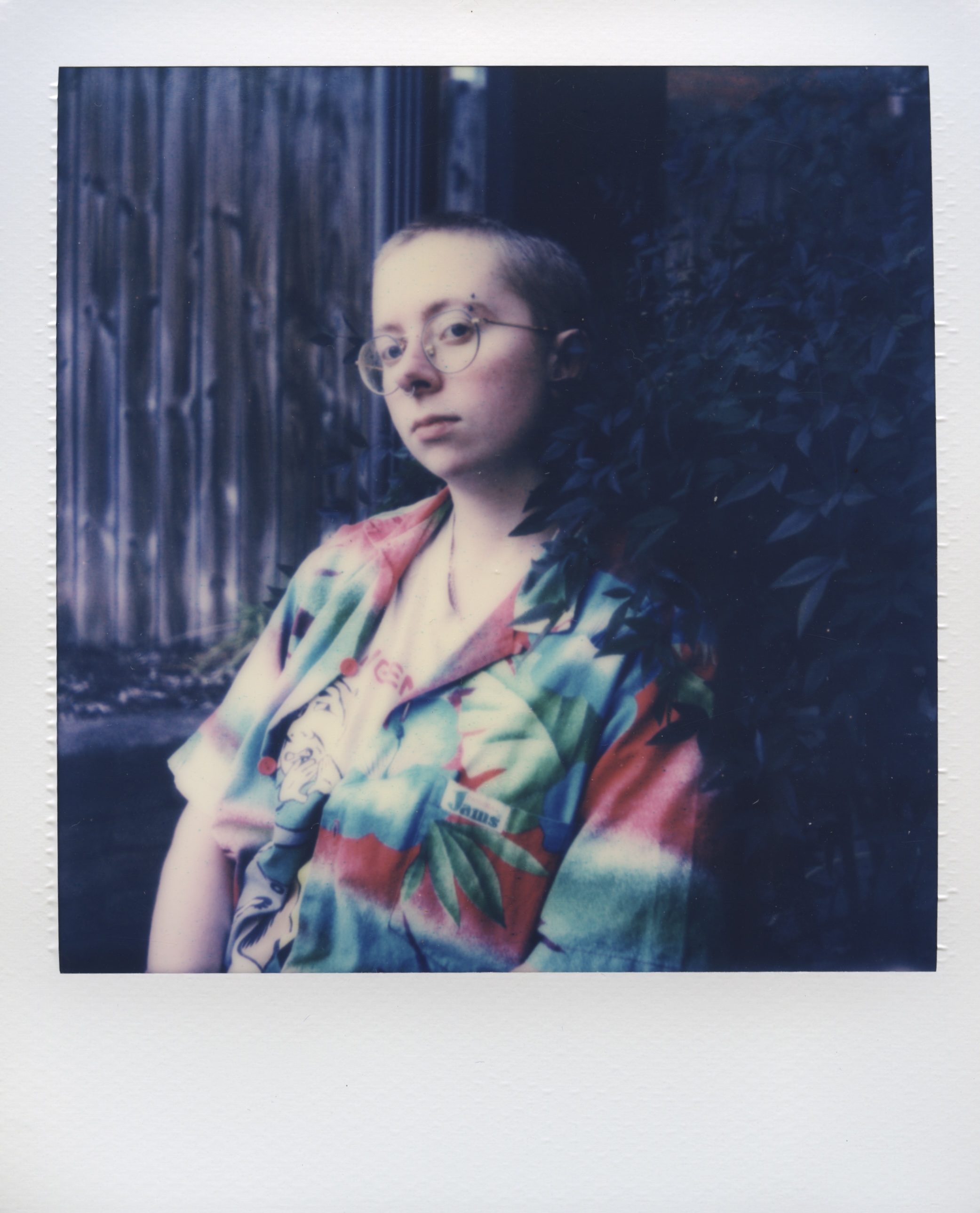
I am most proud of a book of Polaroids I am self-publishing this year called “The Design of a House.” It is my first and only body of work that is in color. I think it is a huge testament to my resiliency. Through the daily practice of my partner and I photographing each other, I began healing. I am proud of myself for being so vulnerable in this work.
I think what sets me apart from others is my ability to take a portrait. I see portraiture as a mirror I want to erase- there is always an instrument in between me and the person I am photographing. To bridge this gap, or power differential, there has to be trust. And for there to be trust, you have to have the difficult conversations. This is something I have worked on extensively in my personal life and naturally translates into my photographic practice. Overall, I critically examine the “lens” in my work, acknowledging its duality as both a historically colonial tool for exploitation and as a mode of reconnection.
If you had to, what characteristic of yours would you give the most credit to?
I measure success in empathy. A “successful” day of taking photos may look like having a conversation with a close friend and taking an iPhone photo of the sunset, or it may be taking hundreds of photos at a wedding ceremony, but I wouldn’t call it a success unless my approach is grounded in the utmost understanding. Sometime this may even look like putting the camera down.
Contact Info:
- Website: https://www.larsmattingly.com
- Instagram: @larsformat


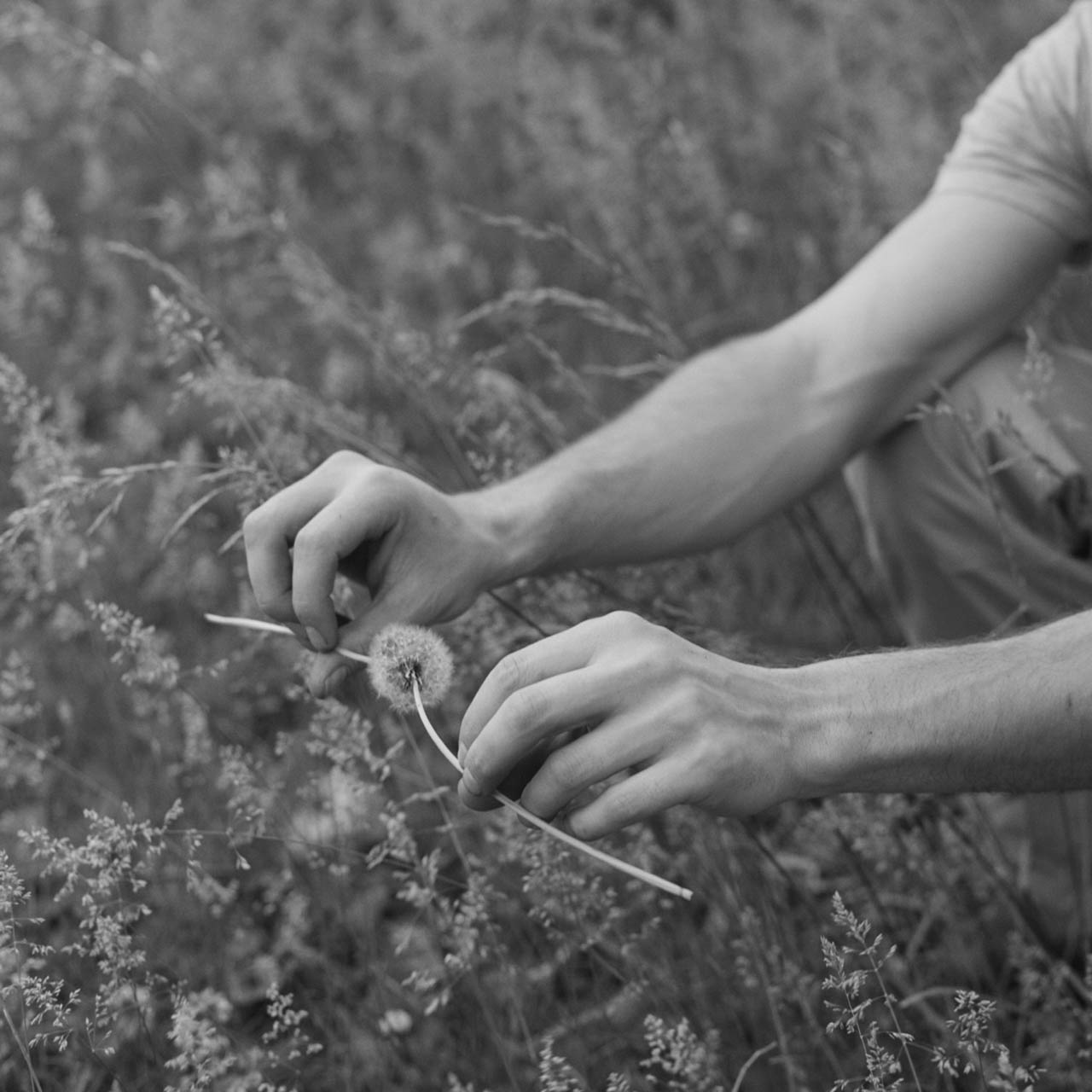
Image Credits
George Meng
Popular
-

The Trailblazers: Rewriting the Narrative
-
Celebrating the Spotlight: Kaytee Shashore Turns Milestones Into Momentum
-
Humanity in the Machine: Alexander Raye Pimentel’s Cyborg Recall Questions the Cost of a Data‑Driven World
-
Raemi Anderson on Courage, Caution, and Answering the Call of the Landscape
-

Hidden Gems: Local Businesses & Creatives You Should Know


