
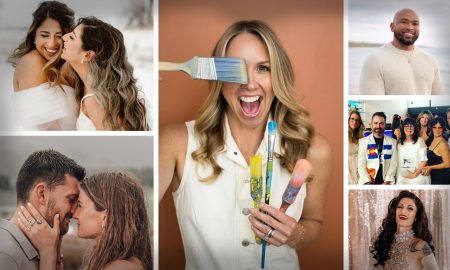


Today we’d like to introduce you to Laura Shape
Hi Laura, thanks for sharing your story with us. To start, maybe you can tell our readers some of your backstory.
I grew up in a small Ohio town as the youngest child of two makers – my dad was an engineer and my mom was an artist. They always encouraged me to follow my curiosity and work with my hands, which, looking back, really shaped how I approach creating things today.
I studied graphic design at Rochester Institute of Technology in New York, which led me to Los Angeles where I worked in print and web design. I was fortunate to land a job as an internet designer when the web was just taking off. There weren’t many designers working in it yet anywhere in the world, so I was able to dive in and really grow in this new space. This experience showed me how much I enjoy experimenting and exploring uncharted paths.
After retiring early and moving to Colorado, I decided to pursue a second career as an artist. I started experimenting with different mediums, including making belts and handbags. Which is how I discovered my love for working with leather. But making art out of something else’s skin didn’t sit well with me. So I set out to see if I could find a type of natural leather I could feel unquestionably good about using.
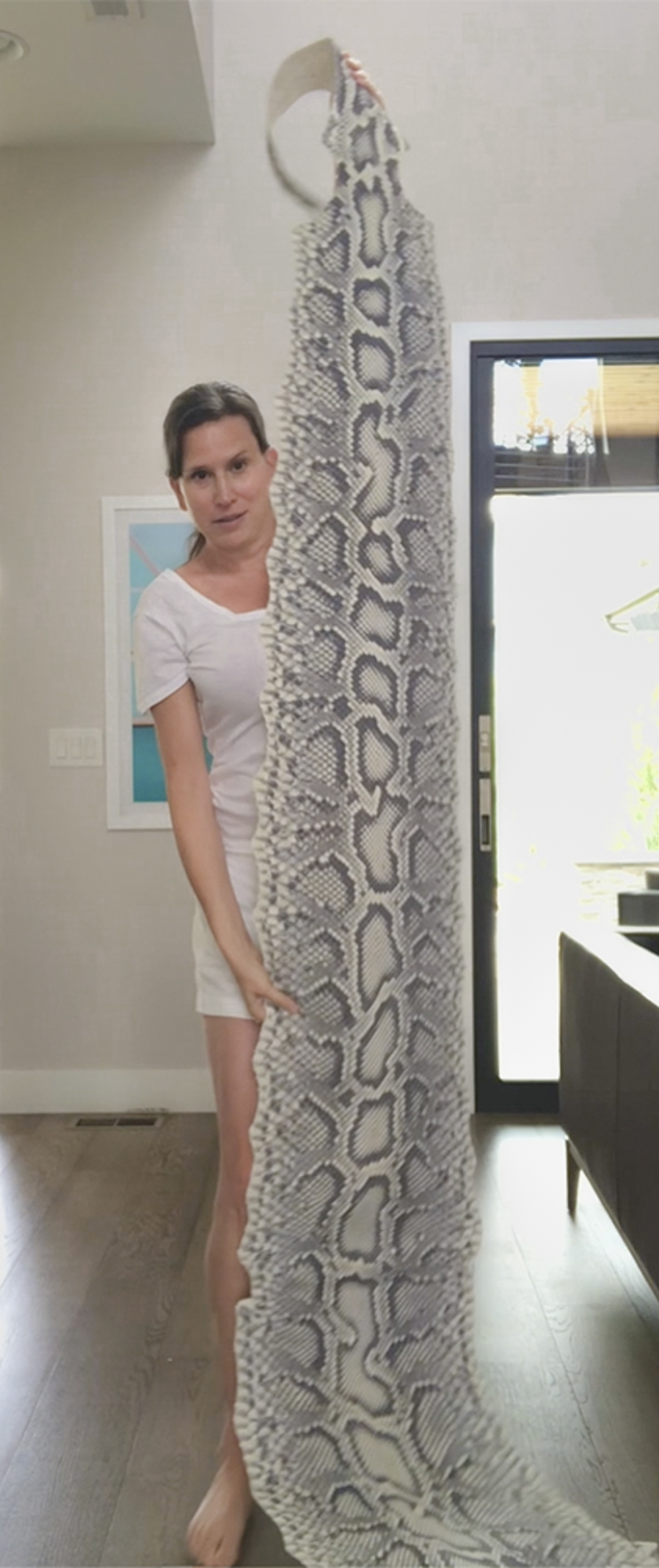
When I learned about the leather being made from invasive animal species, I knew I’d found it. These animals are causing serious problems in various ecosystems – like Burmese pythons in the Florida Everglades, lionfish in the Atlantic and Caribbean, and carp in the Mississippi River. By using their leather in my art, I could create something beautiful out of this ecological disaster, while supporting conservation efforts.
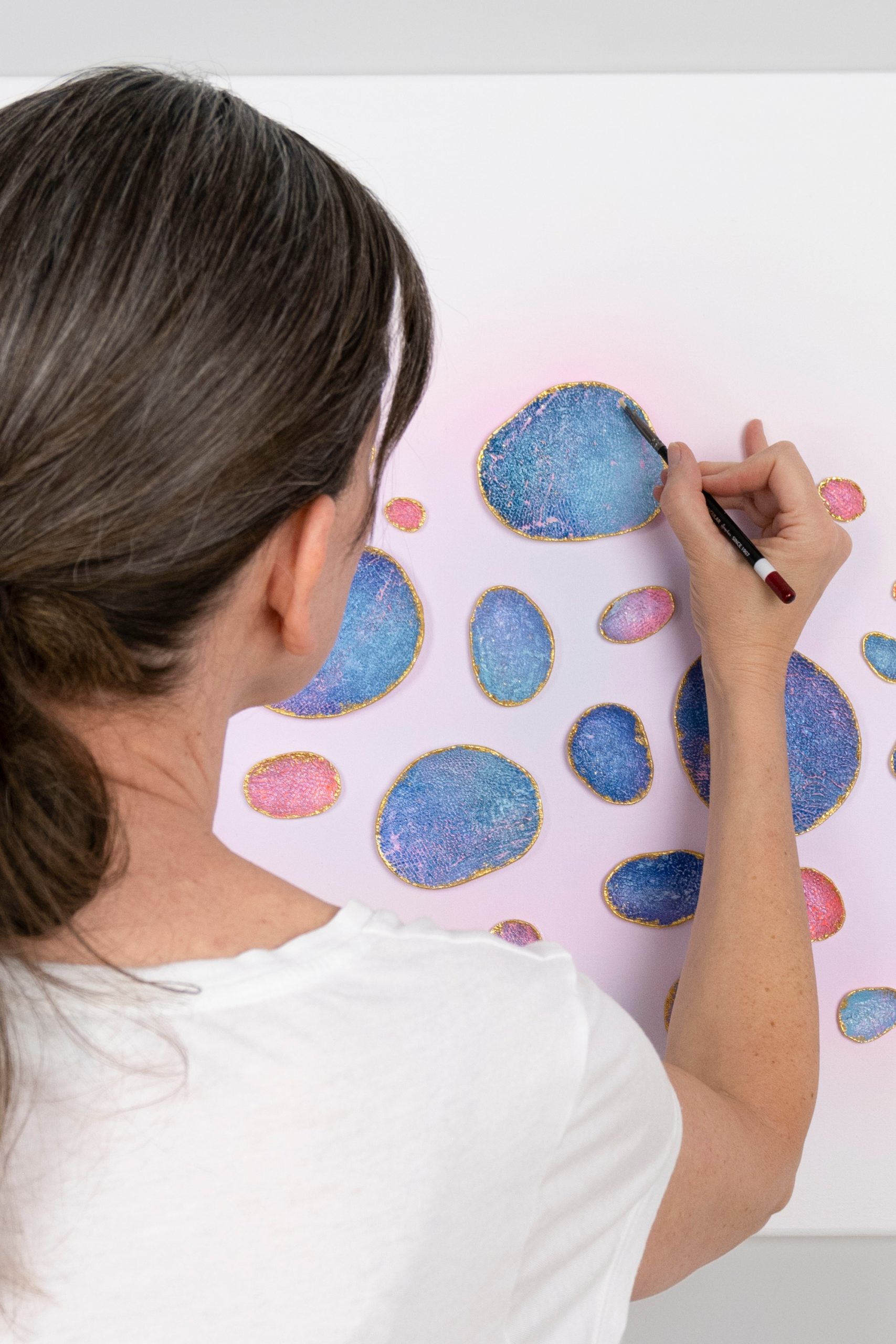
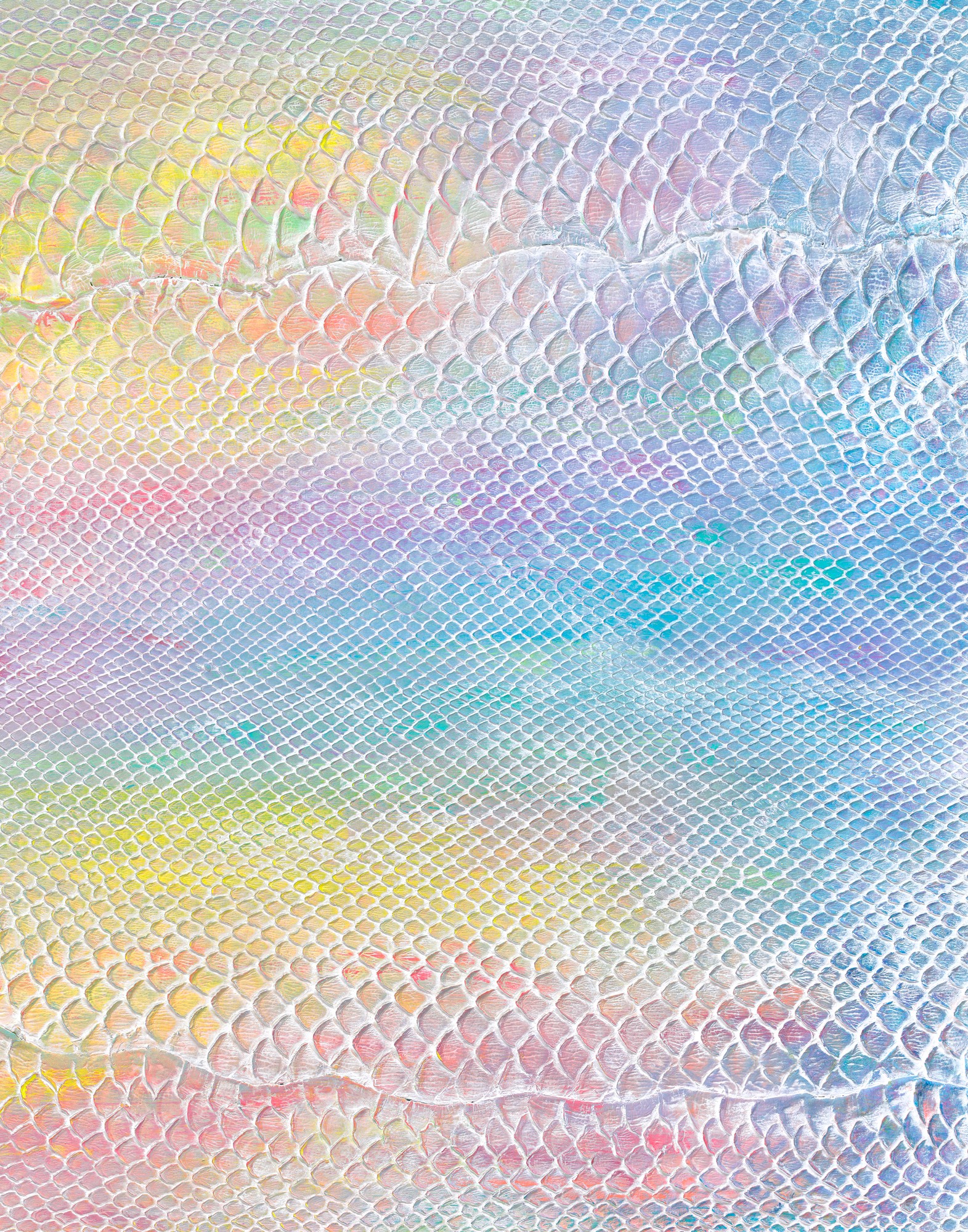
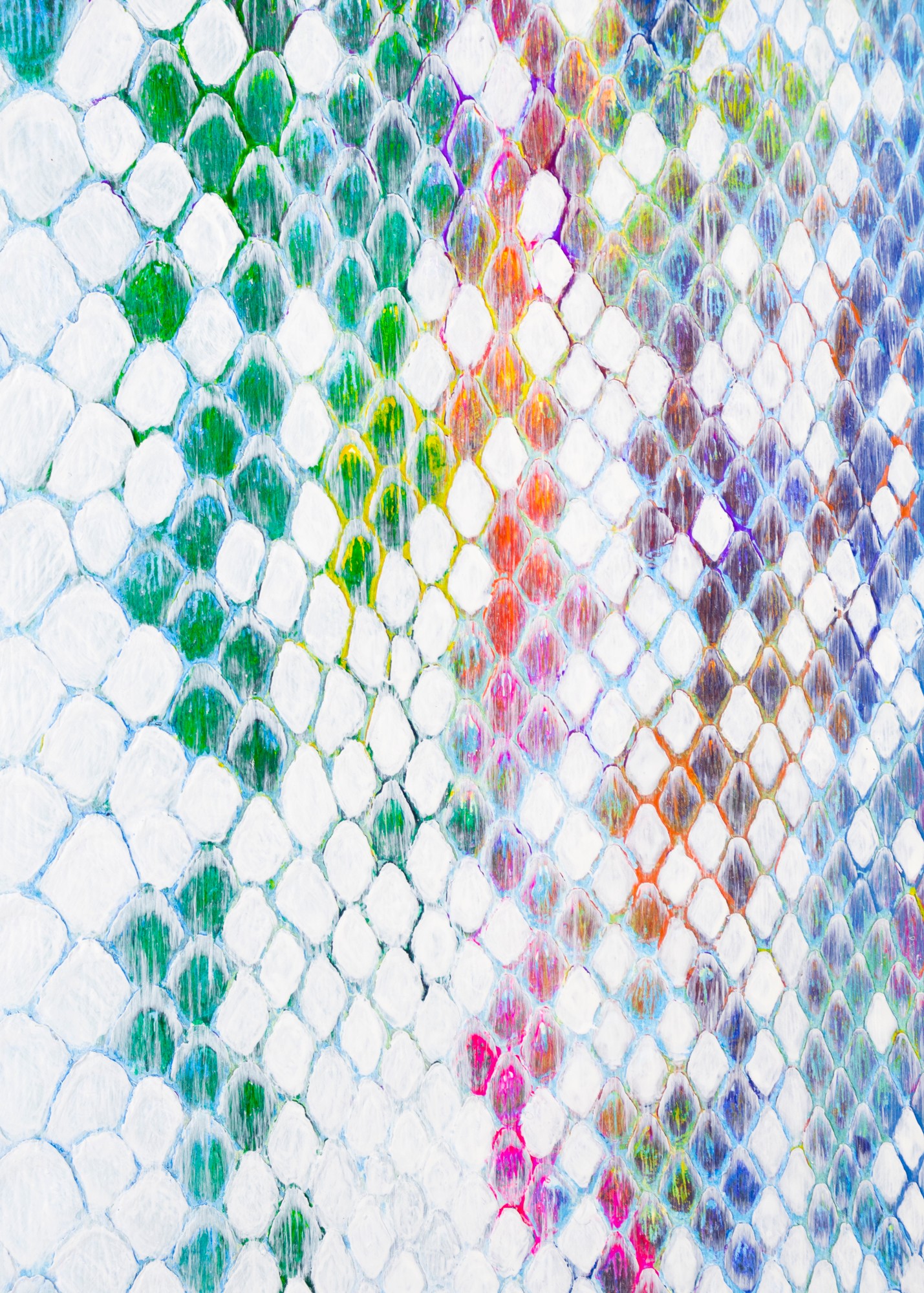
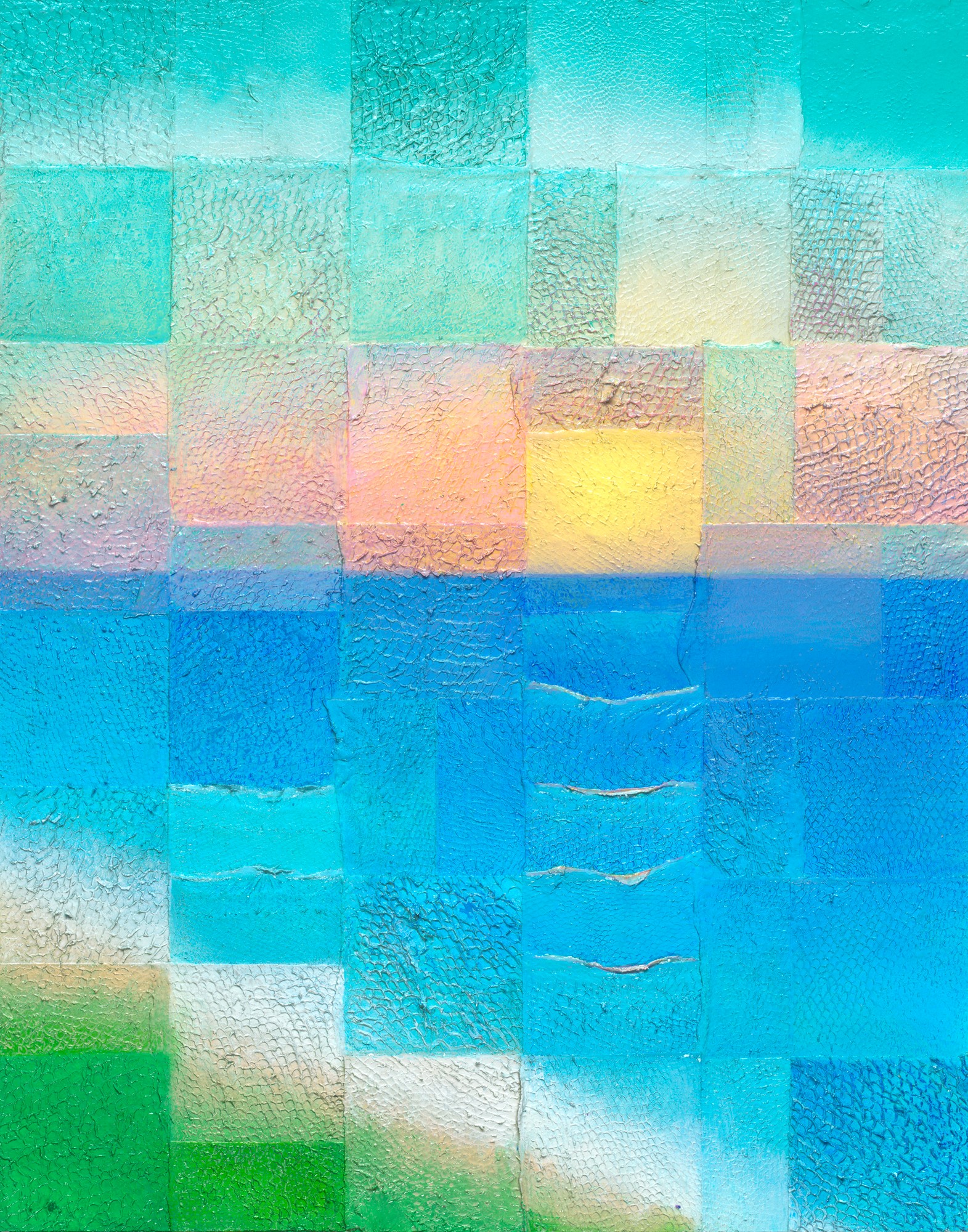
Now I create vibrant, multidimensional paintings using these leathers. I mold them into different forms or attach them to board or canvas, then paint them with acrylics and often add touches of 24 karat gold leaf. Each piece starts conversations about innovation and creative problem-solving. My work has been shown in Colorado and Maryland, including at a Smithsonian Institution associate venue, and I recently received a Juror’s Award from a Smithsonian Environmental Research Center Fellow.
What gets me most excited about this work is how it challenges people to think differently about solving big issues. I love showing that with some creativity and innovation, we can find unexpected ways to make positive change. And it empowers art and beauty to have a real impact in the world.
Can you talk to us a bit about the challenges and lessons you’ve learned along the way. Looking back would you say it’s been easy or smooth in retrospect?
Of course not. But I think adaptability, optimism, and determination are my super powers. So I’ve been able to navigate most of the struggles pretty well. I’ve also just gotten really lucky several times.
Early on I struggled with finding steady work. Getting hired as a full-time designer was tough with no experience. So I did a lot of freelance work to build up my portfolio. But even finding freelance gigs was tough. I remember being so desperate for work in my early twenties that I resorted to cold calling ad agencies. I would ask them if they needed any graphic or production designers today. I landed a great long-term freelance job by doing that.
Also, I had originally wanted to work in advertising, only to find after a couple of years that it wasn’t nearly as fun to me as I’d assumed it would be. Once I started working in the internet, it was all for startup companies. As that’s pretty much all there were then. I loved the fast and loose energy of those environments, but the downside was that startup companies shut down all of the time, so the jobs never lasted that long.
One major hiccup I suffered was about halfway through my design career. I quit my job with a plan to take six months off and relax. Startups meant a lot of long hours, and I needed a break. However, while I was at my goodbye party on my last day of work, my house was broken into. The thief took my print portfolio and my laptop with all of my unbacked-up digital artwork. Which meant I now no longer had a record of any work at all that I’d done up to that point. And most of the companies I’d worked for were gone, along with any trace of their websites that I’d designed. Fortunately, I hadn’t burned many bridges during my career, and I was able to find work with past colleagues. But this forced me down career paths I wasn’t as interested in, and eventually led to burnout.
Then I struggled for years to figure out what I wanted to do next in terms of art. I knew I wanted to make something I could scale and sell, not just be a hobbyist. But I had no experience whatsoever with marketing and sales. It turns out those are pretty crucial skills to have as an independent artist. So, I’m now learning about them as fast as I can.
Now my current struggle is getting my art business off the ground. Being an independent artist is to be a solopreneur. You wear all of the hats and take all of the risks. There’s a ton to learn, and not a lot of formal training opportunities to be had. Fortunately, several art business coaches have recently started online training programs. This has been an enormous help in getting up to speed quickly. So, fingers crossed I’ll get there.
As you know, we’re big fans of you and your work. For our readers who might not be as familiar what can you tell them about what you do?
I create one-of-a-kind abstract paintings using leather from invasive species like Burmese pythons, lionfish, and carp. Each type of leather has its own unique characteristics – lionfish leather is thin and delicate with tiny scale pockets, while python skin has these beautiful natural patterns and textures. I love working with these materials because no two pieces are ever exactly alike.
My process involves molding the leather into different forms or attaching it to board or canvas to create dimensional surfaces. Then I paint them with acrylics, often in bright, vibrant colors that contrast with their natural patterns. I finish many pieces with touches of 24 karat gold leaf, which adds this gorgeous luminosity and helps highlight the textures.
What I’m most proud of is finding a way to transform something destructive into something beautiful and meaningful. These invasive species cause devastating damage to native ecosystems – for instance, a single lionfish can eat up to 70,000 native fish in a year! By creating art from their leather, I’m supporting the people who remove these animals from vulnerable ecosystems while starting conversations about creative problem-solving.
I think what sets my work apart is that it’s simultaneously solving a problem and creating beauty. When someone buys one of my pieces, they’re not just getting a unique artwork – they’re becoming part of a larger solution. Each piece tells a story about innovation and unexpected possibilities. I love that my art empowers people to see that even big, scary problems can have beautiful solutions if we’re willing to think creatively about them.
What quality or characteristic do you feel is most important to your success?
I think it’s curiosity, hands down. It’s what drives me to explore new ideas and try things that haven’t been done before. I’m constantly learning about new unrelated things. And that, along with my background in working with many different mediums, enables me to make connections and discover solutions that others don’t.
Plus, when you’re genuinely curious about something, you don’t mind the inevitable setbacks that come with trying new things. I love the process more than the outcome. Every “failure” just becomes another interesting data point, another piece of information that might lead you somewhere unexpected and amazing. I think that’s why I’ve always been drawn to uncharted territory, whether it was web design in the early days of the internet or creating art from invasive species leather now.
Contact Info:
- Website: https://laurashape.com/
- Instagram: https://www.instagram.com/laurashape/
- Facebook: https://www.facebook.com/LauraShapeArt


Popular
-

The Trailblazers: Rewriting the Narrative
-

Celebrating the Spotlight: Kaytee Shashore Turns Milestones Into Momentum
-

Humanity in the Machine: Alexander Raye Pimentel’s Cyborg Recall Questions the Cost of a Data‑Driven World
-

Raemi Anderson on Courage, Caution, and Answering the Call of the Landscape
-

Hidden Gems: Local Businesses & Creatives You Should Know


