


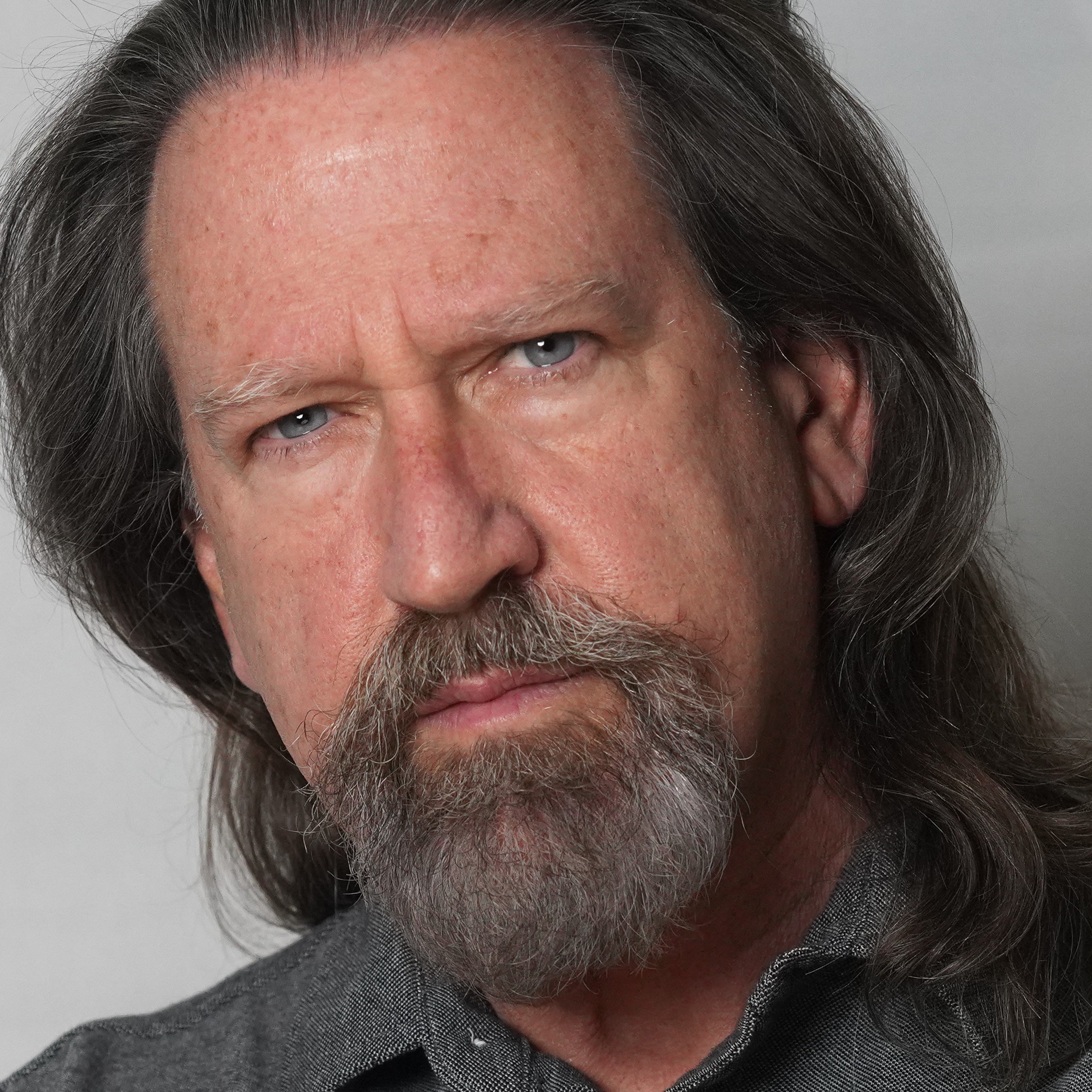
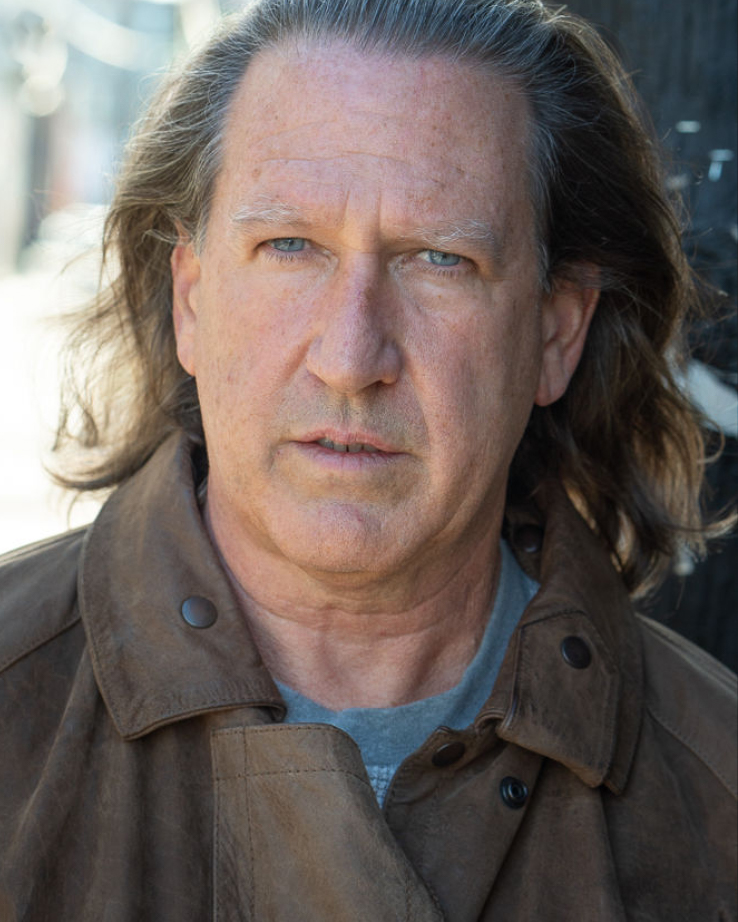
Today we’d like to introduce you to Nautic Von Horn.
Hi Nautic, can you start by introducing yourself? We’d love to learn more about how you got to where you are today?
My story is one of caution: Don’t do what I did. High school theatre led to a college degree in acting, and I found out along the way both that there are more employment options behind the stage and that I’m good at things like lighting, set construction, stage managing, and so on. This was all in San Diego in the 80’s (yeah, did I mention that I’m old?). I worked at almost every stage in San Diego, but mostly at the newly revived La Jolla Playhouse which had been a powerhouse for summer-resting Hollywood actors prior to World War Two and got rebuilt from scratch in 1983 while I was an undergraduate at UCSD in La Jolla. I was in the right place at the right time, got hired as “master electrician” and helped wire the new building, then got to do various things behind stage for productions. Most notably, when Stephen Sondheim decided to redo the one and only flop of his career (Merrily We Roll Along), I was hired on the fly rail crew. It did great in its San Diego run, and the fly rail crew was invited to go to New York to put the show up on Broadway. I chickened out, didn’t go. The show was, again, a horrible flop — it did one performance. But then Sondheim said to that cast and crew, “Hey, I got another show for you.” And that next show was Into the Woods! Ah, well. I’ve always regretted not going to Broadway.
Regret is the caution I spoke of. Shortly after working with Sondheim, I decided to move up to LA and get into movies. I got hired as “Assistant Assistant Second Camera” by Paragon Arts to work on a Cindy Williams movie that sucked so badly I don’t think it ever came out. Shitty experience. I let that scare me away from the industry.
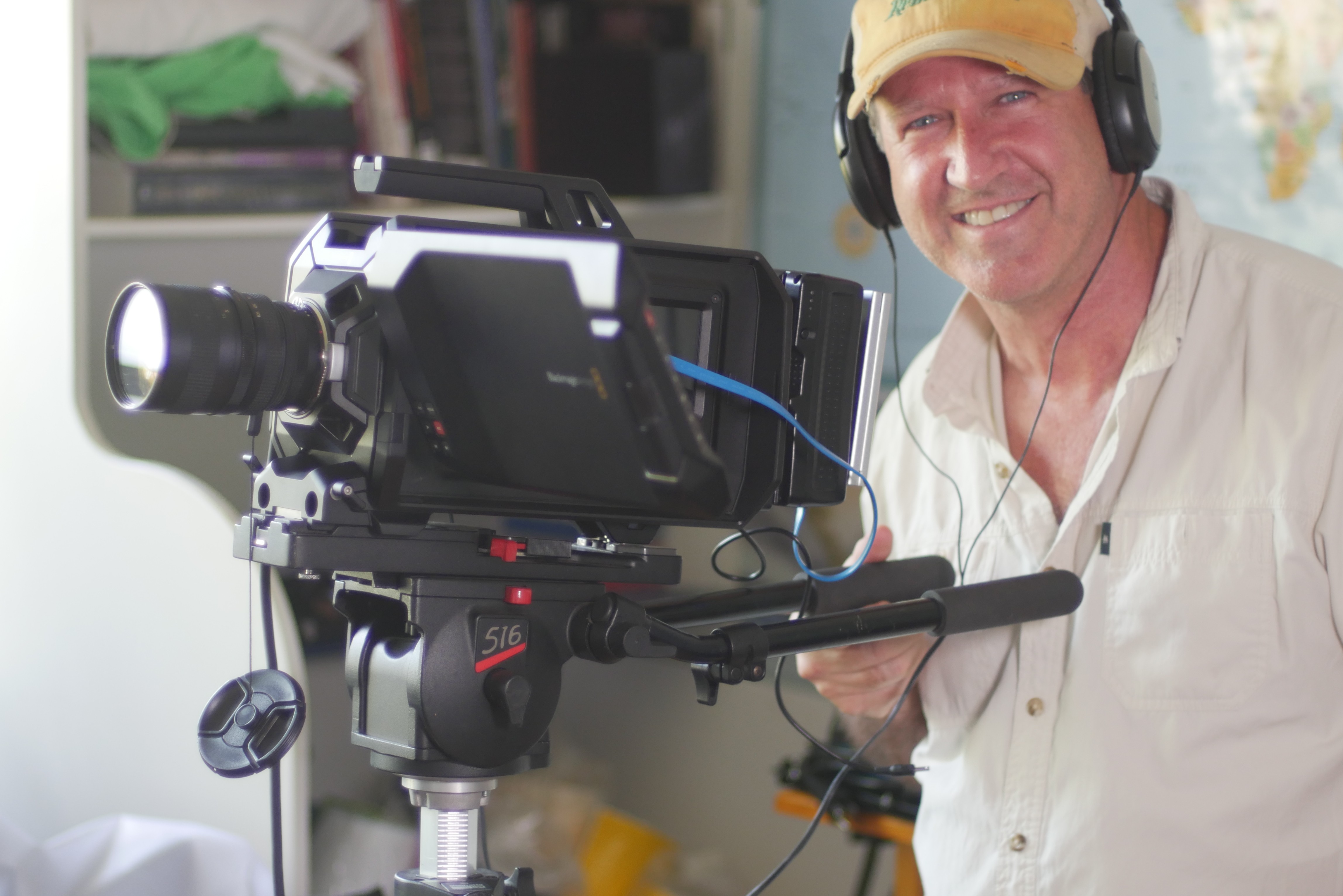
I decided to go to law school. Twenty-four years went by. Wife #1, jobs, wife #2, kids … but no creative outlet. No theatre, writing, production, acting, nothing. Like I was dead inside. Then I finally jumped back in, making my own short films and putting them into film festivals. Getting to know the excitement of awards. Teaching myself how to use camera, lighting and sound equipment. Helping others on their film sets. Made a name for myself as a “sound guy” and able to make $500 / day holding a boom. Then I got hired as First Assistant Director on a feature film in Florida, filmed for 28 set days on 35 locations, and ended up also doing a supporting acting role. Fun stuff. I was alive again.
So, the moral of my story: Don’t give up on your dreams. I sure do regret putting the creative side of my being asleep for so many years.
And perhaps a second message: It’s never too late.
Alright, so let’s dig a little deeper into the story – has it been an easy path overall and if not, what were the challenges you’ve had to overcome?
Smooth? This is a trick question, right? Nothing is “smooth” in the world of acting and filmmaking. Or writing. The typical project gets talked to death and never goes anywhere. I’ve been in soooo many meetings! It seems to me that the industry is full of talkers, and rarely does one ever find a doer. Hardly anyone follows through with what they say they will. Hardly anyone. Maybe that’s true in other industries, too. But it’s definitely true in the film industry. So much so that actors are just routinely expected to be flakes.
When I lived in LA, saying to anyone that you are an “actor” is pretty much synonymous with saying you are a “wanna be”, a “dreamer”, or even a “loser.” There’s just too many total flakes who say they are actors.
I’ve been in Denver for three years. In that time I was hired as “executive producer” to revive a tv show that had run for one season in 2014 on the Discovery Channel. We had meetings … but then that project fell apart. Later I was hired to convert the short stories of an established LA-based science fiction writer into an hour-long tv episodic format … but then that project fell apart. Years ago I was part of a documentary film project involving Kevin Smith … but that project fell apart. See the trend here? That is the norm, and productions that actually reach fruition are by far the exception.
If I had to say why things fall apart, the obvious factor is money. Lack there of, specifically. I used to be part of a really neat bunch of filmmakers in South Carolina who called themselves F.I.L.M.A.M. which stood for “Fuck it, let’s make a movie.” Their philosophy was that people need to stop making excuses (not enough money; not enough time; no good people; can’t afford good gear; etc. etc.) and instead just make what you can. To steal from Nike, Just Do It. Now, with cell phones containing cinematic-level cameras, there is no excuse for not making content.
The biggest reason things fall apart is not money, it’s people. Making anything at all requires real work, and not enough people are willing to put the work in. They want an easy road. But there is no easy road. The “overnight success” is invariably the result of years and years of grinding. Myths aside. I don’t believe any of the stories one hears about someone just being “discovered”. I try to find good people and work with them, to help them. The rising tide lifts all boats! I try to stay away from assholes.
Don’t be an asshole, that’s my advice.
Alright, so let’s switch gears a bit and talk business. What should we know about your work?
I wear multiple hats. Currently, my focus is on acting, and I’ve been spending most of my time in acting classes at Peak – which I highly recommend. My goal was twofold: I wanted to have fun, and I wanted to learn so that every week I was better than last week. Peak has met those goals.
Creatively, my juices are at their highest when I’m writing. I’ve written five adaptations of Shakespeare’s plays, and they are now available on Amazon, Barnes and Noble, and other bookseller sites under the series name “Doable Shakespeare.” Remember studying Shakespeare in school? Odds are you hated it. Most people hate Shakespeare, because reading and understanding his plays is difficult. Acting in his plays is difficult. The biggest compliment I’ve gotten came from my sister after she read my version of Romeo and Juliet; she said, “You took out all the sucky parts!” Yes, that’s what I did. While keeping the beauty of his language, I’ve deleted references to things that made sense in the 1600’s but mean nothing to modern audiences and actors. For example, Shakespeare makes a pun using the word “chollier” … which could be funny (perhaps) if you knew that a chollier is a person who delivers coal. Did you know that? Another thing, I’ve combined small characters, so that every role is fun to perform. There are many other changes, but still I try to make the end result true to Shakespeare’s original.
I’ve written screenplays, and participated in writing groups. All of that is wonderful. Freeing. A writer can write literally anything. Writing is the ultimate high, for me.
A few of the short films I’ve made and put into film festivals were done 100% by me. No crew, no other actors, just me. And that’s not only a fun trip, but also a challenge in learning how to write, pre-produce, film, edit and distribute. Learning then to work with others becomes, sometimes, an exasperating challenge. Storytelling is about communication, and it often starts with a director attempting to communicate a vision to the DP and other crew members. Working with others means relying upon others … and damn, people slack off and the project fails. I love being “creative” but it’s also very important to stay on mission and get the job done. I think the Number One job of a director and assistant director is to get people on board and keep them focused. Not easily done.
Money-wise, I’ve been paid more to work as a “sound guy” than anything else, and I’m proud to be able to do a good job on set to make sure the sound doesn’t suck. It’s an overlooked job. Directors and producers rarely think much about sound, until they get into post-production and realize that bad sound ruins shots more than anything else.
Is there any advice you’d like to share with our readers who might just be starting out?
Learn how to. Work hard. Take classes. Push yourself to be better than you were yesterday, last week. As long as you’re growing, you’re on the right path.
Don’t expect quick or easy success. It doesn’t happen. Relax and recognize that art takes time.
Recognize, too, that it takes luck to succeed. You have to be in the right place, the right moment, around the right people. A lucky break may come to you at any time, sooner or later, but it will … some day. But what happens if opportunity knocks and a door opens in front of you, but you are not ready to walk through that door? That’s as bad (or worse!) than the lucky break never coming. So, yes it takes luck, but you have to prepare and get ready to take advantage of that moment when it comes.
As for what exactly you’re learning, it’s anything and everything. You never know when a particular skill or knowledge will come in handy. Learn everything you can. Never stop learning. I was so pleasantly impressed by hearing Sir Paul McCartney last year, on his 80th birthday, talk about how he continues every day to learn new things. Make that your mantra.
Contact Info:
- Website: https://www.nauticproductions.com






Popular
-

The Trailblazers: Rewriting the Narrative
-

Celebrating the Spotlight: Kaytee Shashore Turns Milestones Into Momentum
-

Humanity in the Machine: Alexander Raye Pimentel’s Cyborg Recall Questions the Cost of a Data‑Driven World
-

Raemi Anderson on Courage, Caution, and Answering the Call of the Landscape
-

Hidden Gems: Local Businesses & Creatives You Should Know


