



Today we’d like to introduce you to Steven Anderson
Hi Steven, it’s an honor to have you on the platform. Thanks for taking the time to share your story with us – to start maybe you can share some of your backstory with our readers?
Writers usually fall into one of two camps: plotters, who plot and outline the entire story before putting fingers to keyboard, or pantsers, who fly by the seat of their pants as characters do the unexpected and what comes next is just as surprising to the author as the reader. I’d like to tell you about the perfect plan that guided my life but, of course, I can’t. I don’t think I’ve ever been able to see more than a step or two through the future fog. I’ve tried to do what is right in each situation, but I’ve failed more often than I’ve succeeded. Mostly, I’ve tried to spend time with people I love, doing things I’m somewhat good at and that I enjoy.
When I look back, what I see is a life made of little unimportant things and interactions that turned out to be critical. Old back and white science fiction shows, the Twilight Zone and The Outer Limits taught me character and pacing and atmosphere, although I didn’t realize it at the time. I retold the stories to my friends so we could act them out on the playground and make them better, or at least made them our own. I wrote stories all the time, and learned the value of starting with the end in mind even if I didn’t know exactly how I was going to get there. I grew up on Heinlein, Asimov, Bradbury, Niven, Pournelle, and a hundred other voices, all demonstrating the art of storytelling.
I also learned the value of encouragement. It’s not an original insight, but wow. Praise from a manager, teacher, friend, or complete stranger is so powerful. Give it freely to everyone who does things that make your life better, whether a poet, nurse, or grocery bagger.
In the real world, keeping the end in mind became harder. Love, marriage, family, career, all made it hard to fit writing into the schedule. A few stories trickled out, but life itself is a rich field of long-term research for a writer, and people I worked alongside, their strengths, weaknesses, weirdness, motivations and fears populate my novels and short stories. (Let that be a warning if you work alongside a writer. You are being studied.) I write science fiction, but my stories are about people more than technology. People and the ways they work together, fight together, love and hate each other, that’s what makes a story interesting.
I don’t think I’m quite at the end yet, so I’m still doing my pantser best to get by, do the right thing, and take the opportunities that at least seem to take me in the right direction. I can look back, see a milestone or two, and create a credible outline of my life and how I came to be where I am. It almost looks like I planned it. I know better. I’m the product of a thousand imaginative voices speaking to me from books and video, and the sharp, personal encouragement, often given casually, that soaked into my soul to keep me moving. I’m happy with the journey and eager to find out what I’ll do next.
We all face challenges, but looking back would you describe it as a relatively smooth road?
I can make it sound hard, but it really isn’t so bad because I have friends, family, and church on my side.
My wife has PLS, Primary Lateral Sclerosis. Being her primary are taker takes time and burns emotional energy. She went from climbing mountains as a Scout Leader, to spending her days in a big recliner dozing and watching NCIS reruns, struggling to move or even speak. She was always my first beta-reader, gentlest critic, and fiercest advocate and encourager. She has not read any of my novels, and the ache I feel from that loss is beyond words or comfort.
Others have written of the pain of morning those still alive but diminished, and it’s a burden that can only be endured through the love we share and the support of the other loved ones in our lives. But the bottom line is she’s still with me, we can still hold hands, and I can still make her laugh.
Appreciate you sharing that. What else should we know about what you do?
My Reunification Series is character driven hard science fiction. I like to create flawed characters and put them into situations where they need to depend on each other in order to survive. Advanced technology, alien species, and new worlds all play significant roles, but my human characters are always central. Also, don’t trust my narrators. They are unreliable and self-serving even if they would never admit to it. Like all of us, they try and fail and try again, learning something about themselves along the way.
My most recent novel, If These Walls Could Talk, is urban-paranormal, but you’ll find the same focus on characters.
What am I most proud of? That I’ve created characters and worlds that feel real to me, and then found the courage and stamina to turn them loose upon the world. There was much to learn about the craft and the complex and constantly changing requirements and culture of the publishing industry. I’ve not mastered all of it yet, but I learn a bit more every day as I strive to create stories that will entertain and inspire my readers.
Is there any advice you’d like to share with our readers who might just be starting out?
Advice? Sure. But these are things that worked for me, on the path I followed, starting with my own levels of ignorance, misconceptions and hubris. Still, there do seem to be some fundamental guidelines (truths? No, nothing too grand.) that all writers discover or learn.
To be a writer, you must write. Write every day if you can. Don’t panic if you miss a day, but writing is a habit. I feel guilty on the days I don’t write.
Set aside time to write, then write, even if you’re not inspired, even if you write junk. Junk can be edited, a blank page not so much.
Become part of your local writer community. Meeting in person is best, but virtual is better than nothing. Every writer you meet will be at a different level. Learn from them.
Read in the genera you want to write. Read to enjoy the story, then read it a few more times to understand how the author made it enjoyable. Character, plot, style are all there as a lesson in what to do, or not do.
Listen and observe people wherever you go. Stories are about characters. Observe and learn how they communicate with each other in different situations and settings.
Join a community of other writers. Did I say that already? That’s OK. It’s worth repeating.
Write what you want to read because when you finish a story, you’ll need to edit it and that means reading it again and again and again. You better like what you wrote.
Need advice on how to publish? The only hard and fast rule is Don’t Pay to have your work published. Legitimate publishers and agents will not ask for money up front. After that, you’ll need to decide if you want to go the traditional publishing route, small press, or be self-published. There are books on how to make this decision that you can read, or you can become part of a community of other writers and hear their experiences. There, I said it again.
Get a good group of beta readers and/or a critique group, especially if you self-publish. They will help you make your draft into something you’re proud off and readers will enjoy.
Get a good editor if you self-publish. They cost money and, if you find a good one, it’s like having a private tutor. Your book will be better and you will be a better writer when you’re done.
Unless you’re an artist, find one to do your cover if you self-publish. DO NOT USE AI. Books are judged by their covers. You do it. I do it. Everyone browsing on Amazon does it. Nothing says amateur like a bad cover.
Develop an ‘author platform’. This means social media, website, and engagement with your followers. I attended a conference with reps from the major publishers. They talked of not being interested in new authors unless they had around one million followers. The publishers are in it to make money, not promote art. Followers equals sales which equals money. Or you can self-publish, in which case having followers is just as important.
Become part of an author community. By this point you should have learned a few things you can share with those just starting out.
Contact Info:
- Website: https://www.stevenandersonbooks.com/
- Facebook: https://www.facebook.com/TheropodPublishing/
- Twitter: Steven Anderson @theropodpublishing.bsky.social
- Other: https://www.amazon.com/stores/Steven-J.-Anderson/author/B075KJCDGY
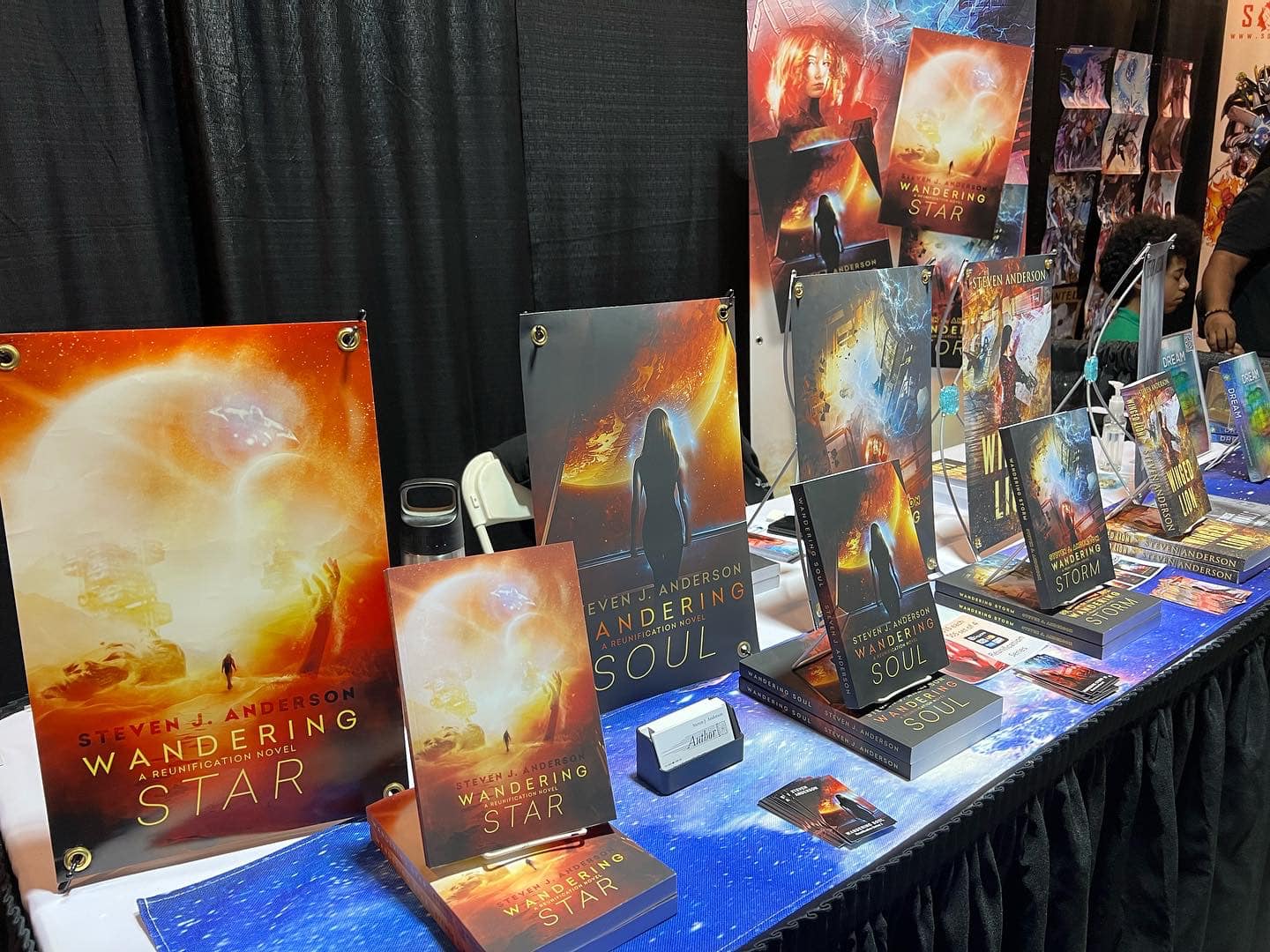


Image Credits
Megan Lundberg
Popular
-

The Trailblazers: Rewriting the Narrative
-

Celebrating the Spotlight: Kaytee Shashore Turns Milestones Into Momentum
-

Humanity in the Machine: Alexander Raye Pimentel’s Cyborg Recall Questions the Cost of a Data‑Driven World
-

Raemi Anderson on Courage, Caution, and Answering the Call of the Landscape
-

Hidden Gems: Local Businesses & Creatives You Should Know


