



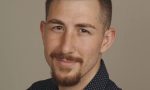
Today we’d like to introduce you to J. Blair Cano, PsyD, MSCP.
Hi Blair, can you start by introducing yourself? We’d love to learn more about how you got to where you are today.
I grew up primarily in Evergreen Colorado with my mother and spent summers and holidays with my father in New Mexico, Kentucky, and Georgia. After high school graduation, I moved to Colorado Springs where I spent a couple of years serving tables at Jake and Telly’s Greek Taverna. From Colorado Springs, I joined the US Navy and trained to be an Avionics Electrician and part of an aircrew. I trained in Pensacola, Florida with the aviation division and US Navy Seal teams. From there, I was stationed at NAS Oceana in Virginia Beach, Virginia. At that point, I was assigned to the largest aviation squadron in the Navy at the time-VF101; a pilot training squadron for F-14 fighter jets. I stayed with this squadron until I was medically separated from the Navy for injuries incurred during service in the Spring of 2002. For about a year after being medically retired, I worked for a local outfitting company that helped people prepare for extensive expeditions-to including outfitting Navy Seal Teams. In October 2003, I returned to Colorado Springs to go back to school full-time for a bachelor’s degree in Criminology with a specialized certificate in Forensics. While completing this degree, I realized that while very fascinating work, I would not be able to work in Forensics as I had experienced a suicide close in my family as a child, and the nature of Forensics hit too close to home. After receiving advice from numerous mentors, I decided to pivot into Clinical Psychology. I then pursued my doctorate degree in Clinical Psychology with a specialty in Neuropsychology. Much of my training and early career was spent in pediatrics and developmental brain injury then morphed into adults with mild Traumatic Brain Injury.
Being located in Colorado Springs, we are surrounded by approximately 6 military installations and therefore the population of children and adults I saw was primarily military based. In 2015, I returned to school to receive a postgraduate master’s degree in Psychopharmacology to help inform my clinical decision-making and move toward the national movement of allowing properly trained and licensed psychologists to prescribe psychotropic medications. As my years working with the military have evolved, combined with my history working with Navy Seals, I found myself working more directly with the Special Operations community of all branches. Currently, I work with The Special Forces Foundation, Care Coalition, VA, Tricare, and The Headstrong Project to provide evidence-based trauma treatments in combination with ancillary treatments such as bio/neurofeedback, heart rate variability training, ketamine assisted therapy, and hyperbaric oxygen therapy to Special Operators with PTS, Moral Injury and/or mTBI.
Can you talk to us a bit about the challenges and lessons you’ve learned along the way? Looking back would you say it’s been easy or smooth in retrospect?
My career path has not been a smooth road or a direct line. First and foremost, I had not anticipated being injured while on active duty and being medically retired. There was my first pivot. I expected to have a career in Criminology/Forensics until the reality of that line of work became untenable. Second pivot. When I first began working in Psychology, it was with the idea I would only get a Master’s degree, then that morphed into a Doctorate degree. I had difficulty getting pregnant before graduate school so figured that was not in the cards for me when I found out in the same week that I was accepted into graduate school and pregnant! Third pivot. I wanted both equally, so my husband and I decided to forge ahead no matter what. There were many late nights and exhaustion; passing the baby to each other in the evening as he came home from a long day at work, and I went off to night school.
After graduate school, the two options I had to get the specialty training I wanted/needed were 1) move the whole family out of state for a minimal salary or 2) stay in Colorado Springs and take an unpaid 3-year internship and post-doctorate program. Fourth pivot. Again, my husband and I decided to uproot the family was not an option so he worked his rear end off and started a new company during the recession of 2008 to support us while I completed my training. Going back for another degree in 2015 was also unexpected, as the movement for psychologists as prescribers had not gained enough momentum by then for me to foresee that need ahead of time. Another pivot!
Thanks for sharing that. So, maybe next you can tell us a bit more about your business?
My business/organization journey had also been indirect. I first started a practice in partnership with a psychiatric nurse practitioner and we ran that company together for 3 years until she decided to leave private practice and move back to her home state. We dissolved that entity and I rebranded my practice to a company called Neurofeedback Colorado Springs where I assessed and treated pediatrics and adults while also providing a training site for new clinicians in the field. In June 2020 I sold that practice to an esteemed colleague of mine so that I could prioritize my work with the Special Operations community, active duty, and veterans. At this point in time, I provide some treatment for Moral Injury, PTS, mTBI, and Peak Performance.
I consult with numerous other practices to integrate complementary services to their businesses as well as institute more efficient business practices and provide supervision in Clinical Psychology, Neuropsychology, and Neurofeedback to junior clinicians. I also offer independent record reviews for veterans in need of Nexus letters for VA claims as well as conduct Security Clearance Evaluations for those with clearance needs. What I am most proud of is my work with the Special Operations Community. It is often difficult to build bonds with that community and it is an underserved and misunderstood community. As far as branding, I am my brand. I am authentic, genuine, and dedicated, and believe that my service to the country post-active duty in helping my fellow veterans has far outweighed my service during active duty.
How do you define success?
For me, success is determined by fortitude, goal setting, and the ability to re-evaluate at any point in time and make the pivots necessary to keep moving forward.
Contact Info:
- Linkedin: https://www.linkedin.com/in/drcano/


Image Credits:
The Headstrong Project and Special Forces Foundation
Popular
-

The Trailblazers: Rewriting the Narrative
-

Celebrating the Spotlight: Kaytee Shashore Turns Milestones Into Momentum
-
Humanity in the Machine: Alexander Raye Pimentel’s Cyborg Recall Questions the Cost of a Data‑Driven World
-

Raemi Anderson on Courage, Caution, and Answering the Call of the Landscape
-

Hidden Gems: Local Businesses & Creatives You Should Know


