



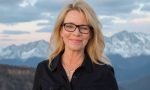
Today we’d like to introduce you to Tina Moss.
Hi Tina, so excited to have you with us today. What can you tell us about your story?
Originally from Castle Rock, Colorado, I still remember the “old days” — and I’ll probably always call the McDonald’s on Wolfensberger “the old McDonald’s.” Growing up there gave me a strong sense of community, but also an early awareness of how much culture and place shape identity.
After high school graduation, I moved to New York City. Those years were formative in a very different way. I worked a range of odd jobs — bartending, waitressing at a comedy club, even working in a hair transplant office — trying things on, learning people, understanding hustle culture from the inside. Being immersed in the pace and diversity of the city exposed me to different socioeconomic realities, cultural identities, and relationship structures than I had grown up with.
At 26, I began my undergraduate studies at Medgar Evers College in Brooklyn. Starting college later than many of my peers gave me perspective. I wasn’t just there to earn a degree — I was there intentionally. Studying in such a culturally rich and historically significant institution deepened my understanding of systemic inequities and the importance of culturally responsive care.
At 30, family needs brought me back to Colorado. That transition grounded me in a new way. I focused on completing my master’s program at Regis University, where my clinical identity began to take clearer shape. My work became centered on relationships, attachment, and understanding how larger societal narratives influence intimacy, sexuality, and mental health.
Three years ago, I began seeing clients outside — literally. Nature felt like a powerful and regulating space, especially in a time when many people were craving connection and safety. Outdoor therapy has been a meaningful extension of my belief that healing doesn’t only happen within four walls; it happens in movement, in breath, in shared presence. I’ve found it to be a powerful way to reach clients who might not otherwise step into a traditional office setting.
Looking back, the road hasn’t been linear. It’s been shaped by geography, family, cultural context, and lived experience. But each chapter — from Castle Rock to New York and back again — has informed the grounded, socially aware, and relationally focused therapist I am today.
We all face challenges, but looking back would you describe it as a relatively smooth road?
Like many people doing relational or therapeutic work, the path has included both meaningful growth and real challenges. Personally and professionally, I’ve had to confront my own blind spots, unlearn internalized narratives shaped by culture and society, and sit with discomfort while expanding my capacity to hold complexity.
There have been moments of doubt — questioning whether I was “doing enough,” navigating systemic barriers within healthcare systems, and working inside structures that don’t always align with values of equity, access, and relational depth. Being culturally and socially aware means recognizing that struggles are rarely just individual; they’re often shaped by larger forces — patriarchy, racism, capitalism, heteronormativity, ableism, and the unrealistic expectations placed on caregivers, partners, and professionals.
I’ve also witnessed how stigma around mental health, sexuality, fertility, parenting, and relationship structures can create shame for clients — and at times, tension within professional spaces. Learning to advocate for inclusive, affirming care (especially for neurodivergent clients, multicultural couples, and those practicing ethical non-monogamy) has required courage and continued education.
At the same time, the challenges have deepened my empathy. They’ve strengthened my belief that healing happens in context — not in isolation from culture, community, or systemic realities. The road has had friction, but that friction has sharpened my clarity about the kind of therapist I want to be: grounded, humble, socially aware, and committed to growth alongside the people I serve.
We’ve been impressed with Rooted Outdoor Therapy, but for folks who might not be as familiar, what can you share with them about what you do and what sets you apart from others?
Talk therapy in Nature – Meet with couples, individuals, families, and groups.
Rooted Outdoor Therapy philosophy follows the Scandinavian Forest School ideals & believes cold/wet weather can be an enriching & a resilience building environment. Only temperatures under 17 degrees Fahrenheit, blizzard conditions, & other extreme weather will result in a reschedule.
Rooted is hosted on a working farm, “Colorado in Bloom”. They grow flowers, fruit, vegetables, raise cattle, chicken & have a couple adopted alpaca. Paths are mowed but rugged. Closed toe shoes & dressing for the weather is recommended.
I practice in a culturally and spiritually responsive way and am affirming of the needs of marginalized identities in BIPOC and LGBTQIA+ people.
If you had to, what characteristic of yours would you give the most credit to?
The quality I feel is most central to my success is attuned presence.
By that, I mean the ability to stay grounded, curious, and emotionally regulated while sitting with complexity — whether that’s conflict between partners, cultural tension, grief, trauma, or desire. Attuned presence isn’t just about listening well; it’s about tracking power dynamics, social context, nervous system responses, and the unspoken layers beneath words.
Pricing:
- 15-minute Virtual Consult – No Cost
- 50-minute Sessions – $150
- 75-minute Sessions – $175
- Assessment session +$35
Contact Info:
- Website: https://rootedoutdoortherapy.com
- Instagram: https://www.instagram.com/therapy_outside_/?hl=en


Image Credits
Ben Nelson Photo LLC
Popular
-

The Trailblazers: Rewriting the Narrative
-

Celebrating the Spotlight: Kaytee Shashore Turns Milestones Into Momentum
-

Humanity in the Machine: Alexander Raye Pimentel’s Cyborg Recall Questions the Cost of a Data‑Driven World
-
Raemi Anderson on Courage, Caution, and Answering the Call of the Landscape
-

Hidden Gems: Local Businesses & Creatives You Should Know


