



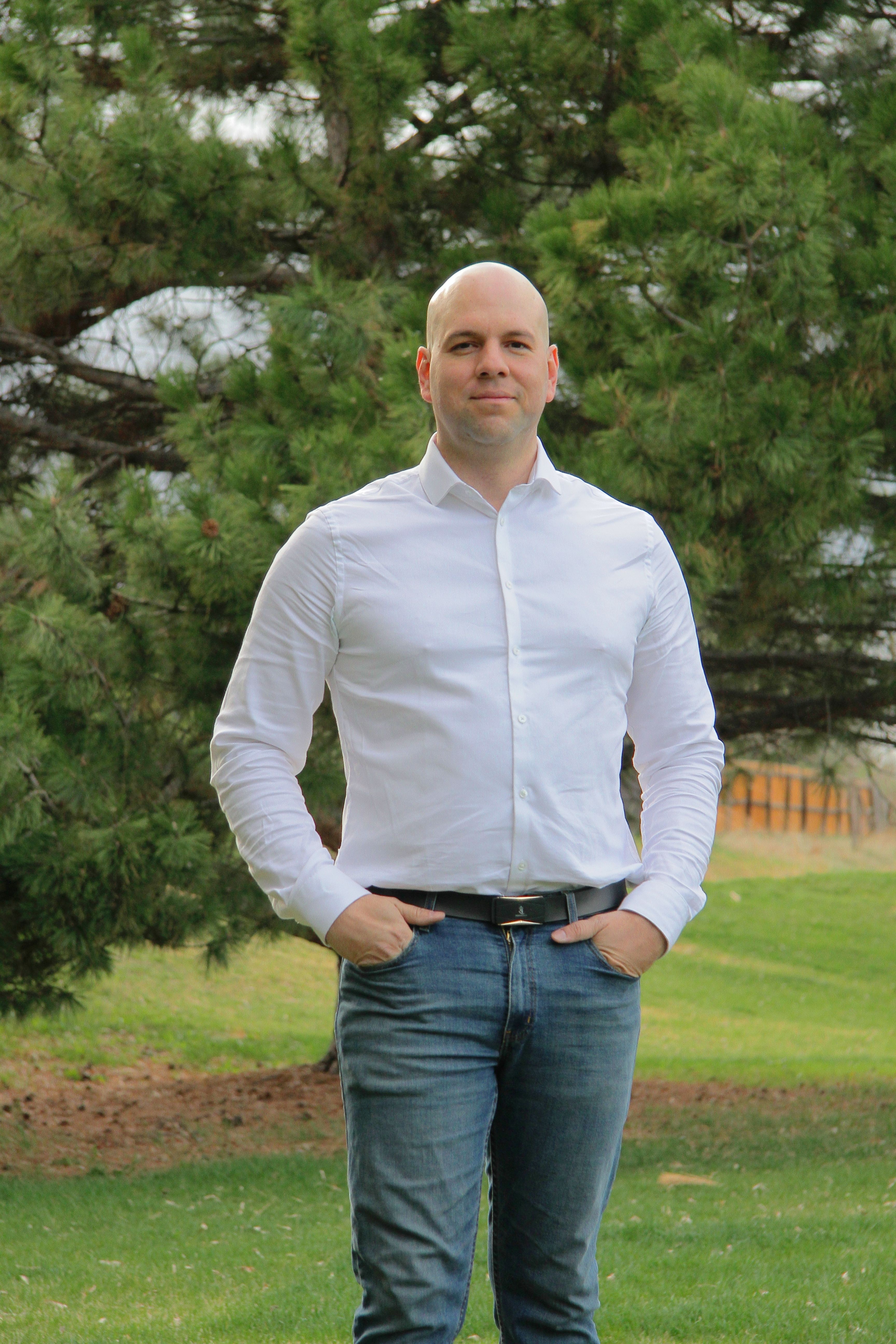
Today we’d like to introduce you to Argenis.
Hi Argenis, so excited to have you with us today. What can you tell us about your story?
My decision to move to Colorado three years ago was driven by my vision of developing professionally in the tech field. During my years in Tampa, I worked as an Uber driver and later at a scaffolding company, organizing and picking up shipments. These jobs taught me many valuable lessons about the importance of organization, time management, and how to adapt quickly to new situations.
Although I was working in Tampa, I always had the dream of developing myself in the tech field, especially in aerial mobility. So, I decided to make an important leap: I rented an 8×5 U-Haul trailer, hitched it to my car, packed all my belongings, and embarked on a 4-day journey crossing several states, passing through Georgia, Tennessee, Kentucky, Illinois, Missouri, Kansas, and finally arriving in Colorado. During that trip, I experienced a mix of emotions: the uncertainty of starting over and the excitement of a future full of opportunities.
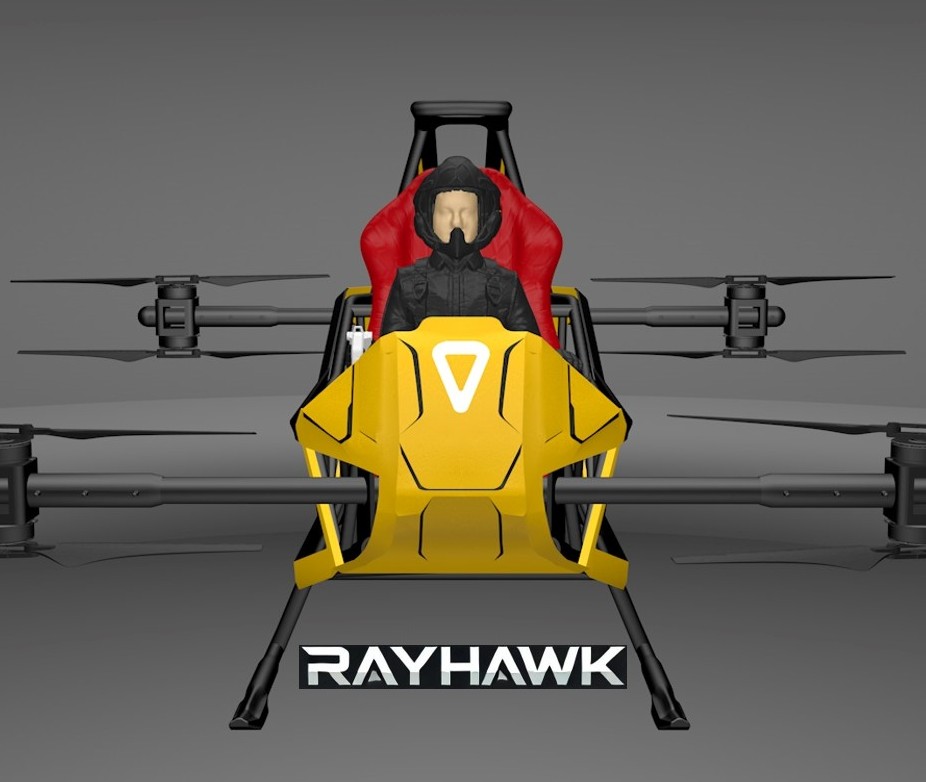
Upon arriving in Colorado, I used my credit card points to stay in a hotel for a month, until I managed to rent an apartment. These three years have been a combination of ups and downs, from living in my vehicle to changing jobs and fully focusing on what I truly love: technology and engineering. During this time, I was able to focus on developing RayHawk, a project that combines my love for engineering and design, and my vision for the future of personal aerial mobility.”
Since I was young, I’ve always wanted a helicopter to play with, and I was always fascinated by the idea of flying in any direction at will. My favorite character was Superman, and I’ve always been captivated by the idea of flying freely. I also loved building and inventing things that didn’t exist. When drones started to emerge, it was as if my mind opened up and began imagining all the uses they could have, especially the idea of having my own vehicle that could go anywhere without needing pavement. It was simply amazing, and the freedom that idea represents is deeply inspiring.
At home, I had a book called ATLAS, which was the geographical book of the planet. I imagined that a manned drone like mine, RayHawk, would allow you to explore the world without limits, traveling freely, without barriers, and with the ability to discover new frontiers of aerial mobility. This book inspired me to take that step toward creating RayHawk, driven by the vision of making something that was once just a dream possible.
My journey began with a deep interest in technology and aviation. Originally trained in journalism and some engineering, I found myself drawn to the potential of electric vertical takeoff and landing (eVTOL) aircraft. I saw a unique opportunity to create a personal, recreational aircraft that would allow individuals to experience the freedom of flight in a sustainable way.
RayHawk began as an idea to develop an eVTOL that would be not only fun and exciting but also accessible for recreational use. My goal was to provide a way for people to enjoy flying, whether for personal leisure, exploration, or simply experiencing the thrill of aviation.
From the initial concept sketches and 3D designs, I’ve worked tirelessly to secure funding, refine the engineering, and connect with experts in the aviation and tech industries. Today, I am focused on building the first prototype, with the goal of testing it by mid-2025 and eventually launching it to the public. Despite the challenges, I’ve been driven by the vision of creating a product that can truly make a difference in the world of urban mobility.
I’m sure it wasn’t obstacle-free, but would you say the journey has been fairly smooth so far?
The road has definitely not been smooth. Developing RayHawk has been a challenging yet rewarding experience. One of the biggest struggles has been securing the necessary funding to bring this vision to life. As with any innovative project, financial resources are a constant concern, especially when it comes to developing a complex technology like eVTOLs.
Another challenge has been sourcing the right components and building partnerships with suppliers. The aerospace industry is highly specialized, and finding the right experts and manufacturers to work with has required a lot of patience and persistence. Additionally, dealing with the complexities of regulations, certifications, and ensuring the safety of the aircraft has been a significant hurdle.
Despite these obstacles, I’ve remained focused on the end goal, learning from each setback and finding creative solutions to keep pushing forward. Each challenge has been an opportunity to grow and refine the project, and I’m excited to see how far RayHawk has come despite these struggles.
Thanks for sharing that. So, maybe next you can tell us a bit more about your work?
I’m a journalist with a background in audiovisual media and a passion for technology, design, and engineering. My journey in engineering has always been driven by my interest in innovation, and this led me to focus on the development of eVTOLs, where I can apply my skills to create exciting advancements in personal aerial mobility.
I specialize in creating innovative designs, using tools like Cinema 4D to bring ideas to life. Over the years, my work in audiovisual media earned me some recognition, but it’s in eVTOLs where I’ve found my true passion. The concept of electric vertical takeoff and landing vehicles excites me because I believe they represent the future of personal transportation, and I’m fully focused on this goal.
What sets me apart is my unique blend of skills: a strong foundation in journalism and audiovisual media, coupled with my hands-on experience in 3D design and engineering. With RayHawk, I’m working to bring a new type of personal, recreational eVTOL to life. What I’m most proud of is how my journey has led me to develop a vehicle that merges my love for design and technology, with the ambition to make personal aerial mobility a reality for everyone.
What would you say have been one of the most important lessons you’ve learned?
The most important lesson I’ve learned along my journey is the value of persistence and the ability to adapt. In the world of innovation, setbacks and challenges are inevitable, but it’s crucial to keep moving forward and learn from every obstacle. I’ve learned that perseverance, combined with the willingness to continuously improve and refine ideas, is what ultimately drives success.
When developing RayHawk, I’ve had to make adjustments and rethink approaches several times. But each challenge has been an opportunity to grow, both personally and professionally. This experience has reinforced my belief that in any ambitious project, the key to progress is staying dedicated to the vision, no matter how many hurdles come your way.
Contact Info:
- Website: https://www.flyrayhawk.com
- Instagram: @RayHawk_eVTOL
- Facebook: RayHawk.eVTOL
- Twitter: @RayHawk_eVTOL
- Youtube: RayHawk eVTOL




Popular
-

The Trailblazers: Rewriting the Narrative
-

Celebrating the Spotlight: Kaytee Shashore Turns Milestones Into Momentum
-

Humanity in the Machine: Alexander Raye Pimentel’s Cyborg Recall Questions the Cost of a Data‑Driven World
-

Raemi Anderson on Courage, Caution, and Answering the Call of the Landscape
-

Hidden Gems: Local Businesses & Creatives You Should Know


