



Today we’d like to introduce you to Hally Strevey.
Alright, so thank you so much for sharing your story and insight with our readers. To kick things off, can you tell us a bit about how you got started?
I was born & raised in Fort Collins, CO (the Poudre watershed) and grew up fishing, hiking, and exploring in the region. My family has a cabin near the Cache la Poudre River. My dad is also a wildlife biologist, so between his influence and my time in the outdoors, I always knew I wanted to pursue a career in natural resources.
I was the 4th generation of my family to attend Colorado State University. My Bachelor’s degree is in Wildlife Biology and I have a Master’s degree in Restoration Ecology from Montana State University.
Before I came to the Coalition for the Poudre River Watershed (CPRW), I worked many seasonal jobs for the US Forest Service, Bureau of Land Management, and the National Park Service where I spent summers doing nighttime owl surveys, early mornings conducting breeding songbird surveys, long days on ATV’s looking for Bighorn sheep and tracking domestic sheep allotments, and a winter in Rocky Mtn National Park doing environmental education.
I started working at CPRW in the summer of 2015. At the time, it was just myself and our previous director. The organization was brand new (it was established as a 501c3 in May 2013), and was formed after the 2012 High Park and Hewlett Gulch wildfires burned over 90,000 acres in the Cache la Poudre watershed. In my decade at CPRW, I’ve worn every hat one person can working for a small non profit. I helped to develop our programs from post-fire recovery to forestry/wildfire mitigation to expanding our working area to across the entire watershed. In the fall of 2021 I became the Executive Director of CPRW. It has been an honor and a privilege to work for a community based nonprofit that collaborates so closely with our stakeholders and partners and that has made a visible impact on increasing the resilience of our watershed while also helping our watershed recover from two devastating wildfires, including the 2020 Cameron Peak Fire (Colorado’s largest fire).
Alright, so let’s dig a little deeper into the story – has it been an easy path overall and if not, what were the challenges you’ve had to overcome?
Ten years ago I would not have guessed that I would be leading a non profit organization. I didn’t ever even envision myself as a leader.
I was very lucky to have such a strong support system in my family while I was in undergrad as well as graduate school. In the natural resources field, it can be really challenging to find a permanent job without a Masters Degree, so I always knew that needed to be part of my path. I did take a few years off between undergrad and graduate school where I worked the various seasonal jobs. The ‘in between’ phases in my early career (before grad school) and after grad school, were challenging because it was hard to find a job. There was a lot of competition for for jobs and it was disheartening to get interview after interview but not a job offer.
When I started at CPRW, I always assumed I’d work here for a few years and then move on, but that did not turn out to be the case! Working for a small non profit always comes with challenges as well. Most of our funding comes from federal, state and local grants- so everything we do is dependent on grant funding. When you have uncertainty in what the funding landscape is going to look like can definitely keep you up at night. Our goal is to continue to diversify our funding sources and become less dependent on grants so we can better withstand changes in funding at the federal/state scale.
Appreciate you sharing that. What else should we know about what you do?
CPRW’s mission is to improve and maintain the ecological health of the Poudre River Watershed through community collaboration. Our working area is from the headwaters in Rocky Mountain National Park to the confluence with the South Platte River. The Poudre watershed is home to over 350,000 people who all rely on the river for clean drinking water. The watershed supports a robust recreation (flyfishing, whitewater rafting, camping etc.) industry as well as brewing and tech. They all rely on a healthy watershed to sustain their businesses.
After 13 years as a 501c3 non profit CPRW has become a trusted and valued part of the watershed/community. I am most proud of my team and how we’ve grown together since I became the director in 2021. We are now a staff of five (and looking to bring on 1-2 new staff in the coming year). Our work brings together federal, state and local governments, nonprofits, private landowners, researchers and community members to achieve landscape scale planning & implementation work. My proudest moments have included leading this community based nonprofit through the Cameron Peak Fire recovery, to helping Larimer County and our region secure a ~10 million grant to protect communities by reducing severe wildfire risk to creating stakeholder driven plans that don’t just sit on a shelf- but are used by the local municipalities, and other partners for their work, as well to seeing my staff grow into their own and manage successful projects.
Do you have any advice for those just starting out?
It’s ok if your passion or your vision of what you expected changes over time.
Make connections- its all about who you know!
Don’t let imposter syndrome hold you back from taking the leap to the next phase of your career.
Contact Info:
- Website: https://poudrewatershed.org
- Instagram: @poudrewatershed
- Facebook: https://www.facebook.com/poudrewatershed
- Youtube: https://www.youtube.com/@poudrewatershed
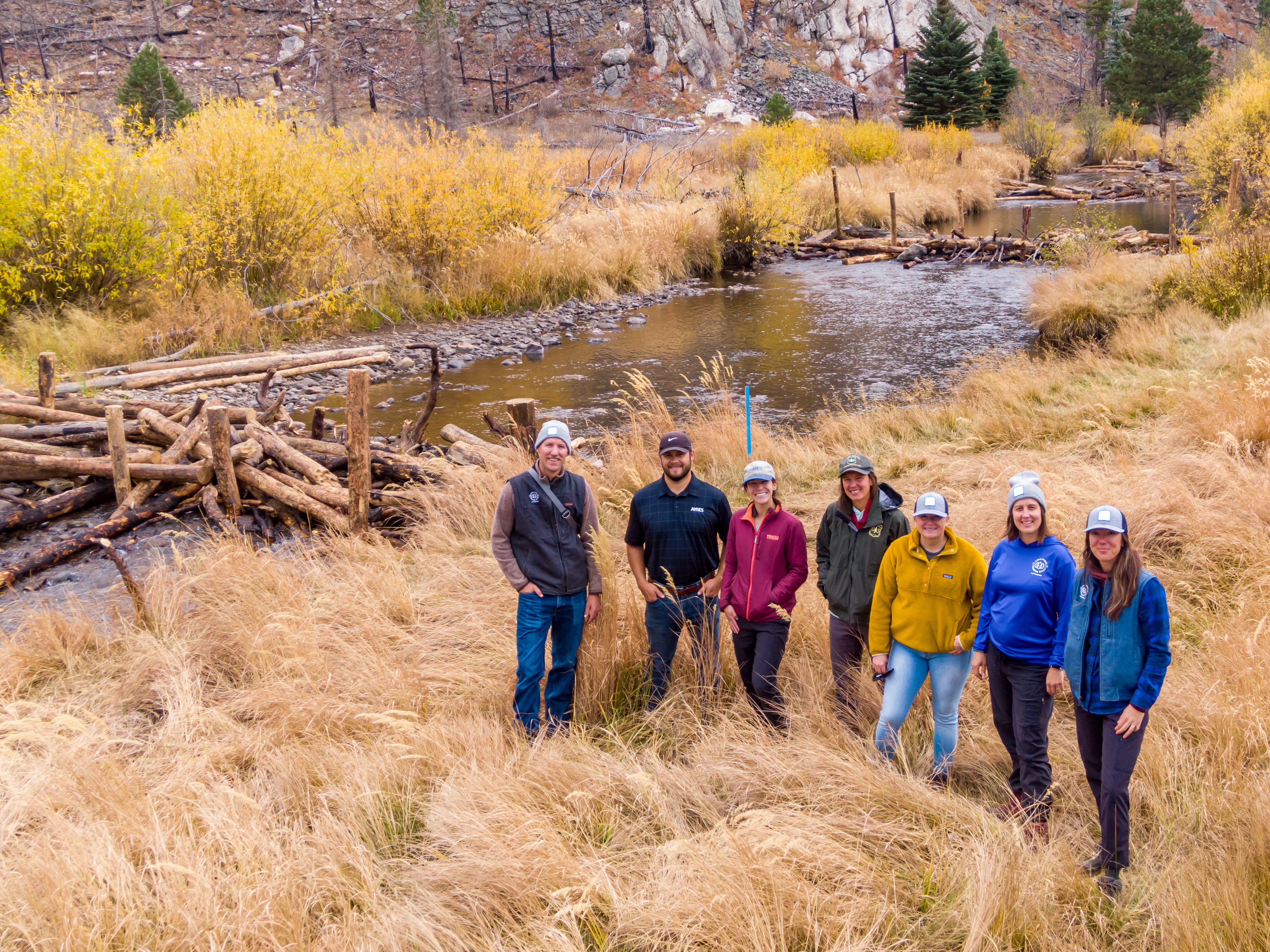


Image Credits
Drone photo (group by river)- Ayres Associates
The other photos were taken by CPRW staff.
Main headshot photo- Clancey
Popular
-

The Trailblazers: Rewriting the Narrative
-

Celebrating the Spotlight: Kaytee Shashore Turns Milestones Into Momentum
-

Humanity in the Machine: Alexander Raye Pimentel’s Cyborg Recall Questions the Cost of a Data‑Driven World
-
Raemi Anderson on Courage, Caution, and Answering the Call of the Landscape
-

Hidden Gems: Local Businesses & Creatives You Should Know


