


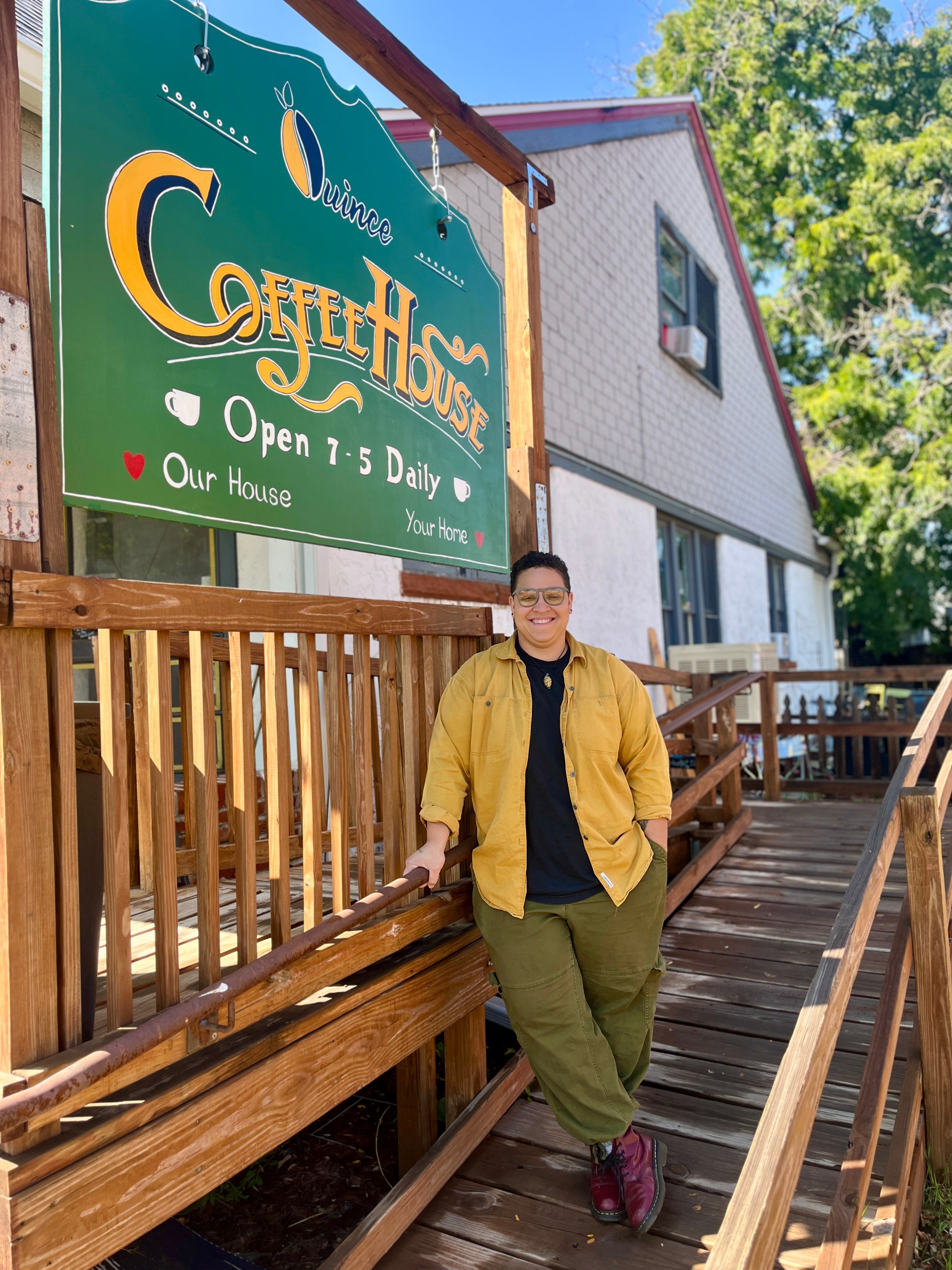
Today we’d like to introduce you to Jenna Greenwood.
Hi Jenna, thanks for joining us today. We’d love for you to start by introducing yourself.
I am lucky enough to have been raised and continuously loved and cared for by a community of brilliant, hard-working, and resilient Black people. Lessons of persistence, how to embody love, and mustard seed faith have been woven into my experience, which has shaped me in such amazing and profound ways.
I grew up in Denver, CO, the traditional territories and ancestral homelands of the Cheyenne and Arapahoe Nations, and the site of trade, hunting, gathering, and healing for many other Indigenous Nations: The Lakota, Ute, Kiowa, Comanche, Apache, Shoshone. I honor and uplift the Indigenous Nations as the original stewards of the land, water, plants, and animals, and mourn the continued genocide and forced removal of indigenous peoples. East Denver, specifically, is where I’ve called home for most of my life. I come from a lineage of movers and shakers and have amazing examples of influential figures who raised me and who’ve left lasting legacies and impacts in the Black community, Denver, Colorado, and beyond. They’ve taught me the importance of serving the community, and have inspired me to keep becoming, learning, creating, and enjoying as many of the tiny beautiful details as possible.
I have a deep commitment to the arts. Music was the heartbeat of my home. Soul, gospel, and smooth jazz were constants, shaping the environment of my childhood. I fell in love with music early, not just the sounds, but the profundity it carried. I was involved in choir and band, and I was surrounded by unapologetically creative and artistic people who made self-expression feel sacred, who reminded me that art could be both survival and celebration. Eventually, I found my own instrument, the drums. I liked holding the responsibility of keeping time – it felt like both power and prayer. Drumming taught me rhythm in a deeper sense: the discipline of timing, the patience of listening, the awareness and intention of syncopation. It gave me a way to understand myself and the world, not just as chaos or noise, but as something that could be shaped into pattern, flow, and sophistication. That rhythm is part of me – it continues to shape how I see the world, how I move through it, and my love for creating spaces where others can embrace their own beat and live through that with liberation and beauty.
Would you say it’s been a smooth road, and if not what are some of the biggest challenges you’ve faced along the way?
My journey has been shaped by barriers both personal and systemic: questions of access, the weight of navigating whiteness and supremacy culture, and the ongoing work of learning how to take responsibility for my own experience.
Access to knowledge, opportunity, representation, resources, and education:
Many of my struggles are tied back to questions of access: “who gets it, and who doesn’t?” Access and representation are shaped by a hyper-individualized, white, cis-hetero dominant culture. As someone who is queer, Black, and non-binary, I rarely saw myself reflected in the spaces I moved through. I was often socialized to believe that my expression of self was something to be critiqued or questioned, which left me feeling unseen, overlooked, and isolated. As a student with neurodiversity, learning challenges, and limited access to support, I often felt that the system and society weren’t designed for my brain. These factors combined created barriers to fully accessing, learning, and experiencing life, and have created challenges that continue to shape how I navigate the world.
Engaging with whiteness and supremacy culture:
Another challenge has been navigating whiteness and supremacy culture. Existing in predominantly white spaces requires a particular set of survival skills for moving through environments not designed with us in mind. The unspoken questions are constant: “How do I shape-shift to be more palatable? What parts of myself do I need to suppress just to remain in this space?” In my work in higher education, I see students experiencing these same tensions. Learning is never just the transfer of knowledge; it unfortunately includes contending with the hidden curriculum that is embedded in institutions. Lessons that are often painful, exclusionary, and deeply rooted in white norms. Professionally, the pressure to assimilate, isolation, and the familiar experience of being “the only (insert identity) in the room” has been just as present. The ongoing labor of shifting and adjusting to fit is exhausting, feeling invisible, and the pressure to perform – a burden that is rarely acknowledged, yet it consistently falls on those of us living outside dominant identities.
Learning to take responsibility for my experience:
One of the most important lessons I’m learning is that it is up to me to take responsibility for my own experience. Over the years, through therapy and exploring different spiritual practices, I’ve been slowly cultivating a sense of inner peace and safety rooted in embodiment and nervous system awareness. I’ve come to understand that while systemic barriers, silencing, and inequities are undeniably real, I am still the only one fully living my life. I am the “one true witness” to my experience, and with that realization comes the responsibility of how I choose to move with it.
We are socialized to believe that something outside of us will save us. We’re taught to look outward for relief, through distraction, validation, or the numbing patterns that help us avoid pain. The systems we’ve created reinforce this, pushing us toward surface-level comfort instead of deeper connection with ourselves. The connection to ourselves and each other – which is the whole point. It comes with a high cost: disconnection, disappointment, and a loss of access to humanity and the humanity of others. What starts to change that is curiosity. Curiosity about how we show up and not run from our discomfort, how our patterns ripple out and cause harm, pain, destruction, and suffering, and how we might learn to know ourselves instead of abandoning and harming ourselves and each other. If we can learn to sit with our own pain and get curious about it, we can sit and hold the pain with others. If we can learn to tolerate discomfort, this also means we can access and experience deep joy, a joy that is not superficial or fleeting, but rooted in presence, fullness, and authenticity. This kind of curiosity, when extended outward, allows us to honor others as whole beings living their own complex lives with an incredible amount of precious and important richness. It invites us to relate not from fear, sameness, or white/cis-hetero convenience and comfort, but from genuine openness, interest, and a commitment to taking responsibility for our experiences and patterns. It is not just an inward practice – it shapes the way we move through the world, connect with others, and center our shared humanity.
Alright, so let’s switch gears a bit and talk business. What should we know about your work?
My career to this point has been centered primarily in the space of education, specifically higher education. I’ve had many influential Black educators in my life, namely, my grandmother, Marie L. Greenwood, who was the first Black tenured teacher in the Denver Public Schools. Over the years, I have developed my own deep passion for education and supporting students. I am a proud graduate of Denver East High School. I studied sociology and religion, earning a B.A. from the University of Colorado Boulder, did a term of service with AmeriCorps at an education non-profit, and went on to complete my M.S. in Higher Education Leadership and Policy with an emphasis in Student Affairs at Portland State University. I’ve spent most of my career working in higher education. I support students as they navigate the complexities of the higher education system, specifically focusing on financial aid and college affordability. Currently, I work at the University of Colorado Boulder’s College of Engineering and Applied Science, overseeing scholarships and college affordability initiatives, and co-leading the Lattice First Generation Scholars Program. My experience working in higher education has led to publishing and presenting work on financial aid practices, with sessions and work entitled “Eliminating Barriers in Financial Aid for Marginalized Students” and “Broken Promises: Resolving Financial Aid Dilemmas that Further Marginalize Students in Need”.
In addition to higher education, I’ve had the opportunity to explore entrepreneurship as a Co-Owner of Quince Coffee House in East Denver. Quince is more than a coffee shop – it’s a vibrant community hub that fosters connection through great coffee, engaging events, and strong local partnerships. At Quince, inclusion and belonging are the foundation of everything we do. Co-owning it has been one of the greatest joys of my life, reshaping how I see myself and deepening my commitment to community. For me, Quince has never just been a business venture – it’s been a homecoming. It has given me the safety to embrace parts of myself I was once too afraid to explore and has helped me move closer to my wholeness. Within this community, I’ve witnessed affirming examples of intersectionality, queerness, gender expansiveness, and so much more. Quince has shown me what’s possible and given me the freedom to explore my own identities, like learning to embrace and celebrate life as a non-binary person. It has also been my classroom for community organizing, a place to experiment, to try and fail, and to learn what it takes to build something rooted in liberation. Quince has brought me moments of indescribable beauty and love, as well as seasons of loss, grief, and struggle. There have been times when the weight of it all has felt too overwhelming, and even crushing. Within all of this, I’ve been reshaped in ways I couldn’t have imagined. Each challenge has revealed something about resilience, about the power of community, and about my own capacity to hold both joy, hardship and the perspective that everything is beautiful and belongs in the process. Quince has broken me open and connected me with a deeper sense of meaning, purpose, and belonging.
What were you like growing up?
I’ve come to believe that one of the most important parts of adulthood is returning to, reclaiming, and reimagining (queering!) the best parts of my childhood. That has meant reconnecting with the passions, places, and practices that shaped me early on and allowing them to guide how I live, lead, and engage today.
Soccer was one of the most formative experiences of my childhood and young adult life. I played goalkeeper, and the game gave me more than just competition – it taught me about leadership, trusting others, and the power of working toward a shared goal. Soccer brought joy, discipline, and a structure that instilled responsibility and focus, while also deepening my love of movement and the outdoors. At the same time, it was not without challenges. I faced a homophobic coach and had to step away from the sport earlier than I wanted. Reclaiming soccer as an adult through the Lipstick Lovers (@denverlipsticklovers) queer soccer league has been beyond meaningful. It feels like taking something that shaped me as a young person and rooting it now in joy, affirmation, and community that reflects who I am today.
Place and connection to nature also shaped me in profound ways. Growing up in Colorado, in a Black family that regularly spent time outdoors, I was taught to listen to and learn from nature. Time outside wasn’t just recreation; it was grounding, a way to notice, reflect, and absorb the wisdom that nature offers. Those lessons gave me balance and reverence for the earth, a connection that continues to sustain me into adulthood. Returning to nature gives me perspective and reminds me to slow down, breathe, and realign with the beauty of what matters.
Another formative influence was my spiritual community and early sense of belief. I grew up in a progressive church, Park Hill United Methodist Church in East Denver, which has a beautiful history of Black and Queer leadership, where I experienced a model of Christianity rooted in justice, expansiveness, and unconditional love. That space taught me the power of ritual, the grounding of routine, and the possibility of a spiritual life that is both inclusive and affirming. Faith became a source of connection and guidance, not exclusion, and I continue to engage in this and other forms of spirituality and belief. To me, ritual and feeling connected to something larger than yourself can ground, create meaning, and cultivate a sense of richness and aliveness in the body and in life.
Returning to those early influences has given me tools to navigate adulthood with intention, resilience, and playfulness. It reminds me that who I was as a young person has always been enough, and it lives within me, guiding the way I move through the world today.
Contact Info:
- Website: https://www.quincecoffee.com
- Instagram: @quincecoffeehouse
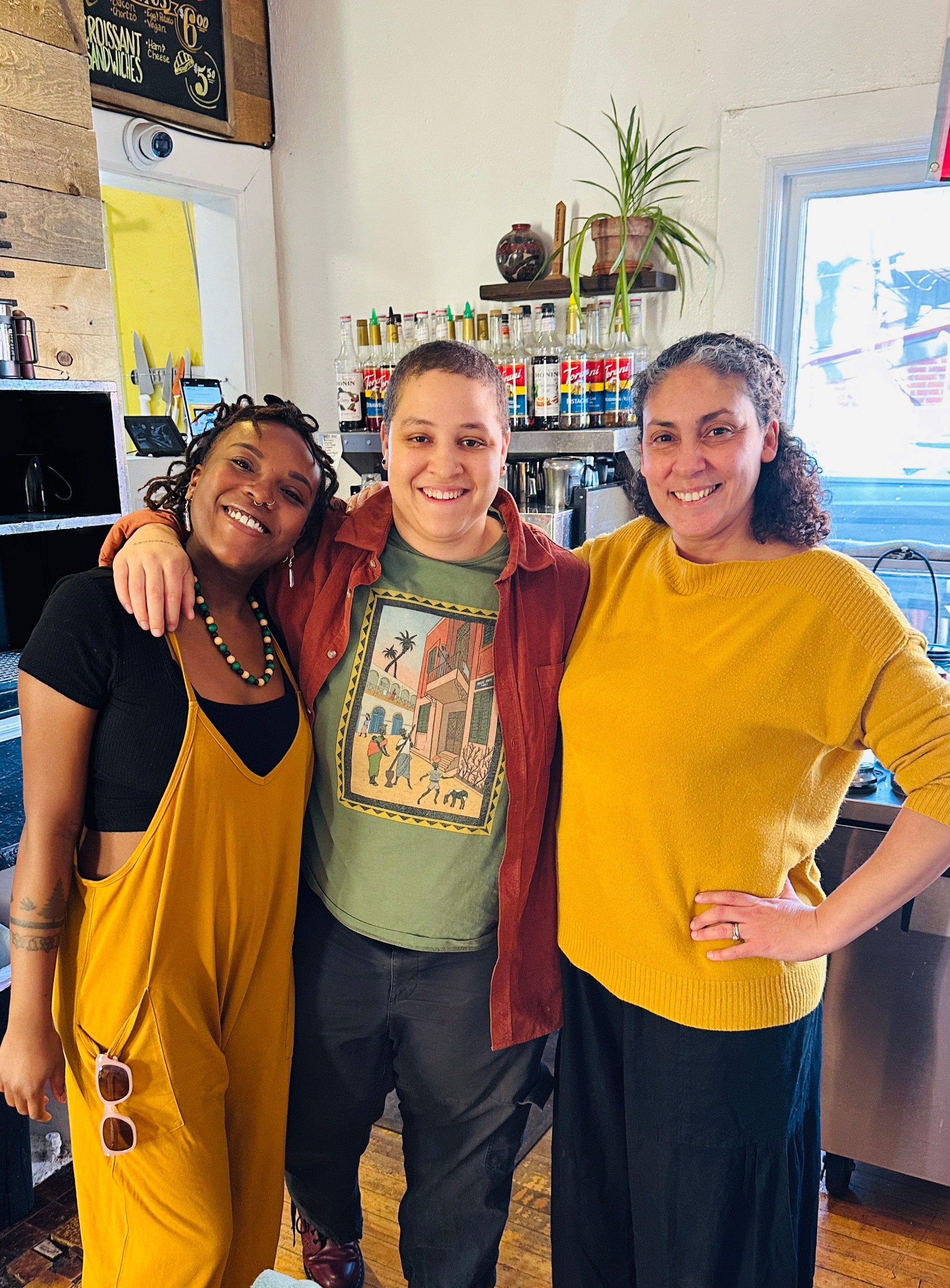
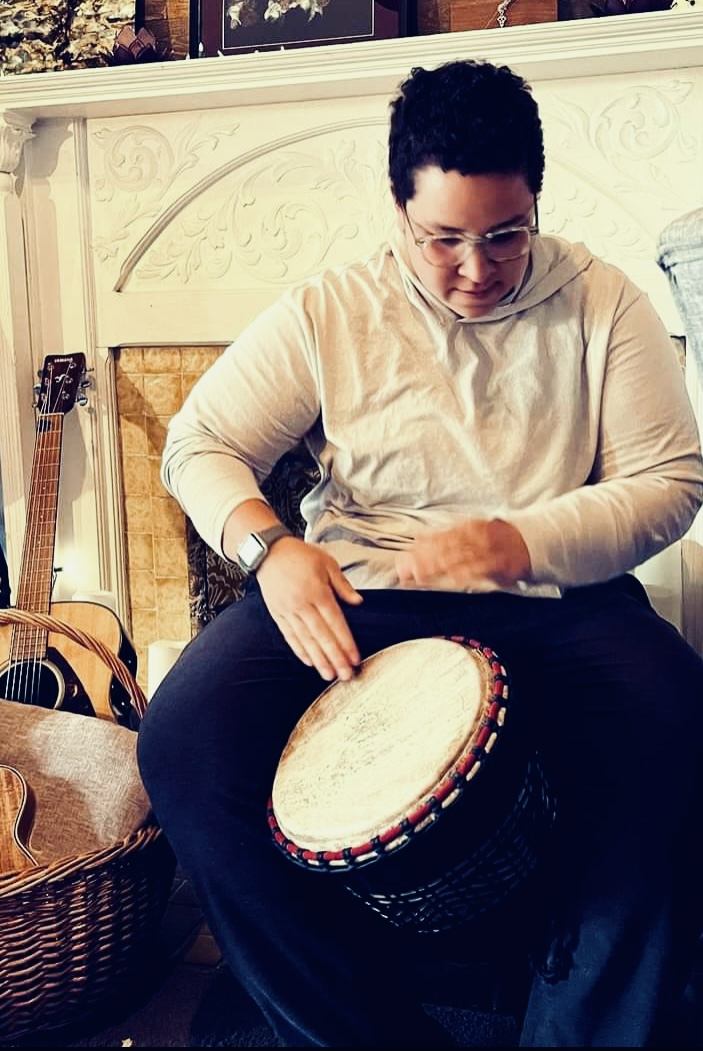
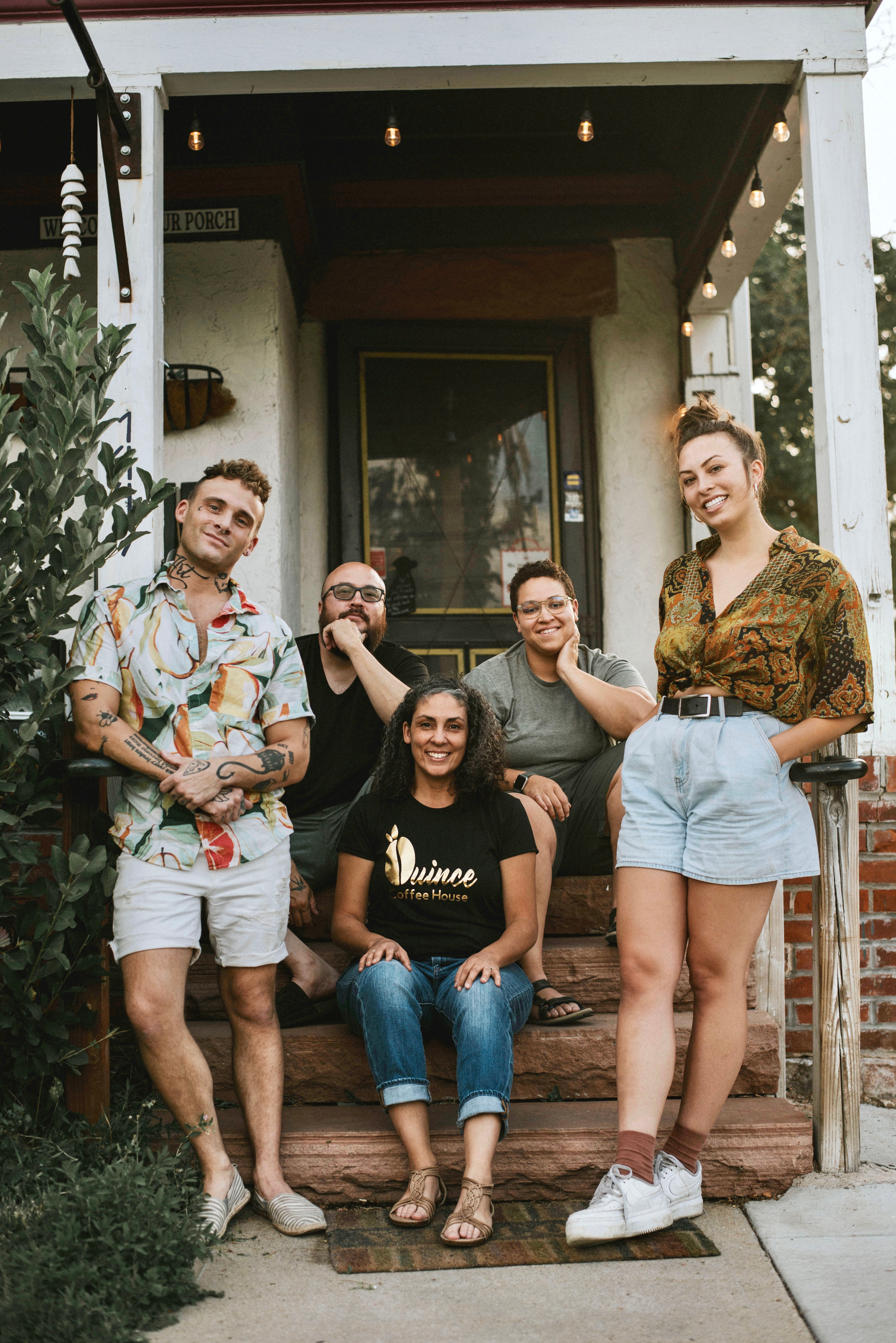
Image Credits
Alex Diorio
Nate Libby
Katharine Hiltbrand