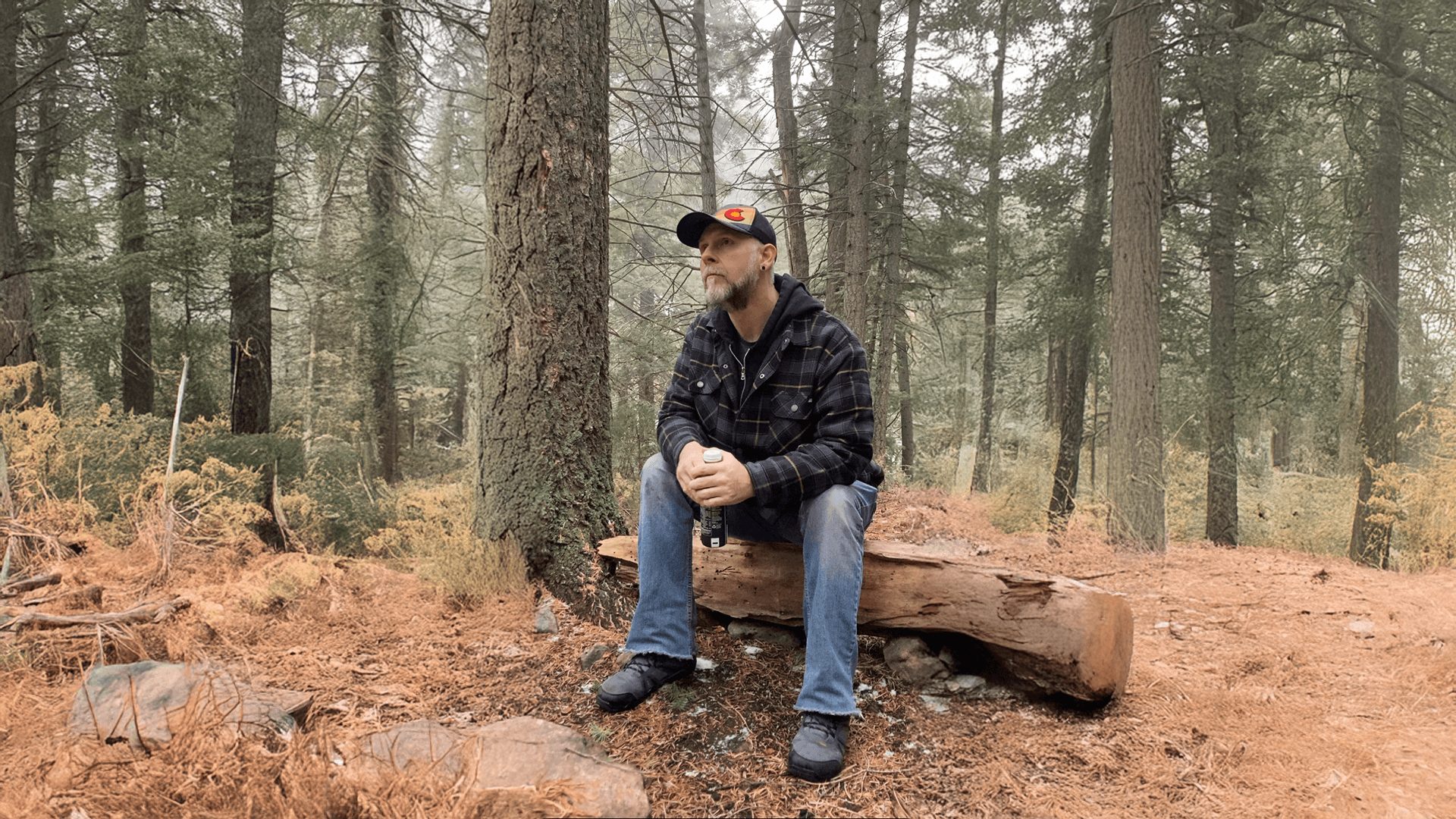


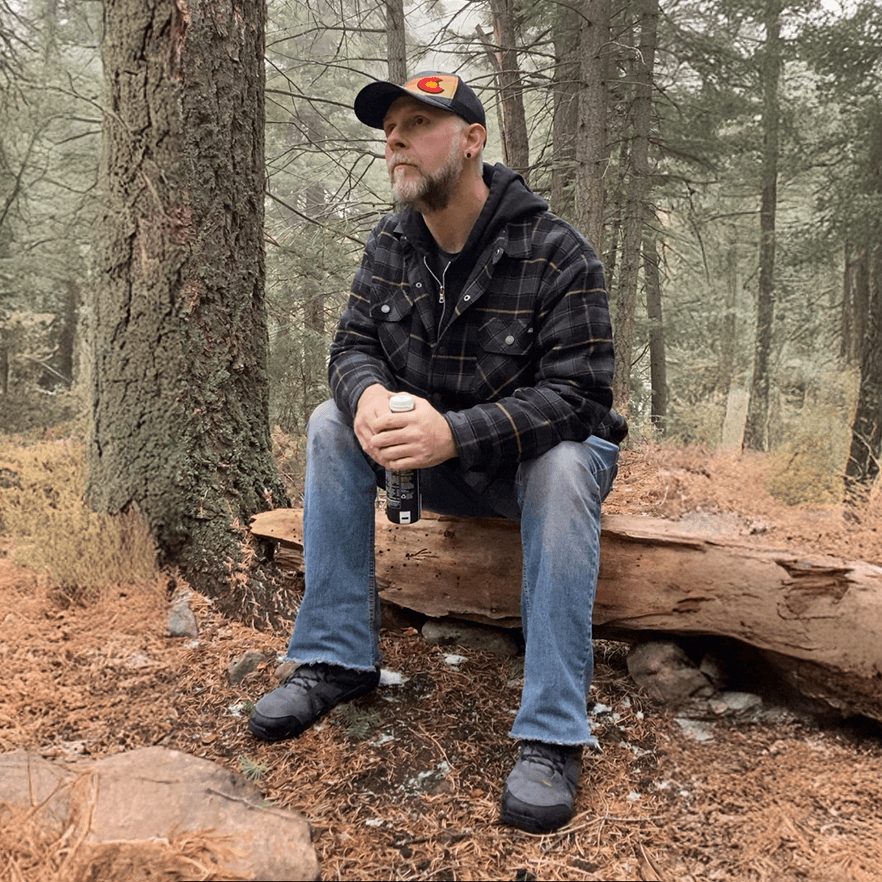
Today we’d like to introduce you to Justin Whedon.
Hi Justin, we’re thrilled to have a chance to learn your story today. So, before we get into specifics, maybe you can briefly walk us through how you got to where you are today?
I’ve always been a “figure it out” person.
I started designing professionally in the early days of the web, when there really wasn’t a roadmap for most of what we were doing. Over the next 30+ years, I moved through graphic design, web development, UX, digital strategy, technology, and eventually organizational strategy and systems thinking.
For the past decade-plus, I’ve been with Information Experts, where I’m now Vice President of Design & Systems Strategy. I originally joined as a designer, but my role gradually expanded because I kept finding myself pulled toward the problems underneath the design work. A client might come to us asking for a new website, but after talking with their people and looking at how the organization actually worked, I’d often discover that the real problem was their information architecture, an inefficient process, disconnected systems, or simply that nobody had stopped to ask what users actually needed.
That realization eventually led me to develop what I call Organizational Investigation, a practice built around a simple idea: before you invest in another solution, make sure you understand the problem you’re actually trying to solve.
More recently, AI and automation have become another part of that work. I’m fascinated by what these technologies can do, but I’m even more interested in figuring out where they genuinely belong and where a simpler solution is better. I’m continually learning, experimenting with Python, AI development, automation, and other emerging technologies.
Outside of my professional work, I also founded Adventure Acres Foundation, a nonprofit focused on getting young people outdoors through citizen science, environmental stewardship, and hands-on learning. That’s become another expression of something consistent throughout my life: curiosity, learning, connecting seemingly unrelated ideas, and trying to leave things a little better than I found them.
Looking back, my career doesn’t feel like a straight line, and I’m glad it isn’t. Design taught me to understand people. Technology taught me how systems work. Consulting taught me how organizations work. And more than three decades of constantly learning has taught me that I don’t need to know the answer when I walk into a room. I need to know how to find it.
That’s probably the best description of where I am today: I investigate complicated problems, connect the dots, and figure things out.
I’m sure it wasn’t obstacle-free, but would you say the journey has been fairly smooth so far?
Definitely not a smooth road, but I think that’s been valuable.
One of the biggest challenges has been learning how to adapt when the thing that worked yesterday suddenly doesn’t work anymore. I’ve worked in technology for more than 30 years, which means almost everything I originally learned how to do has changed, disappeared, or been reinvented several times. Staying relevant has required me to keep learning and being comfortable becoming a beginner again.
Information Experts was probably one of the biggest professional examples of that. The company had built much of its success around large government contracts, and when that landscape changed dramatically, we had to rethink what the company could become. I helped shift our focus toward smaller organizations, recurring services, and a more resilient way of operating. That experience pushed me well beyond design and into strategy, systems, operations, and solving whatever problem happened to be in front of us.
I’ve also learned that one of the harder challenges can be recognizing when you’ve outgrown the way you’ve traditionally defined yourself. I spent a large part of my career calling myself a designer because design was the most visible thing I produced. Over time, I realized that the part I enjoyed most often happened before the design: interviewing people, investigating problems, understanding systems, connecting dots, and figuring out what actually needed to change.
That realization eventually led to Organizational Investigation, and it’s also why I continue pushing myself into areas like AI, automation, development, and emerging technology.
So there have definitely been struggles, but the recurring lesson has been that reinvention isn’t something that happens once in a career. It’s part of the career. I’m still learning, still changing, and still figuring out what comes next.
Thanks – so what else should our readers know about your work and what you’re currently focused on?
My work is difficult to fit into one box, and I’ve realized that’s actually one of my strengths.
I’m currently Vice President of Design & Systems Strategy at Information Experts, but my work extends well beyond traditional design. I spend a lot of time investigating complicated problems, interviewing people, understanding how systems actually work, identifying root causes, and connecting people, processes, and technology to create better solutions.
That can mean redesigning a digital experience, improving an inefficient workflow, introducing automation or AI, reorganizing information, developing a new process, or sometimes discovering that the solution someone initially asked for isn’t actually the solution they need.
That way of working led me to create Organizational Investigation, an independent practice built around the idea that organizations should understand what’s really happening before investing time and money into fixing it. I think of it as the work that happens before traditional consulting: investigate first, then determine what actually needs to change.
I’m also the founder and Executive Director of Adventure Acres Foundation, a nonprofit focused on connecting young people with nature through citizen science, environmental stewardship, and outdoor education. Building it from an idea into a 501(c)(3) and developing partnerships with schools, municipalities, nonprofits, and community organizations is something I’m particularly proud of.
What probably connects all of my work is curiosity. I love learning new things, whether that’s AI, automation, programming, environmental science, or an entirely unfamiliar industry. I’m not particularly interested in being the person in the room who already knows everything. I like being the person willing to ask questions, connect the dots, and figure out what to do next.
If there’s one thing I’d want people to understand about my work, it’s that I’m less defined by a particular discipline than by the kinds of problems I like to solve. Give me something complicated, ambiguous, or stuck, and that’s usually where I do my best work.
We’d be interested to hear your thoughts on luck and what role, if any, you feel it’s played for you?
Luck has definitely played a role, but I think I’ve learned that luck tends to become more useful when you stay curious and open to unexpected directions.
Some of the most important opportunities in my career came from conversations, relationships, or projects I never could have planned. A project that started as a website might lead to solving a much larger organizational problem. Someone I met through one piece of work might introduce me to an entirely different opportunity years later. Even some of my biggest professional challenges ultimately pushed me toward work I probably wouldn’t have discovered otherwise.
I’ve had bad luck too, of course. Projects disappear, industries change, businesses struggle, and plans don’t always work. But those experiences have taught me to adapt rather than become overly attached to a particular path.
I think the best thing you can do is create more opportunities for good luck to find you. Meet interesting people. Learn things that have nothing to do with your current job. Try projects you’re curious about. Say yes occasionally when you don’t completely know where something will lead.
Looking back, my career makes much more sense in retrospect than it ever did while I was living it. I certainly didn’t have a 30-year plan. I just kept learning, building relationships, following interesting problems, and trying to recognize opportunities when they appeared.
Contact Info:
- Website: https://jwhedon.com
- LinkedIn: https://www.linkedin.com/in/jwhedon/