
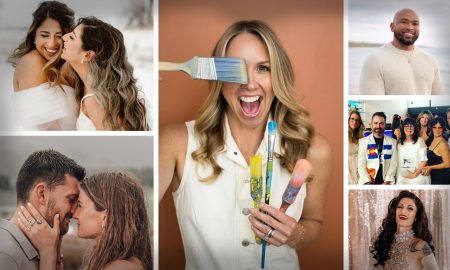


Today we’d like to introduce you to Kelly Bidstrup Graham.
Hi Kelly, thanks for joining us today. We’d love for you to start by introducing yourself.
I started playing piano at the age of four. Fast forward to age seventeen where I started teaching my own private piano studio. I ambitiously started my own business (against the wishes of my mother) which ultimately grew to a studio of nearly thirty students learning piano, voice, violin, flute, and guitar. My students performed two concerts a year and I developed a yearly summer camp for kids that wound up informing my bachelor’s thesis work and ultimately took me to my classroom teaching career, (My mom got on board, and was one of my biggest supporters.) Part of my success was that I chose to do things differently, and try to give students what I wish I had had as a growing musician.
Ever since I can remember, I was making up songs, stories, and ultimately writing music, I would write songs for friends’ birthdays, for any event, talent show, etc. When I started teaching privately, I made original composition one of the cornerstones of my teaching because it was something I had wanted to do so badly, but no one taught me. I had to ask for it, I had to fight for it, and in so many ways I taught myself. This focus on composition led me to my bachelor’s capstone project which was a study of composition in educational music curriculum and a sharing of the work I had been doing with students to get children as young as four to compose their own original music. Part of my passion for this came from my original intention to study composition in college, however, I applied for the program and was not admitted. Rather than delaying my graduation, I took a different path of a thesis and a marketing minor. The thing that struck me the most with applying for the composition program and ultimately not getting in, was the fact that in the course where one develops their portfolio to apply to the program, I was the only woman. My “mentor” was an old white man, who was extremely critical of me. I remember feeling lesser than my peers, I remember hearing praise for them and their ideas, when my mine were criticized as too simple, not good enough, and there was no “mentoring” to help me improve and reach those ambiguous standards he held me to.
As I went on teaching privately, and then ultimately working in a classroom setting launching the Early College of Arvada’s music and theater program, this inequality, this fact that misogyny was ruling the creation of music always lurked in the back of my mind. I would challenge my students to name composers they knew, then challenge them to name a woman. Later, as I became even more aware, those conversations then opened up to asking them to also attempt to name a person of color who’s a composer. This then branched into theater, where I could not unsee the vast numbers of white male writers, producers, directors, and leading characters present in every production. Meaningful stories centered around real women, just were not present and my hypothesis was that we write what we know, so if only white men are telling stories, that is the only perspective we see.
As the rose-colored glasses were lifted from my eyes, I started looking for more ways I could fight this reality. The first outlet I found was writing my first musical, Not Just Anything. It’s the story of an ensemble of diverse women navigating the theater industry, exploring the consequences of only having white men in positions of power. The show is based on my own personal experiences and stories from other women demonstrating the reality that men, white men, are a valuable commodity, and women, no matter how talented, are a dime a dozen and disposable. Once I wrote the show, and it was in a place where I needed a staged reading, I started looking around the Denver theater scene for opportunities to make that happen. What I discovered was that straight plays have a wide variety of places to be read, critiqued, and improved, but no one wanted to touch musicals. At the same time, I was seeing some people self-finance and produce productions of their musicals with mixed results. Seeing this disparity, I talked with those closest to me in the theater world and I made the decision to launch the Colorado New Musical festival in the spring of 2020.
My mission with this festival was to tell untold stories, focusing on stories, writers, and composers who are not typically represented in the musical theater canon. We managed to successfully get started despite Covid coming into our lives. That first year we did the festival remotely, broadcasting via Twitch. Then for year two, we partnered with Backstory Theater’s new theatrical programming for adults, Wellspring. In year two, submissions more than doubled, and we were blessed with an incredibly diverse panel of writers and composers from around the country and even the UK! The goal for the festival and Wellspring partnership, as we go into year three, is to continue to grow, featuring more stories and expanding offerings for creators. In the first two years we did staged readings of full musicals, as well as a showcase night. Moving forward we are excited for do more with the showcase model during the summer festival, then, choose one of those show’s featured to do a full workshop production with Wellspring the following spring. As Wellspring’s programming expands, we are looking forward to teaching and giving opportunities to tell these important stories from authors and composers who otherwise might not have a platform or resources to do so.
This festival is giving our community the opportunities I wish I’d had and with every endeavor, we are working to be more inclusive, more diverse, and more aware of how we can meaningfully tell these important untold stories. I currently am finishing my master’s in Theater at CU Boulder where I’ve conducted a study of music direction for musicals, where there too I am working to bring a more feminist perspective to the scholarship because it is sorely lacking. We need more women and folx of color telling their stories, directing, producing, and composing. I am a maker of art and opportunity, and I will continue to pursue outlets and projects that tell important stories that are not typically told. Make art my friends, because it matters.
Can you talk to us a bit about the challenges and lessons you’ve learned along the way? Looking back would you say it’s been easy or smooth in retrospect?
My story thus far as not been a smooth road, nor has it been a straight one. In so many ways I am incredibly lucky, I have two loving a supportive parents, I never really wanted for anything, I know that I have benefitted from a lot of middle-class white privilege. The struggles I have faced have been because of a lack of compassion or empathy from authority figures, coupled with blatant and rampant misogyny. I also routinely have been underestimated. With every heartbreak, with every no, with every awful encounter, I turned it into a lesson which I have applied to my teaching and leadership. I faced issues in my last two years of high school, where teacher’s instead of lifting me up, instead of approaching me with compassion, instead of acknowledging my talents, decided to put me down and penalize me for poor choices. I needed love, I needed help, I needed to be acknowledged for my talents and fostered in my outlet. Every absence, every late morning was a cry that went unanswered by the people I needed the most. When I became a teacher, I realized that some of what I dealt with from teachers amounted to forms of sexual harassment, along with just plain poor teaching practice. There were even some instances where I was just taken advantage of, like not being good enough to make it into a particular ensemble, but then also being named in sub plans as someone who can play piano and run a rehearsal.
As I moved to college and my first job waiting tables, I was routinely gaslighted that I wasn’t good enough to achieve what I was working towards. I was frequently told if I got it, it was because it was a favor to me or because they were being nice. I dealt with being the only woman in my class wanting to pursue a composition degree, where in classes and mentoring sessions I was put down, instead of being lifted up, and ultimately was not admitted into the program. I had to eventually come to the realization that I could be a composer, that I could do what I wanted without a special degree in the field. But that took time, I didn’t write anything for a solid year after that rejection because I felt like if I couldn’t get into this program if they really had nothing positive to say, I must be terrible at this.
I have always been a hustler, pursuing multiple projects at one time. I ran my own bartending business for a while, where I distinctly remember someone coming up to me and asking who I worked for, then the look of shock and embarrassment on their face when I told them that I worked for myself. I also worked for a horrific principal who actually caused me trauma that I had to process once he left the school. He found ways to not pay me, he found ways to undermine me, he would pull me into his office for threatening conversations, he normalized abusive student behavior toward me, and I learned he had plans to fire me once I finally grew a spine and knew he was a problem.
Routinely in my life, it has been one step forward and two steps back, which only a few moments where the one step was bigger than the two backward. The only option I’ve seen is to keep moving forward, learn from the mistake or from the problem, and look for the next opportunity to shine, even if it means creating that opportunity for myself.
Can you tell our readers more about what you do and what you think sets you apart from others?
My work is varied, I dabble in a ton of different things. The things I am most known for are being a pianist and a teacher. I am an experienced accompanist and performer; I am also a singer in addition to being a multi-instrumentalist. In all of my work, I am known for encouraging original and new works. At the Early College of Arvada, I facilitated one concert a year where all the music was original compositions, mostly from students, but also included my own works and works from alumni, and all the plays were original stories written by the performers. Telling untold stories is so important to me. I am the person who will point out how un-feminist theater and music has been and continues to be, and much of my creative work centers on that idea. My first musical, Not Just Anything focuses on various types of women in theater and their struggles. I am looking forward to a workshop performance of the show in spring of 2022 with Wellspring.
I have gotten the opportunity to be a theatrical performer in the Denver area, mostly performing in ensembles, my most notable role was as Mrs. Vernon-Williams in the regional premiere of Cry-Baby the musical. I have also been a music director for youth theater as well as regional theater productions of I Love You, You’re Perfect, Now Change, The Great American Trailer Park Musical, and Sweeney Todd. One of the things I am most proud of in those pr0fessional productions I music directed, is that the casting was either even male/female or female-heavy. Some of which was the nature of the piece, but for Sweeney, it meant asking the director to think of some roles differently, and how to build ensembles differently with female tenors.
I am also incredibly proud of the theater program I built at the Early College of Arvada, some highlights from that was an original divsed musical called Betty’s Inferno (a take on Dante’s Inferno where Betty (Beatrice) has to save Dante), a partnership with the Pinnacle Charter School and Wonderbound that resulted in an original production of Coraline as a stage play and winning one of 10 free licenses nationally to produce Chicago the High School Edition. Covid, unfortunately, destroyed that partnership, but in spite of that, we managed to take our production of Noises Off (which was supposed to go up in March of 2020), and produce it as a virtual show, live-streamed to audiences across the country. It was absolutely insane, I still don’t know how we did it, it honestly was a miracle of tech and theatrical willpower. We followed that up with the production of a movie musical during the 2020/2021 school year, we produced the musical Prodigy, written by Denver educator Jenni Stafford and composed by Willem Osthyusen. It was an incredible learning experience taking what we knew about theater and translating it to film and audio recording. We partnered with alumni and local professional actors and technicians to create this incredible piece, which tells an all-important story of mental health in artists.
This already was mentioned elsewhere, but I am also incredibly proud of the Colorado New Musical Festival, and apparently, people in the Denver theater world know of me because of it, and that is a weird thing for me. But it is a cool opportunity, I am thrilled about the work we’re doing, and I am honored it is going noticed.
Lastly, I am finishing up a master’s in Theater at Cu Boulder where I’ve done a study interviewing music directors from across the country about music direction in musical theater. It is an area of study with very little scholarship, and the female perspective on the profession in academia is basically non-existent.
I think what sets me apart is that I am a jill of all trades, there is very little I can’t do or haven’t really done. In all the work I do I have a laser-like focus on storytelling, leadership, and feminism. I want to be a role model, I want to be a mover, I want to be a part of what evokes change in my community no matter how big or small.
What makes you happy?
There is so much that makes me happy, spending time with my husband, friends and family is huge. I have two dogs I adore and love to snuggle with when I’m feeling low. I just recently gave birth to my first kiddo, and his little pipsqueak noises make my heart sing. I love seeing my students and former students do creative and incredible things, it brings me so much joy to see them use art for healing, for fun, and for meaning. Making art makes me happy. At the start of the pandemic when we went into lockdown and I was teaching remotely I made the decision to sing thirty songs in thirty days, using one of those almost bingo tile looking things people were using to post songs or create playlists. I did it initially to keep my skills up and to have a reason to practice and perform so I wouldn’t get rusty. I thought that I might not finish because we all thought at that time it’d be two weeks and then we’d be back to normal. But of course, that didn’t happen, so I wound up singing/playing one song a day for thirty days. It gave me some structure, it gave me a goal, it gave me a project. It was what I needed to maintain my mental health during the crisis and keep my spirits up.
Contact Info:
- Email: conewmusicalfest@gmail.com
- Website: https://www.conewmusicalfest.com/
- Instagram: https://www.instagram.com/ilove_apiano/?hl=en
- Youtube: https://www.youtube.com/channel/UCeg7UkfUBobJ1nGKwLAkiaw


Image Credits:
Kelly Bidstrup Graham
Keith Graham
Popular
-

The Trailblazers: Rewriting the Narrative
-

Celebrating the Spotlight: Kaytee Shashore Turns Milestones Into Momentum
-

Humanity in the Machine: Alexander Raye Pimentel’s Cyborg Recall Questions the Cost of a Data‑Driven World
-

Raemi Anderson on Courage, Caution, and Answering the Call of the Landscape
-

Hidden Gems: Local Businesses & Creatives You Should Know


