
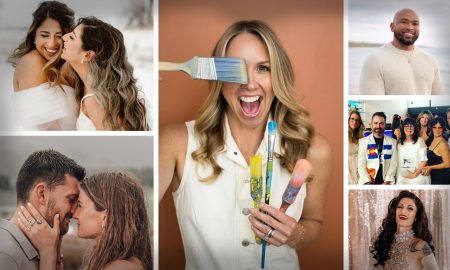


Today we’d like to introduce you to Natasha Pavlovich.
Hi Natasha, thanks for sharing your story with us. To start, maybe you can tell our readers some of your backstories.
For as long as I can remember, I’ve had a passion for living a healthy lifestyle and helping others do the same. Growing up, I had the privilege of being born into an affluent family and was fortunate to have access to good quality education, healthy foods, involvement in sports, and a safe home environment in which to thrive. Even with all the resources and support I had around me, the stress and pressure of being a competitive cross-country runner and high-achieving student led me down a path of suffering from anorexia and bulimia for several years. While what I wanted the most was to live a healthy and well-balanced life, it was extremely challenging to battle the thought distortions and self-destructive behavior patterns that gave me a sense of control over my life at the time. It wasn’t until I injured my hip as an NCAA Division 1 collegiate cross-country runner, that I realized the importance of changing my habits so that I could finally become the role model for healthy living that I so badly wanted to be for others.
My decision to stop running catapulted me into a self-discovery mode that I never experienced before. I had the opportunity to do a deep dive into questioning who I wanted to become and uncover the stories I was telling myself that were holding me back from realizing my full potential. With the help of mentors, therapy, and lots of self-reflective journaling… I was able to tame my inner critic and embrace a spirit of compassion, empathy, and loving-kindness towards myself. This process of self-acceptance and learning how to develop a healthy relationship with food, set me free and healed me from the anorexia and depression that no longer served me. As you can imagine, this was an extremely transformational time for me and has played a major role in my decision to pursue my Master’s degree in Public Health and ultimately, the career I have chosen as a Certified Health Coach and Founder of Health Styles. Healing my relationship with my body and food also allowed me to pursue other athletic ventures I had always dreamed of with a whole new mindset. Examples include: competing in triathlons, bodybuilding competitions, and running a full marathon. Developing a healthy mindset allowed me to change my habits and gain the confidence I needed to overcome obstacles that I never thought were possible. This personal journey has ignited my interest in helping others do the same.
Once I became a Health Coach, I never looked back. Having the opportunity to work with individuals from all ages and backgrounds, find empowerment in seeking healthier behaviors and overcome obstacles to reach their goals is the most rewarding career I could ever ask for. Using a client-centered approach, I honor my clients as the experts of their own lives, while guiding them through a process of self-discovery and mindfulness that ultimately leads to positive and long-lasting results. Whether it be losing weight to feel better in clothes, lowering A1C levels to prevent future health complications, or building a healthy relationship with food and exercise, my coaching program is there to help clients reach their fullest potential.
We all face challenges, but looking back would you describe it as a relatively smooth road?
The path to getting where I am today has definitely not been easy and I’m grateful for that. I don’t think we truly get to experience our greatness or discover what we are made of without enduring some kind of struggle. I believe that our setbacks and failures are opportunities for growth and without them, we can’t achieve our full potential. With that said, one of the hardest things I’ve struggled with over the years is imposter syndrome and that feeling of not being “enough.” While I’ve always had hard work ethic and achieved a lot in my life, there’s been this lingering feeling of doubt that I somehow didn’t earn those achievements or it was all out of luck. It has taken a lot of self-work to uncover what these feelings of inadequacy are rooted in so that I could take steps to rewire old beliefs about myself that were untrue. Even though it’s been painful to face this challenge, I’m grateful for the growth it has allowed me to do within. Being able to overcome a struggle like this has given me perspective that I wouldn’t have had otherwise and that perspective is part of what makes me relatable coach. The gift of the struggle is that I am now able to empathize and connect with others who suffer from imposter syndrome on a deeper level than I would have if I never experienced it in the first place!
Thanks – so what else should our readers know about your work and what you’re currently focused on?
Before I knew I wanted to become a health coach, I knew I wanted to help people live healthier lives in one way, shape or form. This resolve took me in several directions in the healthcare field from being a Farm to School Program Manager, to selling respiratory medical devices, and even working as a Healthcare Field Representative for Congresswoman Doris Matsui. The knowledge and experience I gained from these diverse roles helped lead me to where I am today, working as a Certified Health & Life Coach and growing my own business. One thing I love about being a coach is that we are a community of people who are committed to a lifestyle of life-long learning and evolving our perspectives on different topics, in order to show up at our best for our clients. In an effort to further my expertise and knowledge as a coach, I have recently become re-certified as a Personal Trainer with NASM and am in the process of becoming a Board-Certified Health and Wellness Coach through NBHWC. In addition, I am constantly educating myself on topics that enhance and deepen my coaching conversations with clients such as: healing trauma, facing shame and fear, mindfulness and meditation techniques, eating mindfully, and the art of habit change.
While my coaching sessions cover a wide range of topics, driven by the interests of the clients I’m working with and their goals, I’m particularly passionate about helping people develop healthy relationships with food, exercise, and their bodies. Many of my clients come to me struggling with their weight and body image and want to learn how to make peace with food and themselves, so they can live more fully and confidently in the world. I also work with clients coming in with more serious medical challenges that include but aren’t limited to: pre-diabetes, hypertension, obesity, and high cholesterol. While my role as a health coach is not to diagnose or treat these conditions, I act as a partner to their medical team to help them build healthier eating and exercise habits, which can have a profound impact on their overall health and well-being.
I believe one of my gifts is that I am a Highly Sensitive Person, which allows me to connect deeply to others and empathize with their complex emotions, challenges, and obstacles. When coaching, I lead with a curiosity and compassion that allows clients to feel safe, warm, and heard no matter what they are expressing. I also like to think of myself as a “conscious coach” and seek to help clients become more intimately connected with their inner selves and the world around them so that they are no longer living life on auto-pilot. I view health in a holistic way and understand the very important interrelationship between our physical and mental health. The process of shifting our inner dialogue and stories we tell ourselves can be so empowering and transformational for many.
Do you have any advice for those looking to network or find a mentor?
I think at first, it’s just about being open to having conversations with people in your community about what you are into or passionate about. Eventually, you’ll come across someone interesting, who maybe is doing what you want to do or has a skill you need to learn in order to get to the next level of your personal/professional development. Then, the next step is being brave enough to get curious and ask them if you can pick their brain. I’ve done this several times by asking people out to coffee (on me). People LOVE talking about themselves and usually enjoy giving back to someone who is eager to learn, so it may not be as hard as you think to get them to meet you! Another great form of indirect mentorship I’ve found is to invest in learning about what you are interested in by subscribing to blogs, taking a masterclass or webinar, and listening to podcasts. There are so many fantastic ones out there and you can learn a lot from them.
Pricing:
- $1200 for 90 Day Program (12 Sessions + Unlimited texting)
Contact Info:
- Email: tasha@healthstyles.coach
- Website: https://www.tashahealthstyles.com/
- Instagram: @health_styles_


Image Credits
Kira Whitney
Popular
-

The Trailblazers: Rewriting the Narrative
-

Celebrating the Spotlight: Kaytee Shashore Turns Milestones Into Momentum
-

Humanity in the Machine: Alexander Raye Pimentel’s Cyborg Recall Questions the Cost of a Data‑Driven World
-

Raemi Anderson on Courage, Caution, and Answering the Call of the Landscape
-

Hidden Gems: Local Businesses & Creatives You Should Know


