


Today we’d like to introduce you to Richard Mapes.
Hi Richard, so excited to have you with us today. What can you tell us about your story?
I’ve been reflecting on this question a lot lately. There are so many stories that come together that make us who we are, but recently I’ve been connecting to some of the stories that I lived when I was younger to try to answer this question.
When I was last babysitting my 6-year-old nephew, I watched him playing with Legos while he orated the details of an epic tale unfolding in his mind. The living room around him faded away and was replaced with castles, spaceships, epic battles, dinosaurs, alliances, betrayal and victory! It was exhilarating and connected me to the foundational elements of creativity that I fell in love with when I was his age; the capacity for art to set the stage for new stories to unfold around us. It wasn’t long before I sat on the floor next to my nephew and began to help him build the stories he was exploring in real time. I couldn’t help myself; his enthusiasm was infectious, and his sound effects really sold me on the vision.
My professional background is in Architecture, but I’ve always been a bit of an outsider in disciplinary design tracks. If I’m being honest, I’ve been a weirdo in almost any environment for as long as I can remember. I’ve always cared deeply about unusual things: why certain tints of gray make me uncomfortable, why only women wear high heels, why songs play on repeat in our heads sometimes, and other details too small for other people to seriously ponder. But professionally, I suspect the reason that I find myself an outsider is that I never lost that excitement for storytelling where the only design constraint I had was the limits of imagination itself. Since then, the kinds of stories I’m interested in exploring have matured, but I still think about what kinds of stories the world is staged for. Every given space we experience day to day is built on stories. But which ones?
After exploring the touchpoints between architecture and other adjacent disciplines, namely various kinds of performance spaces, I began to gain some clarity on how I might set the stage for stories yet-to-be lived. It is now my mission to ‘make room’ for new stories wherever possible. My interdisciplinary approach to art is guided by a laser focused approach to leveraging new technologies to spatialize stories in novel, engaging and moving ways. Anywhere there is a story worth telling, I am enthusiastic about setting the stage for it to flourish. Perhaps I can show my nephew that dreaming doesn’t stop when we get older. It just gets more interesting when we invent new ways we can invite people into imagination and show them what new worlds are possible – in real time.
Can you talk to us a bit about the challenges and lessons you’ve learned along the way. Looking back would you say it’s been easy or smooth in retrospect?
It has been smooth in the sense that a roller coaster’s track is smooth, but you still get thrown against the restraints with every whip and loop. The g-forces of a creative career are insane. At times you feel weightless. At others you feel so heavy that you can’t stand. But I think the hardest part of my journey has been that, unlike a roller coaster, I can’t always see where the track is taking me.
I love Rebecca Solnit’s book, “A Field Guide to Getting Lost.” At the beginning of the book, she reflects on Meno’s question to Socrates, “how will you go about finding that thing the nature of which is totally unknown to you?” Socrates’ answer, to paraphrase, is another question ‘why do you care about answers to questions you don’t know to ask?’ Solnit says this misses the point of Meno’s question entirely. She argues that the question isn’t about how to “know the unknown… but how to go about looking for it, how to travel.”
Sometime in grad school, a moment I can’t quite pin down, I realized that I needed to invent a more personal approach to my creative practice of ‘making room.’ I had already traveled such a long way – with a cumulative ten years of experience as an architectural designer and halfway through a Master of Architecture degree – only to realize that I wouldn’t arrive in the place I imagined when I was young. It was a slowly-churning, life-changing experience, where everything around me slowly became more and more unfamiliar. It felt a bit like venturing beyond some intimidating thresholds that I’ve had to cross at different points throughout life: coming out of the closet, ending relationships that weren’t meant to be, realizing I had to adapt when I didn’t get the job I really needed, moving back home when I couldn’t make rent. Life is full of those moments, isn’t it? Often, when we shine a flashlight into the dark, we still can’t see what’s coming next, and there is nothing more terrifying than the unknown.
When someone senses they’re in the wrong place, they’ll sometimes venture out in search of someplace new. At first, it starts with some small, simple detours. Not quite reckless abandon, but loosening the tether just far enough to explore something new; traveling with an intent to return. In my twenties, some of this travel was literal – going to new places in the world to see how other people live and to learn to care about what they care about. In grad school, the exploration was in my creative process. I’d make sketches of places built on absurd stories: what would a house look like if the Architect’s client was a ghost? What would a memorial for an event that has yet to occur feel like? How would a colony of sentient dust bunnies under my bed build a city – or conversely, how do I know they hadn’t already? These conceptual thought experiments were exciting to explore, and each time I embarked on a voyage I became emboldened even more. They allowed me to trace out the edges of architecture, and to stumble upon the moments it touched something different.
In those uncertain moments in grad school, had I been alone, I would have stayed there in uncertainty, and stopped exploring. But I knew from my little detours that exploration enabled me to arrive in places I had never expected to go, with people I had never intended to meet, and with joy I never thought I could find.
My first experience in theater design was with Michael Sample and Jan Paul Kaim. Holli Hornlien, whom I had met by chance when I volunteered to participate in a career fair for high school students at Inner City Arts in LA, introduced me to the duo. At first, working in the theater as an assistant projection designer felt strange. The play was called “Maestro’s Treehouse,” whose tagline was “a play about hope.” It felt odd at the time to hear people talking about hope and love around every corner. I wonder if anyone ever caught me with a puzzled look on my face as I tried to discern whether these people were serious – if they really meant what they were saying: in Sample’s words “it’s all about love, and love is all about.” It felt like I had stumbled into a fairytale. It was unlike any professional experience I’d previously had – unfamiliar to me once again.
One day, while working on the mezzanine of the theater, I looked down at the actors on stage during a rehearsal. I remember seeing their love illuminating the stage. Well, Azra, our lighting designer was illuminating the stage – but she got the hue and intensity of love just right. I remember feeling the actors’ excitement to share hope with the children of Downtown LA. Something clicked. I wanted my whole life to be about this: love and hope. In that moment, I looked around and realized that I had found something new: both a new place in the world, and a new space within me. And it was flooded with light.
When we go searching in the dark, there is no way to know what lies ahead. Sometimes we find ourselves in life changing situations, confronted with the unknown. Other times, in the sweetest moments, we look around and realize we’ve arrived in a place we’ve been searching for, but didn’t exactly know how to find.
Thanks – so what else should our readers know about your work and what you’re currently focused on?
I am an independent artist who creates mixed-reality immersive environments with an emphasis on storytelling. This means I am somewhat flexible in the territories I work in. Some of my favorite projects have been in theater, but I’ve also worked in public art with architectural projection mapping, exhibition design, event design, and as a consultant for mixed reality experiences.
I am passionate about leveraging technology to tell stories in novel ways, so I blend existing physical spaces with context-specific projection or mixed media installations. In the last theater production I worked on, “Phaeton’s Driving Test,” my collaborators and I used projection mapping to make it appear as though the whole theater launches into the sky alongside Phaeton when they wrangle their father’s muscle-car dragster to pull the sun over the morning horizon. In short, I use my background in architecture and new technologies to spatialize stories in novel ways – “making room” for the unexpected in various kinds of performance spaces.
Since I’m an independent artist, I have the opportunity to work with community partners in unique ways. Most specifically, I work to make immersive experiences accessible. There’s a common fear that immersive art is too complicated or expensive. I strongly believe that the most powerful form of storytelling is inviting people into the story itself. Some of the most inspiring projects I’ve done need that kind of power that matches the size of my collaborators’ passion, but they’re not sure how to achieve it. I love helping people expand their horizons by crafting meaningful experiences with resources that are within reach.
For example, I’m currently working with the Denver Public Library on the re-launch event of their program “One Book One Denver.” It’s an unusual space for an immersive artist to work in, but it makes perfect sense considering the role of storytelling, imagination and exploration. We’ve recently been talking about what it would be like to invite an audience to join the featured author on a late-night drive, as he tells us a bit more about his memoir. Using commonplace display devices, we’re going to take hundreds of people on an adventure with the author! Come join us at the launch event at 6pm on August 8th at the Denver Central Library!
Do you have any advice for those just starting out?
There are a few things that I wish I could have told myself when I was younger, and that I make a conscious practice of reminding myself now:
1) Hold on. Nothing stays the same forever.
2) I can’t run, I can’t hide. Success is coming for me.
3) Life isn’t what I expected. I wouldn’t change it for anything.
4) Big things are made of a thousand little yeses.
5) There is always enough room.
Contact Info:
- Website: https://www.richardmapes.net/
- Instagram: https://www.instagram.com/richardmapes/
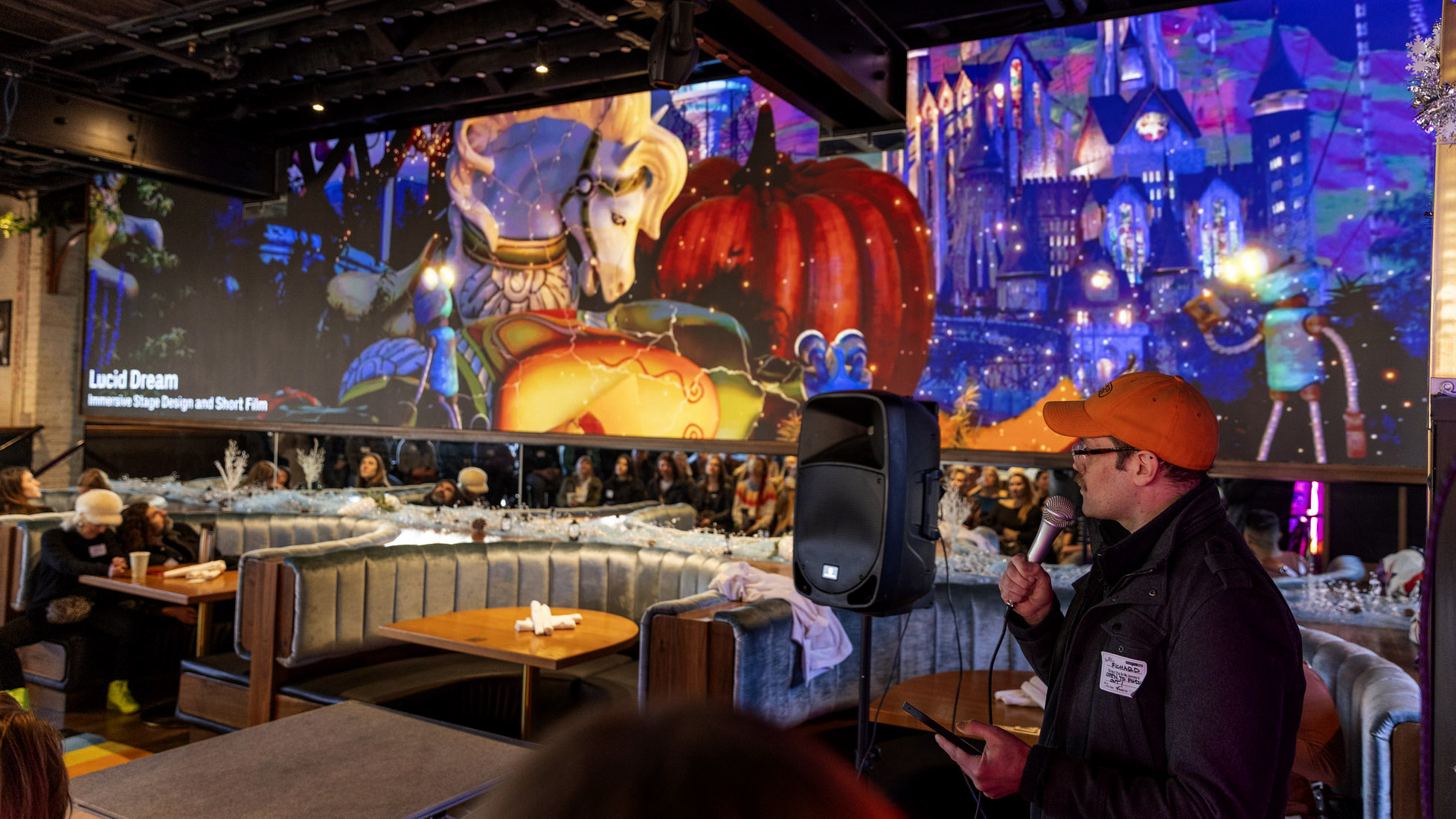


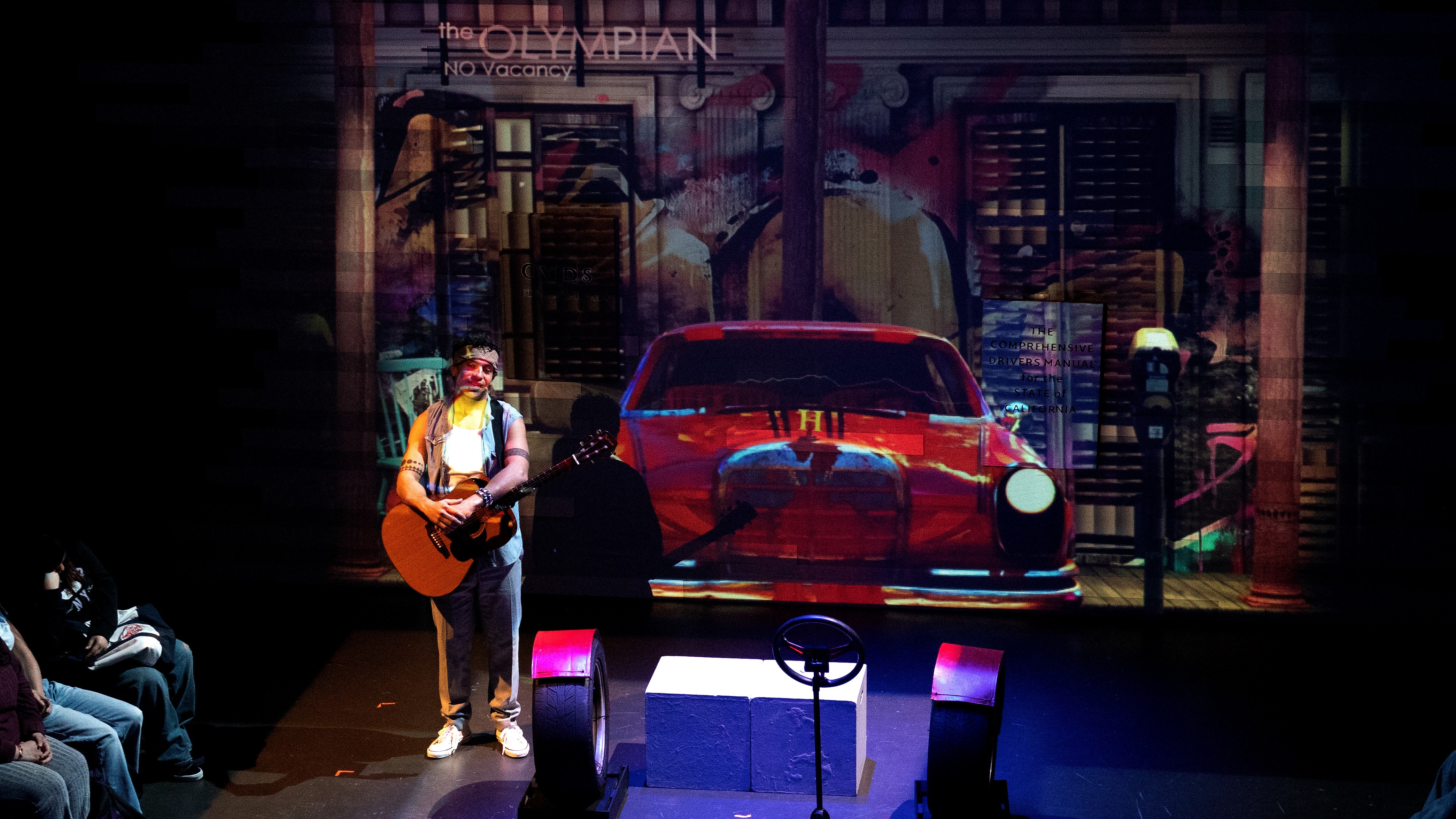
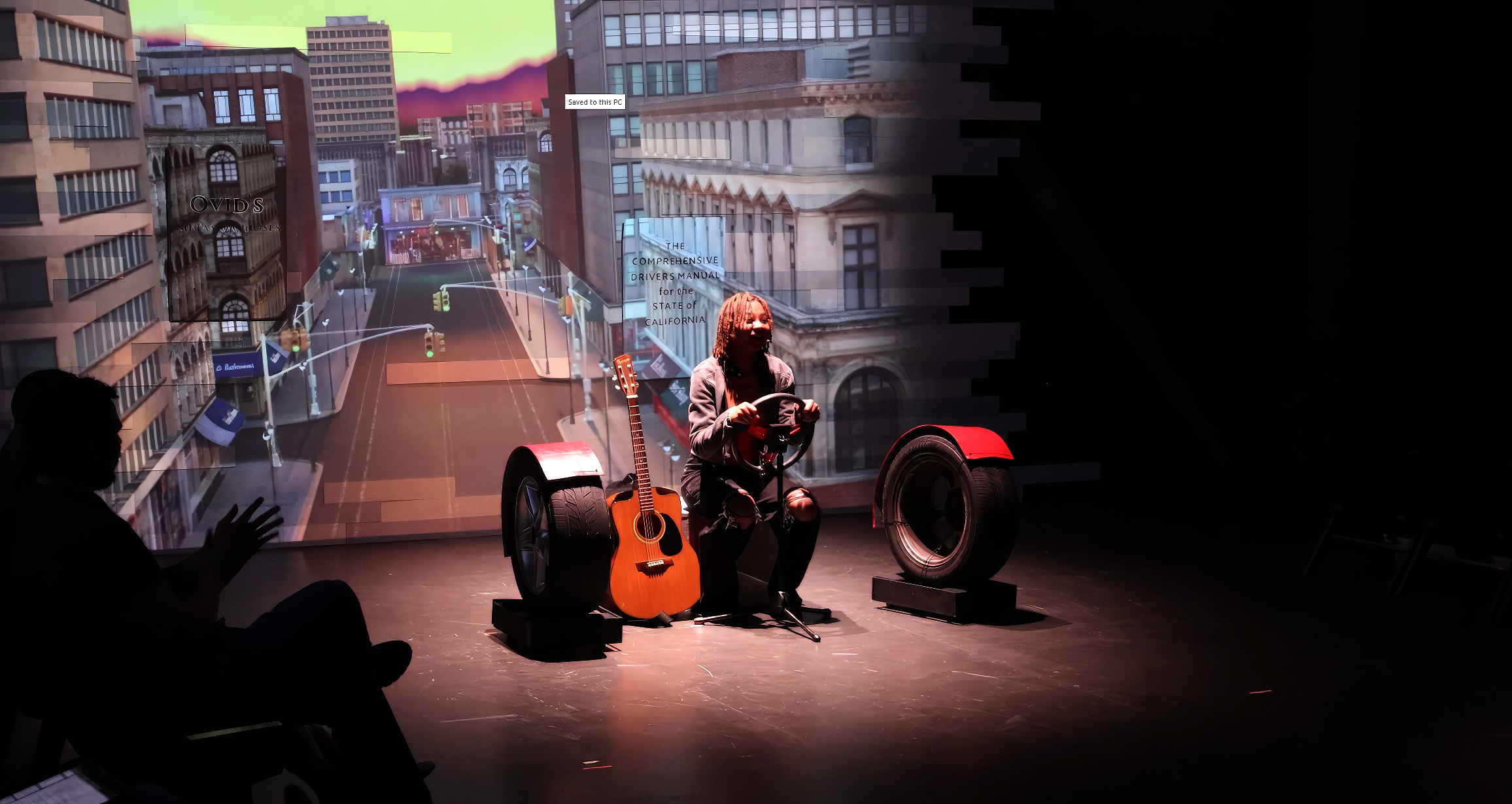

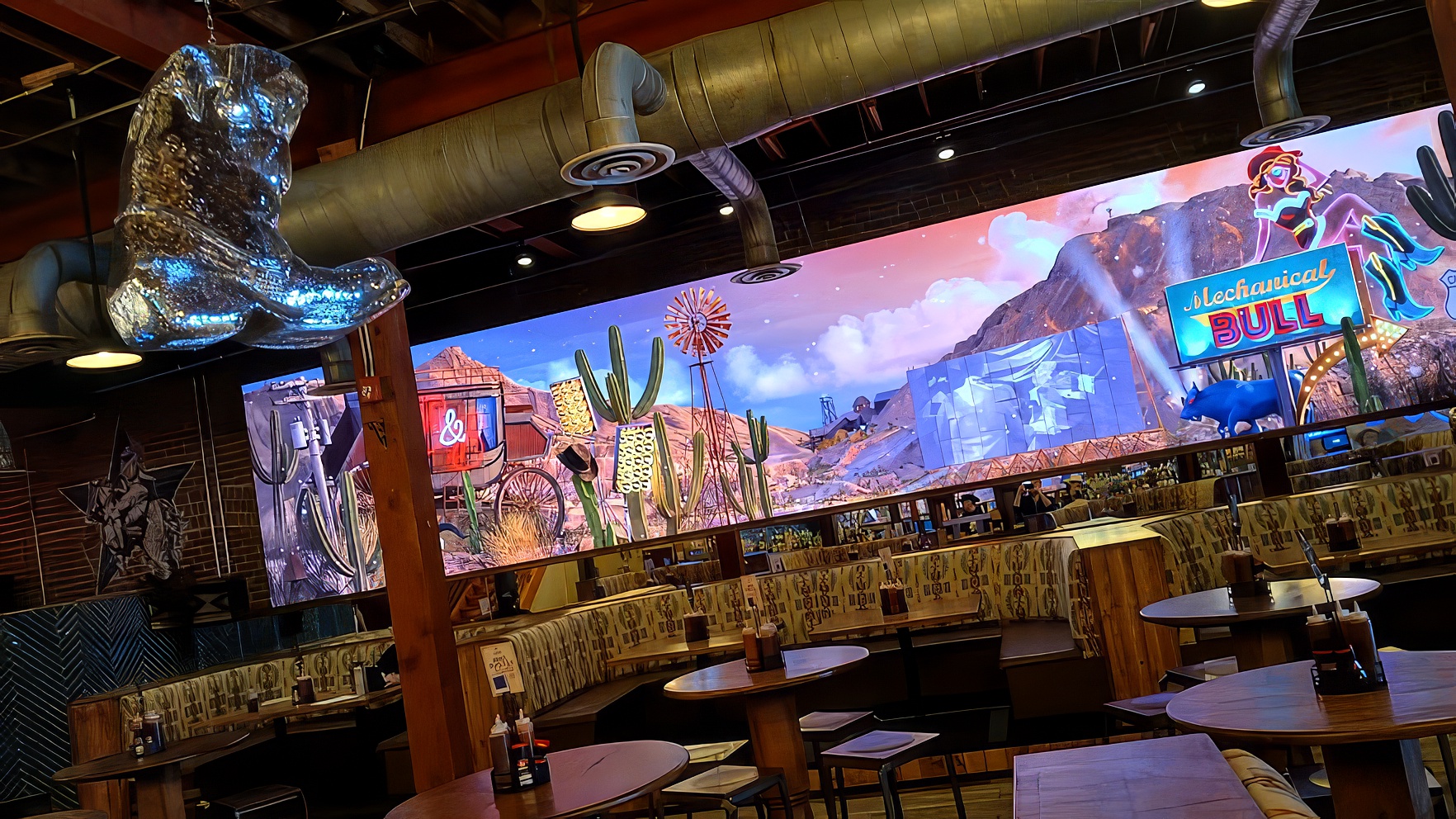
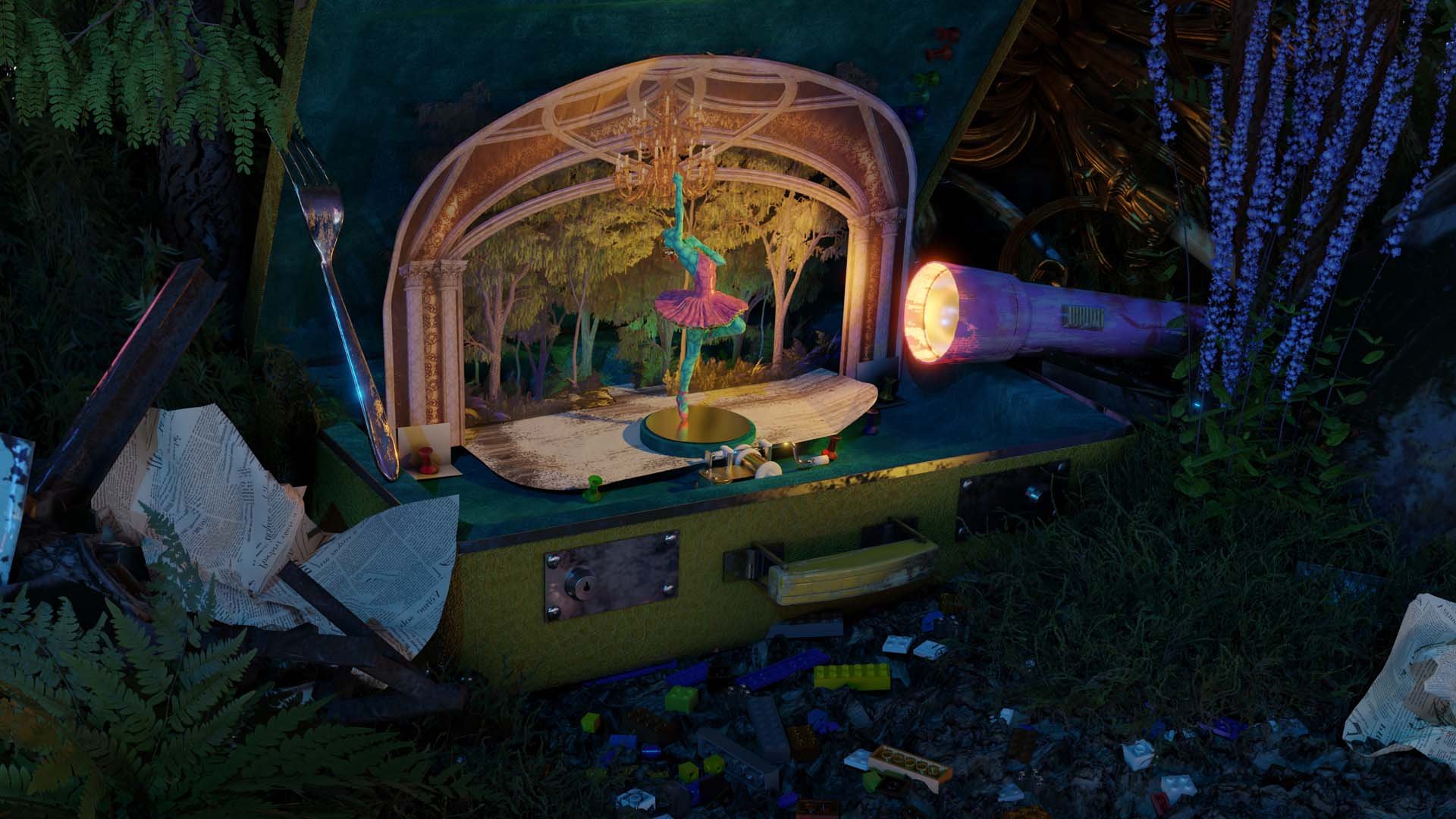
Image Credits
1: Photograph by Justin Levett
2: “Maestro’s Treehouse,” Inner City Arts, LA. December 2023.
3: “Maestro’s Treehouse,” Inner City Arts, LA. December 2023.
4: “Phaeton’s Driving Test,” Inner City Arts, LA. April 2025.
5: “Phaeton’s Driving Test,” Inner City Arts, LA. April 2025.
6: “Working Drawing,” The Denver Theater District, Denver. June, 2024 – December, 2024.
7: “Untitled,” Belles & Boots, Denver. March, 2024 – present.
8: “Lucid Dream,” Short film. Presentation TBA.
Popular
-

The Trailblazers: Rewriting the Narrative
-

Celebrating the Spotlight: Kaytee Shashore Turns Milestones Into Momentum
-

Humanity in the Machine: Alexander Raye Pimentel’s Cyborg Recall Questions the Cost of a Data‑Driven World
-

Raemi Anderson on Courage, Caution, and Answering the Call of the Landscape
-

Hidden Gems: Local Businesses & Creatives You Should Know


