



Today we’d like to introduce you to Silvia Minguzzi.
Silvia, we appreciate you taking the time to share your story with us today. Where does your story begin?
Capoeira Canavial is a group based in Minneapolis, MN, and Fort Collins, CO, that practices and promotes the Afro-Brazilian martial art of capoeira. Canavial means “sugar plantation” in Portuguese—a powerful reminder of the African slaves in Brazil who secretly practiced capoeira and maculelê in those fields as acts of resistance and resilience.
Our group is led by Mestre Lucas Corvo (Luiz Carlos Assunção Silva), from Rosa Neto, Eunápolis, Bahia, Brazil. He has practiced capoeira for more than three decades, traveling across Brazil, three countries, and two continents, and currently lives in Eden Prairie, Minnesota. Mestre Lucas began training at age nine after being inspired by a local capoeirista, Moezeis. He earned his first cords with Mestre Mano and later trained with Mestre Renato, receiving his cordão azul in 1993. After teaching and opening his own academy, he moved to São Paulo, where he trained with Mestre Canguru, became Mestre tercero grau in 2023, all while maintaining strong ties to his home community in Eunápolis,
I joined Capoeira Canavial in 2011 in Fort Collins with my husband, Daniele Tavani, under the guidance of Mestre Lucas Corvo. My friend Renzo Cavalieri, who had trained in California, introduced us to the group. At the time, it was a bold move—I had moved to Fort Collins in 2009 in a wheelchair after a severe herniated disk. Still, I felt that Capoeira was exactly where I was meant to be.
For a while, I managed my pain while training, until one day my back gave out completely. I ended up bedridden and had to undergo back surgery. With months of physical therapy and the unwavering support of my Mestre and group, I returned to training and earned my second belt that same fall. Since then, ten years have passed—my back pain never returned (thanks to both my surgeon and Capoeira), and I’ve continued to train and grow with my community.
We opened a Capoeira chapter at Colorado State University, taught classes large and small, and participated in countless cultural and international events to share this art form. Capoeira is not just a martial art—it’s music, language, history, and community. It demands physical and emotional commitment and teaches values of discipline, creativity, and belonging.
Capoeira is not just a martial art; it’s a community. Every class brings its challenges—sometimes people struggle to attend regularly, keep up with the physical demands, or understand the unwritten rules of the art. But being part of the class means more than showing up: it means training, learning music, singing, helping others, organizing events, and contributing to the group’s growth. That shared commitment is what makes Capoeira so rewarding.
Capoeira is music, language, history, and resilience. It demands physical and emotional commitment while teaching discipline, creativity, and belonging.
Capoeira also connects people across the globe. Wherever I travel—Vietnam, Germany, Italy, Belize, Mexico, Brazil—I look for a local Capoeira group. Even if we don’t share the same spoken language, the shared rhythm, movements, and rituals of Capoeira make us family.
Capoeira is a lot—and it’s beautifully a lot.
Thanks for sharing that. So, maybe next you can tell us a bit more about your work?
I’m from Rome, Italy, and I graduated with a degree in Italian Literature, with a major in Communication and a minor in New Media and Cinema. I moved to the U.S. in 2005 and began working as Art Director for WET – Women Expressive Theater in New York (https://wetproductions.org/). When I got the job, I had to Google what an Art Director actually does, and I was immediately captivated. One of WET’s most successful programs was Rick Takers, a free educational initiative for teenage girls that strengthens self-esteem through media literacy and leadership skills (http://wetproductions.org/education.htm). That experience sparked my passion for supporting underserved youth and using my position to make a meaningful impact.
In 2009, I moved to Colorado and earned an MFA in Graphic Design at Colorado State University, despite having no formal art background beyond my bachelor’s. Those three years were transformative: I realized I wanted my artistic practice to engage with immigration, human rights, women’s rights, and equality. My dissertation, Perspectives (http://www.silviaminguzzi.com/wp-content/uploads/2018/02/MFA-thesis_Perspectives.pdf), serves as my artistic manifesto, exploring “perspective” both technically and philosophically while reflecting my commitment to human rights.
Professionally, I have worked in museums and galleries, first at the Gregory Allicar Museum of Art, then as Director of the Hatton Gallery and Digital Performing Space at CSU. Today, I work at CSU Libraries as a Designer and Exhibition Coordinator, combining exhibition curation, inclusive storytelling, and community engagement.
I am particularly proud of co-creating Social Justice through the Arts (SJTA) in 2018 with Dr. Caridad Souza (Ethnic Studies), Dr. Patricia Vigil (Alliance Partnership), and Lisa Morgan (CSU Dance) (https://womensstudies.colostate.edu/social-justice-thru-the-arts. SJTA engages high school students from underserved communities in exploring social justice concepts through storytelling, movement, image theatre, visual arts, creative writing, digital media, and film. Students examine identity, history, and community through a framework of power, privilege, and difference, culminating in collaborative art projects. The program was recently recognized by CSU’s College of Liberal Arts for its impact and remains one of my proudest professional achievements.
Currently, I continue this work at CSU Libraries and will co-lead the winter 2025–2026 study abroad program in Ghana—Ghana Community Engagement—focused on Transnational Solidarity through Youth Development. I bring expertise in exhibition curation, inclusive storytelling, and community engagement to help students amplify local voices and narratives.
On a personal note, I began practicing Capoeira, an Afro-Brazilian martial art, in 2010 while recovering from serious back injuries. Today, I run a Capoeira studio in Fort Collins with Renzo Cavalieri and Daniele Tavani. My Capoeira name is Onda (Wave), reflecting my journey of resilience and growth.
Let’s talk about our city – what do you love? What do you not love?
What I love most about Fort Collins is my community, which brings together people from all over the world—India, Armenia, Palestine, South Africa, Brazil, Mexico, Central America, Argentina, Africa, and Europe. Even though we come from far away, we’ve become like family: our kids grow up like cousins, and we share food, work, worries, passions, and support.
What I find challenging is the city’s smaller scale and limited diversity compared with a place like New York or Rome. I miss the bustling markets, crowded subways, and the incredible food that thrives when migrants are a central part of the community. That said, Fort Collins has a lot to offer if you look for it—and sometimes you have to create what you don’t see. That’s what I’ve been doing: seeking out and building the communities and experiences I want to be part of.
Pricing:
- Kids class Drop-In child: $8 | Drop-in child+parent: $12
- Kids Monthly pass: (Give what is right for you) – Only Child: $20-40 | Child+Parent: $30-60
- Regular Class: Drop in: $15 | Monthly pass: $40-80 (Give what is right to you)
- Beginner Series: 4 classes $40
Contact Info:
- Website: https://capoeiracanavial.com
- Instagram: https://www.instagram.com/capoeiracanavial/
- Facebook: https://www.facebook.com/CapoeiraCanavial/
- Youtube: https://www.youtube.com/channel/UCQptff75XXiK5d81dH_WISA
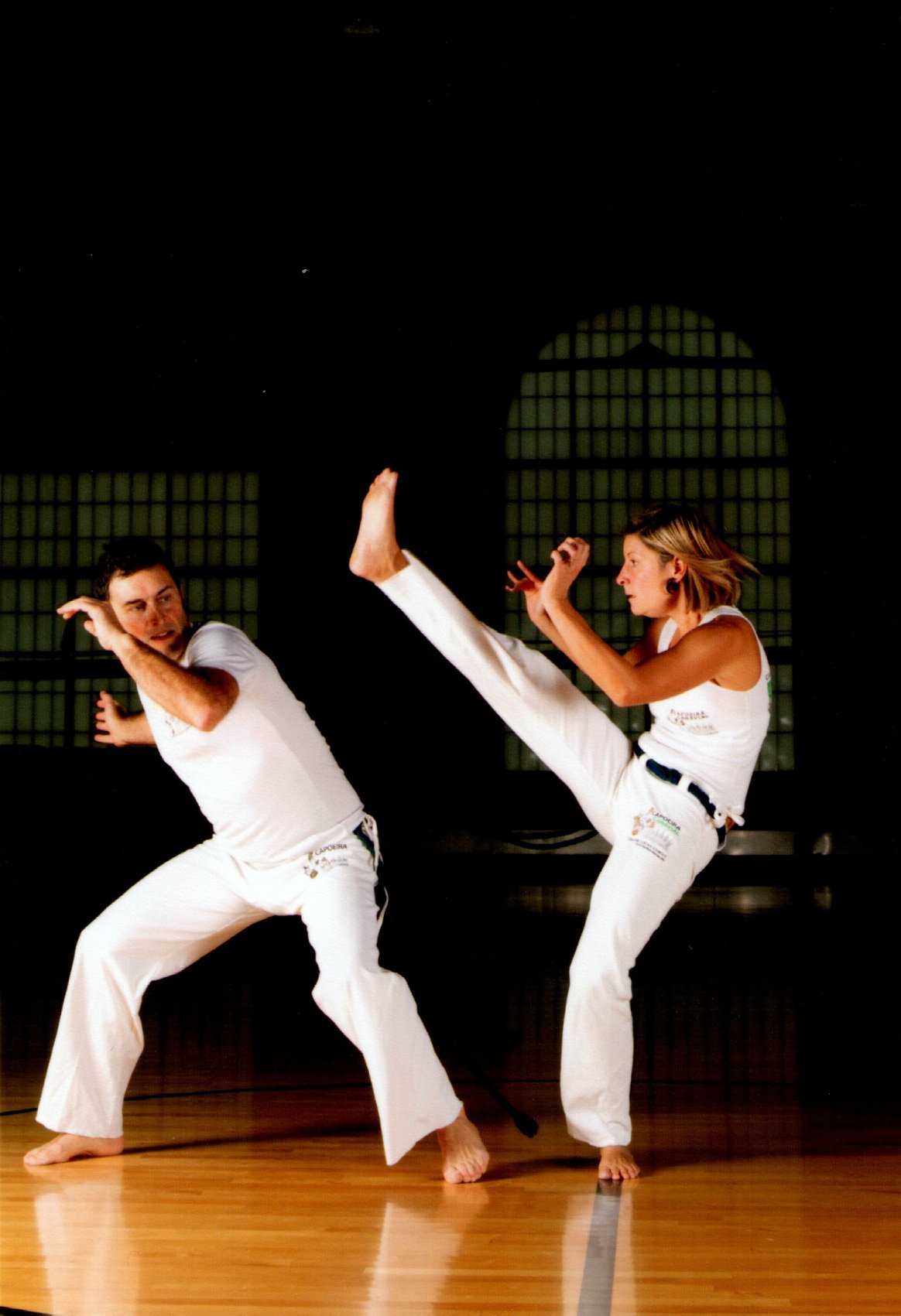

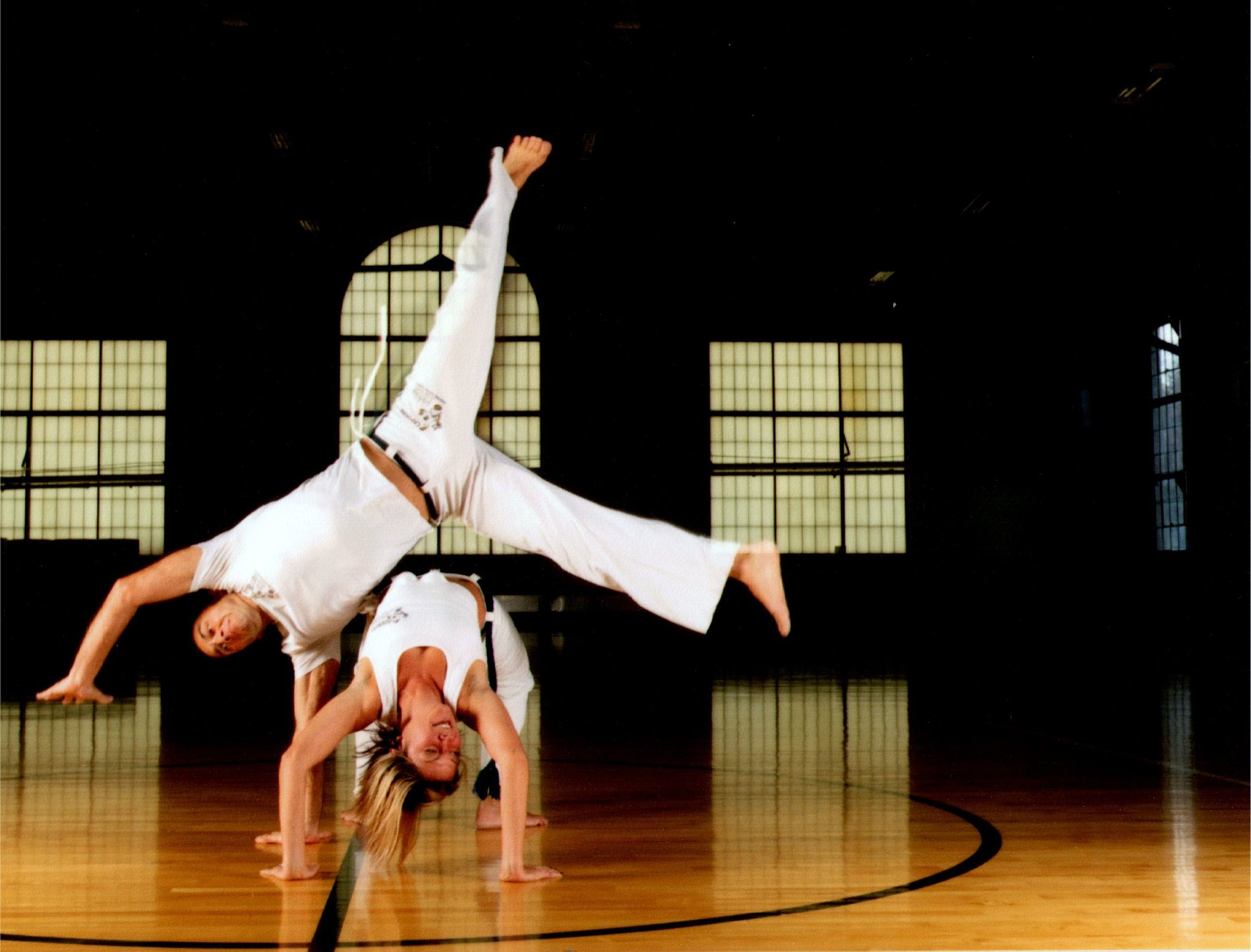


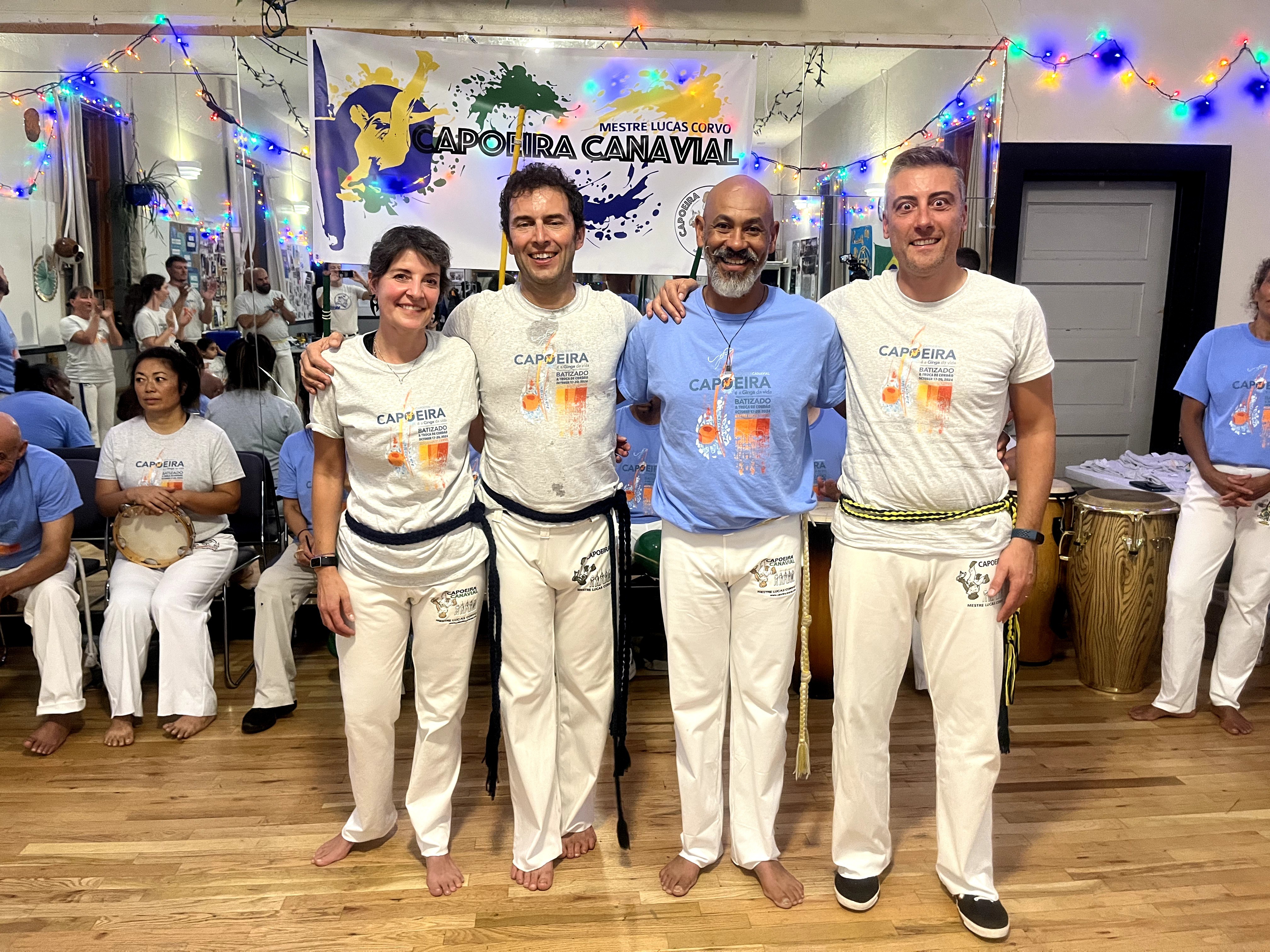

Image Credits
Capoeira Canavial group: students and Batizado
Popular
-

The Trailblazers: Rewriting the Narrative
-

Celebrating the Spotlight: Kaytee Shashore Turns Milestones Into Momentum
-

Humanity in the Machine: Alexander Raye Pimentel’s Cyborg Recall Questions the Cost of a Data‑Driven World
-

Raemi Anderson on Courage, Caution, and Answering the Call of the Landscape
-

Hidden Gems: Local Businesses & Creatives You Should Know


