



Today we’d like to introduce you to Avery Collura.
Hi Avery, can you start by introducing yourself? We’d love to learn more about how you got to where you are today?
When my husband, Dan, died suddenly while we were traveling overseas in 2023, it split my life wide open. We had been living in Melbourne, Australia for nearly a decade—and we were both in the midst of a long battle with alcohol addiction. His death was sudden, shocking, and came at a time when neither of us was well.
Afterward, everything moved fast. I flew back to the U.S. immediately—no time to process, no sense of what came next. I leaned hard on the support of my folks, my brother, and my sister-in-law. And then, within just a few months, the rest of it unraveled too. I found myself navigating not just grief, but addiction, identity collapse, and the complete unmaking of the life I thought I was building.
I spiraled. I powered through. I numbed.
I had a night with alcohol that scared me—and scared my family. That moment led me to an inpatient program that changed everything. I met myself for what felt like the first time. I learned the language of healing—in my own body and in community.
I got sober. I began working with expanded states of consciousness—first as a client, then as a practitioner-in-training. I studied somatic therapy, psychedelic integration, and trauma-informed facilitation. I trained with organizations like Innate Path and the Center for Medicinal Mindfulness, and slowly, I began weaving my own way of working.
What emerged from that process became Jellyfish Journeywork—a coaching practice devoted to helping people move through life’s heaviest moments with honesty, compassion, and clarity. I work with people navigating grief, recovery, big transitions, and a desire for something more authentic. My method is gentle, structured, and intuitive—anchored in lived experience, not just textbooks.
I’m now expanding my grief offerings to include online and hybrid group programs, and retreat intensives launching in early 2026. These spaces hold the complexity of loss—of people, of identity, of imagined futures—and help people find solid ground again.
Alongside that, I co-lead the Colorado Psychedelic Practitioners Cohort (CPPC), a peer-led group supporting over 500 practitioners across the state. We focus on safe, legal, skillful psychedelic practice rooted in community—not hierarchy or mysticism. Together, we’re building the future of ethical, relational psychedelic care.
I never set out to be here—but I can say with certainty, I am exactly where I am meant to be.
Would you say it’s been a smooth road, and if not what are some of the biggest challenges you’ve faced along the way?
It’s been anything but smooth—but it’s also been incredibly aligned.
When Dan died, everything broke. The grief was immense—but what it uncovered underneath changed me even more. The over-functioning. The drinking. The parts of me that had been surviving, not truly living.
Then something shifted. A switch flipped. I was done drinking.
There was no bargaining, no dragging my feet. It just happened. And still, how many times had I said I was done before? How many “rock-bottoms” had come and gone?
That’s the thing—rock bottom doesn’t make sense. It’s not about logic. It’s not the worst moment, it’s the one where the body finally says: no more. I get it if that sounds confusing. If you’re asking, why now?—stop trying to make it make sense. Drop the story. Get into the body. That’s where the wisdom is. That’s where the healing begins. And that’s why I love this work—because I get to walk with people in that moment. Not to fix it, but to honor it. To help them hear what their body is finally saying.
What followed was a blank canvas—terrifying, yes, but also so full of possibility. Something new opened. A glimmer of hope I hadn’t felt in years. And I was willing to trust it.
With sobriety came clarity. With clarity came intuition. And I was ready to trust my body every time it responded with a ‘yes’.
I said yes to Boulder. To studying psychedelics. To leaving corporate. To building community. To learning how to love again.
The logistics of launching a business while rewiring my nervous system was a brilliant challenge. A lot of grief and a lot of unknowns. But the path itself was clear. I knew I was meant to do this work—I just had to become the version of myself that could hold it.
Now, when I sit with clients in their own unraveling—in their grief, their sobriety, their threshold moment—I don’t try to explain it away. I just meet them there. In the body. In the truth. In the aliveness of something new becoming possible.
As you know, we’re big fans of you and your work. For our readers who might not be as familiar what can you tell them about what you do?
At the core of my work is a devotion to grief. Naming it. Honoring it. Making it a high-priority relationship in my life. Choosing it as a true companion—and creating spaces where others can do the same.
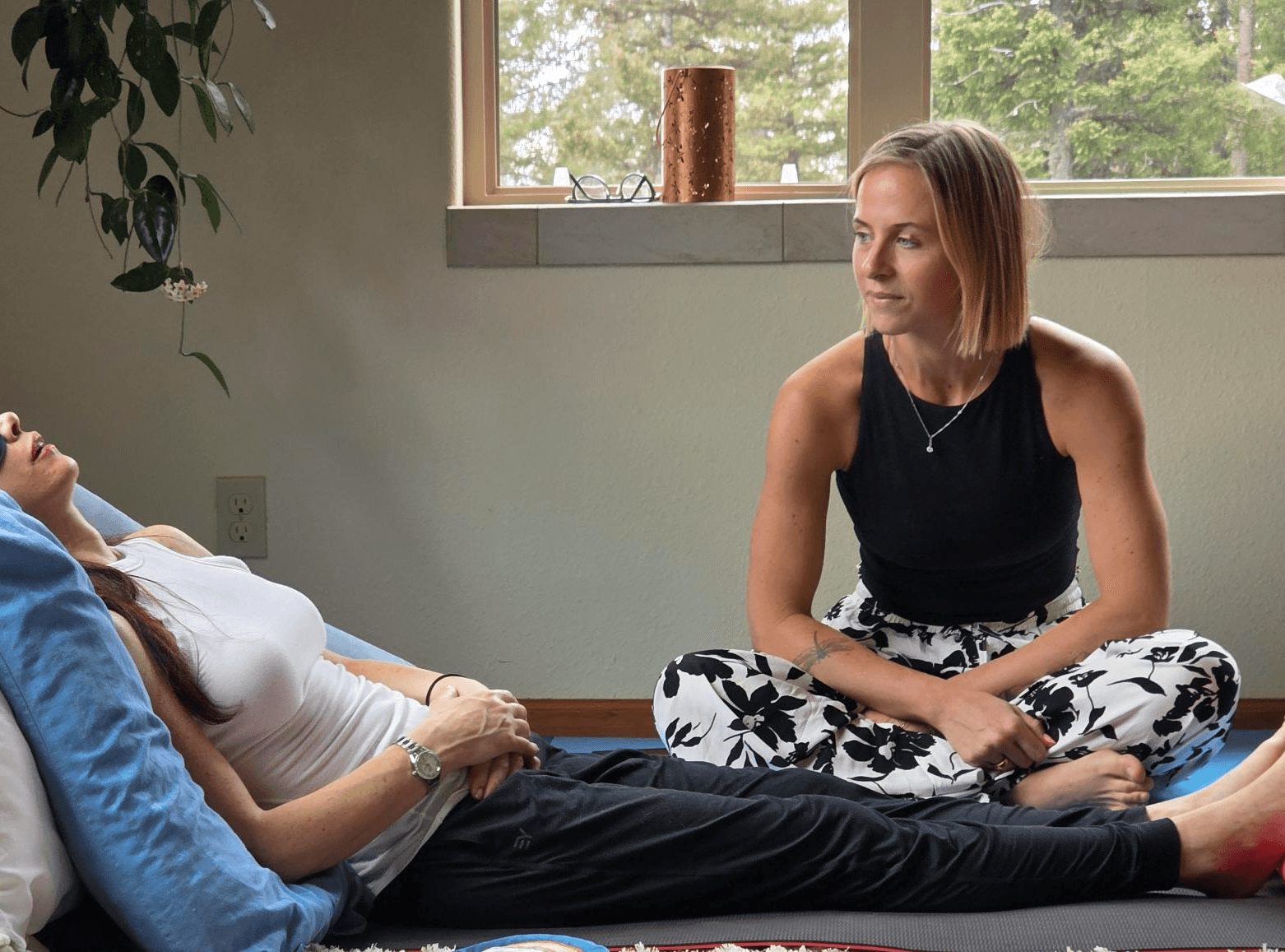
I’m a coach who loves working in the terrain of grief, a psychedelic-assisted therapist, and the founder of Jellyfish Journeywork—a practice that supports people through life’s most tender thresholds with honesty, compassion, and somatic presence.
I work with people carrying loss—of a person, a version of themselves, a future they thought they were building. My grief work is about giving those losses a place to land, to breathe, to move—and to support the brain in remapping attachment structures that have been disrupted.
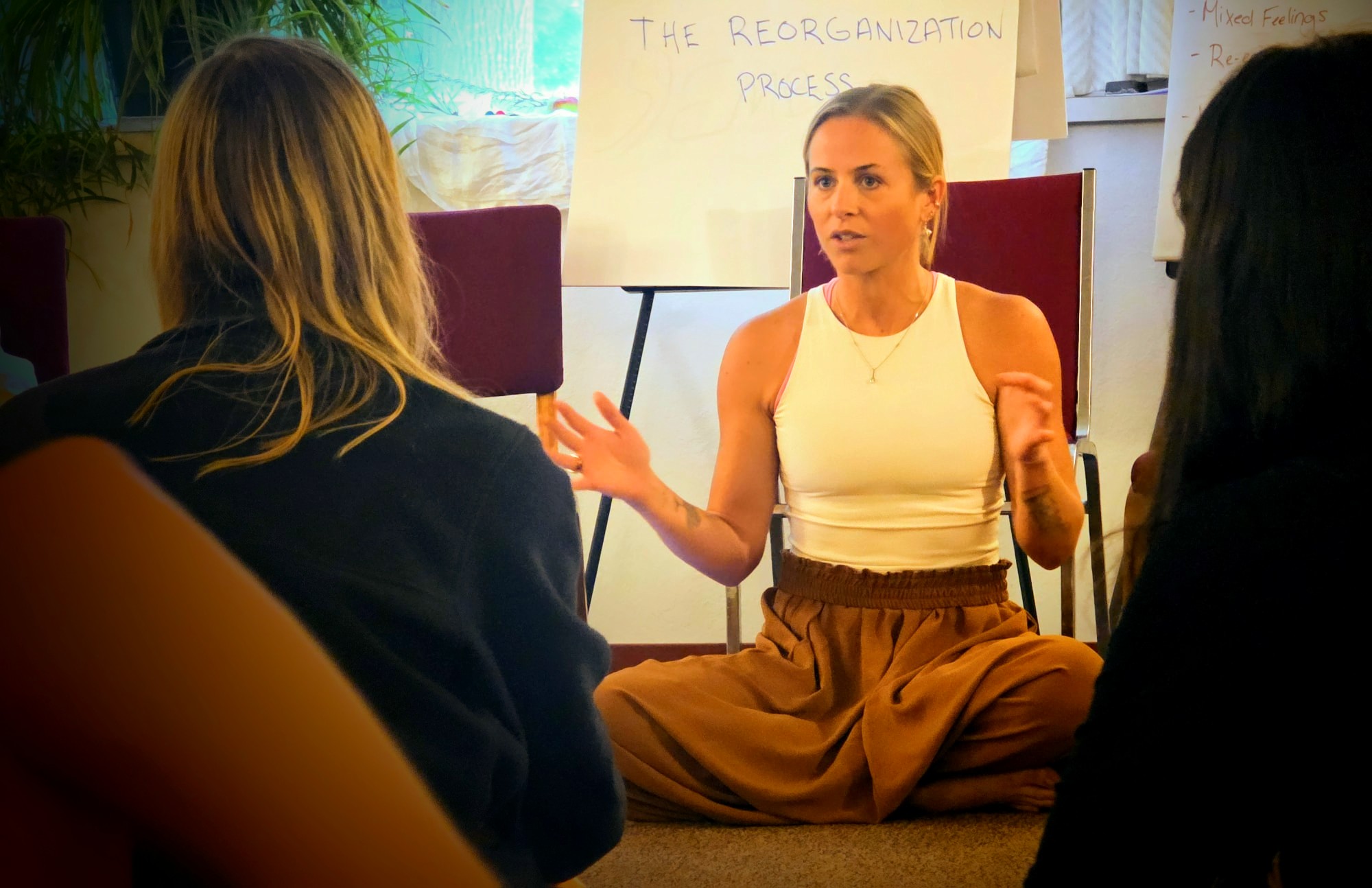
I offer one-on-one coaching, small group programs, and starting in 2026, grief retreat intensives for those ready to go deeper. These offerings weave together somatic work, storytelling, neuroscience, and spiritual integration. I also work with expanded states of consciousness—like low- and high-dose ketamine, DMT, THC, and psilocybin—when safe and aligned. But whether medicine is involved or not, the process is the same: we slow down. We listen to the body. We let grief speak in the language it knows. We unveil, we flow, we alchemize.
What sets me apart is that I didn’t study grief from a distance. I lived it. When my husband died, it broke something open in me—and from that place, this work was born. I know what it feels like when the world no longer makes sense. I know what it takes to rebuild.
What I’m most proud of isn’t the programs. It’s the moments inside them: the tears that are finally allowed. The truths that finally get spoken. The way people leave not “fixed,” but reconnected. Grief changes us—but that doesn’t mean we are broken. It means we are becoming.
What matters most to you? Why?
What matters most to me is honoring grief—not as something to “get through,” but as something to be with.
Grief, when we let it, can be our greatest teacher. It strips away what’s false. It reveals what still matters. It brings us back to the body, to our relationships, to love. My capacity to love expanded infinitely when my relationship with grief changed. And that has reshaped my lens on the world in the most beautiful way.
What matters to me is helping people build that kind of relationship with their grief. One that is alive, dynamic, sacred. I care about creating spaces where grief can be felt—not just understood. I care about weaving grief with attachment theory, mindfulness, psychedelic work, somatic practices, and community—because grief lives in all of those places. It touches everything.
And I care about helping people dance between the ways we grieve: alone, in connection, in stillness, in ceremony, in movement, in silence, in song. There’s no one right way. But there is your way. And it deserves to be witnessed.
This work isn’t about fixing people. It’s about creating the conditions for meaning, truth, and aliveness to emerge in the aftermath of loss. That’s what matters most to me. Because I’ve lived it. And I will keep living it. And I know what becomes possible when we stop resisting grief—and start letting it guide us home. And as Dan and I always said, ‘if we can do this, we can do anything.’
Contact Info:
- Website: https://www.jellyfishjourneywork.com/
- Instagram: https://www.instagram.com/jellyfish_journeywork/#
- LinkedIn: https://www.linkedin.com/company/jellyfish-journeywork



Popular
-

The Trailblazers: Rewriting the Narrative
-

Celebrating the Spotlight: Kaytee Shashore Turns Milestones Into Momentum
-

Humanity in the Machine: Alexander Raye Pimentel’s Cyborg Recall Questions the Cost of a Data‑Driven World
-

Raemi Anderson on Courage, Caution, and Answering the Call of the Landscape
-

Hidden Gems: Local Businesses & Creatives You Should Know


