
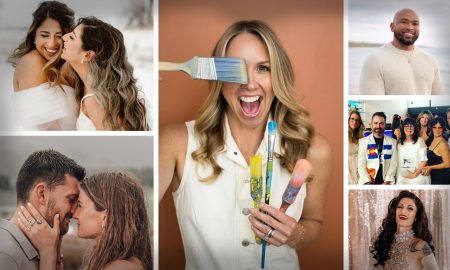


Today we’d like to introduce you to Kelly Singleton.
Hi Kelly, thanks for joining us today. We’d love for you to start by introducing yourself.
I grew up in rural Maryland, surrounded by farms, fields, and animals. From the time I was little, nature inspired me. As a child, I was always drawing. My Mom loves to tell the story about how I once covered her brand-new fridge in doodles. So yeah, art’s pretty much always been part of who I am. I always knew what I wanted to be – an artist. When I was very young, I mostly drew horses because I was horse obsessed – they were the one thing I felt I could actually draw well.
We lived on a two-lane road, right across from a dairy farm and adjacent to a thoroughbred breeding farm. One of their horses even went on to win the Preakness. I used to walk down to the pastures just to watch the mares and their foals. The sad thing is I was super allergic to them. Still am, to a degree. Back then, it was really bad – sneezing, swelling up, the whole deal. But I loved them anyway, so drawing them was my way of being close without actually touching them.
As I got older, I started painting other animals I saw around me – especially birds. I didn’t really get much formal art instruction growing up. By junior high and high school, I was kind of on my own. The schools didn’t have a lot of resources for art, and I was way ahead of the other kids, so I got put into an independent study. Basically, I taught myself.
I ended up going to art school on a scholarship, thinking I’d be learning all the classical techniques and foundations – how to mix paint, study the old masters, that kind of thing. But it wasn’t like that at all. It was more like, “Here’s an assignment, figure it out.” It was a big letdown, but I stuck with it because I wanted the degree. I knew I’d need it to land a job after school. I was realistic enough to know that I wasn’t going to become a full-time fine artist right after graduating.
After I graduated, I worked as a graphic artist for several government contractors at Aberdeen Proving Ground, a military installation in Aberdeen, MD. I did technical illustrations, computer graphics, photography—pretty much whatever was needed. I was there for 23 years, while diligently working on my art in my precious free time (nights and weekends). It paid the bills, but it wasn’t fulfilling, and after a while, it started holding me back. I was getting accepted into more and more major art shows, especially out West, but I was struggling to keep up with my art career while working full time.
Then my husband, Jimmy, got laid off, and it kind of opened the door for us to make a big change. I’d always wanted to move out West before I turned 50, and things were starting to line up with my art. So we asked ourselves: “Do we stay here and Jimmy finds another job, or take the leap now?”
We decided to go for it. I originally wanted to live in Montana to be close to Yellowstone National Park, but Jimmy wouldn’t have been able to find work there in his field, so we landed in northern Colorado – about an hour’s drive from Rocky Mountain National Park. Now, I visit my beloved Yellowstone multiple times a year as it’s within a day’s drive. When in the field, I spend a ton of time just watching animals, taking lots of photos, and soaking up the landscape. It’s where I feel most inspired and most myself. It’s my favorite part of being a wildlife artist.
My work is now featured in several prestigious annual museum exhibitions, including “Night of Artists” at the Briscoe Western Art Museum, “Western Visions” at the National Museum of Wildlife Art, and “Small Works, Great Wonders” at the National Cowboy & Western Heritage Museum. I am currently represented by two esteemed fine art galleries: Montana Trails Gallery in Bozeman, Montana, and The Broadmoor Galleries at the Broadmoor Hotel in Colorado Springs, Colorado.
We all face challenges, but looking back would you describe it as a relatively smooth road?
Definitely not! It’s been one challenge after another.
Early on, I often felt like an outsider. I struggled to relate to my peers, and that sense of isolation followed me into art school. I had high hopes that it would be a place where I’d finally find “my people”- other creatives who shared my passion. But it was a major letdown. Most of the program leaned heavily toward abstract and conceptual work, while I was focused on realism and deeply inspired by nature. I felt more out of place than ever.
Another major hurdle was geography. I was born and raised in Maryland but deeply inspired by the wildlife and landscapes of the American West. I tried to make annual trips to Yellowstone, but the travel was expensive, and there was always the pressure of gathering enough high-quality reference material in a short window of time. It became clear that if I wanted to take my painting career seriously, moving West was essential. That was a big life change, but a necessary one.
For years, I worked full-time as a graphic artist while building my painting career on the side. Balancing the two was exhausting. As I started getting into more exhibitions, my workload became overwhelming. Every bit of time off went straight into painting. Even now, as a full-time artist, I struggle with work/life balance. There’s always a deadline, always something that needs to get done. I have to remind myself to step away from the easel once in a while and reconnect with the outdoors—the very thing that inspires my work in the first place.
And of course, the financial side of being a full-time artist is its own challenge. Sales can be unpredictable – sometimes everything hits at once, and other times, it’s quiet for weeks or months. It forces you to be frugal and develop a strong sense of perseverance.
So no, it hasn’t been smooth. But all of those struggles helped shape who I am – both as a person and as an artist. They gave me the clarity to pursue the kind of work that truly matters to me.
As you know, we’re big fans of you and your work. For our readers who might not be as familiar what can you tell them about what you do?
As a wildlife oil painter, my work is grounded in personal experience. I focus primarily on North American wildlife – animals I’ve encountered firsthand in their natural habitats. That direct connection is essential to my process. I believe you can’t truly capture an animal unless you’ve been with it, observed it, and felt its presence.
I always use my own reference photos – that part of the process means a lot to me. Authenticity matters. Every painting starts with an encounter I’ve had. I’m not just painting an image, I’m painting a moment I experienced.
People often say the eyes in my paintings feel alive – that they have soul. And honestly, that’s the best compliment I could get. I believe animals do have souls, and personalities, just like people. My goal is to bring that out in each piece.
I try to capture everything—the texture of fur, the tension in muscle, the quiet intensity of a gaze. If someone looks into the eyes of one of my subjects and feels a sense of connection – even momentarily – then I feel I’ve succeeded.
If you had to, what characteristic of yours would you give the most credit to?
Persistence, for sure. It’s not a quick climb in the art world – you’ve got to be in it for the long haul. I just keep showing up and doing the work whether I feel like it or not.
Also, a thick skin definitely helps. Artists have to get used to lots of rejection. Not everyone’s gonna love what you make, and that’s fine. I stopped taking rejection personally a long time ago. You just brush it off and keep going.
Contact Info:
- Website: https://www.kellysingleton.com
- Instagram: https://www.instagram.com/kellylsingleton/
- Facebook: https://www.facebook.com/KellySingletonArt/


Popular
-

The Trailblazers: Rewriting the Narrative
-

Celebrating the Spotlight: Kaytee Shashore Turns Milestones Into Momentum
-
Humanity in the Machine: Alexander Raye Pimentel’s Cyborg Recall Questions the Cost of a Data‑Driven World
-
Raemi Anderson on Courage, Caution, and Answering the Call of the Landscape
-

Hidden Gems: Local Businesses & Creatives You Should Know


