



Today we’d like to introduce you to Nicholas Felder.
Hi Nicholas, we’re thrilled to have a chance to learn your story today. So, before we get into specifics, maybe you can briefly walk us through how you got to where you are today?
My growing up was split between Houston, Texas and Atlanta, Georgia. I always knew I was an artist. As early as I can remember, I was obsessed with drawing pictures of people in faraway lands, going on adventures, and falling in love. I started writing stories to accompany the pictures and somewhere around middle school and high school, I decided to try out songwriting and then composing. I now see these two forms of music creation as one in the same, but growing up, I think I compartmentalized and grouped pop music and jazz and R&B in one area and film and Eurocentric classical in another. But either way, music was speaking to me in a way it hadn’t before. I sang in cherub choir at the same time I was drawing and started playing violin in fifth grade. Yet somehow, I think it was the ability to tell stories through another medium that greatly attracted me to music creation. I explored a lot in college, going from film soundtrack to musical theatre to Eurocentric classical to experimental and then found myself returning to my roots after graduation. I didn’t want to choose anymore between the different sides of myself. I just wanted to connect with who I was as a person and artist. So, I suppose I did what many people might do and returned to the beginning—delving into my ancestral history through African American spirituals, gospel, jazz, and folk music. I now blend these styles with my Eurocentric classical training in my compositions. I love singing in my own pieces and writing music about identity, communal joy and healing, and youth empowerment.
In high school, I was old enough to assist with the music program at my church’s Vacation Bible School, an annual weeklong summer camp for K–5 students to participate in Bible lessons, crafts, games, and music making. Each week culminated in a short musical performance with hand motions and dance moves for parents and families. It was my entry point into working with youth, and I simply loved it. For a while, I just thought it was because I enjoyed sharing music with people (and I do). But then one year, the music director was out for a day, and I was in charge of leading 70 students throughout the music classes and assemblies. I just came alive! I remember small group leaders coming up to me afterward, admiring my warm, magnetic, and commanding energy. The more I work with youth over the years—serving as a K–5 literacy tutor, music composition teacher, and arts activism program advisor (to name a few)—and learned from them, the more I realize how much I was meant for this work.
Youth hold so much knowledge and experience and creativity. They know and notice a lot more than we, as adults, give them credit. And though they begin to bottle that energy up as teens, many of them still carry a fire strong enough to incite a revolution. I continue to ask myself questions, like: How do we empower youth to use their voices and express themselves and speak out on social and political issues that directly affect them just as much as anybody else? How do we support them in collective healing and give them the safe space to just breathe and be? How do we help youth learn about their emotions and connect with themselves and others? Some teachers transition to administrative work because they exhausted the limits of influencing change in the classroom. Similarly, I found the limits of effecting change through writing and premiering music. It wasn’t enough. I needed to be in the room with students, teachers, social workers, administrators, counselors, and policymakers.
I now develop and lead music improvisation workshops with high school teens, applying methods from Black American musicians and practices from improvisers and community singing facilitators—artists and psychologists, such as James Oshinsky, David Darling, and Victor Wooten. I guide teens through building blocks of improv, such as call and response and ostinatos (short repetitive ideas) and offer numerous interactive and self-reflective exercises to empower teens’ voices and musical language. Whether students are beginners or experienced performers, exercises, such as ostinatos formed from the rhythmic content of teens’ names, are designed to highlight everyone’s unique talents and abilities. Everyone enters as a teacher and learner.
I believe in empowering young voices in creativity, leadership, and cultivating compassionate relationships both with themselves and each other. Artmaking is just one powerful tool through which this is possible. This is my calling—my mission.
We all face challenges, but looking back would you describe it as a relatively smooth road?
It has definitely not been a smooth road to get to where I am today. I could talk about any number of struggles I’ve experienced—from coming to terms with my Black, biracial, queer identity and finding a space to fully express those parts of myself; to pivoting the year after my master’s when I realized I was no longer interested in becoming a university professor. My life has just been one long, curvy, jagged journey (that may not have even made sense at times), and I wouldn’t change it. My journey, if anything, taught me how to be more human. That being human and building relationships with people is all a process. We’re constantly working on it and learning more every day.
Appreciate you sharing that. What else should we know about what you do?
For the past year and a half, I’ve been leading music improvisation workshops for high school teens to grow in creativity, leadership, collaboration, and social emotional skills. It’s definitely been a journey to reach where I am now. In Winter of 2021, I was earning my master’s in music composition and took a class called “Beyond Boundaries: Radical Black Experimental Music.” The class delved into artists I had never heard of before, like Anthony Braxton, Nicole Mitchell, and Julius Eastman—all artists who tested the limits of the jazz and Western classical spaces to find what most connected with their experiences as Black creatives. Julius Eastman, for example, explored vocal screams, hums, and shouts, to express overwhelming feelings of pain or joy that could not be expressed through any words. I loved this. There were so many times when I wrote songs myself, and the words could not fully encapsulate what I was feeling—emotions that felt bigger than what I could comprehend. I was inspired to write a piece for solo vocalist, sung by myself, called “Skin: Stretching What You Know About Your Being.” This was the first time I had sung one of my own pieces. And although the only word uttered throughout was “skin,” the composition and performance felt very vulnerable. Without words, people only had to focus on the contour of my voice and its imperfections. I intentionally used the word “skin” because I knew it would allow me to meditate from the outermost, surface layer inward toward suppressed memory and insight. When the piece was introduced into a group setting, I noticed our different interpretations and how we fed off each other. I wondered what it would mean to give the performers more agency in the creative space and the freedom to physically move around the room (which is not typical in Western classical music). I then wrote a piece that did that with sections where people could repeat, alter, and recreate melody lines in conversation with each other—just as in gospel music.
A friend of mine immediately said I needed to talk to this community singing facilitator who led similar performances. I attended her “Spiritual Singing” concert a few weeks later and was simply in awe. Kath, the singer, not only led the band of instrumentalists, but also the audience. She used call and response to gradually invite people into the space and participate with their own creativity. It was like church! I knew I had to learn more and how I could bring this to more people myself, so I met with Kath a couple times, and we just sang and improvised together. I had never experienced anything so playful and joyful and natural…not since I was a kid anyway. And here we were communicating with each other on such a deep level through babbling and harmonizing. It wasn’t about the literal sounds we were making but centering where the other person was at in the present moment.
These community singing spaces also do not occur in a vacuum. I’ve conducted extensive research in Black American gospel, jazz, and folk music proving that we, as people, have been communicating in this way for generations. When I taught a music composition and improvisation class for middle and high school students, everything just clicked. I’ve worked with youth all through K12 for several years, but now, my passions for music creation and youth collided. I knew my mission was to empower youth voices, creativity, leadership, and healing through collaborative music improvisation workshops. I now endeavor to start a nonprofit in which the workshops can reach more students and schools and help people connect with themselves and each other.
Can you talk to us about how you think about risk?
Yes, as an artist and creative, I have definitely taken some risks haha. In the Summer 2022, I was living in Ann Arbor, Michigan, and I had just received my master’s in music composition from the University of Michigan. Which yes, yay! It was definitely a victory. I also had recently decided that I wanted to take time off from school to explore career options outside academia before returning for my doctorate (if that was even something I still wanted to do). The idea sounded nice, but I was coming out of graduation with virtually no jobs or contacts outside the university. My parents also lived in Atlanta, Georgia, so even if I wanted to go back (I didn’t even consider it an option at the time though), it wouldn’t be easy. Ann Arbor was the first place, at least in a while, I felt like I truly belonged. I found people who just understood me and felt like family. If I couldn’t make it there, what was the point? So, I hung onto a string of composition and freelance projects and just networked like crazy. Finally, a connection through my dad came through, and I got an interview to help with marketing for a jazz club in town. They could only hire me for two months at a time before needing to check in again, but it was a start. Another month later, I got an interview with a teen center that combined my loves for youth development and arts activism. And then got hired on the spot! It felt too good to be true. Could I actually make a living AND do what I loved at the same time? I never took it for granted. I kept networking with people, in case one of the jobs fell through, and gradually, what started out as something to survive became something fun—very much like making friends. I was just finding people passionate about the same mission and work as me. And then that became more chosen family. I think, to this day, I still don’t take my career for granted. That I can be financially comfortable and do what I love is everything. This never would have happened if I hadn’t taken that risk the summer after my master’s and tried different career options. Now don’t get me wrong—these moments when you have to pivot can suck! But you end up learning so much about yourself and what you’re capable of. For me, I just started with what I knew and was constantly putting my name out there and learning on the spot. And I grew comfortable with the discomfort of not knowing what I was doing all the time. It’s when you pivot when you discover passions of yours that you would have never even considered otherwise.
Contact Info:
- Website: https://www.nicholasfelder.com/
- Instagram: nicksterz
- Facebook: Nicholas Felder
- Linkedin: Nicholas Felder
- Youtube: Nicholas Felder
- SoundCloud: Nicholas Felder


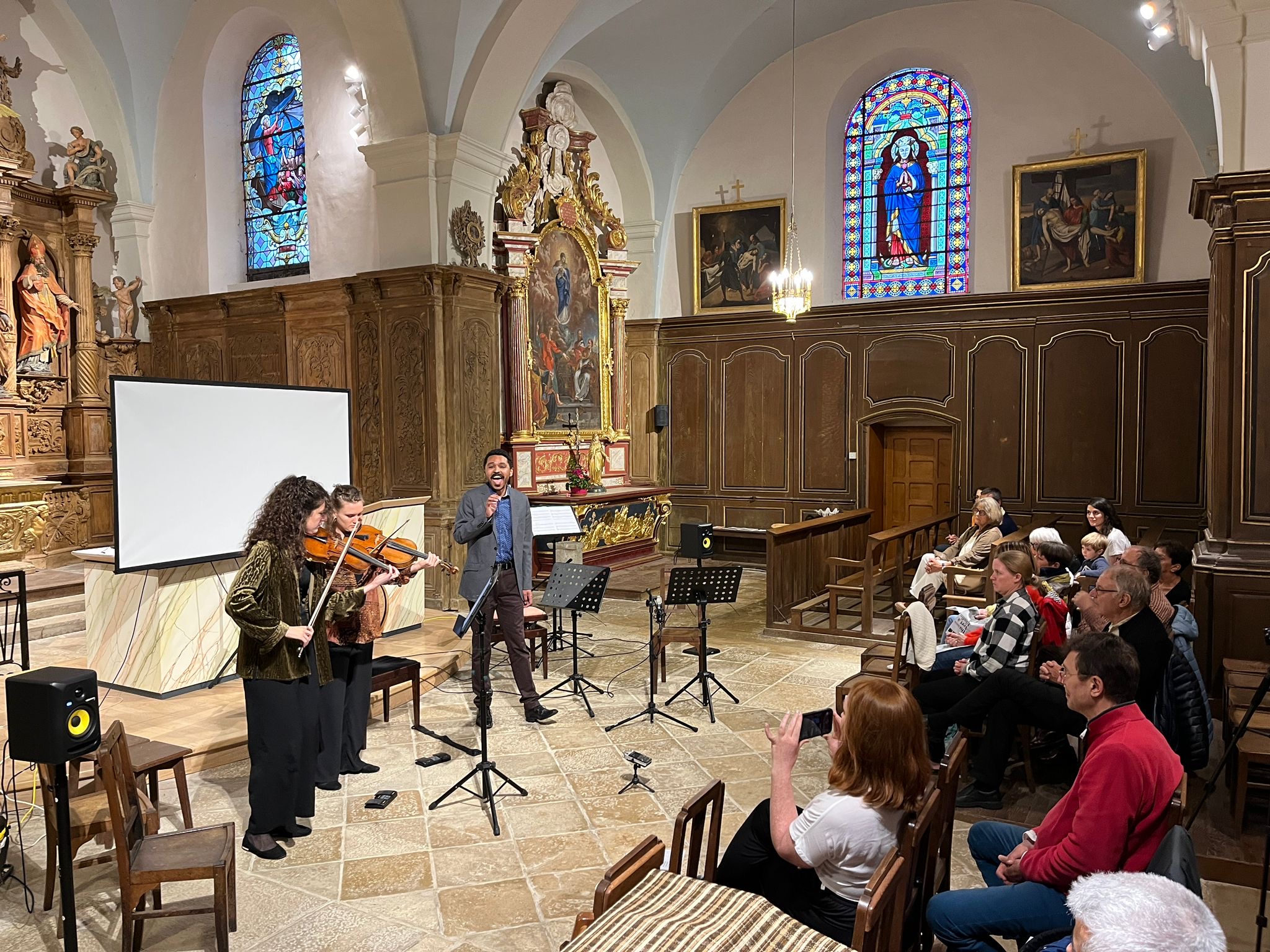


Image Credits
Sly Pup Productions; Gracie Fagan; Clementine Miller; Johnette Martin; Annika Socolofsky
Popular
-

The Trailblazers: Rewriting the Narrative
-

Celebrating the Spotlight: Kaytee Shashore Turns Milestones Into Momentum
-

Humanity in the Machine: Alexander Raye Pimentel’s Cyborg Recall Questions the Cost of a Data‑Driven World
-

Raemi Anderson on Courage, Caution, and Answering the Call of the Landscape
-

Hidden Gems: Local Businesses & Creatives You Should Know


