



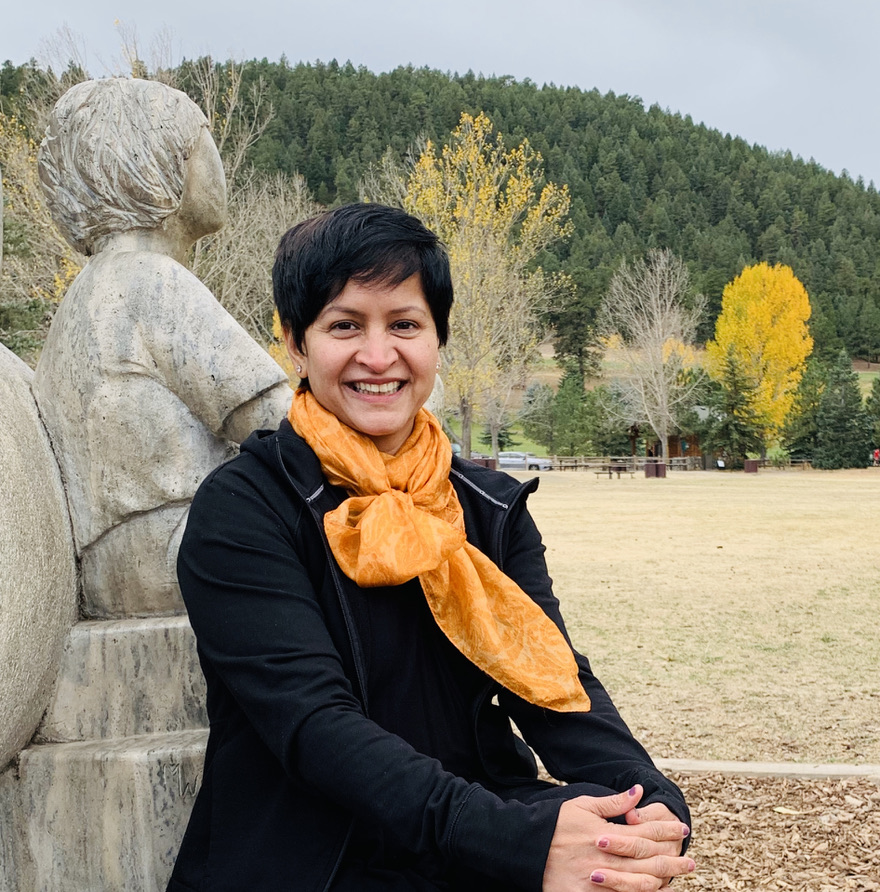
Today we’d like to introduce you to Surabhi Mehrotra.
Hi Surabhi, it’s an honor to have you on the platform. Thanks for taking the time to share your story with us – to start maybe you can share some of your backstory with our readers?
When I think about my journey, it falls into two chapters: life before moving to North America and life after.
I was born in a small town in India, in a family with modest means and a deep sense of responsibility toward others. My dad was supporting our extended family, so there was rarely anything extra, but one rule at home was very clear: anyone who came to our door in need should not leave without help. Community service was not a project; it was a way of life. That mix of scarcity and generosity shaped how I see people and community even today.
After completing my higher education, I started my career as a human resources and talent management professional. It felt natural to move into a field centered on people. Over the years, I worked with several multinational firms and took on roles with increasing scope and responsibility. In one of those roles, I designed a corporate social responsibility initiative that was closely tied to employee engagement. As part of that effort, we helped launch a small school for children living in nearby slums and “adopted” an orphanage where employees volunteered to teach STEM subjects.
Those experiences were a turning point. I saw bright, curious children whose potential was shaped not by their ability, but by where they were born, what language they spoke, and how much their families knew about “the system.” It changed how I understood opportunity, not as something people simply lack, but as something that depends on awareness, support, and access points that not everyone has. Over time, living and working in India, Canada, and now the United States has deepened that view and helped me practice what I call perspective taking: pausing to see a situation through someone else’s eyes before trying to solve it.
When I moved to North America and eventually to the Denver metro area, I carried that lens with me, but I also became the one on the outside. As a new immigrant and parent, I often felt like everyone else had a handbook I had not been given. Simple things like school communication, social norms, and unspoken expectations took extra effort to understand. In my corporate work, I saw fresh graduates who had degrees but were missing practical job readiness skills and networks. In the community, I began hearing about high school students who were experiencing homelessness or deep instability while trying to stay in school.
The context was different from what I had seen in India, but the pattern felt familiar. Children were showing up at school and doing their best, yet their growth was shaped by many small factors coming together: schools doing their best with limited time and staff, parents trying to help with limited information or bandwidth, and a general lack of visibility into available resources and pathways. I do not see this as one person’s or one system’s fault. When you try to support large numbers of people, there will always be blind spots and limits. What matters is how the rest of us choose to respond, whether we stay on the sidelines or share responsibility and help close those gaps.
Like many others, I did not set out to start a nonprofit. I started by volunteering alongside my corporate job, showing up at school events, organizing small supply drives, listening to educators, and talking with other parents who felt a bit lost but wanted to help. Over time, I realized these were not isolated stories. They pointed to deeper issues around readiness, belonging, and access to opportunities. During my maternity leave, I finally had the space to step back and ask a bigger question: instead of helping only around the edges, what would it look like to focus on this work more intentionally? That reflection led to the decision to build something more structured and long term. In 2020, with support from a few like-minded community members, I founded Unite2Uplift to bring together my background in talent management and my lived experience as an immigrant parent.
Today, as Founder and Executive Director of Unite2Uplift (unite2uplift.org), I work with a small but committed team and local partners across the Denver metro area to close opportunity and skills gaps for students. Our work centers on three core efforts: DREAM STEAM enrichment for younger students, the Future Unlocked career readiness and scholarship series for high schoolers, and community efforts like supplies, scholarships, and family–school–community partnerships. At the heart of it, my journey has been about standing in that space between systems and lived experience and trying to make it a little easier for young people and their families to feel informed, supported, and like they belong.
We all face challenges, but looking back would you describe it as a relatively smooth road?
No, it has not been a smooth road, and I am yet to meet anyone who would say that about their own journey.
Growing up, whenever something went wrong or plans fell apart, my mom’s first response was always reassuring: “It is okay, we will find a solution.” That steady, matter-of-fact attitude has stayed with me and still nudges me to focus on solutions whenever the road gets bumpy.
I grew up in India in a family with very limited means. I remember watching my parents stretch every bit of what we had and still find ways to show up for others. That shaped me. It taught me early what it means to adjust and to keep going even when life does not feel straightforward. It also made me naturally notice people on the margins, the ones doing their best with very little.
Years later, uprooting our life in India and moving to North America was another major climb. I left behind a well established career and professional identity and quickly realized it is not always easy to continue in the same way when your background is not in one of the more in demand technical fields. Much of what I had built professionally had to be rebuilt in a new country, with no network, a different culture, and unwritten rules I did not fully understand. It was a real blow at first and very humbling to go from feeling established in my field to feeling like I was constantly trying to catch up. At the same time, I also met supportive people who listened, took a chance on me, and colleagues who shared the unwritten rules. They reminded me that starting over can also open new doors.
As a parent, there have been painful moments too. One of the hardest was when my firstborn experienced a school shooting in Colorado. No parent is prepared for that. It shook my sense of safety and belonging and made my questions about community, connection, and support feel urgent and very personal.
Alongside these big moments, there has been a quieter, ongoing struggle around belonging. As an immigrant, you can feel deeply grateful to be here and still feel like you are on the margins, trying to decode school culture, wondering if you are being understood, and not always seeing your own story reflected back. Over time, instead of waiting for belonging to appear, I put my energy into creating it. I said yes to volunteering, reached out to other parents who felt the same way, and started building bridges between families, schools, and community partners. Those small steps slowly created a sense of community for me and for others.
None of these experiences have been easy, but they have shaped how I lead and why Unite2Uplift exists. They keep me grounded in the reality that many families and students are carrying both visible and invisible challenges even as they do their best to move forward. They also remind me that you do not need a perfect road to make a difference. You can start from where you are, use what you have lived through, and turn that into something a little better for the people around you.
Appreciate you sharing that. What else should we know about what you do?
Professionally, I have always worked at the intersection of people, systems, and change. I started my career in India as a talent management and HR professional, working with people from many different cultures, roles, and educational backgrounds. Over the years, I worked with several multinational firms in roles that grew in scope and responsibility. I served as an HR Manager and, in my role as an Employee Relations specialist, championed an organizational change initiative to streamline global HR processes in close collaboration with senior leadership. My work has consistently focused on engaging, developing, and supporting organizational talent across levels and helping organizations care for their most important resource: their people.
After moving to North America, I continued in people-centered roles. I managed enterprise resource delivery for financial services and technology clients, working closely with hiring leaders and project teams to match the right talent to the right opportunities. It gave me a close look at how talent moves through organizations, where people get stuck—including job readiness gaps among fresh graduates—and what kind of support actually helps them grow.
Across both India and North America, that mix of experience has given me a global outlook, a strong ability to spot gaps, and a methodical approach to problem-solving. One of the biggest lessons from my corporate life is that not every issue needs a complicated solution. Working on organizational processes and systems taught me that some of the most effective changes come from simple, human actions: clear communication, thoughtful expectations, and genuine connection, not just another report or dashboard.
Today, I bring that same lens into my work as the Founder and Executive Director of Unite2Uplift, a Denver-metro nonprofit focused on closing opportunity and skills gaps for students. We do this through three main efforts: DREAM STEAM, which offers hands-on enrichment for younger students; Future Unlocked, a youth-informed digital career readiness and scholarship series for high schoolers; and community-based work like scholarships, essential supplies, and family–school–community partnerships.
What I am most proud of is the consistency of this work and the trust we have built with local educators, families, and volunteers. We are still a small organization, but we show up year after year for the same schools and communities, and we are starting to see students recognize us, remember the workshops, and reach out for support.
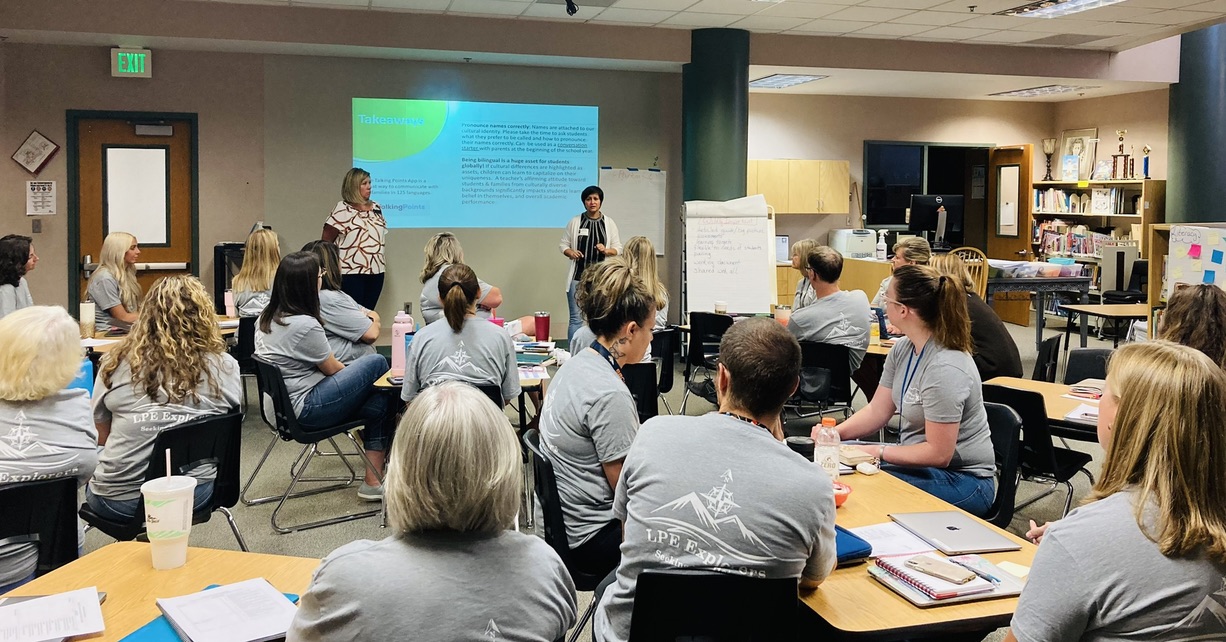
If there is anything that sets me apart, it is the combination of my lived experience as an immigrant parent and my background in talent management. I am used to sitting between different worlds—corporate and community, school and family, student and system—and practicing perspective-taking to understand what each side needs. That bridge-building mindset is at the core of my work, whether I am speaking with a high school student about their future or collaborating with a school leader on how to better support their families.
Do you have any advice for those just starting out?
I think my biggest advice is to not wait until you feel completely ready before you start. When I look back, many important steps in my life did not happen when everything was clear. Moving to a new country, returning to work after a break, or starting Unite2Uplift never came with a perfect map. I had questions, doubts, and very little certainty. What helped was starting small. If you care about something and you see a gap, take one step. Have one honest conversation, volunteer at one event, try one idea. Often you understand the path only after you have walked a little bit of it.
I also wish I had understood earlier how important it is to build a circle around you. As an immigrant and as a professional, I spent a lot of time trying to figure things out on my own. If I could speak to my younger self, I would say, ask for help sooner and let people see where you really are. You do not need a huge network. You just need a few people you can learn from, lean on, and grow with.
Another piece of advice that comes from both my corporate work and community work is to practice perspective taking. Before you respond or design a solution, pause and try to see the situation through someone else’s eyes. That might be a student, a parent, an employee, or a school leader. It is a simple habit, but it changes how you listen and how people experience you.
Finally, be patient with yourself. Starting something new often feels slow and messy. That feeling is normal. Finding your place, building confidence, and seeing the impact of your work all take time. Focus on the next small, real thing you can do well, and trust that these small steps will add up, even if you cannot see the full picture yet.
Contact Info:
- Website: https://www.unite2uplift.org
- Youtube: https://www.youtube.com/@U2U-FutureUnlocked




Popular
-

The Trailblazers: Rewriting the Narrative
-

Celebrating the Spotlight: Kaytee Shashore Turns Milestones Into Momentum
-

Humanity in the Machine: Alexander Raye Pimentel’s Cyborg Recall Questions the Cost of a Data‑Driven World
-

Raemi Anderson on Courage, Caution, and Answering the Call of the Landscape
-

Hidden Gems: Local Businesses & Creatives You Should Know


