



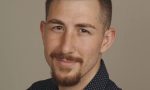
Today, we’d like to introduce you to Eric Hernandez.
Hi Eric, it’s an honor to have you on the platform. Thanks for taking the time to share your story with us – to start, maybe you can share some of your backstory with our readers.
In 2014, my father was admitted to a hospital ICU for a heart attack. My mother and I stood at his bedside, listening to the cardiologist explain the necessary procedures to determine the next steps in my father’s care. After the cardiologist left the room, I asked my parents what they had understood from his visit. They both looked at me wide-eyed and humbly stated, “Not much.”
They then complained that he was only in the room five minutes before leaving, and even if they had understood what he was explaining, there was no time for questions. As a physician, my training included ICU rotations, so I understood the cardiologists’ busy schedules and the demands of every minute of the day. As a son, I felt my parents’ confusion, fear, and frustration at this interaction during such a life-altering event. I explained to my parents the demands of this cardiologist’s time and the fact that my dad was stable meant he could go tend to other more critical patients.
I then used the dry-erase board in my father’s room to put into pictures the medical jargon the cardiologist had used in communicating with them. I explained the various planned procedures, as well as the risks and benefits associated with each. When I was done, my parents were able to ask appropriate questions. Admittedly, I was unable to answer all of their questions and had to seek out the nurse for clarification, but I noticed the fear and confusion my parents originally felt had dissipated from their faces. Immediately, I thought that this was not an isolated incident.
There must be many more people like my parents who, having no medical background, suffer confusion, fear, and frustration whenever they encounter a medical professional. This was the seed that started my planning for Alpine Woods Medical. Two months later the small community clinic I worked in was bought out by a large corporation. At the time, my colleague and I were responsible for over 5,000 patients between us. When the new business manager came to meet with us for the first time, he explained the corporation’s plan for growth in our clinic.
My colleague and I voiced our concerns that we were already stretched thin with two doctors and four support staff. We described our feelings of rushing through patient encounters only to stay 3 hours after closing to try to keep up on the other aspects of our job (e.g., documentation of encounters, reviewing lab results, refilling medications, returning patient phone calls, etc.). The business manager responded to our concerns, citing that we should be spending “6.8 minutes” face-to-face with patients.
In doing this, he noted we would be able to complete all of the other aspects of our job without needing to stay past closing. This was the club to the head that started my exit plan from corporate medicine. Ten months later (October 2015), I started Alpine Woods Medical (AWM) with the mission of focusing on convenience for the patient. Rather than requiring patients to call a receptionist who transfers them to a medical assistant who then transfers them to their doctor’s voicemail, all of our patients have their doctor’s direct cell phone number.
In fact, it is the ONLY phone number our patients have for our practice. There is no receptionist. There is no medical assistant. AWM is designed so that patient inquiries go directly to their doctor and do not go unnoticed or without response. This prevents any attempt to displace blame or “pass the buck.” If something is missed, our physicians are the ones responsible and must make it right. This instills confidence in our patients and integrity in our physicians.
Another main convenience AWM is unique for is that we are a house-call-only medical practice. We are “general practitioners” who can treat all ages and all genders in the privacy and comfort of our patients’ homes, offices, or wherever they may be. This aspect was designed to eliminate the need to take prolonged time away from work to accommodate a commute to the doctor’s office only to be met by a prolonged wait in the waiting room, a short appointment with the doctor, and a commute back to work.
Our patients are able to work, play, rest, or continue whatever they were doing right up until our arrival at their door. The biggest drawback of our practice is that we cannot take insurance. In order to appropriately bill insurance, we require a team of office staff that we simply cannot afford. Our mission requires that our practice remain small (no more than 100 patients per doctor); because of this, we cannot generate the income of the larger clinics (national average of 3,200 patients per doctor). By maintaining this vastly lower number of patients per doctor, we are able to remember all of our patients and their various medical conditions, allergies, and medications.
For example, a patient once called me while I was grocery shopping and asked if he should start a supplement a friend had recommended. Knowing this patient, I was able to tell him, “No, your kidney function has been a bit concerning lately, and this particular supplement can have a negative impact on kidneys.” In addition, by maintaining such a low number of patients per doctor, we are always able to get our patients in on the same day if needed.
In the nine years since AWM began, our mission has remained unchanged. I am proud that despite the many changing factors our society has endured since 2015, AWM has not had to sacrifice any of these values. I realized a long time ago that the U.S. healthcare system is broken. Costs of care remain hidden from patients until a giant bill appears in the mail.
Costs of insurance continue to increase despite an apparent reduction in covered services. At AWM, we bill our patients a fixed amount once per year for unlimited visits. In addition, each visit lasts as long as the patient desires. I cannot fix the U.S. healthcare system for everyone, but I can control how I care for the patient in front of me.
Let’s dig a little deeper into the story – has it been an easy path overall, and if not, what challenges have you had to overcome?
Acquiring enough patients to be able to focus strictly on AWM has been the biggest struggle.
When I started this practice, I needed to work another full-time job at a clinic that was 1 hour away from home. Just to be able to pay my bills. After 4 years, I could drop that full-time job to part-time. For the last 3 years, I have been able to focus only on AWM.
As you know, we’re big fans of Alpine Woods Medical, PLLC. For our readers who might not be as familiar with the brand, what can you tell them about it?
Alpine Woods Medical (AWM) has focused on convenience to the patient since 2015. As described above, all our patients have their doctor’s personal cell phone number. It is the only number they have for our clinic. This ensures patient inquiries go directly to their doctor and do not go unanswered. This instills confidence in our patients and integrity in our physicians.
In addition, our doctors provide house-call visits 90% of the time. This way, parents do not need to corral all their kids into the car or stress about their behavior in the cramped exam room when one child has an ear infection. It also allows patients to continue working in their offices or homes right up until their appointment when the doctor arrives at their door.
We can do everything an office-based doctor can (e.g., sutures, biopsies, full physicals, acute illness visits, chronic illness visits, etc.), but with the added comfort to our patients of being in their most convenient locations. As our mission is convenience to the patient, we do not think booking patient appointments 2, 4, or even 6 weeks out is convenient. By maintaining a vastly lower patient-to-doctor ratio (100:1), we are able to see our patients on the same day. This lower ratio also allows our doctors to take a more holistic approach to patient care. We know more about the details of all our patients’ lives to make medical recommendations that are better suited to their lifestyles.
Lastly, by billing our patients on a term-based system rather than a visit-based system, we can provide unlimited medical care during that term. This liberates our patients to contact their doctor whenever they feel a health concern arises, not when they feel they have suffered enough to warrant the unknown cost of a doctor visit. As a scientist, I have seen this as the most profound impact on improving my patients’ overall health.
Is there anyone you’d like to thank or give credit to?
While in medical school in Michigan and coming home to Colorado for winter and summer breaks, I used to dream of running a house-call practice in the ski resorts so I could combine my two passions of skiing with providing medical care.
In 2012, I found Dr. Doug Mayeda, who owns a house-call practice in Vail, CO. He hired me for weekend shifts as I was already working in a community clinic in Boulder County Monday thru Friday.
Dr. Mayeda taught me how to deliver exquisite care to patients in the comfort of their hotel rooms. It was this experience that made me realize I could practice primary care in the same way on the front range.
Contact Info:
- Website: https://www.alpinewoodsmedical.com
- Email: dr.eric@alpinewoodsmedical.com


Popular
-

The Trailblazers: Rewriting the Narrative
-

Celebrating the Spotlight: Kaytee Shashore Turns Milestones Into Momentum
-
Humanity in the Machine: Alexander Raye Pimentel’s Cyborg Recall Questions the Cost of a Data‑Driven World
-

Raemi Anderson on Courage, Caution, and Answering the Call of the Landscape
-

Hidden Gems: Local Businesses & Creatives You Should Know


